A drone launched by Yemen’s Houthi rebels breached Israel’s advanced air defense system on Sunday, striking Ramon Airport in southern Israel. The impact shattered glass, injured one person, and temporarily halted flights, the Israeli military confirmed.
Although damage at Ramon Airport was minimal and operations resumed within hours, the attack marks a rare successful strike by the Houthis inside Israeli territory. The rebel group later claimed responsibility.
This attack came in retaliation for recent Israeli airstrikes in Yemen’s Houthi-controlled capital, which killed top officials including the Houthi prime minister — a major escalation in the nearly two-year-long conflict between Israel and the Iran-backed rebels.
Escalation in Gaza and Legal Pushback
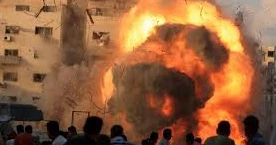
In Gaza City, Israeli forces demolished another high-rise building, displacing hundreds more Palestinians, as they urged civilians to flee south amid an intensifying offensive. The building, which Israel claims was used by Hamas for intelligence purposes, collapsed in seconds. Hamas has denied the allegation.
Meanwhile, in a rare move, Israel’s Supreme Court ruled that the state is not providing adequate food to Palestinian detainees. It ordered the government to ensure that detainees receive the minimum sustenance required by law — a decision prompted by petitions from Israeli human rights organizations alleging widespread hunger in prisons.
Houthis Vow More Attacks After Israeli Strike on Their Leaders
Following the killing of Prime Minister Ahmed al-Rahawi, Houthi forces vowed to step up attacks against Israel and maritime targets in the Red Sea. On Sunday, one of several drones launched from Yemen evaded Israeli defenses and struck the passenger terminal at Ramon Airport near Eilat, injuring a 63-year-old man and forcing temporary flight diversions.
Houthi military spokesperson Brig. Gen. Yahya Saree said eight drones had been launched, warning that Israeli airports would continue to be targets. The Israeli military intercepted three other drones near the Egyptian border and is investigating how the fourth one slipped through its defenses.
The Houthis have launched numerous aerial attacks on Israel since the start of the Gaza war, including those using cluster munitions. Despite the frequency of these assaults, most have caused limited damage. Prior to Sunday, the most serious strike occurred in May, when a missile landed near Ben Gurion Airport, prompting months-long flight cancellations.
Continued Destruction in Gaza
Israel continued its campaign in Gaza City, targeting what it claims is Hamas’ last major stronghold. The Al-Ra’iya Tower, a seven-story building that sheltered many displaced residents, was destroyed on Sunday. Residents described the trauma of repeated displacement, with some choosing to stay despite warnings, while others fled yet again to overcrowded, unsanitary camps.
At least 13 people, including six children and three women, were killed in strikes on a school-turned-shelter, apartment buildings, and tent camps, according to officials at Shifa Hospital. The military said it was targeting militants near the school and had warned civilians to evacuate.
In central Gaza, Al-Awda Hospital reported receiving five bodies — including a young girl’s — following an Israeli strike on a gathering in the Nuseirat refugee camp. The Israeli military has not commented on the incident.
The Gaza Health Ministry reports that over 64,000 people have died since the war began, with more than half being women and children. These numbers include both civilians and combatants.
Trump Claims Israel Accepted Ceasefire Proposal
On Sunday, former U.S. President Donald Trump claimed on social media that Israel had accepted his ceasefire terms for Gaza and urged Hamas to do the same. He warned it was his “last warning” to the group but did not provide details of the proposed terms. Israel did not confirm his statement, and its prime minister’s office declined to comment.
Hamas acknowledged receiving some ideas through intermediaries and welcomed any initiative involving prisoner swaps, but maintained its demands for a full Israeli withdrawal and a Palestinian-led civil administration in Gaza — conditions Israel has consistently rejected.
Israel targets high-rise in Gaza City amid expanded offensive, promises more strikes
Prime Minister Benjamin Netanyahu remains firm on the need for Hamas to disarm completely before any ceasefire can be considered. Meanwhile, a hostages' advocacy group urged the Israeli government to back the emerging agreement, fearing that continued offensives could endanger the remaining hostages believed to be alive in Gaza.
Despite international criticism, Netanyahu reaffirmed his commitment to military victory in Gaza, stating he prioritizes defeating Israel’s enemies over global perception.