Politics

Repeated attacks cannot stop Nasiruddin Patwary: Hasnat
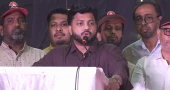
Hasnat Abdullah, MP for Comilla-4 and chief organiser of the southern region of the National Citizens Party (NCP), has said repeated attacks, intimidation and repression will not silence NCP Chief Coordinator Nasiruddin Patwary.
In a Facebook post reacting to the reported attack on Patwary at the Lalon Akhra in Kushtia, Hasnat said Patwary had once again been targeted in Kushtia, marking the fifth such incident since the BNP government came to power.
“No one has ever succeeded in silencing Patwary through such attacks, nor will anyone be able to do so in the future, Insha'Allah,” he said.
Hasnat said no obstacle could halt the struggle for justice, rights and freedom, adding that the fight for truth and justice would continue.
NCP Chief Coordinator Nasiruddin Patwary was allegedly attacked and his vehicle vandalised on the premises of Lalon Akhra in Chheuria under Kumarkhali upazila on Sunday evening.
The incident occurred around 7:15pm, according to police and party sources.
Jamal Uddin, officer-in-charge (OC) of Kumarkhali Police Station, said police went to the spot after receiving information and brought the situation under control.
8 hours ago

Patwary allegedly attacked, car vandalised at Lalon Akhra
National Citizen Party (NCP) Chief Coordinator Nasiruddin Patwary was allegedly attacked and his vehicle vandalised on the premises of Lalon Akhra in Chheuria under Kumarkhali upazila on Sunday evening.
The incident occurred around 7:15pm, according to police and party sources.
Jamal Uddin, officer-in-charge (OC) of Kumarkhali Police Station, said police went to the spot after receiving information and brought the situation under control.
Patwary remained confined inside the Akhra for some time following the incident. Police later rescued him and, around 8pm, escorted him to Kumarkhali Police Station with the help of local party activists, where he was expected to file a complaint.
According to NCP sources, Patwary was visiting Kushtia on a personal trip. He first visited Rabindranath Tagore’s Kuthibari in Shilaidah and later went to the Akhra in Chheuria.
While he was watching a musical performance by local artists and livestreaming it on Facebook, he was allegedly attacked and his vehicle was vandalised, the sources said.
Local NCP leaders alleged that the attack and vandalism were carried out under the leadership of Sangram, a member of the Kushtia municipal unit of Jatiyatabadi Chhatra Dal.
Mozakkir Rabbi, convener of Kushtia District Chhatra Dal, however, said the organisation did not believe in “mob-style politics”.
He said if any Chhatra Dal leader or activist was involved in the incident, that individual would be personally responsible for their actions.
NCP Kushtia District Convener Jannatul Ferdous Tony and other local leaders were accompanying Patwary when the incident occurred.
NCP Joint Member Secretary Tarek Reza alleged in a social media post that BNP leaders and activists attacked Patwary.
A video circulating on social media shows several people chasing Patwary and his associates while shouting, “Catch them, catch them”. However, the authenticity of the video and the identities of those seen in it could not be independently verified.
Patwary did not speak to local media about the incident at the time of reporting.
10 hours ago
Various steps taken to humiliate a freedom fighter: Shafiqur Rahman
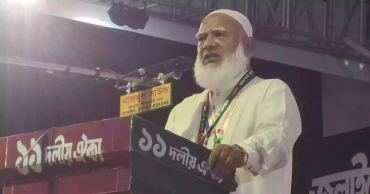
Opposition Leader Dr Shafiqur Rahman on Sunday said various disgraceful measures were taken to humiliate freedom fighter and former two-time MP Major (retd) Akhtaruzzaman.
“Instead of correcting the weaknesses by taking his protest into consideration, he (Akhtaruzzaman) was arrested. Even different disgraceful measures were taken to humiliate a former two-time MP and a freedom fighter before people,” he said in a post on his Facebook page on Sunday.
Dr Rahman said no human being is above mistakes. Freedom fighter Major (retd) Akhtaruzzaman had raised his voice against the suffering and harassment faced by general passengers at the airport, as well as the indifference and irregularities of the authorities, he said.
“In fact, he has become the voice of protest of the suffering passengers, particularly expatriate Bangladeshis returning home,” said the Jamaat chief.
He said the people are not blind and they rather are seeing everything.
“In fact, by protesting against injustice, he has proved his bravery and has become a hero in the hearts of the people who have suffered,” he said.
Dr Rahman prayed to Allah to elevate the dignity of Major (retd) Akhtaruzzaman.
Detectives arrested Major (retd) Akhtaruzzaman from his Cantonment residence in the capital on Friday evening.
The arrest follows a case filed against Akhtaruzzaman at Airport Police Station on Friday under several sections of the Code of Criminal Procedure by Dhaka Airport Security Officer Md Shahriar Alam Sajib on charges of obstructing government duties, creating disorder at Hazrat Shahjalal International Airport, and physically assaulting a security official.
According to the FIR, the incident occurred Thursday morning when passengers arriving from Madina on Biman Bangladesh Airlines flight BG-338 faced a shortage of trolleys and delays in collecting baggage.
Airport Executive Director Group Captain SM Ragib Samad went to the spot to control the situation.
Akhtaruzzaman allegedly verbally abused and threatened him and later assaulted Security Supervisor Warrant Officer Mohammad Kamal Uddin after the latter asked his protocol assistants to stop recording videos in the restricted KPI area.
Akhtaruzzaman threw bottles of Zamzam water from passengers' trolleys and behaved aggressively toward a Biman representative, according to the FIR.
Police said they will examine CCTV footage, record eyewitness statements and collect other evidence before taking further legal action.
15 hours ago
Elected government must fulfil people's expectations: LGRD minister
Local Government, Rural Development and Cooperatives Minister Dr Abdul Moyeen Khan said a government elected by the people's votes must work quickly and effectively to fulfil their expectations.
“Public representatives are elected by the people and perform their responsibilities. After five years, they will again have to face the test before the people. Therefore, ensuring services to the people and remaining accountable to them for their actions are the responsibilities of an elected government,” he said.
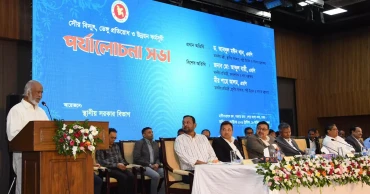
The minister made the remarks on Saturday while addressing a review meeting on “Solar Power, Dengue Prevention and Development Programmes” organised by the Local Government Division at the Multipurpose Hall of the Cooperative Bhaban in Sher-e-Bangla Nagar as the chief guest.
The local government minister said the goal of both government officials and elected representatives is to serve the people.
“Development activities must be implemented quickly while ensuring the maximum use of limited resources,” he said.
He said solar power can play an important role in addressing the electricity problem.
“Alongside installing solar panels on the rooftops of Union Parishad and Upazila Parishad buildings, people should also be encouraged to install solar panels on rooftops at the rural level,” he said.
“If surplus electricity generated during the day can be stored in batteries and used at night, dependence on the national grid will decrease,” he added.
Speaking as a special guest, State Minister for Public Administration Md Abdul Bari stressed honesty, transparency and efficiency in implementing government services and development projects at the grassroots level.
He said honesty and professional efficiency are being given priority in postings and promotions.
He also urged field administration officials to consider their workplaces as their own areas and perform their duties with sincerity.
Speaking as another special guest, State Minister for Local Government Mir Shahe Alam said the role of the upazila administration is important for successfully implementing the government's welfare programmes.
“Over the next four years, Family Cards and Farmer Cards will be delivered to all families and farmers in phases,” he said.
He also said licences would be issued soon after verifying the list of fertiliser dealers.
Regarding infrastructure, the state minister said concrete and Uni-blocks should be used instead of bricks on small rural roads, drainage systems should be introduced on roads in haat-bazaar and port areas, and a safe distance should be maintained when excavating ponds alongside roads.
He also called for assessing the potential of producing organic fertiliser and electricity from waste and encouraged educational institutions to organise annual sports and cultural competitions.
Cabinet Secretary Nasimul Ghani, Principal Secretary to the Prime Minister ABM Abdus Sattar, Public Administration Ministry Secretary Md Quamruzzaman Chowdhury, Local Government Division Secretary Md Shahidul Hassan, Rural Development and Cooperatives Division Secretary Dr Rafiqul I Mohamed, Secondary and Higher Education Division Secretary Abdul Khaleque and Power Division Secretary Mirana Mahrukh, among other senior officials, attended the meeting.
Chief executive officers of all city corporations, deputy directors (local government) of districts, upazila nirbahi officers and administrators of municipalities were also present.
1 day ago
Special cleanliness, mosquito control drive held at DU
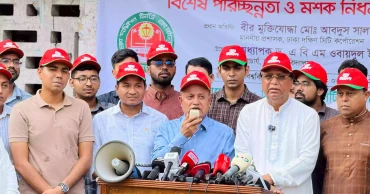
A special cleanliness and mosquito control campaign was held at Dhaka University on Saturday as part of a pre-announced program of the Bangladesh Jatiotabadi Chhatra Dal (JCD), DU unit.
The campaign was implemented by Dhaka South City Corporation (DSCC) with the cooperation of the university administration and initiated by DU JCD unit.
The campaign was inaugurated at the TSC premises around 9am, with DSCC Administrator Abdus Salam attending as the chief guest and DU Vice-Chancellor Prof Dr ABM Obaidul Islam as the inaugural guest.
DU Pro-Vice-Chancellors, Proctor and leaders of the JCD were also present.
1 day ago
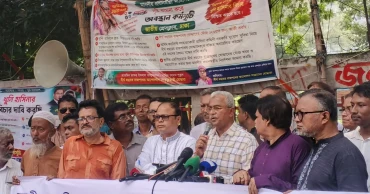
Action against wrongdoers has long been a culture in BNP: Alal
BNP Chairman’s Adviser Advocate Syed Moazzem Hossain Alal on Saturday said taking action against wrongdoers within the party is not a new practice but a long-standing culture.
He said action was taken against BNP leaders, activists and ministers in the past as well when allegations were raised against them, he said at a human chain organised by Jatiyatabadi Samomona Jote in front of the Jatiya Press Club, demanding the arrest of those involved in the alleged assault on Bangladesh NAP Chairman Shaon Sadiq.
He said Prime Minister Tarique Rahman, also BNP chairman, has repeatedly warned party leaders and activists at various levels.
Referring to recent action against a BNP lawmaker, Alal said action has also been taken against a woman MP who had made many sacrifices as a BNP leader.
Recalling BNP’s past, Alal said Shaheed President Ziaur Rahman had spoken about taking action against corrupt elements and “weeds” within the party at a meeting of the central committee of Jatiyatabadi Jubo Dal in Dhaka ahead of his death on May 30, 1981, in Chattogram.
Referring to incidents during the BNP government’s 2001-2006 tenure, Alal said the president of Jatiyatabadi Chhatra Dal, BNP’s largest political affiliate, and an elected MP at the time was arrested over an allegation and remained in jail for a long period.
He said the son of a then Posts and Telecommunications minister was the president of Kushtia Jubo Dal.
After allegations emerged against him over establishing dominance and involvement in controversial activities, he was expelled from Jubo Dal and his father was removed from the Cabinet.
Alal also said another minister from Chattogram was removed from the Cabinet over a fertiliser scam.
He said the practice of taking action against wrongdoers in BNP was not new and had a long history.
“At a time when the party is working for the development of the country in various fields, some people are resorting to false propaganda and disinformation in an attempt to establish lies as truth,” he said.
Regarding the alleged attack on NAP Chairman Shaon Sadiq, Alal said the incident might appear small to the media, but it was a serious matter to them.
“Those who stood at the forefront of BNP’s 17-year movement faced attacks and imprisonment,” he said.
Addressing the Jatiyatabadi Samomona Jote, Alal called for intensified efforts to arrest the actual perpetrators of the attack on Sadiq.
Leaders of the Jatiyatabadi Samomona Jote were present at the programme.
1 day ago
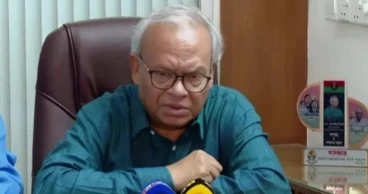
Rizvi mourns death of eminent journalist Toufique Imrose Khalidi
BNP Acting Secretary General Ruhul Kabir Rizvi on Friday expressed deep grief and sorrow at the death of senior journalist and bdnews24.com Editor-in-Chief Toufique Imrose Khalidi.
Khalidi died at around 7:00pm Bangladesh time while undergoing treatment at a hospital in London.
In a condolence message, Rizvi said he was deeply saddened by Khalidi’s death and expressed sympathy to his family members.
“Like his family members, I am deeply saddened by the death of Toufique Imrose Khalidi. As an honest and dedicated journalist and as the Editor-in-Chief of bdnews24.com, he remained uncompromising in carrying out his responsibilities. He was always fearless and unwavering in performing his professional duties as a journalist,” Rizvi said.
He prayed for the eternal salvation of the departed soul and conveyed his deep condolences to the bereaved family, relatives and well-wishers.
2 days ago

Jamaat to launch dengue awareness week on Oct 4
Bangladesh Jamaat-e-Islami will launch a week-long nationwide dengue awareness campaign on Oct 4, with its Ameer and Leader of the Opposition Dr Shafiqur Rahman scheduled to inaugurate the programme in the capital.
The campaign, titled “Dengue Prevention Public Awareness Week”, will be observed from Oct 4 to 10, according to a party press release issued Friday.
The Jamaat chief will inaugurate the campaign at 9 am on Sunday at Madhubagh playground in Moghbazar.
Jamaat said the dengue situation across the country has become serious, with a number of deaths reported from the mosquito-borne disease.
The party called for greater public awareness and cooperation to prevent dengue and urged its leaders and activists, as well as people from all walks of life, to play a united role in the campaign.
The initiative is aimed at raising public awareness about dengue prevention and encouraging collective efforts to curb the spread of the disease.
2 days ago
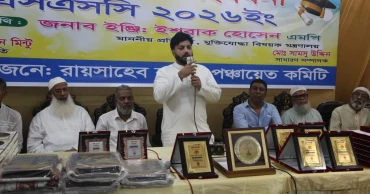
Action to be taken against anyone bringing disrepute to party: Ishraque
Liberation War Affairs State Minister and Dhaka-6 MP Ishraque Hossain on Friday said action would be taken against anyone involved in wrongdoing by using the identity of the party.
He said those deviating from the BNP’s political principles and ideology to commit wrongdoing must be identified and dealt with accordingly.
Ishraque made the remarks while speaking at a reception for meritorious students who achieved outstanding results in the SSC examinations-2026 at Ray Saheb Bazar in the capital. The programme was organised by the Ray Saheb Bazar Panchayat Committee.
“Unfortunately, it is generally the identity of the ruling party that is used by those in power. The identity of the opposition party cannot be used in the same way,” he said.
“Some individuals are using our party identity and trying to deviate from our political principles and ideology,” he added.
Ishraque said Prime Minister Tarique Rahman demonstrated what “zero tolerance” means within 24 hours over an incident in this regard.
“An investigation was conducted and necessary action was taken. A Member of Parliament was instructed to resign, and the MP complied with the instruction and resigned,” he said.
The state minister urged party leaders and activists to remain vigilant so that anyone committing wrongdoing by using the party identity could be identified and action taken against them.
He said BNP and its affiliate and associate organisations have leaders and activists in Dhaka-6, adding that he has confidence in those who practise politics with honesty and dedication.
“I hope they will identify anyone who commits wrongdoing by using the party identity,” he said.
“We are in front, but we do not always see what someone does later. It takes time to obtain accurate information all the time,” Ishraq said, urging everyone to give the government time and remain patient.
He also said various kinds of propaganda were being spread against the government.
Urging people to remain cautious about such propaganda, Ishraque said the people would assess the government’s activities based on their own judgment, including what it was doing and what it intended to do.
Regarding various problems in the area, he said there had been gas and electricity shortages, but the situation had started to improve.
He said plans had been taken up for long-term energy security so that there would be no load shedding or shortages within the next few years and adequate reserves could be maintained.
“Please bring any problem, big or small, to my attention as soon as you notice it. We will resolve it quickly,” he said.
Leaders of the Ray Saheb Bazar Panchayat Committee and BNP leaders at different levels in the locality were present at the programme.
2 days ago
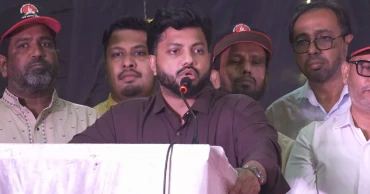
Power must not become a source of injustice, oppression: Ishraque
State Minister for Liberation War Affairs Ishraque Hossain on Thursday called for politics based on principles and ideology, stressing that those entrusted with running the state must ensure that power does not become a means of injustice, torture or oppression.
“Power must not become a source of injustice, torture or oppression against anyone while we are entrusted with running the state,” he said.
Ishraque made the remarks at a programme titled “Come, Warriors of the Generation, Let Us Know Each Other” organised by the Bangladesh Jatiyatabadi Muktijuddher Projonmo Dal at AGB Colony in Motijheel on Thursday night.
He said the Liberation War was fought against injustice, oppression and persecution, and politics must continue to uphold the same ideals.
“Bangladesh's people have placed their trust in us with many hopes and aspirations and entrusted our party with the responsibility of running the state,” he said.
He said the government must, on the one hand, confront domestic and foreign conspiracies and, on the other, rescue the country from the ruins it had been reduced to and rebuild an economy that had been devastated.
3 days ago