banking
BB Governor pledges 'full protection' for Shariah boards to ensure banking integrity
Bangladesh Bank (BB) Governor has assured Shariah board members of ‘full protection’ and functional independence, urging them to work without political influence to restore discipline in the country’s Islamic banking sector.
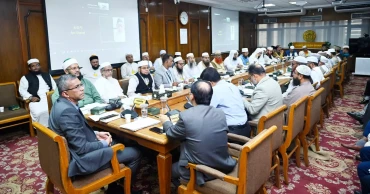
“You, the members of the Shariah boards, will work independently; full protection will be provided to you by the Central Bank,” the Governor said while presiding over a high-level view-exchange meeting titled "Current Status, Challenges, and Future Way Forward of Islamic Banking" held at the central bank headquarters recently.
This marked the first time a BB Governor sat with top Shariah experts, including members of the newly formed BB Shariah Advisory Board, chairmen of Shariah boards from almost all Islamic banks, and renowned Islamic scholars and academics.
In his opening remarks, the Governor noted that money laundering incidents had occurred in several Islamic banking institutions in the past, primarily due to a lack of "proper supervision."
He emphasized that since Islamic banking is designed to be asset-backed, such losses should not occur if the system is implemented authentically.
"The fact that losses occurred is a matter of deep concern for us," he said, adding that empowering Shariah boards is the only way to re-establish effective oversight.
During the meeting, Islamic scholars and experts presented a series of strategic recommendations to strengthen governance:
Urgent enactment of a dedicated "Islamic Banking Act" and the appointment of a separate Deputy Governor and Executive Director at Bangladesh Bank to oversee the sector.
Granting Shariah Supervisory Committees the legal right to work independently of the Board of Directors. It was proposed that the consent of at least three Shariah board members be mandatory for approving large investments.
Ensuring that Shariah supervisors (Murakibs) are protected from management pressure so they can provide neutral audit reports.
Establishing a Shariah Governance Framework modeled after Bank Negara Malaysia and creating a world-class research center and library under Bangladesh Bank to make Bangladesh an "Islamic Banking Hub."
And finally capacity building, in the form of mandatory Shariah banking knowledge for the Board of Directors and a requirement for Bank MDs and top executives to hold recognized certificates in Islamic finance.
The meeting also discussed the situation of five troubled Islamic banks (under the United Islamic Bank umbrella). Scholars urged the central bank to recognize the share value of existing shareholders to mitigate dissatisfaction and requested liquidity support on easy terms for struggling banks.
The Governor concluded by stressing that banks and hospitals should operate solely as service-oriented institutions, free from political interference.
He also expressed interest in hosting international Islamic finance conferences in Bangladesh, inviting world-renowned scholars like Justice Taqi Usmani.
The meeting was attended by prominent scholars including Prof. Dr. Abu Bakar Rafique, Dr. Mohammad Manzur-e-Elahi, Dr. Mufti Yousuf Sultan, and representatives from almost all major Islamic and conventional banks operating Islamic wings.
5 months ago

Bangladesh’s incoming govt takes office with economy at crossroads
As Bangladesh prepares for the formation of a new government following the 13th national election, expectations are running high among depositors, investors and job seekers seeking relief from prolonged financial strain.
The BNP-led alliance is set to assume office amid mounting economic pressures, with questions swirling over who will take charge of the finance ministry and what policy direction the new administration will adopt to tackle banking fragility, stubborn inflation and sluggish job creation.
For Abdul Hamid, a retired government employee, said the stakes are deeply personal.
He has been unable to recover Tk 24 lakh that he placed as a fixed deposit in a private bank.
“I expected the new government that they will return my Tk 24 lakh, which was fixed and deposited in a private bank. But the bank fails to pay me the principal amount and benefits,” Hamid told UNB.
He said many depositors in several private sector banks face similar hardship, with institutions unable to repay funds, leaving families struggling due to a lack of liquidity.
Stock market investors are also looking for signs of a turnaround. Golam Azad, 45, invested around Tk 35 lakh in 2007 after being encouraged by a friend to seek higher returns.
He suffered losses during the stock market scams of 2010 and 2011 and has since waited for a sustained recovery.
Azad said he hopes the incoming democratic government will take meaningful steps to support market stability and protect investors.
Young graduates represent another anxious constituency.
Washim Habib, who completed his degree at a public university in 2021, has sat for the Bangladesh Civil Service (BCS) and other government recruitment examinations but remains unemployed.
Habib said he is seeking employment in either the public or private sector, noting that his elderly parents can no longer continue to support his expenses.
He expressed hope that the new democratic government will create opportunities to help him secure suitable work.
Finance Adviser Flags Structural Challenges
Against this backdrop, Dr. Salehuddin Ahmed, Finance Adviser to the interim administration, has issued a pointed warning about the scale of the economic challenges awaiting the next leadership.
New MPs, cabinet members to be sworn in Tuesday
Speaking to reporters at the Bangladesh Secretariat, he said the primary mission of the incoming government must be revitalising trade and industry while strengthening financial institutions to ensure long-term stability.
Job creation, he stressed, is central to restoring economic momentum.
“If business does not expand, employment will not be generated. And without employment, the purchasing power of the people will remain weak. This is one of the biggest challenges,” he said.
He urged policymakers to foster a vibrant private sector, arguing that the country’s industrial base remains relatively small and overly dependent on exports.
Inflation and Banking Sector Strains
Inflation, he said, remains a “multidimensional problem” that cannot be resolved through monetary policy alone.
While the interim administration has introduced several measures, broader and more comprehensive steps will be required to provide relief.
On banking sector reform, the adviser acknowledged that reorganisation efforts are under way but cautioned that “difficult decisions” lie ahead.
He praised recent initiatives by the central bank governor but noted that credit flow remains constrained and full public confidence in the banking system has yet to return, despite a recent uptick in deposits.
Capital Market and Energy Reform
To reduce overreliance on banks, Dr Salehuddin called for deeper capital market development.
“If we cannot develop the capital market, trade and commerce will not grow by relying solely on banks. Equity participation through the stock market and a strong bond market, especially for the private sector, are essential,” he said.
He said regulatory reform efforts are being slowed by legal complexities and ongoing court challenges.
The energy sector, he warned, poses a 'major long-term challenge'.
He called for intensified domestic exploration, including offshore drilling, and expressed disappointment at the slower-than-expected progress in solar energy development.
The insurance sector, he said, remains another 'sensitive area' where reform momentum has been limited despite various initiatives.
As the new administration prepares to take the oath of office, its first 100 days are likely to be defined by how effectively it can stabilise markets, restore investor confidence and translate high public expectations into tangible economic gains, economists said.
7 months ago
Economists express concern over bank merger; Bangladesh Bank remains confident
Economists and banking experts have expressed deep concern over the government’s plan to merge five struggling Shariah-based banks into a single entity named United Islami Bank, saying such a move will not solve the underlying problems of the banking sector.
Bangladesh Bank, however, remains confident that the merger will help restore depositors’ confidence in the affected banks.
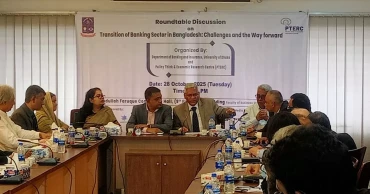
Speaking at a seminar titled ‘Transition of Banking Sector in Bangladesh: Challenges and the Way Forward’ organised by the Department of Banking and Insurance of Dhaka University on Tuesday, experts said merging banks is not a sustainable solution.
Without addressing the root causes, they warned, the crisis could deepen once an elected government takes office.
The central bank has decided to merge five Shariah-based banks — First Security Islami Bank, Social Islami Bank, Global Islami Bank, EXIM Bank, and Union Bank — into one state-owned large Islamic bank. Bangladesh Bank expects to complete the merger by November.
These banks have been plagued by high non-performing loans (NPLs), in some cases exceeding 90 percent, and have repeatedly required liquidity support from the central bank. After several unsuccessful bailouts, the Bangladesh Bank, with the approval of the Finance Ministry and the Council of Advisers, opted for a final merger plan.
“Bailing out private banks with public money is a bad decision. On the other hand, turning distressed banks into state-owned institutions in the name of gaining public confidence is simply cheating,” said former Director General of the Bangladesh Institute of Bank Management (BIBM) Toufic Ahmad Choudhury.
He said the biggest problem in Bangladesh’s banking sector is the swelling NPLs. “Every bank needs to form a loan workout committee to handle bad loans. Instead of doing that, the central bank has chosen the merger path,” he said, warning that United Islami Bank could become “the biggest problem in the banking sector” in the future.
Dr Mahfuz Kabir, Research Director at the Bangladesh Institute of International and Strategic Studies (BIISS), said the decision to merge banks without considering the impact on capital market investors was unjustified.
“Bangladesh Bank must have a clear plan for shareholders of these banks. If the merger fails to resolve the issues, what will the central bank do next? Such contingency measures must be considered before going ahead,” he said.
BNP to ensure Bangladesh Bank’s full independence: Khosru
Sayema Haque Bidisha, Dhaka University’s Professor of Economics and Pro-Vice Chancellor, however, said the situation has reached a point where there is no alternative to mergers. “We urgently need to form a Banking Commission, and the selection of bank boards must be made more stringent,” she suggested.
Despite the concerns, Bangladesh Bank remains optimistic about the merger outcome, as Adviser to the Governor Ahsan Ullah said, “This will create the best Islamic bank in the country’s history.”
He admitted that these banks had repeatedly received financial assistance from the central bank but failed to recover. “We can learn from past merger failures. This time, however, the merger will bring positive results,” he said.
Citing Janata Bank’s example, he said, “Although Janata Bank has around 70 percent NPLs, its situation has not deteriorated like these five banks. Once merged into a state-owned institution, depositors of these banks will be the ultimate beneficiaries.”
Bangladesh Bank Deputy Governor Kabir Ahmed attributed the crisis to a ‘moral collapse’ rather than just financial weakness. “What we are witnessing in the banking sector is not an economic or structural crisis — it’s an ethical one,” he said.
Expressing optimism, Kabir added that inflation is expected to ease further while reserves will increase. “With reserves at $32 billion, and likely to reach $34 billion soon, the economy is heading back toward a comfort zone,” he said.
The deputy governor reaffirmed that the central bank’s current priority is to restore macro-financial stability in the banking sector.
Professor Shahidul Zahid, Chairman of the Department of Banking and Insurance at Dhaka University, presided over the seminar.
10 months ago
Banking, power, revenue reforms in focus as govt faces IMF debt concerns: Salehuddin
Finance Adviser Dr Salehuddin Ahmed on Tuesday said the government is moving forward with reforms to stabilise the banking sector, rationalise subsidies in the power sector, and strengthen revenue mobilisation, while remaining cautious about growing foreign debt under the IMF programme.
Briefing reporters after a meeting at the Secretariat, the adviser said syndicates and rent-seeking practices remain a challenge in the domestic market but stressed that enforcement measures have been intensified to reduce extortion and safeguard consumers.
Dr Salehuddin, however, admitted that extortion has increased across the country since August 5 last year, saying the interim government alone cannot control the menace without political commitment and an elected government in place.
The adviser said the problem has worsened in recent months. “Where previously one taka was being extorted, now it is one and a half or even two taka. After August 5, multiple groups became involved in extortion, while those who were active before are also still behind it. Many of those engaged in extortion are members of business organisations,” he said.
Dr Salehuddin observed that extortion is fueling price hikes. “This is one of the reasons why commodity prices are increasing. But it is not the direct responsibility of my ministry to control this. The interim government does not follow a ‘catch this person, catch that person’ policy,” he explained.
The adviser, however, expressed optimism that inflationary pressures will ease in the coming months. “By June next year, we expect inflation to come down to around 7 percent,” he said.
Dr Salehuddin noted that although the banking sector went through a difficult period marked by liquidity pressures and complications in opening letters of credit (LCs), the situation has eased.
“We are seeing greater stability now. LC-related barriers that disrupted imports last year are no longer acute. Weak banks are being supported to remain afloat, but we are not allowing irregularities to go unaddressed,” he said.
Process to recover laundered money progressing gradually: Finance Adviser
The adviser emphasised the urgent need to broaden the tax net.
“The National Board of Revenue (NBR) has already rolled out the National Single Window digital system, which is streamlining customs and taxation processes. For the first time, many powerful individuals who had previously remained untouched are receiving tax notices,” he said, adding that strengthening a culture of compliance is central to restoring fiscal balance.
Turning to the power sector, the adviser said subsidies have reached an unsustainable level.
“The government has already spent massive amounts to keep electricity affordable. It will not be possible to increase subsidies further. Power companies must now work to reduce their own costs and improve efficiency,” he said, indicating that future tariff adjustments would have to be more carefully managed.
Dr Salehuddin said that the government is reviewing pension reform models, including a “one pay, one pension” framework, but stressed that a universal pension system will take more time to materialise.
“It will be a gradual process, requiring strong financial backing and careful implementation,” he explained.
Commenting on the upcoming national election, the adviser observed that the political climate has been relatively calm.
“Major parties have expressed interest in contesting, which is a positive sign. The army, along with other law enforcement agencies, will play a critical role in maintaining law and order during the electoral process,” Dr Salehuddin said.
Finance Adviser stresses strengthening capital market to reduce bank dependency
He also stressed the importance of maintaining stability in the country’s foreign reserves by prioritising payments to international investors and curbing capital flight.
“Foreign reserves are lower compared to previous years, but the situation is not yet at a crisis level. Our commitment to honouring international payment obligations remains firm,” he noted.
The finance adviser concluded by urging transparency, accountability, and continued reforms across economic sectors. “Bangladesh still has policy space to steer the economy, but sustaining reforms is essential to protect public trust and strengthen resilience against external shocks,” Dr Salehuddin said.
11 months ago
Bangladesh Bank mulls allowing new digital banks to open
Bangladesh Bank has put on agenda for its next board meeting to be held on August 27 the topic of issuing new digital bank licenses.
The move comes amidst internal opposition to issuing new digital bank licenses and uncertainties lingering over digital bank licenses granted in 2023, an executive director of the central bank told UNB on Thursday.
In the last board meeting on August 13, several directors of the Bangladesh Bank spoke against approving new digital banks, citing the current state of the banking sector with several conventional banks struggling to repay depositors.
Many of the central bank board members also had argued that the digital infrastructure was not yet fully ready.
Bangladesh Bank governor stresses capital market's role in revenue generation
The central bank might soon invite applications for new digital banks licenses.
It first issued licenses for digital banks in 2023, when 52 applications had been submitted. After an initial review, nine applicants made it to the board.
Five of the applicants —Nagad, Kori, Smart Digital Bank, North East Digital Bank, and Japan-Bangla Digital Bank— received Letters of Intent (LoI). Other applicants like bKash, Digi Ten, and Digital Bank were instead authorised to open digital banking wings, while Pragati Life Insurance's application was rejected.
Sources at the central bank said that the new approval process would be significantly more transparent and adhere to much stricter criteria than followed during the past Awami League regime, when the process of issuing licenses could easily be politically influenced.
The central bank suspended Nagad's license after the incumbent government assumed power while Kori Digital Bank is yet to get its final license.
Reports suggest that the ownership of these banks was structured through US and Singapore-based shell companies, allegedly to launder money.
Nagad is owned by five foreign companies registered in the US and Singapore - Finclusion Ventures (Singapore), Blue Heaven Ventures, Osiris Capital Partners, Zen Fintech, and Troope Technologies (US).
Kori Digital Bank, on the other hand, is owned by four US-registered companies whose true identities and financial conditions are unknown.
1 year ago

Bangladesh banking sector needs comprehensive reforms, say speakers at dialogue
Bankers, financial experts, and public officials convened in Dhaka on Tuesday to call for comprehensive reforms in Bangladesh’s banking sector in light of global economic shifts and internal systemic vulnerabilities.
The dialogue, titled “Global Financial Trends and Reforms: Implications for Bangladesh,” was organised by the International Chamber of Commerce, Bangladesh (ICCB), and held at a city hotel.
Discussions were set against the backdrop of evolving global financial dynamics—including the potential impact of US tariffs—and alarming findings from the World Bank’s recent Bangladesh Development Update, which underscored deep-rooted weaknesses in the country’s financial system.
Mahbubur Rahman, president of ICC Bangladesh, warned that the full implementation of US tariffs could severely impact Bangladesh’s banking system by reducing export earnings, tightening foreign currency liquidity, and increasing non-performing loans (NPLs), particularly in trade-reliant sectors.
“It is imperative for Bangladesh to adopt resilient financial strategies and regulatory reforms that safeguard economic stability against such external shocks,” Rahman said.
He added that despite resilience in several economic areas, the structural frailties within the financial sector remain a major challenge.
Citing the World Bank report, Rahman noted that gross NPLs have doubled to over Tk 2.9 trillion, with nearly half concentrated in nine state-owned banks.
He pointed to capital shortages, weak adoption of international standards, and an inadequate legal framework for loan recovery as critical issues in need of immediate reform.
“The recent reform initiatives by the interim government and Bangladesh Bank are beginning to uncover the full extent of these risks. The message is clear—reform is not optional, it is essential,” he stated.
ICC Vice President A.K. Azad called on the International Chamber of Commerce (ICC) and the World Trade Organization (WTO) to address the repercussions of US tariff policies on countries like Bangladesh.
He also emphasised the need for international support in settling insurance claims for factories damaged during political unrest, and urged the central bank to liberalize the exchange rate regime.
Florian Witt, chair of the ICC Global Banking Commission, echoed the need for structural reforms.
In his keynote address, he proposed the recapitalisation of state-owned banks and a strategic reduction of NPLs. He also recommended facilitating mergers to create stronger banking entities, conducting forensic audits of troubled banks, and strengthening Tier-1 capital.
Witt highlighted the importance of adopting international standards for NPL categorisation and noted the shifting future of banking toward the Global South.
21 BSEC officials suspended, chairman calls for unity
Deputy Governor of Bangladesh Bank Md. Zakir Hossain Chowdhury remarked that while the central bank has recently undertaken numerous reforms, it is too early to assess their outcomes.
He affirmed that Bangladesh Bank continues to consult with stakeholders, the private sector, and development partners.
Abdul Hai Sarker, chairman of the Bangladesh Association of Banks and Dhaka Bank PLC, expressed optimism that coordinated efforts among stakeholders could help Bangladesh navigate emerging global challenges.
Selim RF Hussain, chairman of the Association of Bankers Bangladesh (ABB), described the current phase of globalisation—“Globalisation 2.0”—as markedly different from previous eras, shaped by fast-evolving geopolitical realities. “Small countries like Bangladesh may not influence these global shifts, but they must respond collectively and decisively,” he said.
Enamul Huque, managing director of Standard Chartered Bank Bangladesh, suggested that Bangladesh shift focus toward high-value apparel items such as manmade fiber (MMF) to remain competitive amid tariff pressures.
Md. Mahbub Ur Rahman, CEO of HSBC Bangladesh, observed major changes in the global supply chain, including increased south-south trade.
He emphasised the need for Bangladesh to strengthen infrastructure, logistics, and supply chain mechanisms.
He also flagged imbalances in trade practices, noting that many businesses import goods using letters of credit (LCs) while exporting based on contracts.
Dr. Shah Md. Ahsan Habib, Professor at the Bangladesh Institute of Bank Management (BIBM), highlighted the uniqueness of Bangladesh’s banking challenges, cautioning against wholesale adoption of developed countries’ practices.
“Our financial literacy and risk management capabilities are still evolving,” he said, though he acknowledged that several banks and businesses are performing well and offer models worth replicating.
Bidyut Kumar Saha, Lead Investment Officer at the Asian Development Bank (ADB), emphasized that many of the sector’s vulnerabilities are internal. “Regardless of global developments, the ongoing reforms by the government and the central bank must continue in full force,” he said, reiterating ADB’s commitment to supporting these efforts.
The event concluded with remarks from ICCB Secretary General Ataur Rahman, reaffirming the organization’s support for inclusive dialogue and collaborative reform to ensure a stable and competitive financial future for Bangladesh.
1 year ago
JPMorgan's Q4 net income jumps 50% to more than $14b
JPMorgan’s net income soared 50% to more than $14 billion in the fourth quarter as the bank’s profit and revenue easily beat Wall Street forecasts.
Earnings per share rose to $4.81 from $3.04 a year ago. The result beat Wall Street profit projections of $4.09 a share, according to the data firm FactSet. Total managed revenue hit $43.7 billion, up 10%, from $39.9 billion a year ago. Wall Street was expecting revenue of $41.9 billion.
Britain’s Treasury chief kicks off China visit
The New York bank set aside $2.6 billion to cover bad loans, up about 20% from the same period a year ago.
JPMorgan shares jumped on the bank's final financial results of 2024, climbing 2.6% before the bell.
1 year ago

Govt ownership stake in Grameen Bank could be reduced
A significant restructuring is on the horizon for Nobel Prize-winning microfinance institution Grameen Bank, with plans to reduce the government’s ownership stake and reshape its board management structure.
According to a draft ordinance recently published on the Financial Institutions Division's website under the Ministry of Finance, the government’s stake in Grameen Bank is set to decrease from 25 percent to 5 percent. The ordinance also proposes amendments to the Grameen Bank Act of 2013.
NBR confirms five-year tax exemption for Grameen Bank to end discrimination
The proposed amendment includes a reduction in the number of government-appointed directors on the bank’s board from three to one.
Additionally, it eliminates the government’s authority to appoint the chairman of the bank. Instead, a 12-member board, which includes representatives of the microfinance borrowers, will elect the chairman independently.
If implemented, these changes aim to strengthen Grameen Bank’s autonomy by limiting government interference, thereby increasing control for the bank’s microfinance recipients over its governance.
Chinese Ambassador visits Grameen Bank's Jobra branch
Grameen Bank, founded by Nobel Laureate Professor Muhammad Yunus, has long been a symbol of empowerment for the rural poor through microfinance. Prof Yunus served as the bank’s managing director until 2011, when the Awami League government forced his resignation, citing his age as the reason. The move drew widespread criticism both domestically and internationally.
The proposed reforms reflect a renewed emphasis on ensuring that Grameen Bank operates with greater independence.
Professor Abdul Hannan made Grameen Bank chairman
1 year ago

This is how RTGS funds transfer works
One of the prime functions of the banking system is to circulate money in the economy and settle payments. These payments can range between clients, foreign settlements, or between banks. Often the high-value, low-volume nature of payments requires higher security and instant process which are typically unavailable with traditional payment methods like NEFT, NPSB, or BACH. And that is where RTGS comes in. Let’s look at what RTGS is and how it works in the Bangladeshi banking system.
What is RTGS?
The term RTGS stands for "Real-Time Gross Settlement". It is a system devised for large-value interbank funds transfer operating in real-time. RTGS is different from the conventional funds transfer channel in the sense that it is instant and irrevocable.
Conventional transfer systems like BEFTN and NPSB use a batch clearance system that bundles several transactions and clears them at a time. These processes are time-consuming, often taking several hours to several days to settle a transaction.
Read More: Which are the Top 10 Strongest Currencies in the World in 2023?
While undertaking high-value transfers, there is always credit risk in the case of batch settlements. For example, a fund transfer failure in the case of BEFTN or NPSB may result in the payable sum being halted for up to 45 days in the gateway. In the case of large-value transactions, such risks may have serious financial consequences.
Why is RTGS better than other funds transfer methods?
There are several reasons why RTGS is a better funds transfer method, even if there are some caveats to it.
Speed
RTGS transfers are settled in real-time and in gross amounts. Well, what does this actually mean? In essence, unlike every batch transaction that happens between banks, RTGS is regulated by the central bank.
The central bank debits funds from Bank A and credits it in Bank B. This happens instantly without the need for the actual movement of money from Bank A to Bank B.
Read More: How to Build a Successful Company?
Security
RTGS transactions use Swift routing through the central bank. The central bank acts as the intermediary and uses a closed channel for transaction settlement. Moreover, the gross settlement amount ensures that there is no chance of transaction failure whatsoever.
High-value transfers
RTGS specializes in high-value and low-volume transactions. It is most commonly used for gross business transactions, government payments, and security settlements. However, being a high-value transfer means there is a very steep minimum transfer amount for each RTGS settlement.
Finality
Even though the central bank acts as the intermediary, the transactions completed through RTGS are final and irrevocable. Once the transaction is completed, it is impossible to reverse the transaction in any way by any party. This provides security against fraud or wire-tagging in transactions.
Read More: Silent Partner vs Investor in Business: Know the Difference, Pros and Cons
How does the RTGS system work?
The RTGS payment system works much like most other transaction systems with a few exceptions. It starts with:
Initial Request
The RTGS payment procedure starts with the sender requesting a transfer of the amount to a certain beneficiary account. The sender is required to input the amount to be transferred and beneficiary account details.
Verification Process
The sender’s bank will then cross-check two things – whether the sender’s account can cover the amount to be sent and also verify the beneficiary’s banking details.
Read More: How to Identify Fake Currency Notes in Bangladesh
Transfer to RTGS
The transaction details are then sent from the sender’s bank to the RTGS system. This closed channel system is controlled by the central bank. Here, the central bank debits the amount from the sender and credits it to the beneficiary’s account.
Settlement
The settlement occurring in the RTGS system is gross. Meaning each individual transfer request is fulfilled individually by the central bank and the associated scheduled banks. This completely removes the credit risk.
Confirmation
The RTGS system confirms the sender and the beneficiary of the transaction and shows the debit and credit information in real-time.
Read More: How to safely send remittance to Bangladesh?
Limitations of the RTGS System
The RTGs system was first introduced in 1985 with just three central banks. Today, over 100 countries and their central banks across the globe use the RTGS system. Even though RTGS is a popular transaction method, it comes with its limitations.
The first limitation is the high minimum transaction limit. In the case of RTGS in Bangladesh, the minimum limit is 1 Lac BDT with a maximum of 5 Lac BDT per transfer. The upper limit is only for personal RTGS transfers. In the case of government payment or interbank foreign currency transfer, there is no upper limit.
There is another issue regarding the liquidity crunch. Every scheduled bank can keep 10% of their scheduled deposit as liquid assets with the Bangladesh Bank treasury and circulate the rest as loans. In the case of high-value high-volume transactions, banks with lower liquidity may not be able to follow through with the debit process.
Read More: Explainer: What it means to let taka float
Even though the sender may completely cover the debit, the liquidity crisis may force banks to default on the RTGS request, resulting in failed transactions. It also has a negative economic signal regarding the liquidity state of the bank.
RTGS in Bangladesh
RTGS was formally inaugurated in Bangladesh on 29 October, 2015. Since then, Bangladesh Bank has connected 60 scheduled banks along with 19 NBFIs into the RTGS system. As of September 2022, Bangladesh Bank has also introduced scheduled transfers for foreign currency interbank with no upper limit.
In 2022, the RTGS system settled 7,977,052 transactions amounting to 5,156,432 crore BDT. There were additional settlements of 5.17 million USD, 15,822,810 EUR, and 204,261 GBP.
Read More: Digital Currency: Benefits and Risks of the Cashless Economy in Bangladesh
A single sender account can request up to 5 RTGS transactions per day, taking the max RTGS limit to 25 lacs BDT per day.
For each transaction, most banks charge 100 BDT as a processing fee. Additional VAT will be included in the transfer amount as per government regulation.
Most RTGS transactions begin at 10 AM and close by 3 PM each banking day. RTGS cannot be utilized on holidays.
Read More: Can You Travel Abroad Without Buying US Dollars?
Final Words
The RTGS system has been a breakthrough in the fund transfer scenario of Bangladesh. While it's not exactly the system for regular day-to-day fund transactions, it provides a secure way for high-value low volume transactions. RTGS essentially brings an added layer of security to the transaction process, barring the credit risk threats and ensuring irreversible gross settlement instantaneously.
3 years ago
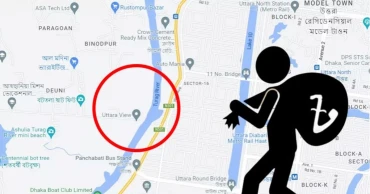
Tk 11 crore robbery: Mastermind among 3 held with Tk 58 lakh
An intelligence team of Dhaka Metropolitan Police (DMP) has arrested three more people including the mastermind, from Dhaka and Netrakona districts in connection with the robbery of Tk 11.25 crore of a bank from a private security agency’s vehicle in Turag area of Uttara in the capital.
They also recovered Tk 58.7 lakh from thir possession.
The arrestees are Mohammad Hridoy, 21, Mohammad Milon Mia, 29 and Akash, the mastermind of the robbery incident.
Tipped off, a team of intelligence team of DMP conducted separate drives in Karail slum of Banani area in the capital and Durgapur upazila of Netrakona district and arrested them, said a press release issued by deputy commissioner of police (media and public relations) of DMP, Faruk Hossain.
With this, 11 people have been arrested and Tk 7.1 crore recovered so far.
Also Read: Tk 2.53 crore more recovered , 8 arrested over Uttara robbery
During interrogation, it was known that, among the robbers, Akash and Sohel Rana made the plot of the robbery incident and a number of people divided into different groups committed the robbery, the release added.
Sohel Rana, now fugitive, was a driver of Money Plant Link Limited, a private security agency, and he knew well about the movement of the vehicle.
The robber gang took the control of the vehicle on that day without any obstruction, it said.
During interrogation, police came to know that the members of the gang were collected from Sunamganj, Sylhet, Netrakona, Gopalganj and Barishal. After the robbery, they took their share and managed to flee the scene, the release said.
Akash and Sohel took a lion share of the money.
Robbers looted cash money worth Tk 11 crore cash from a vehicle of Money Plant Ltd while it was going to refill money at the ATM of Dutch Bangla Bank in Savar, in Turag area of Uttara in the capital.
Earlier, on Saturday, the intelligence teams recovered over Tk 2.53 core more and arrested eight people from Dhaka, its adjacent areas and Sunamganj.
A private car, used in the robbery, has also been seized, it said.
3 years ago