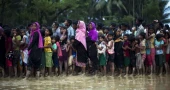
Rohingya
Global support crucial for sustainable Rohingya solution: Salahuddin
Home Minister Salahuddin Ahmed on Sunday said a quick and sustainable political solution to the Rohingya crisis requires strong cooperation from the international community and international organisations.
He urged the UN and the international community to keep the Rohingya crisis on the global agenda and ensure that it is not overshadowed by other global conflicts or crises.
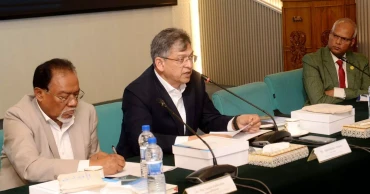
“Through joint efforts and effective diplomacy by the international community, we must ensure the rapid and dignified repatriation of Rohingya refugees to their homeland in Myanmar,” the minister said while addressing a round-table discussion titled “The Rohingya Crisis: Emerging Challenges & Reframing Response Strategies.”
The Institute for Global Cooperation Foundation (IGCF) organised the programme at the auditorium of the Bangladesh Institute of International and Strategic Studies (BIISS).
Salahuddin said a permanent and sustainable solution to the crisis is possible with the direct support of leading countries in global politics and the UN.
He urged international human rights organisations, the UN High Commissioner for Refugees (UNHCR) and all other relevant stakeholders to play a more effective role in resolving the Rohingya crisis.
“Our main goal is one – to ensure that the nearly 1.5 million Forcibly Displaced Myanmar Nationals (FDMNs) currently taking shelter here can be sent back to their own country with full dignity and security,” the minister said.
“For this, continued support from the international community and the political role of leading countries are extremely important,” he said.
Highlighting the long-term impact of the crisis, Salahuddin said Bangladesh has been providing shelter, food, land, healthcare and basic security for livelihood to more than 1.5 million displaced Rohingyas on humanitarian grounds for over nine years.
“But over time, criminal activities, arms and drug smuggling, human trafficking, gender-based violence and activities of armed groups have increased in the camps, creating serious challenges to Bangladesh’s internal security,” he said.
Noting that the lives and environment of local communities living near the camps have also come under serious threat, the minister said necessary security measures such as fencing around the camps and a well-regulated movement system have become essential to control crime and ensure the overall security of both the Rohingya population and local citizens.
“The present government, under the capable and far-sighted leadership of Prime Minister Tarique Rahman, is determined to implement a 100 percent successful repatriation,” he said.
A “National Strategy Formulation Committee on Rohingya Affairs” has already been formed under the dynamic leadership of Prime Minister Tarique Rahman, Salahuddin said, adding that another high-level national committee, headed by himself, is active in maintaining law and order, border management and overall coordination.
“The government is working with a comprehensive whole-of-government approach involving the civil administration, security and defence agencies,” he said.
The minister warned that humanitarian assistance provided indefinitely without a specific and credible repatriation plan could reduce the pressure for a political solution in the long run.
“Therefore, going beyond emergency relief assistance, we need to move quickly towards a ‘transitional strategy’, whose main objective will be to create a safe and suitable environment in Myanmar’s Rakhine State for the Rohingyas to return,” he said.
Salahuddin expressed hope that through a combination of sustainable international engagement, national unity and a strong security framework, Bangladesh will soon be able to ensure the dignified and permanent repatriation of Rohingyas to their homeland.
Prime Minister’s Adviser on Public Administration Md Ismail Zabihullah delivered a speech as the guest of honour, while State Minister for Foreign Affairs Shama Obaed Islam attended the programme as a special guest.
16 days ago
Rohingya Crisis: International community seeks strategic, coordinated, long-term approach
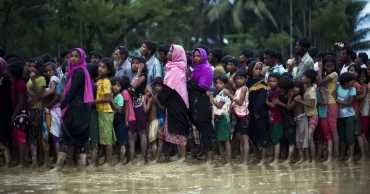
As the Rohingya crisis enters its 10th year, the international community on Tuesday said they must ensure that the Rohingya people are not forgotten.
Creating the conditions for return will require a strategic, coordinated and long-term approach to address the root causes of displacement, build trust between communities, and support greater peace and stability in Myanmar, said the diplomatic missions in a joint statement.
"We will continue to amplify the voices of Rohingya communities, pursue justice and accountability, and work with Bangladesh and international partners to sustain global support," they said.
The diplomatic missions in Dhaka representing Canada, Denmark, the European Union, Finland, France, Germany, Ireland, Italy, Japan, Kosovo, the Netherlands, Norway, Spain, Sweden, Switzerland, and the United Kingdom issued the joint statement to mark the anniversary.
Nine years after the mass displacement of Rohingya from Myanmar, nearly 1.3 million Rohingya refugees remain in Bangladesh.
28 days ago
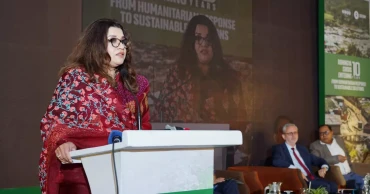
Bangladesh’s humanitarian generosity must not become an excuse for international inaction: Shama Obaed
Urging the international community to shoulder the Rohingya responsibility together, State Minister for Foreign Affairs Shama Obaed Islam on Sunday said Bangladesh’s humanitarian generosity must not become an excuse for international inaction.
“Bangladesh can provide shelter. Bangladesh can provide humanitarian assistance. Bangladesh can help preserve dignity, but Bangladesh cannot resolve the crisis that Bangladesh did not create,” she said.
The State Minister made the remarks while addressing a dialogue titled “Rohingya Crisis Entering 10 Years: From Humanitarian Response to Sustainable Solutions”, as the chief guest jointly organised by the Diplomatic Correspondents Association, Bangladesh (DCAB) and Oxfam in Bangladesh.
She said resolving the protracted Rohingya crisis is a political and moral responsibility that the international community must collectively shoulder, stressing that Bangladesh cannot be left alone to bear the burden.
30 days ago
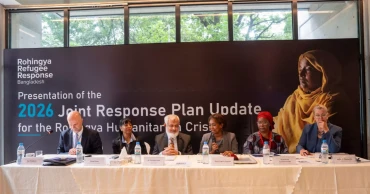
UN, partners appeal for USD 710.5 mln to meet needs of Rohingyas, host communities
The United Nations and its partners, in close coordination with the government of Bangladesh, on Wednesday called for renewed international support, appealing for USD 710.5 million to meet the most critical needs of Rohingyas in the Cox’s Bazar camps and on Bhasan Char, as well as local host communities.
The call came amid growing global instability and rising humanitarian pressures, which have forced difficult prioritization and threatened essential services for vulnerable populations.
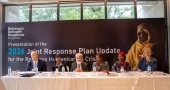
The 2026 JRP update was presented at the UN House in Dhaka by Kelly T. Clements of UNHCR, Rania Dagash-Kamara of WFP, Nyaradzayi Gumbonzvanda of UN Women, M. Forhadul Islam, acting Foreign Secretary of Bangladesh and Secretary for Intergovernmental Organizations at the Ministry of Foreign Affairs; and Carol Flore-Smereczniak and United Nations Resident Coordinator.
The appeal is supported by 98 humanitarian partners, including 52 Bangladeshi organisations.
The humanitarian community reiterated that the most desirable and durable solution to the Rohingya crisis is the voluntary, safe, dignified, and sustainable return of refugees to Myanmar.
Until conditions in Myanmar are conducive, continued international solidarity and support remain essential, not only as a humanitarian imperative, but also to uphold human rights, preserve regional stability, and ensure that refugees and their host communities are not abandoned, according to the UN Refugee Agency.
Sustained international assistance remains crucial to bolstering Bangladesh’s response as it continues to generously host refugees until a durable solution is achieved, said UNHCR.
Nearly a decade after fleeing targeted violence and persecution in Myanmar, some 1.2 million Rohingya refugees now reside in Bangladesh. Needs continue to rise as conflict in Myanmar forces more people to flee.
Since early 2024, some 150,000 Rohingya have newly arrived, straining limited humanitarian resources and intensifying pressure on overcrowded camps.
Officials told UNB that Bangladesh is now hosting over 1.3 million Rohingyas in Cox’s Bazar and Bhasan Char.
The scaled-down, hyper-prioritised 2026 update of the Joint Response Plan (JRP) for the Rohingya humanitarian crisis will reach up to 1.56 million people, including refugees and Bangladeshi host communities.
The USD 710.5 million appeal, 26% lower than in 2025, covers only the minimum required to sustain lifesaving assistance.
It includes USD 247.3 million for food, USD 128 million for shelter, USD 61.2 million for water, sanitation and hygiene, USD 52.7 million for education, USD 49.9 million for health, and USD 35.1 million for livelihoods and skills development.
It also includes USD 36.2 million, across all sectors, in support for host communities affected by the crisis.
From 2017 to the end of 2025, the international community has contributed nearly USD 5.42 billion in humanitarian funding to the Rohingya response, with the United States remaining the largest donor, allowing Bangladesh to sustain lifesaving assistance and making possible major progress in refugee education, health and protection.
Risk of Losing Precious Gains
However, the UN agency said, significant humanitarian needs persist and, without continued international solidarity, Rohingya families risk losing precious gains.
Deputy High Commissioner of UNHCR, the UN Refugee Agency, Kelly T. Clements said they must continue to provide safety, care, and dignity where the Rohingyas are until they can return home in safety and can rebuild their communities in Myanmar.
“As resources become more limited, it is more important than ever to help refugees build skills and resilience, so they can gain independence, hold on to hope, and rebuild their lives,” she said in Dhaka on Wednesday.
Kelly said the humanitarian community is working hard to deliver this support as efficiently as possible as they continue to see resources decline.
“But the needs remain enormous, and efficiencies alone cannot offset the very real impacts of funding cuts on the Rohingya people and the impact on their host communities. Helping the refugee community become more self-reliant remains a crucial goal,” she said.
Assistant Executive Director for Partnerships and Innovation at the UN World Food Programme Rania Dagash-Kamara said Bangladesh has shown extraordinary generosity in hosting this highly vulnerable population, and they are deeply grateful to their donors who have continued to stay the course. “Their sustained support remains a lifeline for refugees.”
Rania said WFP continues to adapt its operations to ensure assistance is delivered equitably, efficiently and effectively, based on real and evolving needs in the camps.
“But humanitarian assistance is not the end goal. Rohingya refugees want to return home to Myanmar when they can do so safely, voluntarily, and with dignity. We must continue to help create these conditions; we cannot let this crisis be forgotten,” Rania added.
Deputy Executive Director for Normative Support, UN System Coordination and Programme Results Nyaradzayi Gumbonzvanda said the needs of Rohingya refugees, especially women and girls, remain immense, and the impact of funding cuts is already being felt across every aspect of daily life in the camps.
“Within the broader challenges of displacement, women and girls face even more risks and barriers that require sustained attention. A gender-responsive, women-centred, comprehensive, and well-resourced response that addresses the overall needs of the refugee population, while recognizing the urgent need for safety, dignity, inclusion, and protection from gender-based violence, is essential to building resilience across the entire community.”
Amid sharp reductions in humanitarian funding and declining development support, Rohingya refugees remain largely reliant on aid.
In 2025, some 35% of camp households relied fully on humanitarian food assistance, 42% had access to temporary and unstable income sources, and only 23% earned income through cash-for-work-based humanitarian activities.
Limited economic opportunities and reduced assistance continue to heavily impact Rohingya households, a situation exacerbated for new arrivals and vulnerable groups, including women and girls, persons with disabilities, and older people.
Hopes Fading
As conflict inside Rakhine State continues, hopes for an imminent return to Myanmar are fading, said the UN agency.
As conditions worsen, more refugees resort to desperate choices, including dangerous and often deadly sea journeys in search of opportunities elsewhere in the region.
2025 was the deadliest year on record for such voyages, just last month, a vessel carrying more than 270 people, many of them refugees, capsized, leaving only nine survivors.
Against this backdrop of increasing and overlapping pressures, the appeal focuses assistance on the most critical humanitarian needs.
Support must be strategically prioritized across a growing refugee population, and investment in refugee resilience and self-reliance is crucial to preserving dignity and hope and reducing long-term dependence on aid.
The latest appeal followed a four-day joint high-level donor mission, led by Kelly T. Clements and Rania Dagash-Kamara, which brought together a group of key international donor representatives.
The mission included a two-day visit to Rohingya camps and host communities in Cox’s Bazar, with participation from key partners: Australia, Canada, the European Union, France, the Netherlands, Sweden, and the United Kingdom.
The delegation also engaged with the government, UN and NGO partners, as well as the broader donor community, in Cox’s Bazar and Dhaka.
4 months ago
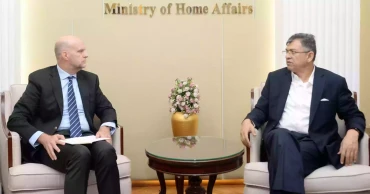
Global aid for Rohingyas must increase amid funding decline: Minister Salahuddin
Expressing concern over a significant decline in global assistance for the Rohingyas Home Minister Salahuddin Ahmed on Tuesday said it is now imperative to enhance international support to improve their living standards and meet their humanitarian needs.
Despite being one of the world’s most densely populated countries Bangladesh has sheltered a large number of Rohingya refugees purely on humanitarian grounds, said the minister.
He came up with the remarks when Ivo Freijsen, Representative of the United Nations High Commissioner for Refugees (UNHCR) in Bangladesh, met the Home Minister at the Ministry of Home Affairs at Secretariat.
He also noted that the United States has recently reduced its funding allocation by 50 percent.
During the meeting, they discussed the overall situation of the Rohingya population sheltered in Bangladesh, including international funding and repatriation issues.
Highlighting the current condition in the camps, the UNHCR representative said refugees are facing severe challenges due to high population density in a very limited space.
In response, the minister said expansion of camp areas is difficult given Bangladesh’s socio-economic and geographical realities.
He stressed that safe, dignified and voluntary repatriation of the Rohingyas remains the most viable solution to the crisis.
Referring to the prevailing geopolitical situation, the minister said the Rohingya crisis should not be overshadowed by global issues such as the Gaza conflict, the Ukraine war and tensions between Israel and Iran.
He urged the United Nations and UNHCR to play a more proactive role in keeping the Rohingya issue high on the agenda at international platforms.
The UNHCR representative invited the minister to attend the Joint Response Plan (JRP) presentation on Rohingya refugees scheduled to be held on May 20.
4 months ago

Nearly 900 Rohingya lost at sea in 2025, a new high: UNHCR
Nearly 900 Rohingya refugees died or went missing in the Andaman Sea and the Bay of Bengal in 2025, making it the deadliest year on record for sea crossings in South and Southeast Asia, according to the UN Refugee Agency (UNHCR).
The agency said more than 6,500 Rohingya attempted the dangerous sea journey during the year, with around one in seven reported dead or missing. This marks the highest death toll recorded on any major maritime route used by refugees and migrants worldwide, it said.
UNHCR mentioned that more than half of those attempting the journey in recent years have been women and children, a trend that has continued into 2026. Between January and April 13 this year, more than 2,800 Rohingya have already attempted the crossing.
The dangers were highlighted by a recent tragedy in which an overloaded boat departing from Bangladesh sank in rough seas in the Andaman Sea on 26 March.
Around 250 people are believed to be missing. Nine survivors were later rescued near the Andaman Islands on 9 April. UNHCR said it is providing medical, psychological and counselling support to survivors and is ready to assist local authorities.
Despite the risks of trafficking, exploitation and death at sea, return to Myanmar voluntarily, safely and with dignity. However, ongoing conflict, persecution and lack of citizenship prospects continue to prevent their return. Many Rohingya continue to attempt the journey. The overcrowded and unsafe boats usually depart from Cox’s Bazar in Bangladesh or Rakhine State in Myanmar, heading towards Indonesia or Malaysia.
UNHCR said many Rohingya refugees want to return to Myanmar voluntarily, safely and with dignity. However, ongoing conflict, persecution and lack of citizenship prospects continue to prevent their return.
At the same time, a severe funding shortage has reduced humanitarian assistance in Bangladesh, while instability in refugee camps and limited access to education and livelihoods are pushing some to take dangerous routes.
The agency has called on countries in the region to save lives by tackling human trafficking networks, addressing the root causes of displacement, expanding safe and legal migration pathways, and strengthening regional cooperation.
More than 1.3 million Rohingya refugees and asylum seekers are currently displaced across the region, including about 1.2 million in Bangladesh.
The 2025 Joint Response Plan has so far received only 53 percent of the required funding, highlighting an urgent need for greater international support.
5 months ago
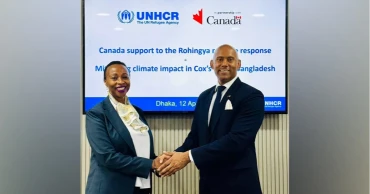
Canada supports Rohingya response for environmental protection, clean cooking fuel
Canadian High Commissioner to Bangladesh Ajit Singh on Sunday said Canada remains a ‘longstanding and steadfast partner’ in the Rohingya crisis response and accounted CAD 10 million contributions to provide clean, safe and sustainable cooking fuel for the Rohingyas in Cox’s Bazar.
“This climate-responsive humanitarian contribution will reduce deforestation and carbon emissions in an environmentally fragile district that will benefit refugees, Bangladeshis, and the wider population,” said the High Commissioner.
He said it will also lower the risks to vulnerable people, especially women, girls, and children, including those that stem from gathering firewood.
“Canada is pleased to provide this $10 million contribution to UNHCR and IOM to strengthen environmental protection that benefits us all, as well as advance the wellbeing of vulnerable Rohingya refugees,” said the High Commissioner.
The funding to UNHCR, the UN Refugee Agency, and IOM, the International Organization for Migration, will ensure the continued provision of liquefied petroleum gas (LPG) to the Rohingya, essential for them to cook, while helping to preserve the fragile environment surrounding the camps and improve safety, health and dignity for refugees, particularly women and children, said the UN agency.
Cox’s Bazar, one of the most climate-vulnerable regions of Bangladesh, faces recurrent flooding, landslides, cyclones, fires and environmental degradation.
Since the start of LPG distribution to Rohingya refugees, the programme has reduced firewood use by 80% among refugee households, preventing an estimated 407,000t of CO₂ emissions every year.
“Nine years on, Rohingya refugees are navigating one of the world’s most difficult displacement situations – protracted crisis compounded by climate vulnerability,” said UNHCR Deputy Representative in Bangladesh Juliette Murekeyisoni.
“Canada’s support comes at a crucial time, and I am deeply grateful for it. Sustained international solidarity remains critical to ensuring that refugees can live in dignity while we work toward conditions for their voluntary, safe, and dignified return.”
Chief of Mission for IOM in Bangladesh Giuseppe Loprete said safe, reliable energy is fundamental to the well-being of families who have experienced immense hardship for the past nine years.
“We thank Canada for their generous support, which ensures that refugees can avoid dangerous firewood collection and live in healthier environments, while also protecting local forests and biodiversity.”
The provision of LPG has been central to the response since 2018. Studies have shown it has dramatically improved indoor air quality in the densely populated camps and lowered household spending on cooking fuel.
The UN refugee agency said Canada’s contribution will support LPG access for some 243,500 refugee households and help conserve up to 10,700 hectares of protected forest in Cox’s Bazar.
It also strengthens community resilience by stabilizing slopes, reducing landslide risks, and lowering human wildlife conflict around ecologically sensitive areas.
5 months ago

Govt approves proposal to provide education in Rohingya camps through UNICEF
The government has approved a proposal to procure education services through UNICEF to improve pre-primary and primary education for forcibly displaced Myanmar nationals (Rohingyas) living in Cox’s Bazar and Bandarban districts, as well as Bhasan Char in Noakhali.
The approved proposal involves an expenditure of Tk 203.87 crore, which will be implemented with funding from the government (GoB) and a World Bank grant.
The approval was given at a meeting of the Advisers Council Committee on Government Purchase held at the Secretariat on Tuesday.
Env Adviser Rizwana, Unicef stress youth role in climate action
The Ministry of Primary and Mass Education placed the proposal before the committee.
The service procurement will be carried out under the SD-4 package of the project titled “ISO Component-One: Pre-Primary and Primary Education Improvement Project in Cox’s Bazar and Bandarban Districts and Bhasan Char of Noakhali.”
According to meeting sources, the initiative under Component-1 of the project aims to engage forcibly displaced Myanmar nationals in productive activities and help them acquire skills in their mother tongue through structured education services.
To this end, UNICEF was invited under a single-source procurement method to submit a proposal for implementing the education programme.
Following the submission, the proposal was jointly reviewed, evaluated and negotiated by the Directorate of Primary Education (DPE) and the World Bank’s education team.
After completion of the negotiation process, a proposal was placed seeking approval to award the package to UNICEF at a cost of USD 18.45 million, equivalent to Tk 203.87 crore, based on the Development Project Proforma (DPP) exchange rate of Tk 110.502 per US dollar. The committee subsequently approved the proposal.
The project was earlier approved by the Executive Committee of the National Economic Council (ECNEC) on May 28, 2024. Its implementation period has been fixed from July 1, 2024 to June 30, 2027.
Under the agreement, the World Bank will directly disburse the entire USD 18.45 million (Tk 203.87 crore) to UNICEF in US dollars.
UNICEF welcomes Bangladesh’s decision to establish separate children’s courts
Sources noted that while the approved DPP initially stipulated implementation through open tendering, the decision to engage UNICEF was taken in line with the conditions of the World Bank’s grant and loan agreements.
Under the package, a total of 256,490 Rohingya students will receive education support in the Myanmar language. To deliver the programme, 4,106 volunteer teachers will be recruited during the first 12 months, followed by an additional 3,700 volunteers over the subsequent six months.
The recruited teachers will receive honorariums at rates determined under the project framework.
7 months ago
Fire risks still high in Rohingya camps: IOM
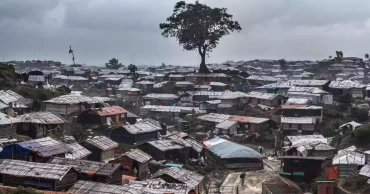
The International Organization for Migration (IOM) has said it continues to work closely with sector partners to scale up assistance and address urgent and evolving needs, stressing that fire risks remain high in the Rohingya camps.
While immediate assistance continues, the latest incident underscores the persistent fire risks facing refugee communities in Cox’s Bazar, which hosts more than one million Rohingya refugees, it said.
The fire risks remain high, particularly during the dry season, due to the dense layout of the camps and the use of highly flammable materials in temporary shelters, IOM said.
It launched an emergency response following a large fire in a Rohingya refugee camp in Cox’s Bazar early Tuesday morning.
Read more: Canada reaffirms commitment to dignity and justice for Rohingya
Relief efforts are being carried out in close coordination with the Government of Bangladesh and humanitarian partners to ensure timely and appropriate assistance to affected families. “When fires strike in overcrowded camp settings, the impact extends far beyond damaged infrastructure,” said Lance Bonneau, IOM Chief of Mission in Bangladesh.
“Families lose shelter, essential belongings, and access to basic services, increasing immediate protection risks. Our response is guided by a clear responsibility to protect lives, uphold dignity and ensure that those affected receive assistance quickly and safely, so families can begin to regain a sense of normalcy.”
The fire affected more than 2,000 refugees, causing extensive damage to shelters and camp-based facilities. No fatalities or major injuries have been reported.
More than 400 shelters were damaged and camp infrastructure was severely impacted, including over 160 water, sanitation and hygiene (WASH) facilities such as water points and latrines, as well as 11 learning centres and two mosques.
Beyond the destruction of shelters, the fire also destabilized the hillside terrain on which much of the camp is constructed, damaging drainage networks and public infrastructure, and increasing risks related to access and erosion.
After the fire was contained, IOM deployed health teams and ambulances to support those with minor injuries and worked with partners to rapidly assess damage and immediate needs.
Building on these assessments, IOM and its partners rapidly deployed specialized teams in shelter, WASH, and protection to support affected families. Within 24 hours of the incident, IOM’s camp management team, together with refugee volunteers, cleared debris from the fire-affected areas to restore safe access for emergency assistance and essential services.
Over 49.5 lakh Bangladeshis internally displaced by natural disasters: IOM
In coordination with the World Food Programme (WFP), emergency food assistance was provided, while affected households received emergency shelter assistance, blankets, floor mats, mosquito nets, and portable solar lights.
Following previous devastating fires, including the March 2021 incident that displaced 45,000 people, IOM and humanitarian partners have continued to strengthen refugee-led emergency preparedness and response mechanisms to enable faster, safer, and more effective action when hazards occur.
8 months ago
Canada reaffirms commitment to dignity and justice for Rohingya
Canada has said it remains steadfast in its support for efforts to advance accountability, dignity and justice for the Rohingya.
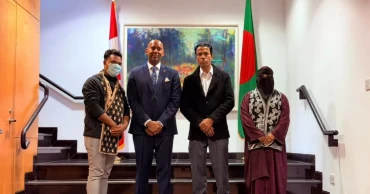
Canadian High Commissioner to Bangladesh Ajit Singh met three Rohingya survivors who will be travelling to The Hague to testify in the upcoming International Court of Justice (ICJ) hearings in the landmark genocide case brought by The Gambia against Myanmar for atrocities committed against the Rohingya.
The discussion focused on the long-standing persecution and violence faced by the Rohingya in Myanmar, their ongoing struggle for rights and justice, and the importance of international accountability, said the High Commission on Monday.
UN court begins hearings on ‘genocide’ of Rohingya by Myanmar
The Rohingya representatives expressed their appreciation for Canada’s support, including support to ensure Rohingya victims voices are heard in the landmark ICJ case.
The High Commissioner acknowledged their courage in testifying and reaffirmed Canada’s commitment to human rights, accountability and international justice.
Bangladesh is currently hosting over 1.3 million Rohingya in Cox’s Bazar camps and Bhasan Char.
8 months ago