United States
US warns shipping firms of sanctions over Iran toll payments in Hormuz
The United States has warned global shipping companies they could face sanctions if they pay Iran for safe passage through the Strait of Hormuz.
The warning, issued Friday by the U.S. Office of Foreign Assets Control, adds fresh pressure to the ongoing standoff between Washington and Tehran over control of the vital waterway.
Nearly one-fifth of the world’s oil and natural gas trade normally passes through the Strait of Hormuz during peacetime, making it one of the most important shipping routes globally.
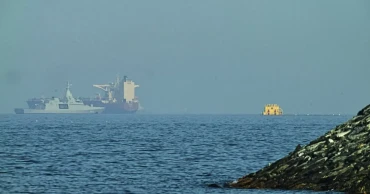
Tensions escalated after Iran effectively disrupted regular traffic in the strait by attacking and threatening vessels following the start of the U.S.-Israel war on February 28. Iran later began allowing some ships to pass through alternative routes closer to its coast, sometimes charging fees for safe transit.
US authorities say these payments, described as a “toll” system, could expose companies to sanctions. According to OFAC, such payments may take different forms, including cash, digital assets, informal exchanges or even in-kind contributions like charitable donations or payments made through Iranian embassies.
“Both U.S. and non-U.S. entities risk sanctions if they make such payments or seek guarantees from Iran for safe passage, regardless of how the payment is made,” the agency said.
In response to Iran’s actions, the United States imposed its own naval blockade on April 13, preventing Iranian oil tankers from leaving the region and cutting off a key source of revenue for Tehran. US Central Command said at least 45 commercial vessels have been forced to turn back since the blockade began.
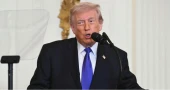
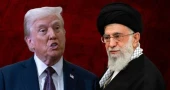
Meanwhile, US President Donald Trump has rejected Iran’s latest proposal aimed at ending the conflict.
“They want to make a deal, but I’m not satisfied,” Trump told reporters at the White House on Friday, criticizing what he called a lack of unity in Iran’s leadership.
Iran’s state-run IRNA news agency said Tehran submitted its proposal to mediators in Pakistan on Thursday night.
A fragile three-week ceasefire between the two sides appears to be holding, although both have accused each other of violations. The ongoing tensions have added strain to the global economy, pushing up prices and causing shortages of fuel and other oil-related products.
Diplomatic contacts are continuing by phone after Trump cancelled a planned visit by US envoys to Pakistan. He has also suggested a new plan to reopen the crucial waterway used by Gulf countries to export oil and gas.
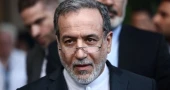
Iranian Foreign Minister Abbas Araghchi has been in contact with regional leaders to discuss ways to end the war and held talks Friday with European Union foreign policy chief Kaja Kallas.
Separately, Iran said Saturday it executed two men convicted of spying for Israel. The judiciary’s Mizanonline news outlet identified them as Yaghoub Karimpour and Nasser Bekrzadeh, saying the Supreme Court had upheld their death sentences.
Authorities accused Karimpour of passing sensitive information to Israel’s Mossad intelligence agency, while Bekrzadeh allegedly shared details about Iranian officials and the Natanz nuclear facility, which was targeted in strikes last year.
Iran has executed more than a dozen people in recent weeks over alleged espionage and terrorism charges.
At the United Nations, China’s ambassador Fu Cong urged both sides to maintain the ceasefire and resume talks, calling it the most urgent priority.
He said China supports mediation efforts by Pakistan and blamed the crisis on what he described as an “illegitimate war” by the United States and Israel, warning of its impact on Iran, the wider region and the global economy.
4 months ago
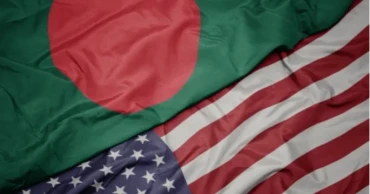
Bangladesh urges US to ensure safety, security of its citizens
Bangladesh has urged the United States to ensure the safety and security of Bangladeshi citizens and students staying there, following the killing of two Bangladeshi students.
“The Embassy is in regular contact with the US Department of State and has requested that the safety of Bangladeshi students and Bangladeshis living in the United States be ensured,” the Bangladesh Embassy in Washington said on Sunday.
The Embassy is also maintaining communication with mainstream media outlets in the United States.
The Ministry of Foreign Affairs (MoFA) is also in close contact with relevant US agencies regarding the matter.
The government has expressed deep condolences over the incident and reaffirmed its commitment to ensuring justice through close cooperation with all concerned authorities.
Immediately after receiving reports that two Bangladeshi students - Zamil Ahmed Limon and Nahida Sultana Bristy, both enrolled at the University of South Florida - had gone missing, the Bangladesh Embassy in Washington, DC, and the Bangladesh Consulate General in Miami established continuous contact with US authorities, university officials, and investigative agencies.
Due to current constraints in transporting the body from Tampa, Florida via Dubai, alternative arrangements are being actively explored, the MoFA said.
At the same time, the Embassy is maintaining regular contact with US authorities to gather further information regarding Nahida Sultana Bristy.
The Ministry of Foreign Affairs in Dhaka, along with the Bangladesh Embassy in Washington, DC, and the Consulate General in Miami, remains in constant communication with the bereaved families.
Dhaka Seeks Justice
Earlier, State Minister for Foreign Affairs Shama Obaed Islam said Bangladesh wants the United States to investigate the brutal killings of two Bangladeshi students - Zamil Limon and Nahida Bristy - and ensure that those responsible are brought to justice.
“We demand a prompt and thorough investigation into the matter so that those involved are identified and brought to justice,” she told reporters at the Ministry on Sunday, describing the double murder as deeply unfortunate.
Bangladesh seeks justice over brutal killings of 2 students in US
The State Minister said she personally spoke on Saturday with Nahida’s brother and Limon’s father.
“We are in contact with all the relevant agencies including the Bangladesh Mission in Washington, the US Department of State, and the FBI. We have spoken to both families and will provide all possible cooperation from our side,” she said.
Shama Obaed said once the autopsy and necessary legal procedures are completed, Limon’s remains will be repatriated to Bangladesh as soon as possible.
The State Minister also said that the Ministry of Expatriates’ Welfare and Overseas Employment is assisting in the matter.
“We are maintaining close communication with all stakeholders in the United States,” she added
The Hillsborough County Sheriff's Office conveyed its sincere condolences over the tragic incident involving the two Bangladeshi students of the University of South Florida in Tampa, Florida, he said.
They also informed that they will coordinate the next steps in this regard directly with the next of kin and advised the Bangladesh Mission to speak with the families about any needs they may have.
At this time, they are not able to disclose any information regarding the evidence collected as this remains an active criminal investigation.
“We will continue to closely monitor the latest developments and share updates as appropriate,” said Moez Limayem.
A suspect is in custody in connection with the case.
He is facing multiple charges, and additional charges may be added as the investigation continues.
Investigators say this is an isolated incident that occurred off campus; the suspect acted alone, and there is no ongoing threat to the safety of the university community.
Zamil had attended USF since fall 2024 to study Geography and Environmental Science and Policy, and Nahida had attended USF since fall 2025 to study Chemical Engineering.
Hisham Abugharbieh, 26, is facing two counts of first-degree premeditated murder with a weapon in the deaths of Zamil Limon and Nahida Bristy, students at USF, according to the Hillsborough County Sheriff’s Office.
He made an initial court appearance on Saturday in Tampa, where he was ordered to be held without bond. A hearing is set for April 28, reports AP.
Abugharbieh, a native-born U.S. citizen, was initially taken into custody on Friday at his family’s home on preliminary charges that include unlawfully moving a dead body, failure to report a death, tampering with evidence, false imprisonment, and battery.
Online court records do not list an attorney for him. Messages were sent via email and phone to the public defender’s office in Hillsborough County.
4 months ago
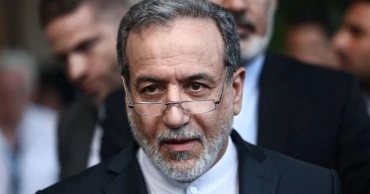
Iran's Araghchi heads to Islamabad in step towards US talks resumption
Iranian Foreign Minister Abbas Araghchi is expected to arrive in Islamabad on Friday night with a small delegation in a move seen as a step towards the possible resumption of direct US-Iran talks aimed at easing escalating tensions.
Senior officials in Islamabad confirmed the development to international media following a series of phone calls between Araghchi and Pakistani leaders on Friday, reports Al Jazeera.
However, Iran’s state news agency IRNA said the visit is primarily bilateral and focused on talks with Pakistani officials, not direct negotiations with the United States. After his Islamabad visit, Araghchi is expected to travel to Moscow and Muscat.
A Pakistani official said there was a “high likelihood of a breakthrough” in efforts to restart stalled US-Iran dialogue, despite rising tensions in the Strait of Hormuz and recent naval confrontations.
The development comes after earlier expectations that a US delegation led by Vice President JD Vance would travel to Islamabad for talks. However, Iran reportedly refused to return to negotiations, citing a naval blockade imposed by US President Donald Trump on April 13.
Since then, both sides have exchanged maritime actions in the Strait of Hormuz, further complicating diplomatic efforts, while talks have remained uncertain.
Araghchi held separate phone conversations on Friday with Pakistan’s Deputy Prime Minister and Foreign Minister Ishaq Dar, as well as Pakistan’s military leadership, according to media reports.
Pakistan has been playing a mediating role in facilitating dialogue between Washington and Tehran, with officials saying the US remains prepared for renewed talks despite delays.
The proposed discussions involve key issues including Iran’s nuclear programme, US sanctions, and the strategic Strait of Hormuz.
Meanwhile, heightened security measures and repeated road closures in Islamabad have disrupted daily life, as the capital hosts diplomatic activity linked to the stalled negotiations.
Residents have reported repeated interruptions to court services, education, transport and business activities due to security restrictions linked to the high-level diplomatic engagements.
Pakistan’s role as a mediator comes amid its own economic challenges, including IMF-backed reforms, rising fuel prices and power shortages.
Despite uncertainty, officials and observers say diplomatic efforts continue behind the scenes, though a firm date for renewed US-Iran talks has not yet been confirmed.
4 months ago

AI use rises at workplaces, but many employees remain hesitant
The use of artificial intelligence (AI) at workplaces in the United States is growing, but many employees are still reluctant to rely on the technology, according to a new Gallup poll.
The survey shows that while more workers are now using AI tools regularly, concerns are also increasing about the risk of job losses. Many employees who avoid AI say they prefer traditional methods, have ethical concerns or are worried about data privacy.
The poll, conducted in February, highlights a mixed picture of how AI is changing workplaces. Some workers see it as a powerful tool that improves productivity and efficiency, while others fear its negative impact.
Scott Segal, a social worker in northern Virginia, said he uses AI to gather information to help elderly and vulnerable patients access healthcare services. However, he also fears that AI could eventually replace his role.
“I think people in jobs that can be replaced should start planning ahead,” said the 53-year-old.
The poll found that about 30% of employees use AI frequently, either daily or several times a week, while around 20% use it occasionally.
Around 40% of workers said their organisations have introduced AI tools to improve operations. Among them, nearly two-thirds reported that AI has had a positive impact on their productivity and efficiency.
Managers appear to benefit more from AI than other employees. About 70% of leaders who use AI at least a few times a year said it has improved their efficiency, compared to just over half of other workers.
Among employees who have access to AI but choose not to use it, 46% said they prefer to continue working in their usual way. Around 40% cited ethical concerns, data privacy issues, or doubts about AI’s usefulness. About a quarter said they had tried AI but found it unhelpful, while roughly 20% felt they lacked the skills to use it properly.
Thuy Pisone, a contract administrator in Maryland, said she uses AI for simple tasks but avoids it for work she can already handle confidently, such as preparing presentations.
The survey also found growing concern about job security. About 18% of US workers believe their jobs could be replaced by technology, automation or AI within the next five years, up from 15% in 2025.
Workers at companies already using AI are even more worried, with 23% saying job loss is at least somewhat likely in the near future.
Despite these concerns, most workers are not overly anxious. Around 70% said they are not very concerned or not concerned at all about losing their jobs to AI.
Segal said he is considering starting a healthcare support service if AI replaces his current role, as he believes some human-centred services will take longer to be automated.
For now, he said, he is even using AI tools to plan his financial future, including retirement savings.
5 months ago

Thousands join ‘No Kings’ rallies against Iran war, Trump across US, Europe
Large crowds rallied across the United States and parts of Europe on Saturday under the banner of “No Kings,” protesting the war in Iran and President Donald Trump’s policies, particularly on immigration.
Minnesota emerged as the focal point of the demonstrations, where thousands gathered at the State Capitol in St. Paul. The flagship rally featured musician Bruce Springsteen, who performed and addressed the crowd, praising public resistance to increased immigration enforcement.
Springsteen performed a song inspired by the fatal shootings of two individuals by federal agents and said the response from Minnesotans had given hope to others across the country.
Protests were reported in all 50 states, from major cities like New York to smaller towns in Idaho. Organisers said more than 3,100 events were registered nationwide, with millions expected to participate.
Most demonstrations remained peaceful, although clashes were reported in Los Angeles, where police used tear gas after protesters allegedly threw objects near a federal detention centre. Some arrests were also made.
Participants voiced a wide range of concerns, including the Iran conflict, immigration crackdowns, and civil rights issues. In Washington, demonstrators marched near the Lincoln Memorial chanting slogans and holding placards critical of the administration.
Republican officials dismissed the protests, with a White House spokesperson claiming they lacked broad public support.
Rallies were also held internationally, including in London, Rome and Paris, where hundreds gathered at the Bastille. Organisers said similar events took place in more than a dozen countries.
Speakers at the Minnesota rally included public figures, activists and politicians, all urging continued resistance and civic engagement. Organisers said the movement is drawing increasing participation beyond major urban centres, reflecting wider national momentum.
5 months ago
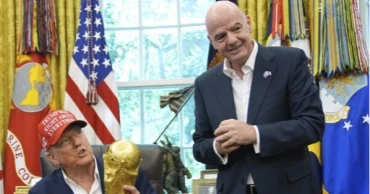
Infantino says Trump assured Iran can travel to US for World Cup
FIFA expects that Iran’s national football team will be able to travel to the United States and take part in the upcoming World Cup, despite the ongoing conflict between the two countries.
FIFA President ‘Gianni Infantino’ said on Tuesday that he spoke with US President Donald Trump about preparations for the tournament and received assurances that the Iranian team would be allowed to enter the United States to compete.
The ‘2026 FIFA World Cup’, which will be jointly hosted by the United States, Canada and Mexico from June 11 to July 19, is set to begin in about three months.
Iran is scheduled to play its group matches in the US, starting against New Zealand in Inglewood, California on June 15. The team will then face Belgium on June 21 before concluding its group stage campaign against Egypt in Seattle on June 26.
Iranian officials had recently indicated that their participation in the tournament might be uncertain due to the ongoing war.
Infantino said he discussed the situation with Trump during a meeting Tuesday night. “We also talked about the current situation in Iran and the fact that the Iranian team has qualified for the FIFA World Cup 2026,” he said, adding that Trump confirmed the team would be welcome to take part in the tournament in the United States.
Infantino and Trump maintain a close relationship. Trump was previously awarded FIFA’s inaugural peace prize, an honour many observers believe was created with him in mind.
However, Iranian fans had already faced restrictions earlier, as they were included in the initial version of a travel ban introduced by the Trump administration.
Infantino said global events like the World Cup are important for bringing people together, particularly during times of conflict, and thanked Trump for his support.
Earlier this week, FIFA World Cup chief operating officer ‘Heimo Schirgi’ said the tournament is too significant to be postponed because of the global tensions linked to the ongoing US and Israeli war against Iran.
Schirgi said FIFA is closely monitoring developments in the conflict but remains confident that the tournament will proceed as planned.
“We are taking it day by day and hope there will be a resolution,” he said. “The World Cup is too big, and we hope all teams that have qualified will be able to participate.”
6 months ago
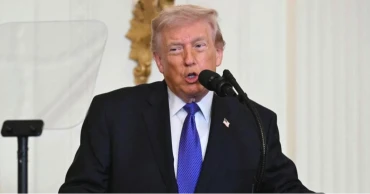
US warns of possible Iranian strike on Saudi oil hub as Trump says it’s ‘too late’ for talks
The United States has cautioned about a potential Iranian attack targeting a major oil-producing city in Saudi Arabia, escalating tensions as President Donald Trump declared that negotiations with Tehran were no longer an option.
Iran’s ambassador to the United Nations in Geneva, Ali Bahreini, expressed skepticism over the value of engaging in dialogue with Washington.
“For the time being we are very doubtful about the usefulness of negotiation,” Bahreini told reporters in Geneva on Tuesday, according to Reuters.
Tehran makes new threat to Gulf shipping as US says ‘hardest hits’ on Iran yet to come
His remarks came shortly after Trump said on his Truth Social platform that it was “too late” to hold talks with Iran, signaling a hardening stance amid rising hostilities.
Source: BBC
6 months ago
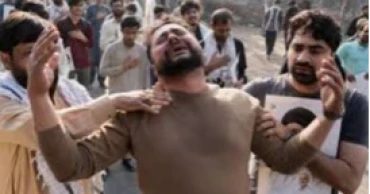
Nine killed as Shiite protesters storm US Consulate in Karachi
At least nine people were killed and around two dozen injured Sunday during violent clashes with police and paramilitary forces after hundreds of Shiite protesters stormed the U.S. Consulate in Karachi, officials said.
The unrest followed reports that the United States and Israel had carried out attacks in Iran, killing the country’s supreme leader, Ali Khamenei. Police and hospital sources said at least 25 people were wounded, with several in critical condition.
Summaiya Syed Tariq, a police surgeon at Karachi’s main government hospital, confirmed that six bodies and multiple injured were initially brought to the hospital, but the death toll later rose to nine after three critically wounded individuals died. Karachi is the capital of Sindh province and Pakistan’s largest city.
Senior police official Irfan Baloch said the protesters briefly attacked the consulate’s perimeter but were eventually dispersed. “The situation is now fully under our control,” he said, dismissing reports that the consulate building had been set on fire. He added, however, that demonstrators torched a nearby police post and damaged consulate windows before security forces restored order.
Witnesses said dozens of protesters remained gathered about a kilometre from the consulate, urging others to join them. One demonstrator reportedly tried to set fire to a consulate window before police intervened.
The Sindh provincial government urged citizens to express their views peacefully and warned against involvement in violence.
Elsewhere, Shiite groups held a peaceful rally in Multan, chanting anti-U.S. and anti-Israel slogans. Participant Mamoona Sherazi said she was protesting the killing of Khamenei, whom she described as a fatherly figure and a strong advocate for Shiites and oppressed Sunni Muslims. “God willing, we will never bow before America and Israel,” she said.
Another rally took place near the U.S. Consulate in Lahore, Punjab province. Senior police official Faisal Kamran said demonstrators were prevented from reaching the consulate and were dispersed when they attempted to march toward it.
Additional rallies were planned in Islamabad and other cities. Authorities said security has been strengthened at the U.S. Embassy and consulates nationwide to prevent further violence.
Shiites comprise roughly 15% of Pakistan’s population of about 250 million, forming one of the world’s largest Shiite communities. While anti-U.S. and anti-Israel protests have occurred in the past, clashes of this scale are rare.
6 months ago
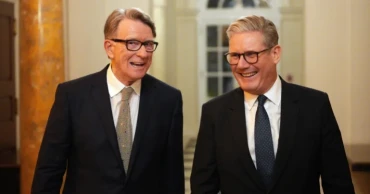
Epstein files shake Europe’s elite, US impact limited so far
Revelations from newly released Jeffrey Epstein documents have triggered political turmoil across Europe, toppling senior figures and prompting investigations, while the fallout in the United States has remained comparatively restrained.
The large cache of files released by the US Department of Justice has dominated headlines in Europe, ending careers of princes, diplomats and politicians who maintained ties with Epstein after his conviction as a sex offender. In contrast, few American figures have faced serious consequences so far.
In Britain, former US ambassador Peter Mandelson was dismissed and is now under police investigation over whether he passed sensitive information to Epstein. Prime Minister Keir Starmer is facing mounting political pressure for appointing Mandelson despite earlier warnings about his links to the disgraced financier.
The documents also deepened scrutiny of Prince Andrew, brother of King Charles III, who had already lost his royal titles and public funding after settling a lawsuit with one of Epstein’s victims. His former wife Sarah Ferguson saw her charity shut down this week.
Although none of the European figures now under fire, apart from Andrew, are accused of sexual abuse, many have been forced out for continuing social or professional contact with Epstein long after his criminal conviction.
Legal experts say European media and political systems have reacted more forcefully. “If your name appears in these files, it becomes a major issue immediately,” said Rob Ford, a political scientist at the University of Manchester, pointing to stronger accountability pressures in parliamentary democracies.
Across Europe, resignations and suspensions have followed. Swedish UN official Joanna Rubinstein stepped down after disclosure of a visit to Epstein’s private island. Slovakia’s national security adviser Miroslav Lajcak quit over communications with Epstein. Latvia, Lithuania and Poland have launched official probes into the documents, with Poland also examining possible links to Russian intelligence.
Norway has been particularly shaken. Authorities opened a corruption investigation into former Prime Minister Thorbjørn Jagland, while ambassador Mona Juul was suspended after it emerged Epstein had left $10 million to her children in his will. Crown Princess Mette-Marit publicly apologized after emails showed her friendly exchanges with Epstein.
In the United States, the release of the files followed bipartisan pressure on President Donald Trump’s administration, but repercussions have been limited. Former Treasury Secretary Larry Summers took leave from academic posts, and a top US law firm chair resigned. Other high-profile figures, including political advisers, business leaders and former presidents, have faced questions but no major sanctions.
Analysts say the contrast highlights differences in political culture and accountability, with Europe showing lower tolerance for associations seen as unethical, even without criminal allegations.
The documents reveal Epstein’s extensive global network of royals, politicians, billionaires and academics, raising fresh questions about his influence and access. European investigators say further disclosures could yet widen the impact of the scandal.
7 months ago
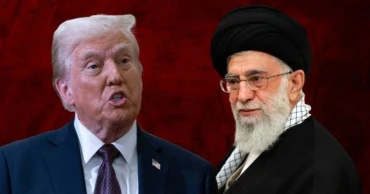
Iran, US to hold nuclear talks in Oman amid tensions; Trump issues warning to Khamenei
Iran and the United States have agreed to hold nuclear talks on Friday in Oman, Iran’s foreign minister said, as tensions remain high following Tehran’s deadly crackdown on nationwide protests.
Iranian Foreign Minister Abbas Araghchi confirmed the talks on Wednesday after earlier uncertainty over their format and scope. U.S. President Donald Trump, meanwhile, issued a blunt warning to Iran’s Supreme Leader Ayatollah Ali Khamenei, saying he “should be very worried.”
Diplomatic efforts initially explored holding broader talks in Turkey, with regional countries involved and issues such as Iran’s missile program on the agenda. However, Iran later pushed for a narrower meeting focused only on its nuclear program, limited to direct involvement by Tehran and Washington.
Oman, which has long acted as a mediator between Iran and Western powers, previously hosted similar talks. Those negotiations collapsed last year after a brief war between Iran and Israel, during which the United States bombed Iranian nuclear facilities.
A White House official confirmed the talks will go ahead in Oman but said Washington remains skeptical about their success. Several regional leaders reportedly urged the U.S. not to abandon diplomacy despite ongoing tensions.
The talks come amid sharp strains in relations, including the recent shooting down of an Iranian drone by a U.S. Navy jet and an attempted interception of a U.S.-flagged ship by Iranian fast boats in the Strait of Hormuz.
Iranian President Masoud Pezeshkian has instructed his foreign minister to pursue “fair and equitable negotiations,” signaling rare openness to talks backed by Supreme Leader Khamenei.
U.S. officials said Washington hopes discussions will eventually expand beyond the nuclear issue to include Iran’s missile program, regional proxy networks and human rights concerns. Iran continues to insist its nuclear program is peaceful, though it has enriched uranium close to weapons-grade levels.
Turkey has urged both sides to resolve their differences through diplomacy, warning that foreign intervention in Iran could destabilize the region.
7 months ago