Bangladesh

Bangladesh welcomed into global nuclear energy community by Rosatom director
Bangladesh has entered the global nuclear energy community with the completion of the first power unit at the Rooppur Nuclear Power Plant, the country's first nuclear facility.
The milestone was highlighted by Andrey Timonov, Director of the Communications Department of Russia’s State Atomic Energy Corporation Rosatom, during a plenary session titled "Russia's Image in International Media" held on Wednesday (September 16) as part of the ‘Media Stream’ program at the International Festival of Youth (IFY‑2026) in Yekaterinburg.
"Rosatom stands at the forefront of global nuclear technology, delivering world‑class solutions at every stage of the production cycle — a position reinforced by our extensive international footprint. This year, Rosatom has completed the construction of the first power unit in the People's Republic of Bangladesh, together with our Bangladeshi partners. Commissioning operations at the unit began this summer,” said Timonov.
“We are witnessing the emergence of a new nuclear power, in the peaceful sense of this word. The project is designed not only to address the country's energy needs, but also to give a powerful impetus for its further development, to enable the Republic to complete the journey of technological development in years rather than decades, as has been the case in other countries," he said.
Speaking with visible warmth about his frequent visits to Bangladesh, Timonov described a country undergoing profound transformation.
"I have visited Bangladesh many times, and I am completely captivated by it — the beautiful nature, the wonderful people. Of course, the country is developing. Of course, the country has a very complex history, he said.
“Just ten years ago, there could be no talk of nuclear energy in their country. And today we welcome it as a new nuclear power,” Timonov said.
He described a remarkable phenomenon visible across Bangladesh — a deep public affection for the nuclear plant
“A growing number of young people are eager to pursue nuclear education — both in Russia and right here in Bangladesh," he said.
Timonov said the vision of a nuclear Bangladesh dates back decades. "For the first time, the idea of building a nuclear power plant in the republic was raised back in the days of the Soviet Union, when the then‑head of the Republic approached Leonid Ilyich Brezhnev with this request. And what is this country actually doing now? It is not simply closing its energy deficit — it is attempting, with the help of a nuclear power plant, to do very quickly what took other countries 60 to 80 years: to make a giant, colossal leap in its development."
"We went there, it seemed, to build a power plant — but in reality, we built a symbol of national pride. We built an object that the entire country is proud of," Timonov emphasised.
The International Festival of Youth (IFY‑2026) took place in Yekaterinburg from September 11 to 17 under the motto "Follow Your Dream." The festival drew over 113,000 applications from around the world and welcomed 10,000 participants from 191 countries. Bangladesh was strongly represented, with around 90 delegates joining the event, said a press release.
The headline of this story has been edited. Also the word 'officially' has been removed from the intro for more clarity.
3 days ago
Bangladesh logs two more suspected measles deaths
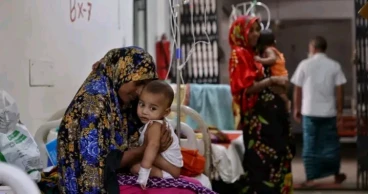
Two children died with measles-like symptoms in the 24 hours until 8:00am on Thursday, bringing the country’s combined tally of confirmed and suspected measles-related deaths to 1,046 this year.
The Directorate General of Health Services (DGHS) has classified all two latest fatalities as suspected measles deaths.
With these, the total number of suspected measles deaths has reached 946, while confirmed deaths from measles have remained the same at 100.
A total of 1,282 new suspected measles cases were reported during the 24-hour period, bringing the cumulative number of suspected cases nationwide to176,480
Meanwhile, 61 new confirmed measles cases were recorded, bringing the total number of laboratory-confirmed infections to 20,343
Since March 15 this year, a total of 155,602 patients with measles-like symptoms have been hospitalised across the country, of whom 149,540 have recovered, according to DGHS data.
4 days ago
Bangladesh reach Asian Games semifinal after rain washes out China quarterfinal
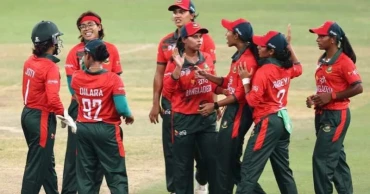
Bangladesh advanced to the Asian Games women's cricket semifinals Thursday after their quarterfinal against China was abandoned due to a wet outfield, with neither team taking the field.
The sun was out and both sides had completed their warm-ups, but the ground stayed too wet from earlier rain for play to start.
The match was called off before the toss. Bangladesh went through on ranking, sitting 10th in the ICC T20I standings against China's 36th.
Bangladesh will face the winner of Friday's match between India and Japan, set for 11 a.m. Bangladesh time, in the semifinal on September 20.
The team has won two silver medals and a bronze in past editions of the Games. In a video message released by the Bangladesh Olympic Association before the China match, batter Sobhana Mostary said the squad was aiming for another medal.
The washout also cost China what would have been a first official meeting between the two sides in T20 cricket. Bangladesh and China last played at the 2010 Asian Games, where Bangladesh bowled China out for 34 and chased the total down in seven overs for the loss of one wicket.
That match was not recognized as an international fixture, meaning Thursday's game would have been the first sanctioned T20I between the teams.
4 days ago
Get out of India fascination, Bangladesh wants to “reset” ties: Humaiun Kobir
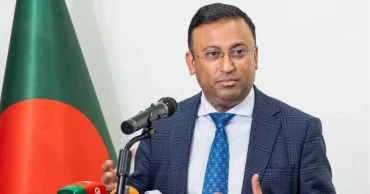
State Minister for Foreign Affairs Humaiun Kobir on Sunday said Bangladesh wants to “reset” its bilateral relationship with India after what he described as an uncomfortable relationship over 15 years under an “authoritarian, corrupt and exploitative” regime.
“We want to move towards a new relationship, which should be done through bilateral discussions, not through a multilateral forum,” Kobir said while responding to a question at the Ministry of Foreign Affairs.
Responding to a question, he said, “Breakfast in India, lunch in India, dinner in India - then when will you eat your own food?”
“We have to get out of the India fascination. India is just another country, and Bangladesh wants good bilateral relations with it,” Kobir said.
He said his earlier remarks specifically referred to India and the need to rebuild bilateral relations through direct bilateral engagement.
“What I said was mainly applicable to India. We want to build a good working bilateral relationship with India,” he said.
Kobir said Bangladesh’s first engagement with a country with which it wants to develop better relations should ideally be through a bilateral visit rather than a meeting on the sidelines of a multilateral forum.
“That was said only in the case of India. I never said that whenever we attend a multilateral event, we will not meet anyone,” he said.
He clarified, however, that this does not mean Bangladesh will avoid meeting countries on the sidelines of international forums.
Asked about recent incidents along the Bangladesh-India border, Kobir said the government would address such issues through diplomatic channels. “We will resolve these issues through diplomatic discussions,” he said.
He said Bangladesh would raise its concerns with India at every appropriate level while adhering to international law, border protocols and agreements between the two countries.
Asked about the reported review of 101 MoUs, Kobir said the agreements were being scrutinised and reviewed through the parliamentary process.
The 81st session of the United Nations General Assembly (UNGA) will once again bring together world leaders to revitalise global cooperation, give a critical push to the Sustainable Development Goals and drive collective action for peace, dignity and equality on a healthy planet.
The State Minister said Prime Minister Tarique Rahman is scheduled to leave for New York on September 21 to attend the 81st session of the United Nations General Assembly and will stay there until September 26.
The Prime Minister is scheduled to address the UN General Assembly, where he will present Bangladesh’s new vision and highlight the country’s democratic transition and aspirations for the future.
“He will share his thoughts and vision for the future of Bangladesh with world leaders,” Kobir told reporters.
“He will have a very busy schedule in New York,” Kobir said, adding that the Prime Minister would hold meetings with world leaders on the sidelines of the UN General Assembly.
Asked whether the UN Refugee Convention would be discussed during the visit, Kobir said Bangladesh would organise a sideline event focusing on the Rohingya crisis.
“There will be a high-level discussion or meeting on the Rohingya crisis as part of the visit. It is a major priority for us,” he said.
Asked about the possibility of a sideline meeting between the Prime Minister and US President Donald Trump, the state minister said such meetings are often decided at the last moment during major international conferences.
“The primary focus of the Prime Minister’s visit is to address the UN General Assembly,” he said, adding that details of the sideline meetings would be known in due course.
8 days ago
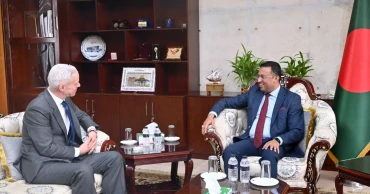
Bangladesh, Switzerland find economic partnership key pillar of bilateral relations
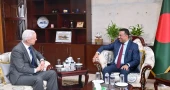
Bangladesh and Switzerland on Monday discussed ways to further expand bilateral trade and investment, including increased Swiss investment in promising sectors of the Bangladesh economy.
Both sides recognised economic partnership as a key pillar of Bangladesh-Switzerland bilateral relations.
Ambassador of Switzerland to Bangladesh Reto Renggli paid a courtesy call on State Minister for Foreign Affairs Humaiun Kobir at the Ministry of Foreign Affairs.
They agreed to pursue practical measures to enhance technical and vocational skills development opportunities for Bangladesh’s workforce.
The Ambassador congratulated the State Minister on his assumption of office and expressed confidence that the longstanding friendly relations between Bangladesh and Switzerland would be further strengthened.
14 days ago
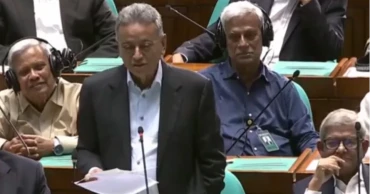
Bangladesh received $82b in foreign loans from 2010 to June 2024: Khosru
Bangladesh received nearly $82 billion in foreign loans between 2010 and June 2024, Finance Minister Amir Khosru Mahmud Chowdhury told Parliament on Sunday.
“From 2010 to June 2024, 81.83 billion US dollars of foreign loans were taken,” he said, while replying to a starred question from ruling party lawmaker Lutfur Rahman (Cox’s Bazar-3) during the question-and-answer session in the House.
Earlier, the Sunday sitting of the Parliament started around 3:30pm with Deputy Speaker Barrister Kayser Kamal in the chair.
The finance minister said during the same period, the principal and interest payments against the government's foreign loans amounted to 17.11 billion and 6.04 billion US dollars, respectively.
According to the statistics provided by the minister, the total amount paid in principal and interest against the country’s foreign debt stood at $23.15 billion between 2010 and June 2024.
15 days ago
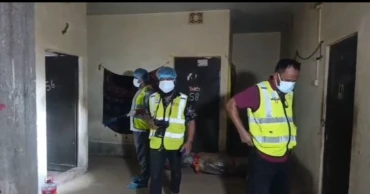
Couple, newborn found dead in Savar
Police recovered the decomposed bodies of a couple and their newborn from a house at Madhya Jamgara in Ashulia of Savar early Saturday.
The identities of the deceased could not be known immediately.
Tarikul Islam, Officer-in-Charge of Ashulia Police Station said the family recently rented a room on the second floor of a four-storey building owned by one Haji Hazrat Ali.
Getting odour from the house, local people informed police who recovered the bodies breaking open the door of the room around 1:30am.
The bodies were sent to Shaheed Suhrawardy Medical College and Hospital morgue for autopsy.
Police suspected that the man might have killed himself as a gamcha (towel) was found wrapped around his neck.
Locals said the doors and windows of the room were usually remained closed.
A forensic team from the Criminal Investigation Department (CID) visited the scene and collected various pieces of evidence.
Efforts are underway to identify the deceased and determine those involved in the incident, said the OC.
17 days ago

Access to clean energy to become increasingly important for Bangladesh: Michael Miller
Ambassador and Head of Delegation of the European Union (EU) to Bangladesh Michael Miller on Wednesday said access to clean energy will become increasingly important for the competitiveness of Bangladesh’s garment industry as European markets and global value chains transition towards a low-carbon future.
“There is an opportunity to combine manufacturing strength with cleaner production that we encourage you to grasp with both hands, to place this country at the forefront of sustainable sourcing,” he said while speaking at a roundtable in Dhaka.
HSBC Bangladesh, the Apparel Impact Institute (Aii), the Embassy of Sweden in Bangladesh and the Delegation of the European Union to Bangladesh convened a high-level roundtable bringing together international and national stakeholders from the government, global apparel brands, manufacturers, financial institutions, development partners and industry associations to discuss how Bangladesh can accelerate access to reliable, competitive and clean energy for its apparel industry.
The roundtable, titled “Advancing Decarbonisation for Apparel in a Changing Energy Landscape”, focused on the growing urgency to accelerate Bangladesh’s clean energy transition as global apparel supply chains move towards decarbonisation and markets, including the European Union, introduce increasingly ambitious sustainability and environmental requirements.
19 days ago

Miraz 65 keeps Bangladesh in control as Australia miss chances
Mehidy Hasan Miraz was unbeaten on 65 as Bangladesh reached 417 for 8 at lunch on the third day of the first Test against Australia on Saturday, stretching their lead to 219 runs.
Miraz and Taskin Ahmed added 45 without being separated in the morning session, putting on their fifth partnership of more than 40 runs in the innings.
Miraz has faced 152 balls, hitting five fours and a six. Taskin is 12 not out from 22 balls.
Australia managed only two wickets in the 23-over session, both taken by Josh Hazlewood. Hasan Mahmud and Taijul Islam were dismissed as Bangladesh lost their seventh and eighth wickets.
Australia also missed two chances off Pat Cummins. Steven Smith and Travis Head both put down catches.
Miraz finished the session in style, hitting Cameron Green for six over the boundary. His partnership with Taskin has taken Bangladesh closer to a lead of 250.
Bangladesh resumed the day on 351 for 6 after Tanzid Hasan’s 101, Najmul Hossain Shanto’s 84 and Mominul Haque’s 49 helped them build a strong position. They had started the innings 102 runs behind Australia, who were bowled out for 198 on the first day.
Australia now face the prospect of having to chase a large deficit in their second innings, with Bangladesh still two wickets away from completing their first innings.
1 month ago
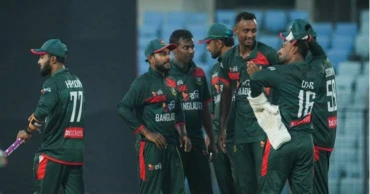
Bangladesh set for direct World Cup qualification as West Indies face qualifiers again
Bangladesh are set to qualify directly for the 2027 ODI World Cup after Afghanistan’s win over Ireland strengthened their position in the ICC ODI rankings.
The qualification list will not be official until the rankings cutoff on Sept. 30. But with less than seven weeks to go, Bangladesh are in the top eight and cannot realistically be overtaken.
The top eight teams in the ODI rankings on Sept. 30, excluding the two host nations, will qualify directly for the World Cup. South Africa and Zimbabwe have already qualified as co-hosts.
Afghanistan secured a place in the top eight by beating Ireland by three wickets in Belfast on Sunday. The result left Australia, India, New Zealand, Pakistan, Sri Lanka, England, Afghanistan and Bangladesh in the eight direct-qualification spots.
Bangladesh are therefore on course to avoid the qualifying tournament and go straight into the World Cup, which will be hosted by South Africa, Zimbabwe and Namibia next year. Their place will be confirmed after the Sept. 30 cutoff.
West Indies, meanwhile, will have to take the longer route.
The two-time world champions are ranked 10th and cannot break into the top eight even if they win their two remaining ODIs against India before the cutoff. They will have to play in the World Cup Qualifier in February and March next year.
It will be the third consecutive World Cup cycle in which West Indies have had to go through the qualifiers.
They failed to qualify for the 2023 World Cup after finishing fifth in the Super Six stage, missing the tournament for the first time in their history.
That failure also kept them out of the 2025 Champions Trophy, a tournament they have not played since 2013.
The 2027 Qualifier will include West Indies and Ireland, the two lowest-ranked non-host Full Members, along with teams advancing from World Cup League 2 and the Qualifier Playoff.
The qualification route has also changed. The Qualifier winner will advance directly to the second round of the World Cup, while the teams finishing second through fourth will enter a Super Series. The winner of that series will also advance to the second round.
Bangladesh, barring a late change in the rankings, will not have to take that route.
1 month ago