Government

PPP breathing new life into shuttered jute mills under BTMC
The government has initiated steps to revive closed state-owned textile and jute mills through public-private partnerships (PPP) and private leasing as part of its election manifesto, Textiles and Jute Minister Khandakar Abdul Muktadir told Parliament on Monday.
Replying to a starred question from Jamaat MP Mohammad Moslehuddin Farid (Jashore-2), the minister said Bangladesh currently has 25 state-owned textile mills under the Bangladesh Textile Mills Corporation (BTMC), while the private sector has around 1,780 spinning, weaving and dyeing-finishing mills affiliated with the Bangladesh Textile Mills Association (BTMA).
He also said there are 266 licensed jute mills across the country, including 25 state-owned mills under the Bangladesh Jute Mills Corporation (BJMC). Of these, 193 are operational and 73 remain closed.
The minister said, in line with the government's pledge to reopen shuttered industries, 15 of BTMC's 25 state-owned textile mills have been selected for operation under the PPP model.
"So far, agreements have been signed with selected private partners for four textile mills and their handover has been completed. Production has already begun at two of these mills," he said.
Work is underway to hand over another 11 closed textile mills to private entrepreneurs under the PPP initiative, he added.
Abdul Muktadir said production at all 25 BJMC-run state-owned jute mills was suspended in 2020 following a decision of the then Awami League-led government. However, the present government has taken initiatives to restart the mills in line with its election commitments.
According to the minister, 14 jute mills have so far been leased to private operators, of which nine have already resumed production.
The remaining mills are being leased out in phases, and production at those facilities is expected to begin by December 2026 under private management, he said.
The minister also outlined several other initiatives involving former BJMC mills.
He said plans have been taken to establish an Inland Container Depot (ICD) at MM Jute Mills Ltd under BJMC management.
Two mills—Latif Bawany Jute Mills Ltd and Karim Jute Mills Ltd—which fall within the jurisdiction of Dhaka South City Corporation are being processed for declaration as industrial zones through the Bangladesh Economic Zones Authority (BEZA), he said.
Among the three mills that remain outside the leasing process, Amin Jute Mill has been excluded because it falls within a city corporation area, while two others remain outside the programme due to pending legal cases.
The minister said the government is committed to strengthening the jute sector by increasing production, diversifying jute products, expanding exports and encouraging private investment
2 months ago

Purchase body clears proposals for Tk 704.7 cr fertiliser, sulphur imports
The Cabinet Committee on Government Purchase on Wednesday approved procurement proposals worth more than Tk 704.7 crore including the import of urea fertiliser and sulphur for the country's agricultural and industrial needs.
The decisions were taken at a meeting of the committee atSecretariat with Finance Minister Amir Khosru Mahmud Chowdhury in the chair.
Import of 40,000 metric tonnes of urea fertiliser through the Direct Procurement Method (DPM) at a cost of Tk 348.56 crore was among the proposals.
The proposal submitted by the Ministry of Industries involves the purchase of urea from UAE-based Delta Star Trading FZ-LLC through its local agent Ibedita Trading, Dhaka.
The per-metric-tonne price has been fixed at US$707.01.
The committee also recommended approval of another fertiliser import proposal under a government-to-government arrangement.
Under the proposal, 25,000 metric tonnes of bulk granular urea will be imported from Saudi Arabia's SABIC Agri-Nutrients Company .
The Ministry of Industries estimated the procurement cost at Tk 185.13 crore, with the fertiliser to be supplied at a price of US$600.83 per metric tonne.
The committee approved another proposal for importing 15,000 metric tonnes of rock sulphur/bright yellow sulphur for TSP Complex Limited (TSPCL) at a cost of Tk 171.01 crore.
The proposal was also submitted by the Ministry of Industries, with Seychelles-based M/s Fabsco Construction Limited selected as the supplier.
According to the proposal, the sulphur may be sourced from a range of internationally recognised producers and refiners, including Formosa Petrochemical Corporation of Taiwan, Turkmengas of Turkmenistan, Mongstad Refinery of Norway, ADNOC of the UAE, Duqm Refinery of Oman, SOMO of Iraq and Reliance Industries of India, among others.
3 months ago
Govt’s first 100 days deliver message of hope, positive change: PMO e-book
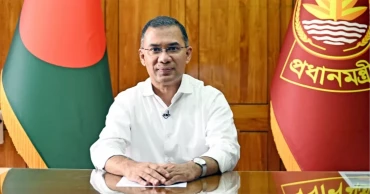
The first 100 days of the BNP government have delivered a message of hope and positive change to the nation through reforms, policy initiatives and citizen-focused governance efforts, according to an e-book published by the Prime Minister’s Press Wing.
Prime Minister’s Additional Press Secretary Atikur Rahman Rumon said the e-book – released on Wednesday marking the government’s first 100 days in office –presented in detail the activities of different ministries, key decisions and progress in implementing various programmes during the period under the leadership of Prime Minister Tarique Rahman.
“It is a document of the government’s first 100 days in office,” he said.
Rumon said the government believes its first 100 days have brought a message of hope and positive change to the nation.
“Different programmes and initiatives taken by the government have already started creating visible impacts on public life and society,” he added.
BNP Chairman Tarique Rahman assumed office as Prime Minister on February 17 after his party won the 13th parliamentary election held on February 12 by a landslide.
The PM’s Press Wing said the e-book will be updated regularly and made available online for reading and downloading.
According to the introduction to the e-book, leadership is judged not only by election promises but also by how quickly those promises are turned into practical action plans.
It also said in Bangladesh’s new political reality, Prime Minister Tarique Rahman’s election pledges and their rapid implementation have become a topic of national discussion.
According to the e-book, the government assumed office amid political instability, economic pressure, weak law and order, foreign currency reserve challenges and a slowdown in investment and employment.
Despite those challenges, the publication said, the government has demonstrated quick policy decisions, administrative discipline and signs of stability in economic management during its first 100 days.
The e-book also highlighted several personal and administrative decisions made by the Prime Minister that drew public attention.
It said Tarique Rahman’s decisions to limit VVIP protocol, use a private residence instead of an official one, travel in personal vehicles and bear his own fuel expenses reflected a culture of restraint, accountability and simplicity in public office.
The publication also highlighted his direct engagement with ordinary people during visits across the country, saying citizens from different age groups and professions gathered spontaneously to see and interact with him.
It described his open question-and-answer session with students at Dhaka University as an example of participatory political culture, where students discussed issues, including education, employment, technology and the future of Bangladesh, directly with the Prime Minister.
The e-book also said Tarique Rahman has frequently broken with traditional protocol to speak with children, receive gifts from them and interact with farmers, workers and labourers “as an ordinary citizen,” which, it claimed, strengthened his image as a people-oriented leader.
It also referred to several symbolic actions, including waiting at traffic signals, walking to office and participating in programmes among ordinary citizens after office hours, describing them as examples of participatory and citizen-focused leadership.
According to the publication, the government also introduced Saturday office activities as part of efforts to increase administrative continuity and service efficiency.
The e-book said the Prime Minister encouraged young innovators by using locally developed technologies and vehicles, describing it as support for domestic innovation and youth-led initiatives.
Summarising the government’s first 100 days, the publication said the administration prioritised social and economic support programmes, digital reforms in administration and the judiciary, and long-term infrastructure and economic planning despite challenges such as inflation, energy pressures, global instability and employment constraints.
It also acknowledged that controlling commodity prices, ensuring energy security, increasing investment and expanding employment remained major challenges.
The PM’s Press Wing said many programmes were still at the initial implementation stage, but added that the government has pledged to build a more technology-driven, accountable and service-oriented state.
The e-book concluded with a quote attributed to Prime Minister Tarique Rahman: “Ensuring service to the people is the sacred responsibility of this government.”
3 months ago

Govt announces Tk 1 lakh reward for info on illegal fuel hoarding, smuggling
The government on Monday announced a maximum reward of Tk 1 lakh for anyone providing verified information to local administration on illegal hoarding and smuggling of fuel, aiming to curb unlawful activities and ensure fair distribution.
The decision was taken by the Bangladesh Petroleum Corporation (BPC) amid the rising global fuel prices triggered by tension in the Middle East which have caused instability in the supply and market management of petroleum products, said a press release of Energy and Mineral Resources Division.
Government to be tougher against fuel hoarding, smuggling
Some unscrupulous traders in the country are hoarding imported fuel instead of selling it at government-fixed prices, selling it secretly at higher rates, it said.
Field administrations have already taken action against several such illegal networks. Despite this, the trend of unlawful hoarding is reportedly increasing at an alarming rate, it added.
The identity of informants will remain strictly confidential, it said.
The Deputy Commissioner concerned will ensure receipt of the reward.
The financial incentive is open to all individuals, institutions, and organisations.
To ensure uninterrupted supply of government-priced fuel to consumers and prevent illegal hoarding, BPC’s initiative will be implemented with the support of local administrations, following approval by the Cabinet Division.
5 months ago
Government to be tougher against fuel hoarding, smuggling
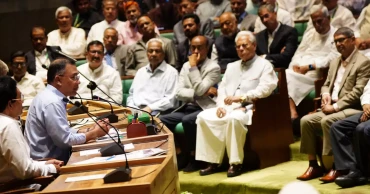
The government will take tougher measures against fuel hoarding and smuggling as Prime Minister Tarique Rahman on Saturday directed the authorities concerned to act against those creating an artificial oil crisis in the country.
He gave the directives chairing the meeting of the BNP Parliamentary Party at the Ruling Party’s Meeting Room at the Parliament Secretariat in the afternoon, a day before the first session of the 13th parliament will resume after a 14-day recess.
Tarique Rahman, also the Leader of the House, asked the Members of Parliament (MPs) to be vigilant against the artificial fuel crisis and price hike, said Chief Whip Nurul Islam Moni while talking to reporters after the meeting.
PM Tarique Rahman visits BNP central office in Nayapaltan
“Our leader has given a directive to the MPs to remain vigilant everywhere so that fuel price would not go high and the government, in coordination with the district administration and other (field-level) administrations, can take action wherever necessary,” he said.
The Prime Minister also directed the Power, Energy and Mineral Resource Minister Iqbal Hassan Mahmood to deliver a speech under the Section 300 of the Rules of Procedure in the House on Sunday with a tough message against the fuel hoarding.
The Chief Whip said the government provides Tk 200 crore subsidy every month to keep fuel prices under control. “The government is trying to keep the price of oil stable by subsidizing about 200 crore taka every month. But some unscrupulous syndicates are trying to create an artificial crisis,” he said.
Noting that fuel is smuggled from the country due higher prices in a neighbouring country, the Chief Whip informed that the Prime Minister asked the Home Minister to take tough action against fuel smuggling.
“Besides, operations will be conducted against those who hoard fuel or try to create an artificial crisis simultaneously,” said Nurul Islam while raising the PM’s directives given in the meeting.
5 months ago

Government appoints administrators to 5 more city corporations
The government on Saturday appointed administrators to five more city corporations.
The Local Government Division issued a notification in this regard on Saturday.
Advocate Bilkis Akhtar Jahan Shirin has been appointed administrator to Barishal City Corporation, Md. Mahfuzur Rahman to Rajshahi City Corporation, Md. Rukunuzzaman Rokon to Mymensingh City Corporation, Mahfuz un Nabi Chowdhury to Rangpur City Corporation and Md. Yusuf Molla to Cumilla City Corporation.
Administrators of six city corporations assume office
Earlier, on February 22, the government appointed administrators to six city corporations including the two in Dhaka.
The notification stated that their appointments were made under Section 25Ka(1) of the Local Government (City Corporation) (Amendment) Ordinance, 2024.
As per Section 25Ka(3), the administrators will exercise the powers and responsibilities of the city mayor and receive allowances according to regulations.
6 months ago

Govt lists measures to save energy amid crisis
The government on Thursday announced a series of measures to tackle the global energy crisis amid the ongoing conflict in the Middle East.
In a statement, the Cabinet Division said that addressing the current global crisis requires saving electricity and energy at the national level. Officials and employees in all offices, including government, autonomous, statutory bodies, and corporations, are urged to use electricity and energy responsibly and economically.
Avoid decorative lighting, reduce personal vehicle use amid energy supply uncertainty: Govt
The statement outlined the following measures:
Make use of natural daylight by keeping windows, doors, or blinds open and avoid using electric lights when sufficient natural light is available.
Reduce existing lighting by half and avoid using extra lights.
Turn off unnecessary lights, fans, air conditioners, and other electrical appliances during office hours.
Maintain air conditioner temperatures at 25 degrees Celsius or above.
Switch off all electrical appliances, including lights, fans, and air conditioners, when leaving the office room.
Avoid unnecessary lighting in corridors, staircases, washrooms, and other areas.
Use energy-efficient appliances wherever possible.
Turn off all electrical appliances, including computers, printers, and scanners, after office hours.
All lighting should be avoided.
Limit the use of vehicles and ensure fuel consumption is economical.
The Cabinet Division said strict adherence to these measures is essential to manage the impact of the global energy crisis.
6 months ago

Govt appoints secretaries to four ministries, divisions
The government has appointed new secretaries to four key ministries and divisions as part of a major reshuffle in the country’s administrative structure.
Separate notifications in this regard were issued by the Ministry of Public Administration on Tuesday night.
As per the orders, Rafiqul I Mohammad has been appointed secretary to the Ministry of Agriculture, Md Kamruzzaman to the Health Services Division, Abdul Khalek to the Secondary and Higher Education Division, and Md Shahidul Hasan to the Local Government Division.
Govt proposes opposition nominee for Deputy Speaker: Salahuddin
According to the notifications, the appointed officials will serve in their respective posts on a contractual basis for one year from the date of joining.
The notifications stated that their appointments have been made on the condition that they sever all ties with any other profession, business, or employment with government, semi-government, private institutions or organisations before joining their new posts.
Other terms and conditions of their appointments will be determined through separate contractual agreements, the notifications added.
6 months ago

Three DIGs transferred to different positions within same rank
The government has transferred and posted three senior police officers in the public interest, according to a notification issued by the Home Ministry.
Deputy Inspector General (DIG) of police (Barishal Range) Md Manjur Morshed Alam has been transferred and posted as DIG of the Tourist Police.
Md Mostafizur Rahman, DIG at Police Headquarters, has been posted as DIG of Barishal Range.
Ali Hossain Fakir appointed as Bangladesh police chief
Meanwhile, Mohammad Harun-or-Rashid, Commandant (Additional DIG) of 5th Armed Police Battalion (APBn) in Dhaka, has been transferred and posted as Additional DIG at Bangladesh Police Academy (BPA) in Sardah, Rajshahi.
The order, issued in the public interest, will come into effect immediately, the notification said.
6 months ago
Mobile court drives to be conducted to prevent black marketing, rooftop travelling
The government has decided to conduct mobile court drives to identify passengers without tickets and prevent ticket black marketing and stop travel on the roof of trains during the upcoming Eid-ul-Fitr.
The decision was taken at a meeting held at Rail Bhaban in the capital on Monday to ensure safe, smooth and comfortable train journeys during Eid, with Railway Minister Shaikh Rabiul Alam in the chair.
The meeting decided to sell standing tickets equivalent to 25 percent of the total number of seats on each train to manage additional passenger pressure during the Eid-ul-Fitr.
'Not all collections in the road transport sector is extortion': Roads, Railways and Shipping Minister
However, authorities have been instructed to ensure that passengers with non-seat tickets are not allowed to travel in AC coaches or first-class compartments.
Officials said necessary steps will be taken to ensure a safe and hassle-free Eid journey for passengers.
6 months ago