Fashion
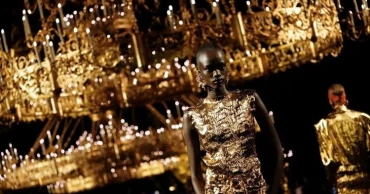
Paris Fashion Week dazzles with gold, bare looks amid luxury slowdown
Paris Fashion Week leaned into glamour, bold styling and elaborate presentations as luxury brands sought to attract shoppers amid a prolonged industry slowdown.
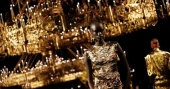
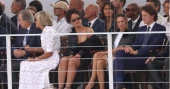
Saint Laurent opened one of the week's most dramatic shows with giant chandeliers casting golden light over a black outdoor runway, with the Eiffel Tower visible in the background. Catherine Deneuve, Kate Moss, Hailey Bieber and Rami Malek attended, while Jennifer Lopez watched Stella McCartney's show and Rihanna appeared at the presentation by conceptual label Matières Fécales.
The spring-summer 2027 collections largely focused on three themes: extravagant glamour, revealing silhouettes and bringing couture-level craftsmanship into everyday clothing.
At Saint Laurent, designer Anthony Vaccarello marked his 10th anniversary with a collection dominated by gold. Safari jackets and trench coats appeared in metallic fabrics, while cocktail dresses featured shimmering lace and cropped jackets came in brocade.
The show came as Saint Laurent's parent company Kering seeks stronger growth. The label has benefited from improving demand in the United States and Europe while sister brand Gucci continues to struggle.
Chloé designer Chemena Kamali embraced elaborate textures, combining lace, pearls, tassels and broderie anglaise. Stella McCartney presented relaxed tailoring, knitted designs and dolphin motifs on denim while highlighting ocean conservation.
Revealing styles were also prominent. Tom Ford featured sharp tailoring alongside bare chests, fishnet, skimpy swimwear and silk robes. Balmain showcased corsets, garters and bras beneath cropped jackets, while Rick Owens presented sculptural gowns and elaborate tulle designs.
Balenciaga focused on craftsmanship, using detailed stitching to reshape shirts, T-shirts and jeans. Loewe, celebrating its 180th anniversary, emphasized soft leather and wearable designs.
At Place de la République, Matières Fécales presented a collection titled “The 99 Percent,” featuring shredded denim and protest-inspired looks.
Despite the spectacle, the luxury industry faces financial pressure. Bain & Company estimates about 60 million consumers have stopped buying luxury goods since 2022 as prices have risen sharply.
22 days ago
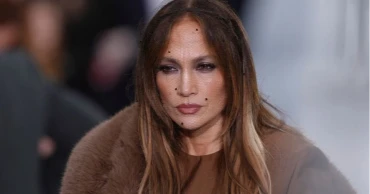
Stella McCartney highlights ocean conservation with sea-inspired collection in Paris
British fashion designer Stella McCartney used her Paris Fashion Week show Wednesday to criticize the fishing industry and draw attention to the impact of seafood production on marine life.
The show marked 25 years of McCartney's fashion label, which has never used leather, fur or feathers. It was held in the rain-soaked gardens of the British ambassador's residence, with actress and singer Jennifer Lopez among those watching from the front row.
McCartney said the language people use to describe marine animals changes depending on whether they are being admired or eaten.
“Who makes that decision?” she asked backstage, referring to the use of terms such as “sea life” and “seafood.”
She was more direct when discussing the fishing industry.
“It's war. We're at war with the oceans,” she said.
McCartney said fishing nets can bring up dolphins and octopuses along with fish, with much of the unwanted catch thrown back into the sea dead.
Models walked through the gardens to PJ Harvey's song “Down by the Water.” Juliette Binoche sat near Lopez, while Karlie Kloss and Miranda Kerr were among the models on the runway.
Sea-inspired designsThe collection reflected the theme through its colors and flowing designs.
The palette included seafoam, sage, coral, blush and chocolate. The tailoring, influenced by Savile Row designer Edward Sexton, was relaxed and designed to move like water.
Oversized blazers featured drawstrings inspired by rain jackets, while peplums returned in rounded shapes around the hips.
Sheer layers revealed bandeaus and short shorts as part of the growing trend of wearing underwear as outerwear.
McCartney also brought her signature sportswear style into the collection, pairing fitted leggings with boxy technical jackets. T-shirts featured dolphins appearing to leap through the air.
Kloss wore a minidress decorated with small waves across one shoulder, while Kerr appeared in a seafoam-colored gown tied at the waist.
Evening gowns wrapped around the body before falling in long, straight shapes inspired by designer Madame Grès. Ruffles at the hems suggested breaking waves.
“It's really, really important to want to wear the clothes,” McCartney said. “For me, that's the main thing.”
Focus on sustainable materialsThe fashion house described the ready-to-wear collection as “100% responsible,” using recycled cotton denim, organic cotton and silk.
It also used a black pigment made from algae instead of oil-based materials.
McCartney said the certified wool used by the brand can be traced back to the farms where it is produced. Since 2026, the company has also used Brewed Protein, a wool alternative made through fermentation by Japanese biotechnology company Spiber.
A week before the show, McCartney co-founded the Climate Pledge Fashion Coalition with Amazon and forest conservation group Canopy.
The initiative brings together orders from more than 60 companies in an effort to help sustainable materials reach large-scale production.
McCartney bought back LVMH's minority stake in her fashion label last year but continues to advise LVMH chairman Bernard Arnault on sustainability issues.
“I'm advising him on so many things in sustainability,” she said.
McCartney ended the show wearing jeans, a white T-shirt and a loose blazer before taking her bow and leaving the runway.
Backstage, when questions shifted from ocean conservation to fashion, she asked: “You mean you want to talk about the clothes?”
After 25 years, the clothes remain central to her message.
24 days ago
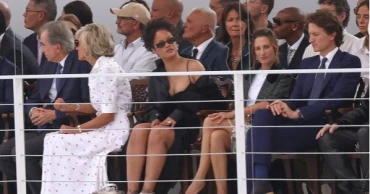
Dior unveils relaxed, unfinished looks at Paris Fashion Week
Rihanna, Jennifer Lawrence, Rosalía and Cynthia Erivo were among the stars in the front row Tuesday as Dior designer Jonathan Anderson presented 65 looks for spring on a runway built across a pond in Paris’ Tuileries Garden.
The collection explored a deliberately unfinished style, with the idea that luxury can sometimes come from leaving clothes partly undone.
Trees rose from the water while artificial fog covered the runway as Paris temperatures reached 82 degrees Fahrenheit (28 degrees Celsius).
The opening outfit set the tone: a white pinstriped double-breasted jacket worn over a striped shirt and short cream skirt. The shirt was left untucked and the outfit appeared loosely put together.
Bras were visible beneath open jackets, shirts were buttoned unevenly, and pajama-style piping appeared along the edges of tailored pieces.
Even the hems looked as if they had been blown by the wind.
A relaxed take on DiorThe collection was a major departure from the style established by Christian Dior, who founded the fashion house in 1946 and introduced the iconic New Look a year later. The look featured fitted Bar jackets with tightly defined waists and full skirts.
Anderson took charge of Dior’s womenswear, menswear and couture in 2025, becoming the first designer since Dior himself to oversee all three areas. Since then, he has pushed the house toward a more relaxed style.
The show notes asked, “how light can a dress be?” The collection answered by treating traditional tailoring more like soft drapery.
Bar jackets appeared softer, with their waist flounces falling naturally rather than holding a structured shape. One jacket was combined with a barn coat.
Houndstooth, a traditional Dior pattern, appeared in sheer chiffon.
The 1952 La Cigale dress was also reworked in strapless pink pleated tulle, with its shape inspired by the insect it was named after.
The collection drew heavily on Dior’s archives while presenting familiar pieces in new forms.
The deliberately untidy styling reflected a wider trend seen during fashion month, including at Prada and other major fashion houses.
Luxury details appeared in subtle places, including Murano glass buttons and faux fur hidden under jacket lapels. At the same time, some outfits made a much bigger visual statement, with jackets and miniskirts decorated with hundreds of hand-cut petals that moved as models walked.
Bronze, silver and mint-green trousers added color to a mainly black, white and gray collection.
The saddle bag, a popular design from the John Galliano era at Dior, also returned.
A collection with a familiar feelGuests received a pair of wenwan walnuts with their invitations. The traditional Chinese walnuts are rolled in the palm for years until they develop a smooth polish, a process that echoed the collection’s focus on worn and crumpled textures.
But the idea also highlighted one of the collection’s possible weaknesses. This was Anderson’s 10th Dior collection in just over a year, and some of its key features balloon-shaped chiffon minidresses, sheer tailoring and single dangling earrings have already become familiar.
The collection’s central question, therefore, was whether Anderson’s refined and deliberately unfinished style still offers enough surprise for Dior.
After 10 collections, the designer’s approach has become increasingly recognisable suggesting either that Dior has found a new identity or that Anderson has settled into a formula.
25 days ago
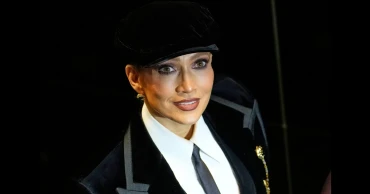
Jennifer Lopez adds star power to Dolce & Gabbana's Milan runway show
Jennifer Lopez brought celebrity glamour to Dolce & Gabbana's Spring-Summer 2027 runway show in Milan on Saturday, drawing crowds of fans who gathered outside the venue hoping to catch a glimpse of the singer and actress.
Lopez attended the show from the front row dressed in a dark velvet suit with a matching cap and equestrian-style boots. She has maintained a relationship with the Italian fashion house for decades.
The latest collection by designers Domenico Dolce and Stefano Gabbana revisited the brand's traditional Sicilian aesthetic while giving it a contemporary, younger feel.
The designers presented the collection as a form of family inheritance passed between generations, incorporating updated versions of classic Italian-inspired pieces.
Tweed suits featured leopard-print details, while checked tablecloth patterns appeared on youthful bloomers and bra tops paired with sheer stockings. Lace slips were decorated with fringe and beads.
Crocheted doilies, traditionally associated with Italian homes and markets, were transformed into skirts and dresses.
The designers also targeted younger consumers by combining embellished denim with gardening-style boots, while retaining some of the fashion house's familiar signatures, including black dresses, lingerie-inspired designs and animal prints.
Fans outside the venue held signs for K-pop star Choi San and Japanese actor Hikaru Iwamoto, but many were particularly excited about Lopez's appearance, chanting her nickname, “J-Lo,” as guests left the show.
Earlier this week, Lopez attended Vogue World wearing a strapless black Dolce & Gabbana tulle gown featuring sequins.
During Saturday's runway presentation, she watched the models closely, with a dramatic animal-print hooded cape featuring gold detailing and faux-fur trim emerging as one of the standout pieces. The cape was styled over loose-fitting jeans.
28 days ago
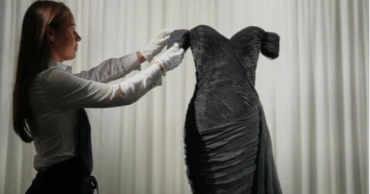
Princess Diana’s ‘revenge dress’ goes on display ahead of Sotheby’s auction
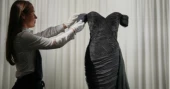
Princess Diana’s famous “revenge dress,” worn on the day her then-husband publicly acknowledged his infidelity, is going on display ahead of a Sotheby’s auction, with an estimated value of up to $300,000.
The striking black dress is beginning an international tour, reflecting the continued worldwide interest in Diana nearly three decades after her death.
The dress went on public display at Sotheby’s in London on Friday. Diana wore it on June 29, 1994, the same day an interview was broadcast in which then-Prince Charles admitted he had been unfaithful.
Knowing that the revelation was coming, Diana chose a figure-hugging, off-the-shoulder silk dress designed by Greek designer Christina Stambolian for a gala at London’s Serpentine Gallery.
Morgane Halimi, Sotheby’s global head of handbags and fashion, said Diana used the outfit to take control of the public narrative surrounding her.
“She always used fashion as a way of expression, but this time (it) was a way to communicate her personal expression of herself,” Halimi said. She added that Diana appeared to be sending the message, “I’m taking back the story and I’m here and I stand for myself.”
Photos of Diana wearing the dress, paired with a sapphire necklace, black pumps and bright red nail polish, were published around the world. The Sun newspaper described the look the following day as “Revenge is chic.”
A year later, Diana acknowledged that she had also been unfaithful in an interview, famously saying, “there were three of us in this marriage,” referring to Charles’ relationship with Camilla Parker-Bowles, now Queen Camilla.
Charles and Diana divorced in 1996. Diana was killed in a car crash in Paris the following year at the age of 36.
The dress has remained a symbol of Diana’s public image. A life-size wax figure of her wearing the outfit was unveiled at a Paris museum last year.
The dress is being auctioned for the first time since 1997, when Diana sold it along with other clothing items to raise money for AIDS charities. Sotheby’s estimates its value at $150,000 to $300,000, though experts say it could sell for considerably more.
In 2023, a red sweater featuring sheep that Diana wore to a polo match in 1981 sold for $1.1 million, setting a record for an item owned by the late princess.
“I personally believe that this dress is the most powerful item linked to Diana,” Halimi said.
She added that Diana’s provenance has long attracted collectors, while the story and wider meaning associated with the dress could also draw museums and other institutions as well as private collectors seeking rare pieces.
Diana was a global style icon and one of the world’s most photographed women during her lifetime. Public interest in her remains strong, including fascination with the breakdown of her marriage to Charles, now King Charles III.
A new book by Diana’s brother, Charles Spencer, has recently attracted headlines and renewed a public dispute between the Spencer family and the royal family over how the princess was treated.
The dress will remain on display in London until Sept. 24 before traveling to Hong Kong and Geneva. It will be auctioned in New York on Dec. 9.
1 month ago
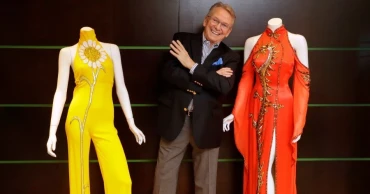
Star designer Bob Mackie, known for dressing Cher and Marilyn Monroe, dies at 87
Bob Mackie, the fashion and costume designer whose bold Hollywood creations helped define glamour in the 1970s, died Monday at the age of 87.
Mackie became famous for creating some of the most memorable looks for stars including Cher, Marilyn Monroe and Carol Burnett. His publicist said he died of pneumonia in Palm Springs, California.
“He lived his 87 years to the fullest, fulfilling his dream of being a Fashion and Costume Designer, which is all he ever wanted to do,” a statement posted on his social media accounts said.
Known as the “Designer to the Stars,” Mackie won nine Emmy Awards and a Tony Award and received three Oscar nominations. One of his Oscar-nominated works was the sheer batwing gown worn by Barbra Streisand in the film “Funny Lady.” He was inducted into the Television Academy Hall of Fame in 2002.
Mackie designed gowns for Madonna, Streisand, Sharon Stone, Diana Ross and Julia Louis-Dreyfus, as well as concert costumes for Pink.
He also designed Marilyn Monroe’s famous sheer, beaded gown for her breathy performance of “Happy Birthday” at a 1962 fundraiser for President John F. Kennedy and the Democratic National Committee.
His influence lives on
Mackie’s impact on fashion can still be seen in the work of designers and celebrities today. His creations have been worn by Anya Taylor-Joy, Miley Cyrus, Zendaya, Kendall Jenner and Bella Hadid.
Zendaya wore a Mackie gown while honoring Cher at the 2024 Rock & Roll Hall of Fame induction ceremony. Taylor Swift also used Mackie’s original designs as inspiration for her showgirl look on the cover of her 2025 album “The Life of a Showgirl.”
Sequins, rhinestones and glitter were among Mackie’s favorite design elements, earning him nicknames such as the “Sultan of Sequins” and “Guru of Glitter.”
But his design philosophy was simple.
“You don’t try to change anybody, you just try to make them look better than ever,” he told The Associated Press in 2018.
Tributes poured in following his death. Actor Kristin Chenoweth called him a “legend,” while designer Isaac Mizrahi wrote that he was “heartbroken.” Actor Alyssa Milano described him as “one of the best that ever was.”
A career spanning Hollywood and Broadway
Mackie also had a successful career on Broadway. He designed costumes for “On the Town” in 1971 and “Moon Over Buffalo” in 1995. His other Broadway projects included “Debbie” in 1976, “Minnelli on Minnelli” in 1999 and “The Cher Show,” for which he won his Tony Award.
Born and raised in Southern California, Mackie developed a love for Hollywood glamour as a child after watching Technicolor musicals. He sketched elaborate outfits for his mother and sister and became involved in costume and set design for school productions.
He studied advertising and illustration at Pasadena City College before studying costume design at the Chouinard Art Institute in Los Angeles.
Mackie later worked for legendary costume designer Edith Head before landing a job on “The Carol Burnett Show.”
Close partnership with Cher and Burnett
Mackie and Burnett became close friends and collaborators. He created costumes for some of her most memorable characters, including Nora Desmond, Eunice and her parody of Scarlett O’Hara in “Gone With the Wind,” called Starlet O’Hara.
For Starlet O’Hara, Burnett wore the famous green curtain dress still attached to its curtain rods. The costume is now part of the Smithsonian’s National Museum of American History.
“I love doing funny things,” Mackie told AP in 1999. “One week I’d have to make Carol an unattractive postal worker, and who knows what I’d have to do the next.”
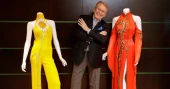
Mackie later worked on “The Sonny and Cher Show” after Cher appeared as a guest on Burnett’s program and became fond of his designs. He said Cher’s Laverne character, dressed in a leopard-print jumpsuit with dangling earrings, was one of his favorites.
Their partnership later took a more daring direction when Cher moved into movies and began attending the Academy Awards. Mackie created the beaded, midriff-baring outfits that became a signature of her red-carpet appearances.
At the 1974 Met Gala, Cher wore one of Mackie’s most famous creations — a sheer, beaded gown with feathered sleeves and a feathered skirt. The dress and Cher appeared on the cover of Time magazine.
Other memorable looks included a beaded spiderweb outfit with a matching Mohawk in 1986 and a revealing gown she wore after winning the best actress Oscar in 1988.
“The outfits are sometimes mistaken for fashion, but they’re costumes like for a character in a play,” Mackie told AP in 1999. “I want people to have fun. I want people to say ‘Wasn’t that interesting?’ or ‘Wasn’t that wild?’”
Mixed views on modern fashion
Mackie also found some commercial success. He launched a ready-to-wear clothing line in 1982 that later appeared at New York Fashion Week and became an early partner of QVC.
Although revealing dresses became increasingly popular, Mackie later expressed frustration with what he saw as repetitive and overly exposed red-carpet fashion.
“You watch awards shows and say, ‘Oh, cover up! Put it away! Honey, I don’t need to see all of that!’” he told The Hollywood Reporter in 2024.
He also criticized the similar looks worn by celebrities at the Met Gala, saying he was bored by the lack of originality.
Mackie also designed dozens of Barbie dolls for Mattel, featuring different faces, body types and stories. He is credited with being the first designer to create an entire Barbie doll, including a Lady Dracula Cher doll with small fangs and a coffin-shaped box.
The documentary “Bob Mackie: Naked Illusion” premiered in 2024. One of his dresses worn by Cher in 1975 was sold at auction that year for $101,600, about 25 times its original estimate.
Mackie was married to showgirl Lulu Porter from 1960 to 1963. Their son, makeup artist Robert Gordon Mackie Jr., died of AIDS at age 35. Mackie’s longtime partner, costume designer Ray Aghayan, died in 2011.
Mackie once summed up his approach to design by saying practicality was never his priority: “It’s all about looking good and living your fantasies.”
In 2017, at age 71, Cher again attracted attention at the Billboard Music Awards wearing two outfits designed by Mackie.
Mackie, however, remained critical of what he considered an increasingly predictable fashion industry.
“Nothing is very interesting anymore,” he told Vogue in 2017. “You just keep seeing the same thing over and over again and there are no surprises. Unfortunately, you don’t see much fashion anymore.”
1 month ago
For New York's Haitian community, annual West Indian Day Parade means more in trying times
Brooklyn’s Eastern Parkway is set to come alive Monday with steel drums, colorful floats draped in flags and the aroma of jerk chicken as hundreds of thousands of people gather for the West Indian Day Parade, one of the largest celebrations of Caribbean culture in the United States.
For Haitians, however, this year’s parade carries a more serious tone. Federal immigration enforcement has increased pressure on Caribbean and other Black immigrant communities over the past year, while Haitians have lost a major immigration protection known as temporary protected status, or TPS. The program had allowed hundreds of thousands of Haitians to remain legally in the US.
Organizers say the parade is therefore both a celebration of Haitian pride and a welcome moment of joy during a difficult year.
“There’s a somber cloud over it with everything that has happened from last year to this year with TPS,” said Natalie Lafontant, a Brooklyn native who organizes Lespri Ayiti, or “Spirit of Haiti,” the largest Haitian marching community, known as a “mas,” in Monday’s parade. She pointed to conditions at detention centers and the deportation of Haitians who may have no reliable means of supporting themselves after returning home.
Still, Lafontant said hardship has never stopped Caribbean people, particularly Haitians, from expressing themselves through culture.
She said Haitians rely on music, dance and art to keep moving forward despite difficult circumstances.
Keeping the parade alive amid immigration pressuresIn June, the US Supreme Court ruled 6-3 in Mullin v. Doe that federal courts could not review the Trump administration’s decision to end TPS for Haitian and Syrian immigrants. The ruling cleared the way for about 350,000 Haitians to lose the protection.
A federal judge finalized the order in early August, while work permits linked to Haitian TPS expired on July 27.
Lafontant’s Lespri Ayiti group, which includes about 180 artists, designers, musicians and community members, is taking part in the parade for the second consecutive year. The group faced difficulties securing sponsors for its float this year.
Organizing the parade is expensive, she said, with costs including insurance, costumes, designers and arrangements for participants. Despite the financial burden, the group continues because of its love for Haiti.
Haitians have deep roots in New YorkLafontant is part of a Haitian community of about 163,000 people in the New York metropolitan area, according to the Migration Policy Institute. It is the second-largest Haitian population in the US after the Miami metropolitan area.
Many Haitian immigrants settled in Brooklyn neighborhoods such as Flatbush, East Flatbush and Crown Heights.
Haitian migration to New York grew in waves beginning during the dictatorship of Jean-Claude “Baby Doc” Duvalier. Political repression and economic collapse pushed many Haitians to leave the country during the 1970s and 1980s. The migration continued after Duvalier was ousted in 1986.
Haiti’s tradition of resistance goes back even further to the Haitian Revolution, when enslaved and free Black people defeated French colonial rule in what is widely considered the only successful slave revolt in modern history. The struggle culminated in the 1803 Battle of Vertières and paved the way for Haiti’s independence in 1804.
That history remains an important source of pride for Haitians around the world, including generations who have established new lives outside the country.
Edwina Paul, founder of SPM, or “Fanm Se Poto Mitan,” meaning “Women Are the Pillar of Society,” left Haiti in 1993 and moved with her husband to Brooklyn’s Canarsie neighborhood.
Paul’s coalition of Haitian women leaders and organizers will also participate in Monday’s parade. She said insecurity and instability in Haiti have been major reasons people leave the country.
“It's not safe there. Coming here is like an umbrella for us to be safe from that,” she said, referring to Haitians fleeing gang violence and instability.
She stressed that Haitian migrants come to the US seeking work, education and a safer life, not to commit crimes.
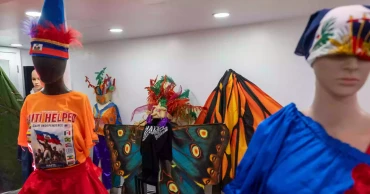
Haitian music and fashion take center stageSPM is highlighting Haitian resilience through its parade costumes this year.
Fashion designer Clara Poteau, a Fashion Institute of Technology alumna, created royal blue emperor robes inspired by Jean-Jacques Dessalines, a leader of the Haitian Revolution and the first leader of independent Haiti.
Six designers and one painter spent a month creating and hand-painting costumes celebrating Haitian achievements. Their work continued through the weekend before the parade.
The costumes include dresses decorated with miniature Haitian flags and skirts featuring national football players Duckens Nazon and Emmanuel Sanon, who hold Haiti’s international scoring records with 44 and 47 goals, respectively.
An orange T-shirt called the “Freedom” tee features the flags of countries whose independence Haitian revolutionary leaders supported with shelter, money, weapons and troops. The countries include Venezuela, Colombia, Ecuador, Peru, Bolivia, Panama, Mexico and Greece.
Music will also play a major role in the Haitian “mas.” Jesus Luc, a Harlem native and Lespri Ayiti’s band manager, organized a lineup featuring Raboday, a popular contemporary Haitian and Caribbean music style, along with Kompa, Haiti’s signature dance music.
DJ Comix of Team Madada will headline the musical lineup. Luc described the group as one of the most popular in Haiti and said its sound represents a new generation of Haitian youth culture.
“It’s electrifying. It’s music that will touch your soul,” Luc said, adding that the combination of music and costumes would bring the spirit and heart of the Haitian people to the parade.
1 month ago
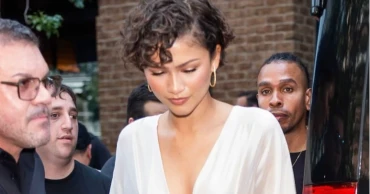
Zendaya embraces goddess-inspired style as she begins 'The Odyssey' promotional tour
Actor Zendaya has launched the promotional tour for Christopher Nolan's upcoming film "The Odyssey", turning heads with a look inspired by her character in the movie.
Widely regarded as one of Hollywood's leading fashion figures, the Emmy Award-winning actress is known for "method dressing" by choosing outfits that reflect the roles she plays. She appears to be continuing that trend for The Odyssey.
For her first appearance promoting the film, Zendaya wore a flowing outfit from the Khaite Resort 2027 collection. The look featured an ivory draped blouse with a deep V-neckline, paired with a matching semi-sheer A-line midi skirt. A black leather cord belt with gold accents highlighted the waist.
Zendaya plays Athena in the film, a character traditionally depicted in flowing white garments. Fashion observers said her outfit appeared to be a modern tribute to the Greek goddess's signature style.
She completed the look with gold dangling earrings, her trademark pixie bob hairstyle and metallic python-print strappy sandals by Christian Louboutin, replacing her usual So Kate pumps. Her understated makeup kept the focus on the outfit's elegant silhouette.
The appearance marks the beginning of what is expected to be a closely watched promotional tour for The Odyssey, with Zendaya once again blending fashion with her on-screen role.
Earlier this year, Zendaya also drew attention for her bridal-inspired looks while promoting The Drama. Reports say she recently married longtime partner and fellow actor Tom Holland.
She also earned praise for a series of character-inspired fashion choices during the promotional campaign for Spider-Man: Brand New Day. With The Odyssey, Zendaya appears to be entering a new goddess-inspired fashion phase that is already attracting attention.
3 months ago
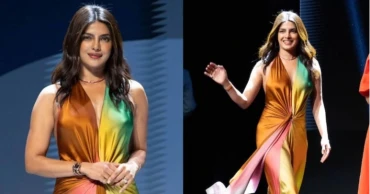
Priyanka Chopra dazzles at Cannes Lions
Actor Priyanka Chopra Jonas made a stylish appearance at Cannes Lions 2026, turning heads in a sophisticated designer outfit while sharing her views on storytelling and filmmaking at the global creativity festival.
The actor attended the five-day international event, which celebrates achievements in creativity, marketing and entertainment, and took part in a discussion at the Debussy Theatre on storytelling, originality and maintaining a creative vision.
For the occasion, Chopra wore a colour-block halter-neck maxi dress by designer Silvia Tcherassi. The outfit, crafted from Italian fabric and featuring a sleek column silhouette, was valued at around Rs 1.8 lakh.
She paired the dress with leather thong sandals and kept her overall look understated yet elegant. Her accessories included a pink necklace and a Rolex Day-Date watch, while her makeup featured neutral brown tones and a matte finish.
During the session, Chopra spoke about how she approaches storytelling and selecting film projects.
“I think you follow your gut when it comes to storytelling. I try not to follow trends, because that's really hard. A trend is interesting right now, it might not be interesting next week. It takes a year for a movie to be made, and by the time next year comes around, will audiences still be interested?” she said.
The actor emphasised that emotional impact matters more than following market trends.
“So, I try not to think through trends, I try to think through how does this make someone feel? Because my favourite movies, and you can answer as well, but are the ones that you talk about later, you kind of revisit again. It makes you feel something, when you're leaving the movie theatre, you kind of have something to say about it. So I try to think about when I read scripts for films that I want to make, is how does it make me feel if I watch this movie?” she added.
Chopra, who stars in the series Citadel, said she believes the most memorable films are those that leave a lasting emotional impression and continue to spark conversation long after audiences have watched them.
Source: NDTV
4 months ago

Prada embraces simplicity and everyday style at Milan Fashion Week
Designers Miuccia Prada and Raf Simons showcased a collection inspired by everyday wardrobe essentials during Milan Fashion Week, presenting a modern interpretation of jeans-based fashion through premium leather and innovative technical materials.
For the Spring/Summer season, Prada introduced a streamlined silhouette featuring cropped jackets and slim-cut five-pocket trousers, complemented by classic blazers and leather outerwear. The designers said their goal was to create clothing that resonates with ordinary people rather than catering solely to the fashion elite.
Ahead of the show, Simons compared the collection to a simple plate of pasta pomodoro, suggesting that fashion, like food, sometimes benefits from returning to timeless basics.
Although denim served as the collection’s inspiration, Prada revealed she has never worn jeans, while Simons said he only recently resumed wearing them after decades of favoring wool trousers. Nevertheless, the classic five-pocket pant became the foundation of the new Prada look.
Most outfits were crafted from soft leather in muted shades such as ivory, gray, burgundy, and turquoise, accompanied by energetic rock music on the runway. Some designs featured lightweight, semi-transparent technical fabrics suited to the recent European heatwave, while only a small number of looks incorporated actual denim.
The collection also included cropped shirts, knitted vests with geometric motifs, and silk scarves tied around the waist for contrast. Accessories were kept minimal, with colorful waist pouches and bold belts serving as the primary additions. Distinctive pointed shoes fastened with multiple Velcro straps completed the ensembles.
Prada emphasized the importance of creating versatile, functional clothing and avoiding excessive or unnecessary design elements. Simons echoed that sentiment, noting that fashion often draws its strongest inspiration from real-life street style rather than luxury runways.
Describing the collection, Simons highlighted its clean, vertical lines and understated elegance, saying it reflected a sense of calm, optimism, and renewal while challenging conventional ideas of luxury fashion.
The presentation itself mirrored the collection’s minimalist philosophy. Models walked through a simple showroom furnished with transparent benches, ensuring every guest had an unobstructed view.
Among the notable attendees were Anthony Edwards, Troye Sivan, ENHYPEN, and Louis Partridge. Outside the venue, enthusiastic fans braved the summer heat to catch a glimpse of the stars.
4 months ago