Others
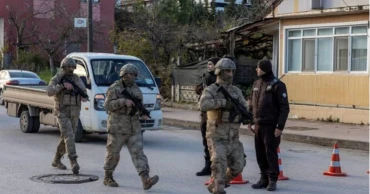
Türkiye detains 83 IS suspects in nationwide crackdown
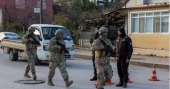
Turkish security forces have detained 83 suspects across 28 provinces in a nationwide operation targeting the Islamic State (IS) terror group, the Interior Ministry said Friday.
The raids were carried out by provincial gendarmerie commands in coordination with the Gendarmerie General Command's Counter-Terrorism Department and local chief public prosecutor's offices.
According to the ministry, those detained include alleged members of IS, individuals accused of providing financial support to the organization through affiliated contacts and purported aid organizations, and people spreading propaganda for the group via social media platforms.
The ministry did not reveal the identities of the suspects or confirm whether formal charges had been filed, but emphasized that operations against IS activities and financial networks would continue.
Türkiye officially designated IS as a terrorist organization in 2013 and has subsequently faced repeated attacks claimed by or linked to the group.
21 minutes ago
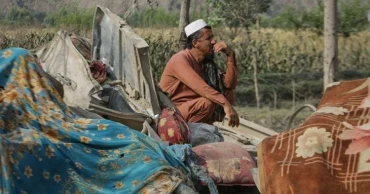
Pakistan carries out airstrikes in Afghanistan after accusing Kabul of drone attacks
Pakistan said it carried out airstrikes early Thursday on 10 locations in Afghanistan that it claimed were used to launch drone attacks against Pakistan a day earlier, sharply escalating tensions between the two countries and raising concerns over ongoing mediation efforts.
The strikes hit areas in the southern and eastern Afghan provinces of Kandahar, Paktia and Khost, killing four civilians, Afghan government spokesperson Zabihullah Mujahid said in a statement.
“These shameless acts of aggression and attacks by the Pakistani military regime will be met with an appropriate response,” he said.
Pakistani Information Minister Attaullah Tarar announced the strikes after officials said Afghan Taliban forces had launched eight drones and shelled Pakistani border posts following an attempted cross-border infiltration by militants, which Pakistani troops said they had foiled.
Tarar also posted aerial footage on X that appeared to show several strikes hitting large compounds in Kandahar and Khost.
He said the air and drone strikes destroyed militant hideouts and support facilities, including drone launch and storage sites, at 10 locations in areas controlled by the Taliban. According to Tarar, the sites were linked to attacks on civilians in Pakistan and Wednesday’s drone incursions.
Mujahid rejected Pakistan’s claims that Afghanistan had launched drone attacks and warned that Pakistan would face “consequences” for the airstrikes.
The latest strikes came days after Pakistani fighter jets hit sites in eastern Afghanistan on Monday, which Islamabad said were militant hideouts.
The escalation could complicate mediation efforts by China, Turkey, Qatar and Saudi Arabia to help establish lasting peace between Kabul and Islamabad.
Pakistan has repeatedly accused the Taliban government in Afghanistan of allowing militants to use its territory to launch attacks inside Pakistan. Kabul has denied the allegations.
“Instead of dismantling these networks and taking credible and verifiable action against those using Afghan territory to perpetrate terrorism against Pakistan, the Afghan Taliban regime has chosen to escalate the situation through hostile drone operations against Pakistan,” Tarar said.
He described the Pakistani strikes as “deliberate, precise, calibrated, and proportionate,” saying they were limited to identified military targets directly linked to the attempted attacks against Pakistan.
Pakistani officials also said Wednesday that security forces had neutralized eight makeshift drones launched by the Afghan Taliban before they could reach the northwestern city of Kohat and the border town of Torkham.
They also said Afghan forces had fired mortars and other heavy weapons at Pakistani border posts, prompting Pakistani forces to respond with artillery fire targeting Taliban border posts, mortar positions and defensive sites.
The four officials spoke on condition of anonymity because they were not authorized to discuss the latest escalation with the media.
Pakistan’s Information Ministry said 28 militants were killed in Monday’s airstrikes. Afghan authorities, however, said at least three civilians were killed and four others injured. The U.N. mission in Afghanistan confirmed the civilian casualties, and Kabul formally protested the strikes.
On the sidelines of the U.N. General Assembly in New York, Pakistani Foreign Minister Ishaq Dar expressed concern over what he said was the presence of more than two dozen anti-Pakistani militant groups in Afghanistan.
Monday’s airstrikes followed a gunbattle with militants in Hangu, a district in northwestern Khyber Pakhtunkhwa province near the Afghan border, that killed six Pakistani security personnel.
Days earlier, a suicide bomber attacked a mosque inside a police compound in nearby Kohat.
Eight gunmen then stormed the compound, leading to a 20-hour gunbattle that killed at least 21 people, most of them police officers. No group has claimed responsibility for the attacks.
Pakistani authorities blamed the violence on the Pakistani Taliban and allied militant groups.
The Pakistani Taliban, formally known as Tehrik-e-Taliban Pakistan, have intensified attacks on Pakistani security forces since the Afghan Taliban returned to power in Afghanistan in 2021.
6 hours ago
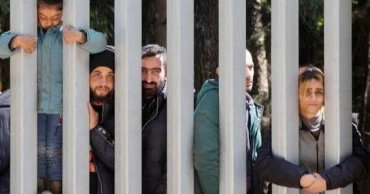
Poland urges EU to allow temporary asylum suspension during migration crises
Poland suspended the registration of asylum applications from migrants entering from Belarus in March 2025, describing the move as a temporary emergency measure to counter what it said was an effort by Russia and its ally Belarus to destabilize the country by directing migrants toward the European Union.
The policy has remained in place for about 18 months. Poland is now calling on the European Union to allow member states to temporarily suspend asylum applications during situations involving what authorities describe as “instrumentalized” mass migration.
Rights groups, however, warn that such a policy could conflict with international law.
The Polish-Belarusian border stretches about 400 kilometres and forms part of the EU’s external frontier.
Since 2021, EU authorities have accused Belarusian President Alexander Lukashenko of using migrants as a political tool by encouraging people to travel to Belarus and seek entry into the EU, offering an alternative to more dangerous routes across the Mediterranean.
EU considers new emergency migration frameworkThe possibility of an EU-wide approach gained attention on Sept. 16 when European Commission President Ursula von der Leyen said the Commission would propose a new European emergency response framework for cases involving “engineered and weaponized” mass migration.
She said the framework would provide limited flexibility in applying normal migration procedures in specific emergency situations.
Von der Leyen did not specify which procedures could be changed. Details about the framework, including whether it would require approval from the European Parliament and EU leaders, remain unclear.
Poland’s Deputy Interior Minister Maciej Duszczyk, who oversees migration issues, welcomed the announcement as a sign that other EU countries were considering what he calls the “Polish solution.”
“We are happy that what we’ve been saying for a year, or a year and a half, is now becoming mainstream in the EU,” Duszczyk told The Associated Press.
He said a migration crisis in Ceuta in July, when more than 70,000 people crossed from Morocco into the Spanish enclave in North Africa, showed that other European countries could face border emergencies similar to Poland’s.
But Tineke Strik, a Dutch member of the European Parliament, said she was concerned that the proposed framework could lead to the Polish approach being adopted across the EU and make restrictions on asylum applications more widely accepted.
“If you normalize it, if you make it the default policy of all EU member states, you (the Poles) are not falling outside of the framework,” Strik said. “It simply has been legalized.”
She said such a move could weaken a central principle of European and international asylum law, under which people must have an opportunity to seek protection before they are returned.
Michael O’Flaherty, human rights commissioner for the Council of Europe, which is separate from the EU, also expressed concern that discussions about suspending asylum rights at the EU level could cross into violations of international law.
Critics say allowing countries to suspend asylum applications could undermine the principle of non-refoulement, which prevents governments from returning people to places where they could face persecution.
The principle became a key part of the international refugee protection system after World War II, following the experience of people fleeing Nazi persecution who were denied safe refuge.
Rights groups challenge Poland’s policyDuszczyk said Poland’s suspension of asylum applications is consistent with international law. He said people considered especially vulnerable, including pregnant women, children and those facing persecution in Belarus, can still seek asylum.
“Each person who appears on the border has the right to speak to the Polish border guards and explain their situation,” Duszczyk said.
The Polish ombudsman and nongovernmental organizations working with migrants, however, dispute that account.
“Visibly pregnant women might stand a chance, but in the case of sick people or teenagers who are minors, their arguments are typically undermined,” said Karolina Czerwinska of the Association for Legal Intervention, a Polish NGO that provides legal assistance to migrants.
Duszczyk argued that conditions have changed since the 1950s, when countries emerging from World War II established much of the modern international system of refugee protection and human rights.
Czerwinska said Poland’s position on the frontline of Russia’s war against Ukraine makes respect for human rights particularly important.
“We Poles located on the front lines of the war in Ukraine should really make sure human rights are respected,” she said. “We may need to make use of them ourselves.”
Poland says EU migration pact is not enoughHuman rights organizations said von der Leyen’s announcement was unexpected because the EU’s new Pact on Migration and Asylum, which took effect three months ago, already allows countries facing border emergencies to adjust some asylum procedures.
Those measures include extending deadlines for processing applications and allowing migrants to remain in detention for longer periods.
Duszczyk, however, said the European Commission’s proposal showed that the existing pact was “not enough.”
He said the EU needed a new legal mechanism that would allow member states to temporarily suspend normal procedures during a declared emergency.
According to Duszczyk, the European Commission is expected to provide more details about the proposed framework at a meeting of EU interior ministers on Oct. 1. Further discussions are expected at a European Council summit later in October.
The European Commission has said the proposed emergency mechanism would apply only under strictly defined conditions and would allow limited, time-bound flexibility in existing procedures while maintaining fundamental rights.
6 hours ago

A month after Nepal-China floods, families still await news of missing loved ones
Olena Kalynychenko was looking forward to sharing the chrysanthemum tea she had bought in China with her partner.
“She said, ‘When I come back home, we will drink the tea made from Chinese flowers,’” said Oles Visich, Kalynychenko’s partner. He has now been waiting for news about her for a month, after she and thousands of others disappeared in catastrophic flooding along the Nepal-China border.
Her last known location was exiting China at a border post at 10:22 a.m. local time, 15 minutes before the flood.
Kalynychenko, 36, was part of a group of 56 people, mostly Ukrainians, who had traveled to Mount Kailash in Tibet for a spiritual retreat.
Their families' situation is a sign of how complex and time-consuming the process is of rescuing, recovering and identifying victims lost to the disaster. Given the number of missing, the process will likely take months.
They disappeared while heading from China to Nepal on their way home. Some relatives say they have received no information from authorities. The Chinese government has told at least two families that their relatives left Chinese territory before the flood struck, but they haven't been able to confirm whether they entered Nepal as Nepal's immigration complex and its records were destroyed in the floods.
Little information is reaching families
The floods killed more than 1,400 people and left more than 6,000 missing, most of them on the Nepali side of the border. Nepal has said that 636 foreign nationals remain missing, including 54 Ukrainians. China has reported 261 foreign nationals among the missing on its side, including one Ukrainian.
Families in Ukraine say most of them have not received any answers since realizing their relatives were among the missing.
“We only have the statistics that are being posted online — how many people have been found, how many are alive, how many are dead, and how many are still missing,” said Stanislav Solohub, whose brother and sister-in-law went missing on Aug. 25.
Nepal says it has recovered 1,451 bodies, but only 112 have been handed over to families so far.
The government said it has collected DNA samples from 2,035 relatives so far, but it has not disclosed how many victims have been identified.
Last messages were sent minutes before the floods began
The group, led by Irina Blonskaya, a spiritual teacher who often organized retreats, was returning from its journey home in China when the flood struck Aug. 26. Their plan was to travel by bus from the Tibet region to Kathmandu, where its members would board flights to their respective countries. The group’s last message was sent at 8:27 a.m. Nepal time, about 10 minutes before the mountain slope collapsed.
Many had not checked in with their loved ones that morning, owing to the time difference.
Authorities have said the were triggered when a section of ice and rock broke away from a Himalayan mountain slope, creating a fast-moving torrent of water, ice, mud and debris. It destroyed communities and Gyirong Port, a border crossing used by some pilgrims traveling to or returning from Mount Kailash.
‘Who is looking for them?’
Vladsylava Horlova’s mother, Elena, was traveling in the group as well. She initially found her mother’s name of the list of the missing from the Nepali government, but hasn't received any further information from the Nepali side. Later, the Chinese embassy confirmed her mother had left the country, and was not counted in China's list of missing people.
Horlova, a college student who is a refugee in Norway, worries her mother wasn't in either country when the flood struck. There’s a stretch of road between the Nepali immigration building and the Chinese one along the border, videos from travelers show.
“You think about what if someone appeared to be in a no man’s land or that they left China, but not physically, who’s looking for them?” she asked.
Horlova has attempted to contact organizations ranging from the Ukrainian embassy in China, to Norwegian police, and even the Red Cross. She, like the others, have submitted their DNA samples to police to help the search.
On the other side of the border, China has said that when the remains of foreigners are identified, it will notify their respective embassies, but the authorities have not given any details about how many identities have been confirmed so far.
People still have hope
Though it has been a month since the original disaster, some families are still holding on to hope.
Just days before Kalynychenko left for her travels, she organized a retreat for women in Ukraine whose partners were fighting on the front lines of the war, some of whom had not heard from their partners for two years.
Visich, her partner, sees the irony of his situation, but like others in the group, has chosen to stay positive. Visich, also a psychologist, wrote a support guide for others like himself, offering tips on mental health.
“Because for my Olenka, for example, the most important thing in our connection, that each other … needs to be happy,” Visich said.
9 hours ago
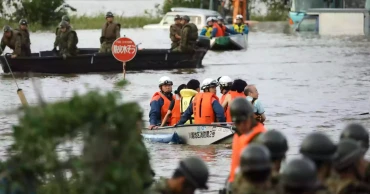
Death toll rises to 11 after typhoon-induced downpours in Japan
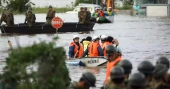
The death toll rose to 11, with three others still missing, after heavy rain brought by a large typhoon lashed the Kanto region in eastern Japan and triggered landslides and flooding earlier this week, local media reported Friday.
Among the deaths, seven were confirmed in Chiba Prefecture, east of Tokyo, while four were confirmed in Kanagawa Prefecture, southwest of the capital. The most recently found victim was a woman in her 70s who had been reported missing after a landslide in Yokosuka, Kanagawa, according to public broadcaster NHK.
Police and firefighters are continuing to search for the missing people.
Typhoon Dujuan, which approached Japan's eastern Pacific coast on Monday, brought record rainfall to the Kanto region and the Izu Islands, triggering landslides and river flooding and wreaking havoc in areas near Tokyo, particularly in Chiba Prefecture.
As of Thursday afternoon, nearly 1,000 buildings in Chiba and Kanagawa prefectures have been destroyed, damaged, or flooded due to the typhoon, NHK reported.
At Lake Imbanuma in northern Chiba, some levees were breached following the typhoon, leaving surrounding residential areas, rice paddies and streets inundated. Although water levels have been gradually falling, flooding continues, with recovery work ongoing into Friday.
The typhoon also caused considerable inconvenience to daily life and transportation. As of around 6 a.m. local time on Friday, about 11,790 households in Chiba and Kanagawa prefectures were still without power. Train services in Chiba were suspended or reduced on certain sections of many lines, with some services not expected to resume for about three months.
Meanwhile, according to the Japan Meteorological Agency, another typhoon, the 26th of the season, could approach the country in the coming days, potentially bringing rough seas and severe weather to the southern island prefecture of Okinawa and other areas.
10 hours ago
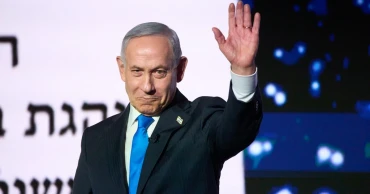
Netanyahu defends Iran attack as delegates walk out of UN speech
Israeli Prime Minister Benjamin Netanyahu faced a mass walkout by delegates as he addressed the UN General Assembly on Thursday, where he defended Israel’s decision to attack Iran and sharply criticized those who left the hall.
As Netanyahu approached the podium, delegates responded with a mixture of cheers and boos, while scores of representatives walked out. Many seats remained empty as he began his address.
Netanyahu described the decision to attack Iran as one of the easiest decisions he had made and accused the delegates who left the hall of lacking courage.
“If there are any other moral cowards who have not yet left the hall, please do so now,” he said.
The Palestinian Mission to the United Nations had called on delegations to leave the chamber during Netanyahu’s speech.
Hamas signals readiness for Gaza peace plan
Meanwhile, Hamas said it was prepared to move ahead with the next steps of a proposed peace agreement for Gaza after US President Donald Trump’s Board of Peace unveiled a six-month reconstruction plan worth $2.45 billion.
Hamas spokesperson Hazem Qassem said the group was fully prepared to implement the Board of Peace’s roadmap, but did not refer to any plan for the group to surrender its weapons.
Israel has said reconstruction efforts in Gaza cannot proceed unless Hamas disarms.
Hamas had previously agreed to a proposal that included disarmament but has since accused Israel of violating ceasefire arrangements, while Israel and Hamas have traded allegations over breaches of the agreement and Israel's continued presence in large parts of Gaza.
A senior European Union official said only 1 billion euros ($1.1 billion) has so far been raised toward the estimated 71 billion euros ($80.8 billion) required to rebuild Gaza.
The estimate was jointly made by the United Nations, the World Bank and the 27-member European Union.
18 hours ago
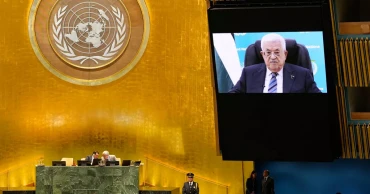
Palestinian President addresses UNGA by video after US denies visa
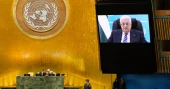
Palestinian President Mahmoud Abbas addressed the UN General Assembly on Thursday through a prerecorded video after the United States denied him and other senior Palestinian officials visas to attend the annual gathering in person for the second consecutive year.
Speaking from his office in Ramallah, the 90-year-old Palestinian leader said Palestinians would not accept displacement or allow others to determine their future.
“We will not leave our homeland. We will not accept displacement. And we will not allow anyone to decide our future on our behalf,” Abbas said.
Although the plight of Palestinians has featured prominently in speeches by world leaders during the General Assembly session, Abbas called for concrete international action against Israel, particularly over its military operations and the supply of weapons to Israel.
“How long will some countries continue to remain silent about Israel, or continue supplying it with weapons that it uses against our people?” he asked, referring to the destruction and loss of life in Gaza and the West Bank.
Abbas said Palestinians were facing an extremely difficult period, describing widespread destruction of neighborhoods, refugee camps, schools, universities, hospitals and places of worship in Gaza.
He also urged the international community to support a two-state solution to the Israeli-Palestinian conflict, saying Palestinians were prepared to live alongside Israel.
Israeli Prime Minister Benjamin Netanyahu was scheduled to address the General Assembly in person later Thursday. The Israeli delegation's seats in the hall were empty while Abbas delivered his remarks.
Netanyahu has opposed the establishment of a Palestinian state while he remains prime minister and has said the Palestinian Authority is not a partner for peace.
Abbas also criticized the expansion of Israeli settlements in the occupied West Bank, saying efforts to preserve the possibility of a Palestinian state must include protecting the territory on which it would be established.
The Palestinian president said Gaza should not be separated politically from the West Bank and east Jerusalem in the long term. He called for the three areas to be administered under “one state, one government, one law and one legitimate entity authorized to bear arms.”
Abbas has headed the Palestinian Authority since 2005. The authority, established under the 1990s peace agreements with Israel, exercises limited self-rule in parts of the West Bank and depends heavily on international assistance.
The Palestinian Authority lost control of Gaza after Hamas won parliamentary elections in 2006 and seized the territory by force the following year.
Abbas was elected president in 2005 for a four-year term, but no presidential or legislative elections have been held since 2006. In his address, however, he said elections were forthcoming.
During Abbas's tenure, Palestine has been recognized as a state by a majority of UN member states, although the recognition has not ended Israel's decades-long occupation of the West Bank and east Jerusalem.
The Palestinians seek those territories as part of a future independent state, while Israel has maintained control over them since the 1967 war. Palestinian authorities and much of the international community regard Israeli settlements in the occupied territories as illegal and an obstacle to establishing a viable Palestinian state.
Abbas recorded the address on Wednesday.
21 hours ago
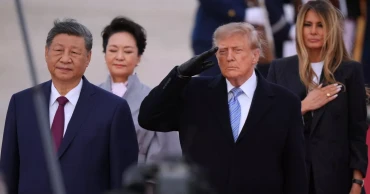
Trump welcomes Xi in Washington as US-China trade truce extended
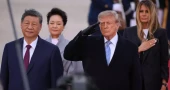
Chinese President Xi Jinping arrived in Washington on Wednesday and received an unusually high-profile welcome from US President Donald Trump as the two countries agreed to extend their existing trade truce until January.
US Treasury Secretary Scott Bessent announced the extension during an interview with Fox News as Trump greeted Xi at Joint Base Andrews. Under the truce, Washington and Beijing have agreed to reduce tariffs and refrain from introducing new trade restrictions.
Bessent said the extension until Jan. 10 would provide Trump and Xi additional time to discuss outstanding issues at upcoming summits in China in November and Florida in December. He said it remained unclear whether the two sides would negotiate a broader agreement or simply continue the current arrangement.
Trade remains one of the main areas of tension between the two countries, alongside artificial intelligence, US policy toward Iran and China's position on Taiwan. However, Xi's three-day visit is also expected to emphasize ceremonial diplomacy, highlighted by Trump's decision to personally greet him upon arrival.
A 100-foot red carpet was laid out beside Xi's aircraft, with a 21-member honor guard positioned along the sides. Trump and first lady Melania Trump welcomed Xi and his wife, Peng Liyuan, with handshakes.
The arrival ceremony featured a flyover by two B-1 bombers, military formations representing all branches of the US armed forces, and the national anthems and flags of both countries. Trump and Xi exchanged a few words that could not be heard by reporters, and Trump briefly placed a hand on Xi's back during their interaction.
Later, Trump told reporters that he believed the Chinese delegation appreciated the reception.
In a statement following his arrival, Xi said China and the US should view each other as partners rather than rivals. He said China's national development goals and Trump's “Make America Great Again” agenda could coexist and contribute to the success of both countries and the wider world.
Questions over the lavish welcomeTrump has repeatedly praised Xi and described their relationship as warm, while emphasizing the need to maintain what he calls strategic stability between Washington and Beijing.
Some Republicans, however, have criticized the elaborate reception. Senate Armed Services Committee Chairman Roger Wicker said Trump should reconsider inviting Xi given the range of disputes between the US and China.
Secretary of State Marco Rubio defended high-level engagement, saying the US and China are the world's two largest economies and among the world's most powerful military powers.
Danny Russel, a former US diplomat and now with the Asia Society Policy Institute, said the ceremonial reception could benefit Beijing by portraying Xi as a highly respected global leader.
China sought longer trade truceChina had reportedly hoped for a longer extension of the trade truce, which was previously scheduled to expire on Nov. 10.
Wendy Cutler, a former US trade negotiator, said the shorter extension indicated that Washington remained concerned about China's implementation of commitments, particularly regarding critical mineral exports and purchases of US agricultural products.
Craig Singleton of the Foundation for Defense of Democracies said the limited extension would allow Washington to assess whether Beijing fulfills its outstanding commitments before agreeing to another extension.
Trump has yet to publicly comment on the extension. The two leaders are expected to hold more substantive discussions on Thursday following an official welcome ceremony at the White House and a military review.
They are also scheduled to attend a black-tie dinner featuring prominent business figures, including Nvidia CEO Jensen Huang and SpaceX CEO Elon Musk.
Trump seeks to match China's welcomeTrump has signaled that he wants to provide Xi with a grand reception similar to the welcome Trump received during his visit to China earlier this year.
Xi did not personally greet Trump when he arrived in Beijing; Chinese Vice President Han Zheng received him instead. Trump was nevertheless welcomed with a red carpet, military honors, a band and hundreds of Chinese youths carrying US and Chinese flags.
Melania Trump said her husband chose to personally receive Xi because of their close relationship, adding that Xi and his wife deserved to be welcomed with “the most respect.”
The lengthy red carpet at Joint Base Andrews was reminiscent of the elaborate reception given to Russian President Vladimir Putin when he arrived at a US military base in Alaska last summer for talks on the war in Ukraine.
Xi and Peng are scheduled to return to the White House on Friday for a private tea with Trump and Melania before joining them on a visit to the National Archives, where they are expected to view historic documents highlighting US-China relations.
1 day ago
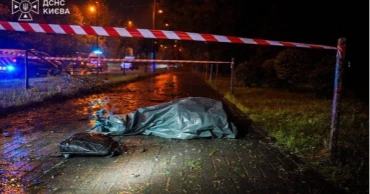
Russian strikes kill 8 in Ukraine as UN debates ways to end war
Russian drone and missile attacks across Ukraine killed at least eight civilians overnight, officials said Thursday, as the war continued despite renewed international calls for a settlement at the UN General Assembly.
In the northeastern Kharkiv region, a Russian strike killed six agricultural workers and injured 12 others, Interior Minister Ihor Vyhivskyi said.
Another attack on Kyiv killed a man and a woman, while officials in the southern port city of Odesa also reported heavy Russian bombardment.
Ukrainian President Volodymyr Zelenskyy urged countries in a speech to the UN General Assembly late Wednesday to cut Russia's revenues through sanctions and trade restrictions, saying Moscow needs money to continue the war.
Zelenskyy and other world leaders have repeatedly used UN gatherings to call for pressure on Russia to end its invasion.
However, years of diplomatic efforts have yet to produce a breakthrough. The war has disrupted global food and energy supplies and further strained relations between Russia and Western countries.
Kremlin spokesman Dmitry Peskov repeated Moscow's call for a comprehensive peace agreement rather than a temporary ceasefire after Ukraine renewed its demand for a complete and unconditional halt to the fighting.
“We believe it's necessary to seek peace, not a temporary truce,” Peskov told reporters Thursday.
Russia has demanded, among other things, that Ukraine give up territory — a condition Kyiv rejects.
Air attacks intensifyThe aerial war has intensified in recent months. Russia has continued launching cruise and ballistic missiles, powerful glide bombs and jet-powered drones at Ukraine.
Ukraine, meanwhile, has used long-range drones to target Russian oil refineries and other businesses important to the country's economy.
There have been few major changes along the roughly 1,250-kilometre front line in eastern and southern Ukraine since last year. Large numbers of drones used by both sides have made troop movements difficult.
Russian strikes put civilians under pressureThe attack on Kyiv damaged more than 50 civilian sites, including apartment buildings, post offices, a maternity hospital and a textile factory, Vyhivskyi said.
Russian strikes have repeatedly hit civilian infrastructure, including trains, shopping centres, supermarkets and gas stations, keeping many Ukrainians on edge.
Valentyna Kolosenko, 49, a Kyiv resident, said a solid oak door protected her when three explosions occurred near her home.
She said she remained determined to cope with the situation despite the fear.
“Everything is paralyzed. Nothing works,” she told The Associated Press. “Getting to work is incredibly difficult and frightening.”
Liubov Paziuk, 74, a pensioner in Kyiv whose home windows were shattered, said she also intended to remain in the city.
“We don't get used to it, we adapt, because we have only one choice: to stay here, on our land, despite everything,” she said.
Russia's Defense Ministry said its forces had targeted weapons factories, telecommunications facilities and logistics sites in Kyiv and the Odesa region overnight.
The United Nations said last week that more Ukrainian civilians had been killed and injured during the first eight months of 2026 than throughout all of 2025.
According to the UN Human Rights Monitoring Mission in Ukraine, Russian attacks killed at least 368 civilians and injured 2,314 others in August.
“Russia's escalation of terror demonstrates that active diplomacy must come hand in hand with devastating pressure on Putin's regime and unwavering support for the defense of Ukraine,” Ukrainian Foreign Minister Andrii Sybiha said on X.
With another winter approaching, Zelenskyy warned that conditions could become even more difficult but said Ukraine would continue resisting.
“Ukrainians understand that this winter could be very harsh for us. But in response, we will have no choice but to make it painful for Russia, too,” he said on social media.
He added that steps to reduce tensions were needed before winter.
Ukrainian drones hit western RussiaRussian officials reported Ukrainian drone attacks in western Russia on Thursday but provided few details.
In the Rostov region, fragments from a Ukrainian drone damaged an administrative building at an oil refinery, but no fire was reported, regional Gov. Yuri Slyusar said.
In the Krasnodar region, drone fragments caused a brief fire at an industrial facility, emergency officials said.
Ukrainian officials did not immediately comment on the reports.
Drones enter Romanian, Moldovan airspaceRomania's Defense Ministry said Thursday that a drone entered Romanian airspace for about four minutes before crashing near a town in the country's north, close to the Ukrainian border.
Romania had earlier scrambled two F-16 fighter jets and two Spanish F-18s to monitor its airspace at two locations after several drones were detected in Ukraine near the border.
Authorities did not say who operated the drone.
Moldova's Defense Ministry also reported several airspace violations during Russia's attacks on neighbouring Ukraine.
The incidents prompted Moldovan authorities to close part of the country's northern airspace, the ministry said.
1 day ago

Turkey detains 11 suspected IS, al-Qaida members in Istanbul
Counter-terrorism police in Istanbul detained 11 foreign nationals on Thursday over suspected links to the Islamic State (IS) and al-Qaida terror groups, local media reported.
State-run media reported that police launched simultaneous operations at several addresses after establishing that the suspects had maintained contact with members of both extremist groups in conflict zones.
According to authorities, the suspects had allegedly posted content praising terrorist organizations on social media platforms and were assessed as capable of carrying out attacks targeting the country.
During the raids, law enforcement officers seized a knife, ammunition and numerous digital materials. The nationalities of the detained individuals have not yet been disclosed.
Türkiye officially designated IS as a terrorist organization in 2013 and has subsequently faced repeated attacks claimed by or linked to the group.
1 day ago