Others
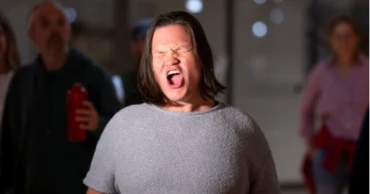
Austrian yodelers take their voices underground, turning parking garage into Alpine echo chamber
With no mountains nearby to practice in, Austrian yodeling enthusiasts have found an unusual alternative — an underground parking garage that creates echoes similar to those heard in the Alps.
“It’s not too dissimilar to the high mountains,” yodeling teacher Anna Maria Gutschi said while leading a group of about 30 people through an empty parking garage earlier this week. “You have wide hallways; you have walls that reflect a lot.”
Gutschi works for the Styrian Volksliedwerk, a cultural organization that promotes traditional folk music in Graz, a city in southeastern Austria. Although Graz is not located in the high mountains, it sits in a flat basin surrounded by hills and low mountain ranges on the edge of the Alps.
The organization has been offering yodeling courses in unusual locations as a way of keeping the traditional art alive in modern times.
The sessions can be held in places ranging from underground car parks and canals to gas stations, as long as the acoustics are suitable. Up to 30 people can take part in each session.
“It’s a form of communication from mountain to mountain — just like that, without the need for a phone,” Gutschi said as she demonstrated the rising and falling sounds of yodeling.
“And it’s not as boring as writing an SMS. Sounds much better, too,” she added.
Gutschi described yodeling as a musical tradition in which the sound builds upward through different notes.
“The energy is rising, it’s rising and rising,” she told her students. “Ever higher and then it wants out on top and there it goes.”
For more than an hour, the group walked through Graz’s largest underground parking garage, practicing until they reached its deepest section, where the acoustics created the strongest echoes.
Some participants were experienced yodelers, while others were trying it for the first time.
Jamey Sohn, a South Korean student studying sustainable development in Graz, joined the course to experience Austrian culture.
“When I actually came here, it was a lot more — well, I wouldn’t say easy per se, but it’s a lot more approachable than I first expected,” Sohn said.
From Alpine communication to musical traditionYodeling developed centuries ago in the Alps as a way for people to communicate across long distances. It was also used between people and animals.
Cattle could recognize their owners’ voices and return to the stable from a distance.
Over time, the traditional form of singing developed into a musical genre and gained international popularity, particularly through the American musical film “The Sound of Music.”
For Thomas Button, a yodeling teacher originally from New York state, the practice is “like a form of meditation. Singing meditation.”
Local yodeling enthusiast Rudolf Schmidhofer said performing together creates a strong sense of energy and connection.
“It’s hard to describe how much power you get from yodeling together, the energy from within,” he said. “The togetherness, the polyphonic kind of yodeling where you must listen to each other.”
“I’m still a student when it comes to this, but I like it very much,” he added.
7 hours ago

Smithsonian's Black history museum marks 10 years amid Trump administration pressure
The National Museum of African American History and Culture is marking its 10th anniversary with celebrations, even as it faces pressure from the administration of President Donald Trump over how American history is presented in federally supported museums.
The museum, which opened on Sept. 24, 2016, plans a weekend of events at its National Mall location and The Wharf along the Washington Channel. The celebrations will begin Thursday with activities throughout the museum and include a discussion titled “Understanding America,” featuring Smithsonian Secretary Lonnie G. Bunch III, the museum's founding director.
The anniversary will also have a family-style feel, including a performance of Stevie Wonder's “Happy Birthday.”
“Our anniversary is really founded through this theme of ‘Welcome Home. Our Legacy Continues,’” said Shanita Brackett, the museum's acting director. “It means we are planning our next 10, frankly 20 years of exhibitions right now.”
The museum, often affectionately called the “Blacksonian” by visitors and supporters, has come under scrutiny from the Trump administration.
Trump signed an executive order last year seeking changes at a number of federally supported museums and landmarks. The Interior Department has also removed dozens of displays from national monuments that focused on social activists, people of color, women and LGBTQ people, among others.
The order directed federal officials to work with Congress to prevent the Smithsonian from using federal funds for exhibits that allegedly “degrade shared American values, divide Americans based on race, or promote programs or ideologies inconsistent with federal law.”
However, museum officials say their work has continued without interference.
“We have not changed any exhibitions. We haven't changed our language. We know that what we do is steeped in scholarship,” Brackett said.
‘No changes’ to museum's missionThe Smithsonian receives funding from both the federal government and private sources. Its funding structure and governance, which includes lawmakers from both parties, private donors and Supreme Court Chief Justice John Roberts, have made it more difficult for the administration to directly control its exhibits.
Still, supporters of the museum have expressed concern about possible changes to its exhibitions over the past two years.
Trump's administration has also announced measures aimed at the Smithsonian. Trump ordered signs to be placed outside some Smithsonian buildings warning visitors that they could encounter exhibits presenting what the administration considers an inaccurate portrayal of American history.
Brackett said the museum remains committed to its original mission of presenting “the unvarnished truth of African American history and culture.”
“We know that Black history is a part of American history, and it's our job to ensure that everyone who comes to this museum, who engages in our programming, who visits us online, understands exactly how all of this evolved,” she said.
She said the museum also seeks to show how African Americans' contributions have helped advance the United States.
“There are no changes to exhibits other than rotating objects that need conservation,” Brackett said.
Some visitors had feared that displays such as the casket of Emmett Till and a Greensboro lunch counter at the nearby National Museum of American History might have been changed to address concerns from the administration.
Brackett said there had been no such changes.
“Nothing has changed,” she said.
More than a century of advocacyThe idea of creating a major landmark on the National Mall to recognize African American contributions dates back more than 100 years.
In 1915, Black Civil War veterans urged lawmakers to establish a memorial honoring their contributions to the war, during which many had fought for their own freedom.
The proposal moved forward slowly over the following decades. Later, efforts to honor the legacy of the civil rights movement gained support among lawmakers.
Congress approved the museum in 2003, and it opened its doors on Sept. 24, 2016.
At the opening ceremony, then-President Barack Obama described African American history as an important part of the broader American story.
“It is a glorious story, the one that's told here. It is complicated, and it is messy, and it is full of contradictions, as all great stories are,” Obama said.
Over the past decade, the museum has welcomed nearly 14 million visitors from 200 countries and more than 26,000 school groups, according to the Smithsonian.
The 10-story museum has five floors above ground that focus on African American art and cultural achievements, while five underground floors explore the community's deeper history.
Its exhibitions present both the difficult and triumphant chapters of African American history and their place in the wider history of the United States.
Visitors eager to experience the museumA day before the anniversary, Shallary Duncan of Williamsport, Pennsylvania, visited the museum for the first time.
“With all of the changes in our country, it made me yearn to be here. I don't want to see any changes that would mitigate the reality of this experience,” said Duncan, a psychologist and self-described history enthusiast.
She said it was important for African Americans to have a voice in preserving their history.
“We know that African Americans have been in this country for as long as the country has been here, so it's important for us that we are a part of a voice that says this is real, our history is real and we don't want it to change,” she said.
More than a dozen students from a group of historically Black colleges and universities also visited the museum Wednesday to learn from its exhibitions. Some said they had been visiting since childhood.
For Jaina Dotson, a student at Tuskegee University studying architecture, the visit was especially meaningful. She had visited the museum as a child while growing up in Maryland and wanted to see how her perspective had changed.
The visit also connected with her studies, as she had researched the museum's design for an architecture project.
“Looking at the outside facade, the corona, and the intention of the design behind that, as well as the layout of the museum itself, was an integral part of my research,” Dotson said.
“The layout of the museum, its architecture, is really important for the experience. So it'll be fun to actually experience that as a patron.”
1 day ago
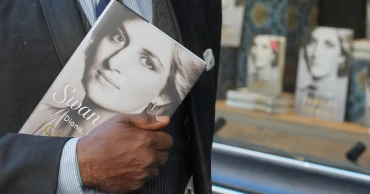
New book by Princess Diana's brother prompts war of words with King Charles III
A book published Tuesday by the brother of the late Princess Diana has made headlines around the world with its damning allegations about Diana's ex-husband, now King Charles III, and reopened decades-old wounds within Britain's royal family.
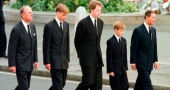
In "Swan Song: Diana, My Sister," Charles Spencer alleges that he argued with the then-Prince Charles over palace plans for Prince William and Prince Harry, then 15 and 12, to walk behind their mother's coffin during her 1997 funeral procession.
Spencer says he told Charles that Diana, who was killed in a car crash in Paris at the age of 36, would not have wanted her boys to undergo the ordeal. He claims the prince "went ballistic" during the argument, and told him: "Rest assured, we'll forget her soon enough." Spencer also accuses Charles of having "contempt" for his ex-wife and of sounding "elated" after her death.
After excerpts of the book were published last week, Buckingham Palace responded with a strongly worded statement that's rare by the measured standards of the royal household.
"His Majesty is mindful that the pain of fraternal grief can cloud reason, affect judgment and color memory in ways others do not recognize, even many years after such a loss," it said.
Spencer has stood by his claims, insisting to the BBC that he is telling the truth. On the royal rebuttal, he asked: "Is he furious or is he embarrassed?"
War of words draws renewed attention to Charles and Diana's stormy history
Charles, then 32, married 20-year-old Lady Diana Spencer in a lavish ceremony at St. Paul's Cathedral in 1981. The couple divorced in 1996, and a decade later Charles married Camilla Parker Bowles, now Queen Camilla.
Charles Spencer, the 9th Earl Spencer, has long clashed with the royals over their treatment of his older sister.
Tensions between the palace and the Spencer family following her death were dramatized in the film "The Queen" and the Netflix series "The Crown."
In a searing eulogy at his sister's funeral, Spencer vowed that her "blood family" would carry on her "imaginative and loving" legacy in raising her two sons. The speech was widely considered a swipe at the royals.
At the time, many in Britain and beyond felt Queen Elizabeth II and her kin were too slow to acknowledge the global outpouring of grief over Diana's death and that the monarchy was deeply out of touch with the public mood.
Diana tried to break off engagement to Charles and back out of wedding
After days of news stories that pitted one Charles against another, the book landed in shops with a new offering of salacious allegations.
Spencer says his sister tried to break off her engagement after discovering Prince Charles had bought a bracelet for Camilla. She also tried to back out of the wedding, telling her father it was clear Charles didn't love her.
"My father was appalled and said it was impossible to pull out of such an enormous commitment at that point," Spencer wrote.
Diana had suicidal thoughts and more than once drove to the famous chalk cliffs at Beachy Head on the south coast of England and considered "ending it all," her brother said.
Spencer, like his nephew Prince Harry, holds the press responsible for the car crash that killed Diana, saying the paparazzi were the "leading cause of her death."
'Swan Song' is in ample supply and offered at half price
The book was prominently displayed in windows and stacked on tables in London bookshops. The 28-pound ($37.43) hardback was offered Tuesday at half price in some shops and early sales were not brisk.
Mary Scheible, a retired pharmacist visiting from Atlanta, said she couldn't wait to get back to her hotel to start reading it.
Scheible was married the same year as Diana and Charles and has always been fascinated with the princess's story.
"I wanted to see her brother's side of the story and what he had to say," Scheible said. "I'd really like to read the book in its entirety and see if what's being said is really what he's trying to convey in the book or not."
The Telegraph gave the book a two-star review (out of five) and called it a "monument" to Spencer's ego and not a book about his sister.
The Times of London said it went beyond defending Diana to launch a "Shakespearean blood feud between two aristocratic houses — a Montague-versus-Capulet drama played out in Barbour jackets and tweed where an 'ancient grudge' becomes 'new mutiny.'"
After broadcaster Piers Morgan threatened to sue over allegations of what he called "examples of brazen falsity," Spencer apologized for getting at least one of his facts wrong. But he reiterated that Morgan was surly when Spencer told him he was not welcome at his sister's funeral.
Morgan said he still planned to sue to have the "lies" removed from the book.
Charles Spencer says press treatment of Harry echoes that of his mother
The royals have spent decades putting that period of crisis behind them. The warmer, more personable approach of William and Harry — and, in recent years, the king — is a legacy of that time.
In his book, Spencer also criticized the royals for what he described as a "lack of obvious care" for the then 12-year-old Harry.
He recounted how "tiny, and slight, and bereft" his nephew looked after the funeral. "He needed Diana's hugs, of course, and they would forever be denied him," he wrote. "But instead of calm and nurture, he was allowed to spin out of control."
Some critics have questioned why Spencer felt the need to revisit the pain and trauma 30 years on.
The aristocrat said he wanted to write down his own thoughts and memories about Diana, "once and for all, rather than having the discomfort of again reading the opinions of others, many of which are based on untruths."
Asked if the relationship between the press and Harry and his wife, Meghan, mirrors the way the media treated his sister, Spencer told the BBC: "(Diana) was really brought low by all that criticism. I suppose it's a pity when I see echoes of that now."
Penguin Press said the book will be published globally and translated into 12 languages.
2 days ago
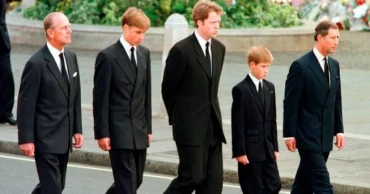
Buckingham Palace rejects claim in book by Princess Diana's brother
Buckingham Palace has strongly rejected a claim by the brother of the late Princess Diana that King Charles III said his former wife would soon be forgotten after her death.
In a new book, Charles Spencer describes the difficult days following Diana's death in a car crash in Paris in 1997 at the age of 36.
Spencer claims he argued with Diana's former husband, then Prince Charles, over plans for Prince William and Prince Harry, who were 15 and 12 at the time, to walk behind their mother's coffin during her funeral procession.
Spencer says he told Charles that Diana would not have wanted her sons to go through such an ordeal. He alleges that Charles replied: "Rest assured, we'll forget her soon enough."
Spencer also accuses Charles of showing "contempt" toward Diana and says the then-prince sounded "elated" after her death.
The Daily Mail has published extracts from Spencer's book, "Swan Song: Diana, My Sister," which is due to be released next week.
Buckingham Palace issued an unusually strong statement late Wednesday in response to the claims.
"While we do not comment on books as a matter of principle, His Majesty is mindful that the pain of fraternal grief can cloud reason, affect judgment and color memory in ways others do not recognize, even many years after such a loss," the palace said.
Ingrid Seward, editor-in-chief of Majesty magazine, described the statement as "very strong."
"I can't think of another occasion … in the recent history of royal communications which has been as stark as this one," she said, adding that it was clearly issued with "a great deal of feeling."
Tensions between the royal family and the Spencer family after Diana's death have been widely discussed and portrayed in the film "The Queen" and the television series "The Crown."
The royal family faced criticism at the time for being slow to respond to the public's grief over Diana's death. Her ability to connect with ordinary people highlighted a more personal side that many felt was missing from the wider royal family.
Prince William and Prince Harry later adopted a more openly emotional approach, while King Charles has also become more publicly expressive in recent years.
Charles, then 32, married 20-year-old Lady Diana Spencer in a lavish ceremony at St. Paul's Cathedral in 1981. They separated in 1992 and divorced in 1996.
Charles Spencer, the 9th Earl Spencer, has long criticized the royal family's treatment of his sister.
In a widely discussed eulogy at Diana's funeral, Spencer promised that her "blood family" would preserve her "imaginative and loving" legacy while raising her two sons. The speech was widely viewed as criticism of the royal family.
"I feel that the Spencers and the royals are just never going to become friends again, as they were centuries ago," Seward said. "They were very close, but I don't think they're going to become friends again in any hurry."
George Gross, a royal historian at King's College London, questioned why Spencer had chosen to revisit the painful period publicly.
"We're dealing with somebody's death," he said. "It is very sad at the root of it, and I have to ask some questions as to why a brother at this point is going over all of that again in a book. I think the public know the answer to that."
7 days ago
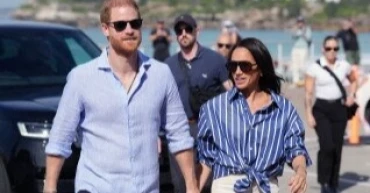
Prince Harry, Meghan move children to new school over security concerns
Prince Harry and his wife Meghan have moved their two children to a different school because of security concerns, a spokesperson said Tuesday, just weeks after the family returned to the United Kingdom for a fresh start.
The decision was made after discussions with the family's security team about the practical challenges of their existing arrangements, the spokesperson said in a statement.
Prince Archie, 7, and Princess Lilibet, 5, had only recently begun the new school year in England after the family moved from California in late August.
British media reported that the long school journey and heavy traffic along the route were among the concerns discussed by the couple and their security team. The family is currently living at a private residence outside London that is not connected to the royal family.
The spokesperson stressed that the decision was not a reflection on the school or the care the children had received there.
The move came as Harry and Meghan awaited a new assessment from the government committee responsible for reviewing security arrangements for VIPs. The assessment is expected to address whether the family should receive publicly funded protection now that they are living in the UK.
Harry and Meghan stepped down from royal duties and moved to California more than six years ago, saying they wanted to earn their own living. They later signed major deals with Netflix and Spotify.
Relations with the wider royal family have since become strained, though Harry has recently expressed hope for reconciliation so he can spend more time with his father, King Charles III.
Harry has also been engaged in a long-running dispute with the British government over the restoration of publicly funded police protection, which was withdrawn after the couple stepped back from royal duties.
He previously said he could not “see a world” in which he would bring his wife and children back to the UK without security guarantees.
Earlier this month, King Charles reiterated that Harry and Meghan remain non-working members of the royal family and would continue not to use formal titles such as His Royal Highness and Her Royal Highness, in line with arrangements in place since 2020. The couple said they were surprised by how the statement was issued, saying they had little time to review it before it was made public.
9 days ago
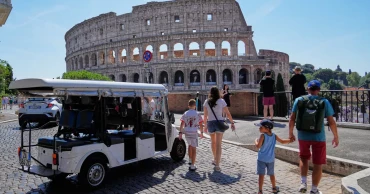
Rome moves to rein in booming golf cart tours
Rome authorities are moving to tighten regulations on golf carts that have become increasingly popular among tourists, as concerns grow over congestion, illegal parking and overtourism in the Italian capital’s historic center.
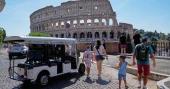
Hundreds of golf carts now carry visitors through Rome’s narrow streets and around major landmarks. While operators say the electric vehicles are quieter, take up less space and produce no exhaust fumes, critics argue that their rapid growth has added to the city’s already severe traffic and parking problems.
Golf cart bookings in Rome increased 147% this summer compared with 2024, according to TripAdvisor. The city is estimated to have as many as 500 such vehicles.
Rome has only about 4,300 regular on-street parking spaces in its historic center, while an average of 50,000 vehicles enter the area each day, according to city transport officials.
Luigi La Licata, head of a neighborhood association in Monti, said the golf carts had become the latest source of frustration for residents already dealing with heavy traffic.
“Overtourism is a real problem,” said Pascal van Duijnhoven, president of Metur, an association of golf cart tour operators. He acknowledged that the industry was part of the problem but argued that the vehicles could also help address transport challenges if properly regulated.
Rome Deputy Mayor for Sustainable Mobility and Transport Eugenio Patanè said the city was seeking greater control over the sector.
He said the city wants to introduce fixed routes, limit the number of golf carts and establish a system for selecting authorized operators. Rome has asked the regional authorities to transfer regulatory powers over passenger transport and tourism businesses to the city.
Patanè said he expected the transfer to take place this month, allowing Rome to introduce new rules for the rapidly expanding sector.
Meanwhile, authorities have stepped up checks on golf cart operators. Vehicles linked to Metur members were stopped 14 times during the latter half of August, according to van Duijnhoven.
Operators said some checks lasted up to an hour and complained that penalties were sometimes excessive or inconsistent. Unlicensed tour guides can face fines of up to 4,000 euros ($4,600), while vehicles allegedly operating as unauthorized private-hire services can be barred from the streets for more than a month.
The crackdown has also exposed tensions between golf cart operators and traditional taxi and private-hire drivers, who accuse the newcomers of taking away part of their business.
Despite the disputes, city authorities say regulation is necessary as the golf cart business has become increasingly widespread in Rome’s crowded historic center.
20 days ago
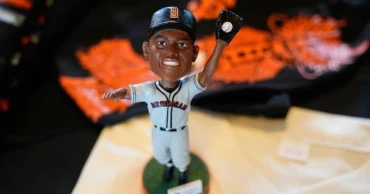
Nod if you’ve heard this: Bobblehead dolls remain an American favourite
Give one a gentle tap, and its oversized head starts shaking, moving up and down or from side to side. That familiar movement has made bobblehead dolls one of America’s most popular and enduring collectibles.
From entertainers and athletes to politicians, animals and fictional characters, almost anyone can be turned into a bobblehead. Personalized versions featuring ordinary people are also popular.
Often handed out as promotional gifts at baseball games and other events, the quirky figurines have become a familiar part of American pop culture.
“I think they’re the ultimate Americana, sort of pop-culture icon,” said Phil Sklar, a longtime bobblehead enthusiast and founder of the National Bobblehead Hall of Fame and Museum in Milwaukee, Wisconsin.
The museum displays a large collection of the figurines, explores their history and also sells bobbleheads.
However, the dolls did not originate in the United States. According to Sklar, head-nodding figures existed in China hundreds of years ago. Europeans later brought similar versions back to Europe, where smaller models, particularly in Germany, became popular.
Bobbleheads gained widespread popularity in the United States during the 1960s, initially featuring sports stars and being distributed at baseball games. Their appeal later expanded to include famous figures such as members of The Beatles.
Although public interest in bobbleheads has risen and fallen over the decades, they have remained a popular collectible, with many of the biggest names in sports, entertainment and public life eventually getting their own version.
For many Americans, the simple, head-shaking figurines have become a lasting symbol of pop culture.
21 days ago
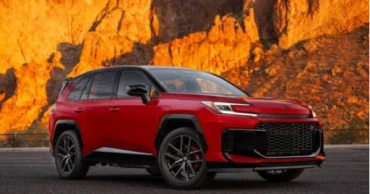
Toyota RAV4 vs Hyundai Tucson: Which plug-in hybrid SUV is the better choice?
You want to cut fuel costs but are not ready to switch to a fully electric vehicle, the 2026 Hyundai Tucson Plug-in Hybrid and the 2026 Toyota RAV4 Plug-in Hybrid could be good options.
Both SUVs combine a conventional hybrid system with a rechargeable battery, allowing drivers to travel a certain distance using only electric power. Regular charging at home can help reduce petrol consumption. But which of these two popular compact SUVs offers better overall value? Edmunds tested both vehicles to find out.
Range and fuel economyThe Toyota RAV4 Plug-in Hybrid has a clear advantage in electric range and fuel efficiency.
Toyota estimates that most RAV4 Plug-in Hybrid trims can travel up to 54 miles using only electric power, while the sportier GR Sport is rated at 48 miles. In Edmunds' real-world test, however, the GR Sport managed an impressive 58 miles before the battery was depleted.
After the battery runs out, the RAV4 is estimated to deliver up to 40 mpg in combined city and highway driving, a figure that Edmunds also found realistic in its testing.
The Tucson Plug-in Hybrid trails behind, with an EPA-estimated electric range of 32 miles and fuel economy of 35 mpg after the battery is depleted. Although it performed slightly better than those estimates in Edmunds' testing, it could not match the RAV4's advantage.
Winner: Toyota RAV4 Plug-in Hybrid
Passenger comfort and cargo spaceThe two SUVs offer similar cargo capacity, although the RAV4 has a slight edge in the plug-in hybrid versions.
The RAV4 provides 33.6 cubic feet of cargo space behind the rear seats, compared with 31.9 cubic feet in the Tucson. Edmunds found both cargo areas spacious and practical, with their boxy shape making it easier to load luggage and other items.
However, the Tucson offers significantly more room for rear-seat passengers. It has 41.3 inches of rear legroom, compared with 37.8 inches in the RAV4. The difference is noticeable for adults, teenagers and families using child seats.
Edmunds' testers also found the Tucson's front seats softer and more supportive. Its ride quality over rough roads was also more comfortable than that of the RAV4.
Winner: Hyundai Tucson Plug-in Hybrid
Technology featuresBoth SUVs performed exceptionally well in Edmunds' infotainment testing, receiving scores of 9.7 out of 10 for usability and connectivity.
The RAV4 features a newer and improved infotainment system compared with other Toyota models. However, some important functions, including navigation and voice controls, depend on an internet connection and may require a paid subscription after the free trial ends.
The Tucson includes these functions directly in its system without requiring an internet connection, although its navigation search is not as capable.
Hyundai provides a standard 12.3-inch central touchscreen. Toyota offers either a 10.5-inch display on lower trims or a larger 12.9-inch screen on higher-end models.
Overall, the technology packages are closely matched.
Winner: Tie
Pricing and valueBoth SUVs start at just over $42,000, including destination charges, and their prices rise to around $50,000.
At the top end of the price range, the Tucson comes with nearly all available features. A similarly equipped RAV4 XSE requires additional options, pushing its price above $52,000.
Edmunds also rated the Tucson's interior more highly, citing better-quality materials and a more premium look and feel. Hyundai also offers stronger basic and powertrain warranty coverage than Toyota.
Winner: Hyundai Tucson Plug-in Hybrid
Style and choiceToyota offers buyers more options.
Besides the SE and XSE trims, the RAV4 Plug-in Hybrid is also available in the more adventure-focused Woodland version and the sportier GR Sport model. These choices give buyers more flexibility in terms of styling, capability and driving character.
The Tucson Plug-in Hybrid, meanwhile, is available only in SEL and Limited trims. Hyundai's more rugged-looking XRT version is not offered as a plug-in hybrid.
For buyers looking for more variety and distinctive styling, the RAV4 offers more choices.
Winner: Toyota RAV4 Plug-in Hybrid
Edmunds saysThe competition is close, with the Tucson standing out for passenger comfort, interior quality, value and warranty coverage.
However, the RAV4 Plug-in Hybrid's biggest strengths are the features that matter most to many plug-in hybrid buyers: a longer all-electric driving range and better fuel economy.
For drivers mainly focused on reducing fuel use and making the most of electric driving, Edmunds says the Toyota RAV4 Plug-in Hybrid is the better overall choice, despite the Tucson's advantages in comfort and value.
22 days ago

A guide to choosing chrysanthemums for a colourful fall garden
September marks the transition from summer to fall, and while many summer flowers are still blooming, gardeners are beginning to turn their attention to one of the season's most popular plants — the chrysanthemum, commonly known as the mum.
Most mums sold in ready-made containers at garden centres are traditional “cushion” mums. These compact, rounded plants are popular for their colourful flowers, but gardeners have many other varieties to choose from.
Around 40 species of wild chrysanthemums are recognised worldwide. Over the centuries, breeders have developed thousands of different varieties, making chrysanthemums one of the largest and most diverse groups of flowering plants.
The National Chrysanthemum Society classifies mums into 13 categories based on flower shape. Although some types require special care and are mainly grown for exhibitions, many attractive varieties are suitable for home gardens.
Perennial mums can return every yearMany chrysanthemums are perennials and can bloom again year after year if they are planted early enough to allow their roots to become established before winter.
Gardeners should, however, be careful when buying florist mums, often sold in foil-covered pots at supermarkets and other stores. These are usually grown as temporary fall decorations and may not survive the winter.
Checking the plant label is important to see whether a variety is suitable for the local climate and growing zone.
Perennial cushion mums are among the easiest to find. Their compact, rounded shape is covered with small, double flowers in colours ranging from white and yellow to pink, purple, red, orange, bronze and rust. They usually begin blooming in late summer or early fall and can continue flowering for four to six weeks.
Most cushion mums grow well in hardiness zones 5 to 9, while some varieties can survive in colder areas as low as zones 3 or 4.
Other varieties can add something differentDaisy chrysanthemums have flowers that resemble daisies, with a flat centre surrounded by petals. Their stems often produce several blooms in colours including white, yellow, pink, lavender, orange, bronze and even two-tone combinations.
Most varieties are suitable for zones 5 to 9, although cold-hardy types such as Mammoth can survive in zones as low as 3.
Gardeners looking for something more unusual may consider Fuji, or spider, mums. Their long, narrow, tube-shaped petals curl at the ends, giving the flowers an appearance similar to spider legs.
These mums can be harder to find and may be available mainly at specialist nurseries or through mail-order catalogues. Most are hardy to zone 5 and often begin blooming in early November, with flowers lasting between four and eight weeks.
Homecoming, also known as Football mums, are among the largest and most striking chrysanthemum varieties. They became popular during the early and mid-20th century when their large blooms were commonly used in corsages for college homecoming events.
Their flowers are large and densely packed, with petals that curve inward. These mums can be grown as perennials in zones 5 to 9 and are generally available from specialist nurseries or mail-order suppliers.
With so many shapes, colours and varieties available, chrysanthemums offer gardeners plenty of ways to brighten their fall gardens beyond the familiar cushion mum.
24 days ago
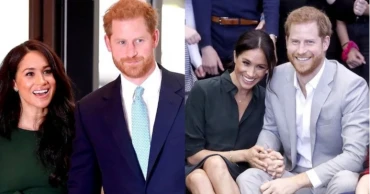
Harry and Meghan reportedly spend $120,000 on private jet for UK move
Prince Harry and Meghan Markle have reportedly returned to the United Kingdom with their children, Archie and Lilibet, six years after stepping back from their roles as working members of the royal family.
Their reported move has drawn widespread attention, but their journey to the UK has also made headlines, with reports saying the Duke and Duchess of Sussex spent around $120,000 on a private jet.
According to Page Six, Harry and Meghan chartered a private aircraft through global private aviation company Planet 9. The reported hourly cost of the jet was about $12,000.
With a flight from the United States to the UK taking around 10 hours, the total cost of the journey was estimated at approximately $120,000.
The couple reportedly travelled with their son Archie, 7, and daughter Lilibet, 5, aboard a Bombardier Global Express XRS. The aircraft can carry up to 13 passengers and includes two bathrooms, five beds and space for several pieces of luggage.
Reports said Harry and Meghan chose a private jet partly because they wanted to take their family dogs with them. The couple reportedly travelled with Pula, a black Labrador, and Mia, a beagle.
Meanwhile, the family’s rescue chickens will reportedly remain at their home in Montecito, California, where they will continue to be cared for.
According to reports, Harry and Meghan have decided to spend an extended period in the UK after living in California for several years.
The Telegraph reported that the family plans to live in the Cotswolds region of central England and has enrolled Archie and Lilibet in a school in or near the area, with the children expected to begin classes in September.
It remains unclear whether the move will be permanent. Reports suggest the couple will continue to keep their homes in California and Portugal.
The reported return to the UK has also renewed attention on Harry's relationship with the royal family. While reports suggest he has improved his relationship with his father, King Charles III, he is still believed to have a strained relationship with his brother, Prince William, and William's wife, Catherine.
Source: NDTV
27 days ago