Politics
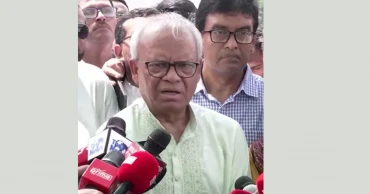
His battleground, his fort, his home: Rizvi returns to BNP's Nayapaltan central office after elevation to top post
BNP Acting Secretary General Ruhul Kabir Rizvi Ahmed on Sunday visited the party’s central office at Naya Paltan for the first time to carry out official activities since being appointed to the party's top organisational post.
Rizvi arrived at the central office around 11am and carried out his official work there.
Later, leaders and activists of BNP and its affiliated organisations, as well as leaders of the 12-Party Alliance, met with Rizvi. Many of them greeted him with flowers on the occasion of his appointment as Acting Secretary General.
Earlier in the morning, Rizvi, along with newly appointed Prime Minister’s Political Adviser Zahir Uddin Swapon, paid homage at the graves of BNP founder and former President Shaheed Ziaur Rahman and former Prime Minister Khaleda Zia at Zia Udyan in the capital’s Sher-e-Bangla Nagar area around 10am.
BNP Joint Secretary General Abdus Salam Azad, Volunteer Affairs Secretary Mir Sarafat Ali Sapu, 12-Party Alliance spokesperson Dr Maulana Mufti Mohiuddin Ikram, Kalyan Party Chairman Lion Mohammad Shamsuddin Parvez and United Liberal Party Chairman Mohammad Aminul Islam, among others, were present on the occasion.
27 days ago
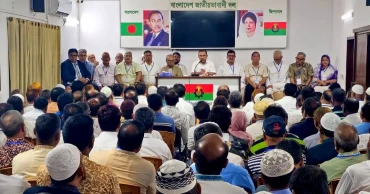
PM Tarique meets BNP leaders from Rajshahi division
Prime Minister and BNP Chairman Tarique Rahman on Thursday evening held a meeting with BNP leaders from Rajshahi division to discuss organisational matters.
The meeting was held at the BNP chairman’s office in Gulshan, said Prime Minister’s Additional Press Secretary Atikur Rahman Rumon.
“BNP Chairman and Prime Minister Tarique Rahman held the meeting with leaders from Rajshahi division, district and metropolitan units on organisational matters. This is part of a series of such meetings,” he said.
Rumon said the Prime Minister earlier held meetings with leaders from different districts and divisions over the past month, adding, “This is a continuing process.”
BNP Senior Joint Secretary General Ruhul Kabir Rizvi, Land Minister Mizanur Rahman Minu and leaders from different districts of Rajshahi division were present at the meeting.
1 month ago

SC releases full text of verdict on Jamaat registration
The Appellate Division of the Supreme Court has released the full text of its verdict overturning a High Court ruling that had declared the registration of Bangladesh Jamaat-e-Islami as a political party illegal.
The four-member Appellate Division bench, led by the then Chief Justice, delivered the judgment on June 1 last year.
The full copy of the verdict was published on Monday.
The Election Commission granted Jamaat registration as a political party in November 2008. In 2009, Syed Rezaul Haque Chandpuri and 25 others filed a writ petition challenging the legality of the registration.
After a final hearing, a three-member bench of the High Court declared Jamaat’s registration illegal by majority opinion on August 1, 2013. The court also granted a certificate for appeal against the verdict, which was later converted into an appeal.
Jamaat also filed a regular leave-to-appeal petition that year.
Following the High Court verdict, Jamaat sought a stay order, but the then Chamber Judge of the Appellate Division, Justice AHM Shamsuddin Chowdhury, rejected the plea on August 5, 2013.
Subsequently, on December 7, 2018, the Election Commission officially cancelled Jamaat’s registration through a gazette notification.
On November 19, 2023, the Appellate Division dismissed Jamaat’s appeal and leave-to-appeal petitions against the High Court verdict after no lawyer appeared on behalf of the party.
Jamaat filed separate petitions following the fall of the Awami League government on August 5, 2024, seeking restoration of the appeal and leave-to-appeal by condoning delays. After hearing the matter, the Appellate Division restored the petitions.
The appeal and leave-to-appeal were later included in the Appellate Division’s hearing schedule, and hearings began on December 3, 2024.
Jamaat also filed an application regarding the allocation of its electoral symbol.
The court subsequently tagged the application with the appeal and leave-to-appeal for hearing.
After concluding hearings, the Appellate Division delivered its verdict on June 1 last year.
During the previous Awami League government, the Ministry of Home Affairs issued a notification on August 1, 2024, banning Jamaat and its student wing – Bangladesh Islami Chhatra Shibir.
Following the formation of an interim government on August 8, 2024 after the fall of the AL government, the ban on Jamaat and Shibir was withdrawn.
4 months ago
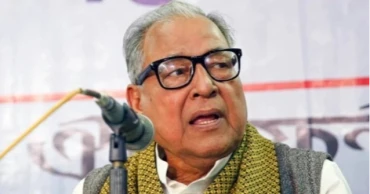
BNP says election accusers must prove allegations
BNP senior leader Nazrul Islam Khan on Friday said that those raising allegations over Thursday’s parliamentary elections must provide evidence to support their claims.
Talking to journalists at the Election Commission, Nazrul Islam responded to allegations made by Bangladesh Jamaat-e-Islami regarding alleged vote rigging and warnings of protests.
“They may feel hurt and express themselves, but if anyone makes allegations against someone, it is their responsibility to prove them,” he said, adding that no allegations had been made directly against his party.
Nazrul Islam, who serves as chairman of the BNP’s Election Steering Committee, said the party was observing victories in more than two-thirds of the constituencies.
He said this indicated that the electorate had given BNP the mandate to govern for the next five years.
Nazrul described the day as “a significant one in Bangladesh’s history” and said voters had once again entrusted the party with governing responsibilities.
He also expressed gratitude to supporters and thanked the electorate.
When asked about the possibility of forming a national government, Nazrul said there had been no discussions on the matter.
He clarified that his visit to the Election Commission was not an official party briefing, adding that BNP Chairman Tarique Rahman would later deliver a formal statement on behalf of the party.
Nazrul Islam said BNP’s coalition partners had also secured victories, which he said reflected public confidence in the alliance’s leadership and future plans.
Comparing the latest election with previous polls, he said that earlier elections had seen significant loss of life, whereas this time there had been no reported casualties, describing it as an important development.
He, however, acknowledged that voter turnout had not reached expected levels and expressed hope that participation would increase in future elections.
Nazrul Islam thanked media organisations for their coverage, saying it had helped voters understand BNP’s plans and contributed to the electoral outcome.
7 months ago

BNP leaders confident of massive victory, hope to form govt after 19 years
BNP is confident of a massive victory and forming the next government with a clear majority after being out of power for more than 19 years, as the party enters the battle of ballots in the 13th national election on Thursday.
Senior party leaders told UNB on Wednesday that months of preparation, a nationwide campaign, large public gatherings, and what they describe as growing public frustration over economic hardship have strengthened their belief that the party is heading towards a huge victory.
However, alongside this confidence, they also expressed concern over possible violence, irregularities, and what some leaders described as attempts at ‘election engineering’ in certain constituencies.
Tarique thanks top Islamic scholars for supporting BNP
The BNP leaders also expressed worries over the party’s rebel candidates in around 80 seats, fearing it may prevent them from obtaining a two-thirds majority.
Over the past weeks, the BNP has conducted an extensive nationwide campaign under the leadership of party chairman Tarique Rahman. From divisional cities to remote districts, he has participated in more than 43 public rallies, drawing massive crowds that have reinvigorated the party’s supporters.
On the final day of campaigning, after rallies across Dhaka constituencies, Tarique Rahman formally concluded the campaign with a visit to his parents’ graves. Party leaders claim that the large turnout at these gatherings has boosted morale among activists.
The BNP’s election manifesto centres on the slogan ‘Bangladesh First’. The party has promised to ensure politics of justice and humanity, not revenge, production, not looting; rights, not fear, fairness, not discrimination.
Building on the 19-point programme of Shaheed President Ziaur Rahman, former Prime Minister Khaleda Zia’s Vision 2030, and Tarique Rahman’s own 31-point plan, the manifesto pledges to build a welfare-oriented, democratic and prosperous Bangladesh.
BNP has placed strong emphasis on anti-corruption measures, employment generation, and institutional reform.
Bangladesh’s independence safe only in hands of Tarique Rahman: BNP's Mintoo
Tarique Rahman has repeatedly said the party will adopt a ‘zero tolerance’ policy against corruption. The party has pledged to strengthen the Anti-Corruption Commission, ensure accountability in administration, and reform the police and judiciary. It has also promised transparency in the banking sector.
Youth employment has been highlighted as a major priority. BNP has promised to create more than one crore jobs in five years, expand technical and language training, support start-ups and simplify student loan facilities.
The manifesto includes nine major pledges, covering monthly support for poor families through a family card, farmer cards, and recruitment of 100,000 health workers, skill-based education and mid-day meals, promoting sports as a profession, river dredging and tree planting, ensuring religious harmony, and building a digital economy.
BNP leaders believe that these pragmatic plans and programmes have helped boost their popularity.
Party leaders say strong public participation, active campaigning, a clear manifesto, and focus on youth have given BNP confidence in victory.
BNP’s confidence also stems from its past experience in governance. Party leaders said during its previous terms, the party achieved food self-sufficiency, economic growth, increased electricity production, infrastructure development, and strengthened multi-party democracy, proving its capability to manage crises and govern effectively.
Regarding their expectations from constituencies, BNP leaders said they are confident of strong results in divisions including Dhaka, Sylhet, Barishal, Mymensingh, and Faridpur, while anticipating competitive but favourable outcomes in Chattogram and Rajshahi.
They also see the potential for significant gains in Rangpur and Khulna. Several leaders claimed the party could win more than 200 seats, with recent surveys showing BNP leading in many areas.
Despite the overall optimism, BNP faces some internal challenges. Around 80 constituencies reportedly have rebel candidates contesting against official party nominees.
A BNP Standing Committee member, speaking anonymously, said it is the party’s failure that they could not manage the rebel candidates. “I think we should have made more effective efforts to reach an understanding with them. In many constituencies in Dhaka and Mymensingh divisions we’ll face difficulties due to the rebel candidates.”
He, however, said some BNP rebels may win in different seats, and he hoped they would finally support BNP.
Another concern raised by some leaders is outreach to women voters, as they acknowledged that organisational efforts to engage women directly were not as strong in certain areas.
“Usually, BNP is very popular among female voters. But this time Jamaat worked vigorously and invested heavily to gain their support. Compared to Jamaat, we could not reach women voters in the same way. This is a matter of concern for us,” a BNP Vice Chairman, speaking anonymously, said.
In conversations with UNB, several BNP leaders expressed concern about possible election-day violence and irregularities.
They said their activists have been instructed to remain alert at polling centres and to resist any attempt at vote rigging.
At the same time, they urged voters to turn out peacefully and exercise their democratic rights.
When contacted, BNP Standing Committee member Dr Khandaker Mosharraf Hossain told UNB, “We are very hopeful about a good result. We believe we will get a single majority. There are many allegations and discussions around different issues, but if the Election Commission and the government act neutrally until the end, the country will see a free and fair election.”
On questions about rebel candidates, he added, “I am not personally worried. Our candidates will win and we will secure the majority.”
BNP Central Election Steering Committee spokesperson Mahdi Amin said it is inevitable that the BNP will return to power. “A quarter is trying to resist us by creating various obstacles. But the democracy-loving people will ensure our victory for the restoration of democracy and their rights by casting their votes for the Sheaf of Paddy.”
He said they trust the Election Commission and the members of the law enforcement agencies to ensure a free, fair, and credible election.
“We hope BNP will form the government soon by winning the people’s votes.” Mahdi said, adding that people will strongly resist any attempts at vote manipulation or rigging.
Any attempt to thwart elections to face mass resistance: BNP
7 months ago
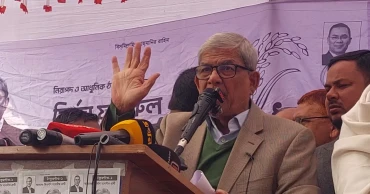
Jamaat wants to push Bangladesh back, says Fakhrul
BNP Secretary General Mirza Fakhrul Islam Alamgir on Monday alleged that Jamaat-e-Islam aims to turn Bangladesh into an Afghanistan-like state, raising concerns over the party’s political agenda and its potential impact on national stability.
“They want to take Bangladesh backward. They are a party that prevents us from moving forward. We don’t want to move backward; we want to move forward,” Fakhrul said while campaigning at Lalmia Market in Dholarhat Union.
He also criticised Jamaat Ameer’s alleged anti-women remarks.
No one can foil elections: Mirza Fakhrul
“I don’t know if it is true or false, but if it is true, then he did wrong. Women will never accept it,” he said, adding that Jamaat reportedly restricts women’s working hours in the garment industry.
Fakhrul, who is also contesting the Thakurgaon-1 seat, highlighted the importance of female education and employment. “If our girls don’t go to school and college, where will they get jobs? Men and women must live in Bangladesh with equal rights,” he said.
Quoting Islam, the BNP leader said women should be given the rights they deserve.
Local BNP leaders, activists, and a large number of supporters attended the event.
7 months ago
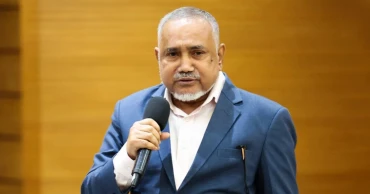
Next polls to shape Bangladesh’s future path: Jamaat leader Taher
Jamaat-e-Islami Nayeb-e-Ameer and Cumilla-11 (Chauddagram) candidate Dr Syed Abdullah Mohammad Taher on Wednesday said the 13th parliamentary election would determine the future course of Bangladesh.
“This election will decide whether Bangladesh moves forward with independence and self-respect or returns to the dark phase of the past 54 years,” he said while addressing a views-exchange meeting at a party office in Chauddagram in the ditrict in the afternoon.
He said the polls would also determine whether the country would revert to what he described as fascist politics or move towards building a democratic, civil and just society by safeguarding the rights of all citizens.
Read More: Khaleda Zia was Bangladesh’s most popular leader: Jamaat’s Taher
Dr Taher said that the election would pave the way for a new phase of national development and create an opportunity for the actual reflection of people’s opinions.
The meeting was chaired by Chauddagram Upazila Jamaat Ameer Mahfuzur Rahman.
Jamaat-e-Islami Central Majlish Shura member and Cumilla South District Ameer Advocate Mohammad Shahjahan, former district Ameer Mohammad Abdus Sattar, former upazila Ameer VP Sahab Uddin, and Municipal Ameer Maulana Ibrahim also spoke at the event.
7 months ago
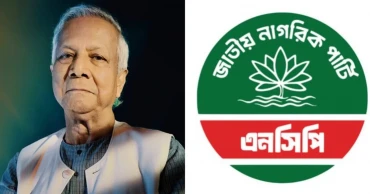
NCP delegation to meet CA Prof Yunus this afternoon
A four-member delegation of the National Citizen Party (NCP) is scheduled to meet Chief Adviser Prof Muhammad Yunus on Monday afternoon.
In a media release, the NCP said the meeting will take place at 5:00pm at the State Guest House Jamuna.
The delegation, led by NCP Convener Nahid Islam, will include Asif Mahmud Shojib Bhuiyan, chairman of the party’s Election Steering Committee, Secretary Monira Sharmin, and Advocate Zahirul Islam Musa, head of the committee’s legal support subcommittee.
According to the party, discussions during the meeting will focus on what it described as the Election Commission’s partisan conduct and the overall current election situation.
Earlier on Sunday night, Asif Mahmud told an emergency press conference that the NCP would reconsider whether to participate in the upcoming parliamentary election due to the Election Commission’s alleged biased behaviour.
NCP reconsiders election participation over ‘one-sided’ EC decisions: Asif Mahmud
On the same day, the Election Commission issued show-cause notices to Nahid Islam and Chief Coordinator Nasiruddin Patwari over alleged violations of the electoral code of conduct.
The NCP, however, claimed that Nahid and Nasir were campaigning for the referendum and that such activities do not constitute a breach of election rules.
8 months ago
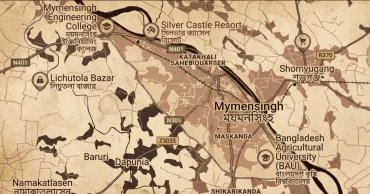
Clash between ‘BNP supporters’ leaves one dead in Mymensingh
A man was killed in a clash allegedly between two groups of BNP supporters following the inauguration of an election office of an independent candidate in Dhobaura upazila of Mymensingh on Friday evening.
The deceased was identified as Nazrul Islam, 40, son of Mofiz Uddin of Ramsinghpur village of the upazila and an activist of independent candidate Salman Omar Rubel.
Additional Superintendent of Police (Finance and Administration) Abdullah Al Mamun said Salman Omar Rubel went to Ershad Bazar on Friday evening to inaugurate his election office.
After the programme ended and he was leaving the area, supporters of BNP-nominated candidate and BNP Joint Secretary General Syed Emran Saleh Prince allegedly attacked Rubel’s supporters, triggering a clash.
During the clash, Nazrul Islam was stabbed by rivals.
Locals rushed him to Dhobaura Upazila Health Complex where doctors declared him dead.
Following the incident, tension has been prevailing in the area.
Independent candidate Salman Omar Rubel alleged that Prince’s supporters carried out a sudden attack from behind after the office inauguration.
He demanded the immediate arrest of those involved in the killing of his supporter.
BNP-nominated candidate for Mymensingh-1 (Haluaghat-Dhobaura) constituency Syed Emran Saleh Prince said he was not fully aware of the incident as he was in Haluaghat at the time.
BNP leader Alamgir murder case: fourth suspect arrested in Jashore
“From what I have initially heard, the incident stemmed from a family dispute. Attempts are being made to give it a political colour,” he said.
If it is found that anyone linked to our party is involved, action will be taken, he added.
Dhobaura police station Officer-in-Charge (OC) Md Shafikul Islam said police visited the scene and legal action is underway.
8 months ago
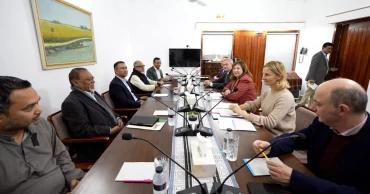
EU assures Tarique Rahman of stronger cooperation with Bangladesh
The European Union on Tuesday night assured BNP Acting Chairman Tarique Rahman that it will stand beside Bangladesh with stronger and increased cooperation in the coming days.
“They (the EU) said they would extend cooperation on a larger scale and with greater commitment in the days ahead,” BNP Standing Committee member Nazrul Islam Khan told reporters after a meeting between Tarique Rahman and an EU delegation.
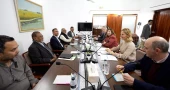
The delegation, led by European Union Ambassador Michael Miller, visited the BNP Chairperson’s Gulshan office in the evening and held talks with Tarique Rahman on various issues.
The meeting, which lasted for more than one and a half hours, mainly focused on the upcoming 13th national parliamentary election, BNP’s views on holding a free and fair election, the overall political situation in the country, and the condition of workers in Bangladesh.
Besides Tarique Rahman and Nazrul Islam Khan, BNP Chairperson’s Advisory Council member Ismail Zabihull, Joint Secretary General Humayun Kabir, and Acting Chairman’s Adviser Mahdi Amin were present at the meeting.
During the meeting, Nazrul Islam said,Tarique Rahman thanked the European Union for its continued support to Bangladesh’s development and urged it to play a more effective role in the future so that the people of Bangladesh benefit more.
8 months ago