Centre for Policy Dialogue
CPD finds FY27 budget ambitious but unlikely to deliver on key promises
Centre for Policy Dialogue (CPD) on Sunday said the national budget for FY2026-27 reflects a clear philosophy of economic recovery through human development but its ambitious macroeconomic targets rest on shaky ground and the fiscal framework is unlikely to hold as proposed.
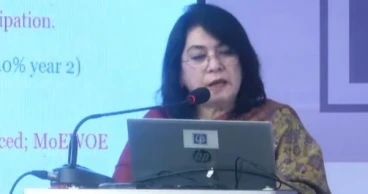
CPD Executive Director Dr Fahmida Khatun presented the think tank's Independent Review of Bangladesh's Development (IRBD) analysis at its Budget Dialogue 2026 at a city hotel in Gulshan.
The think tank put forward eight key observations on the FY27 budget, which Finance Minister Amir Khosru Mahmud Chowdhury presented to parliament on June 11.
CPD noted that the government's GDP growth target of 6.5% represents a recovery claim from an estimated 5.0% in the revised FY26 budget, but Bangladesh Bureau of Statistics (BBS) provisional data puts actual FY26 growth at only 4.14%.
On revenue mobilisation, CPD flagged that the government targets an 18.2% growth in revenue collection, reaching Tk 6,95,000 crore, but its own projection based on data through March 2026 suggests actual FY26 collection may be only around Tk 4,50,000 crore, implying the real growth target required is closer to 54.4%.
The think tank welcomed the budget's reprioritisation of public expenditure toward human capital sectors, noting that health allocation surged 124% and education rose 42.7% compared to the revised FY26 budget.
However, it cautioned that both sectors suffer from persistently weak budget utilisation, with health development spending utilisation collapsing from 80% in FY15 to just 30% in FY25.
On the Annual Development Programme (ADP), CPD said the Tk 3,00,000 crore ADP allocation, a 50% jump over the revised FY26 figure, reflects an ambitious fiscal stance, but only 35.4% of last year's ADP was spent in the first ten months, signalling low absorptive capacity.
It also noted that none of the eight mega projects due for completion in FY27, including the Rooppur Nuclear Power Plant, are expected to finish on time.
CPD raised equity concerns over personal income tax structure, pointing out that lower-income groups face a proportionally higher tax burden increase than those earning above BDT 30 lakh annually.
On social protection, the Social Safety Net Programme(SSNP) allocation rose 13.9% to Tk 1,44,000 crore in FY27, but CPD observed that pension management and agriculture subsidy together absorb 43.2% of the total SSNP budget, programmes not strictly targeted at the poor.
Regarding the government's pledge to create one crore new jobs within 18 months, CPD found budget allocations across four key employment ministries either declining or stagnant as a share of total expenditure.
The Ministry of Commerce saw the sharpest cut, with allocation slashed from Tk 909 crore to Tk 329 crore.
CPD also flagged the absence of a medium-term roadmap to address preference erosion ahead of Bangladesh's LDC graduation, despite the government formally requesting a three-year deferral in February 2026.
“This budget is the first major opportunity for the new government to demonstrate its ability to drive economic recovery through sustained structural reforms,” Fahmida Khatun said, adding that its success will ultimately depend on the quality of execution and the strength of institutional capacity to deliver.
3 months ago
Revenue target, inflation control biggest hurdles in proposed budget: CPD
The Centre for Policy Dialogue (CPD) has identified the target to achieve the proposed revenue collection of Tk 695,000 crore and bringing inflation down to 7.5 percent as the biggest challenges in implementing the national budget for fiscal year 2026-27.
Finance Minister Amir Khosru Mahmud Chowdhury on Thursday unveiled a record Tk 938,000-crore budget, the largest in Bangladesh's history.
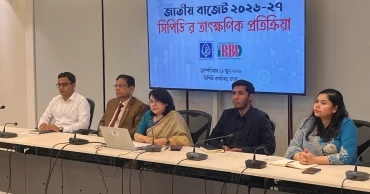
Giving instant reaction to the budget at a press briefing at CPD’s Dhanmondi office later in the day, CPD Executive Director Fahmida Khatun said budget targets must be realistic to ensure effective implementation. “If the targets are not realistic, it will be difficult for the government to implement the budget, which could undermine economic discipline.”
She described the revenue target as particularly ambitious, noting that Bangladesh has historically struggled to meet its revenue collection goals.
“Although high revenue targets are regularly set, they often remain unattained. The proposed target requires a significant jump in revenue mobilisation, which will be a major challenge for the government,” Fahmida said.
She warned that failure to achieve the revenue target could make it difficult to contain inflation within the projected 7.5 percent level. “Average inflation in the current fiscal year is around 9 percent. Bringing it down by about 1.5 percentage points within a year will be challenging. If the government falls short in revenue collection and resorts to increased bank borrowing, the task will become even more difficult.”
The CPD executive director said inflation control would require a stable exchange rate, improved food and energy supply systems, and prudent monetary management. “Bangladesh is currently pursuing a contractionary monetary policy. In this context, policymakers will need to strike a careful balance to stimulate investment. Greater coordination between fiscal and monetary policies is also necessary.”
While describing the proposed GDP growth target as ambitious, she said it was not unattainable given the size of Bangladesh’s economy and population.
The budget projects economic growth at 7.5 percent, compared to an estimated 6.5 percent growth in the current fiscal year. “To achieve this target, private investment and productivity must increase, while exports need fresh momentum. At the same time, ongoing reforms must continue. Given the current investment climate, the condition of the financial sector and persistent energy challenges, achieving the target will be quite difficult,” Fahmida said.
She also observed that the budget could have placed greater emphasis on economic stability rather than growth.
However, the CPD executive director welcomed tax incentives for solar panels and electric vehicles, as well as the budget's focus on skills development, agriculture, and small and medium enterprises (SMEs), describing them as positive measures for the economy.
CPD Distinguished Fellow Mustafizur Rahman was also present at the briefing.
3 months ago
CPD raises concerns over power overcapacity, pushes for 'no new fossil' fuel policy
The Centre for Policy Dialogue (CPD) on Saturday urged the government to halt new fossil fuel-based power projects, revise what it called inflated demand projections and bolster parliamentary oversight to put Bangladesh’s power and energy sector on a fiscally sustainable and climate-aligned path
CPD said Bangladesh’s power and energy sector is at risk of fiscal stress, stranded assets and stalled renewable energy transition due to overestimated demand projections, fossil fuel lock-in and weak regulatory transparency.
Presenting a research paper titled 'New Government’s Priorities in Addressing Socio-economic Challenges: Introducing Knowledge-based Decision Making in the Executive and Legislative Process' at CPD’s Dhanmondi office, CPD Research Director Khondaker Golam Moazzem outlined a series of structural weaknesses in the sector and recommended urgent reforms within the first 180 days of the new government.
The study identified 'Power and Energy: Reviving for Energy Transition' as the seventh priority sector and found that procedural transparency, accountability, and implementation efficiency remain the weakest pillars of decision-making in this sector.
CPD noted that existing master plans project electricity demand to reach 40-50 gigawatts (GW) by 2040, while independent estimates suggest a more realistic requirement of around 30 GW.
The study warned that inflated GDP-demand linkages, rather than actual industrial consumption data, have been used to justify aggressive expansion targets. This could lead to massive surplus capacity that would be 'difficult to undo', increasing fiscal burdens through long-term contractual obligations.
Spatial planning mismatch was also highlighted, with Dhaka receiving disproportionately high projections compared to emerging industrial hubs such as Chattogram and Sylhet.
CPD recommended that Bangladesh Power Development Board (BPDB) and Power Cell adopt rigorous econometric forecasting methods and subject revised projections to independent validation and parliamentary review.
The report underscored the structural burden of capacity payments to independent power producers (IPPs), even for idle plants. Despite recent tariff hikes reaching Tk 8.95 per unit in 2024 — fiscal stress persists.
According to the study, plant-by-plant payment details and the rationale behind tariff adjustments lack transparency, while public hearings by the Bangladesh Energy Regulatory Commission (BERC) have often been bypassed.
CPD recommended introducing a 'No Electricity, No Pay' clause in future Power Purchase Agreements (PPAs) to eliminate unconditional capacity charges. It also called for renegotiation of rigid 'take-or-pay' contracts, though acknowledging the legal complexity involved.
The think tank warned of growing dependence on imported LNG and coal, raising concerns about stranded assets and fiscal instability.
It said long-term price volatility impacts are systematically downplayed and that insufficient assessment has been conducted regarding risks associated with new LNG terminals and coal-based infrastructure.
CPD proposed adopting a clear 'No New Fossil Fuel-Based Power Generation' policy and urged reassessment of planned coal projects, including Matarbari Phase 2, through parliamentary debate to ensure fiscal and climate accountability.
The study also called for scaling up regional power trading with Nepal and Bhutan to import hydropower and balance solar intermittency.
While the interim government approved the Renewable Energy Policy 2025, CPD observed that grid absorption capacity for variable renewable energy (VRE) remains capped at 20%, and smart grid implementation has been deferred to 2040-2050.
Private renewable energy developers face bureaucratic hurdles in securing grid interconnection approvals, the report said.
CPD recommended that Power Grid Bangladesh (PGB) conduct a technical grid stress test to determine upgrades required to absorb at least 30% renewable energy by 2030.
It also proposed establishing an Independent System Operator (ISO) to separate grid management from BPDB and ensure institutional neutrality.
A 'Resource-to-Grid Data Hub' integrating real-time renewable energy potential mapping across districts should be developed under parliamentary monitoring, the study added.
In the primary energy segment, CPD highlighted a persistent daily gas shortage of around 1,200 million cubic feet per day (mmcfd), with total demand at 3,800 mmcfd against supply of just over 2,600 mmcfd, including LNG imports.
The report argued that increasing LNG imports alone would deepen financial burdens and recommended prioritising domestic gas exploration instead.
It stressed that overemphasis on new LNG infrastructure and domestic coal exploration reflects weaknesses in evidence-based analysis and stakeholder engagement.
A central theme of the CPD study is embedding knowledge-based decision-making in both executive and legislative processes.
The report called on the Parliamentary Standing Committee on Power and Energy to review all major generation, fuel mix and procurement decisions to ensure statutory compliance and transparency.
It noted that suspension of the Quick Enhancement of Electricity and Energy Supply (Special Provision) Act 2010 by the interim government is a positive step toward restoring competitive procurement and judicial oversight.
CPD, however, warned that without institutional restructuring, real-time data transparency and structured parliamentary scrutiny, reform efforts may remain partial.
Immediate and Long-term Priorities
For the next 180 days, CPD recommended:
1. No approval of new fossil fuel-based power plants
2. Independent validation of revised demand projections
3. Introduction of “No Electricity, No Pay” clauses in future contracts
4. Engagement with export-oriented industries in designing a National Solar Rooftop Programme
5. Institutionalising parliamentary review of all major sectoral decisions
Beyond 180 days, the study proposed grid modernisation, establishment of an Independent System Operator, zonal energy audits, smart grid pilots, and legislative-backed accountability frameworks.
Moazzem said the success of the new government would depend on its ability to align fiscal prudence, climate commitments and energy security through transparent, evidence-driven policymaking.
“Without structural reforms and parliamentary oversight, the sector risks repeating past mistakes of overcapacity, high tariffs and fiscal stress,” Moazzem added.
7 months ago
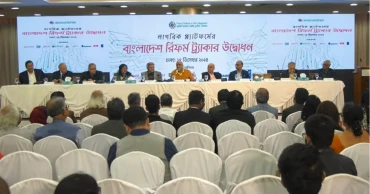
Politicians also face growing security concerns alongside citizens: Debapriya
Amid recent attacks on political figures, politicians in Bangladesh are now facing serious security concerns alongside ordinary citizens, said Centre for Policy Dialogue (CPD) Distinguished Fellow and Citizen’s Platform Convener Debapriya Bhattacharya on Sunday (December 14, 2025).
Speaking at the inauguration of the Bangladesh Reform Tracker, organised by the Citizen’s Platform at Agargaon in the capital, Debapriya said citizens across the country are suffering from acute insecurity, with politicians now joining that list.
“Citizen’s Platform has travelled across districts and identified a common problem—citizens are facing severe insecurity. Now politicians have joined them,” he said.
Referring to the recent attack on Inqilab Mancha General Secretary Osman Hadi, Debapriya said, “We do not think this attack will be the last on politicians. Violence against women, attacks on minorities, citizens’ safety and now politicians’ security have all become major issues.”
On the ongoing reform process, he said prolonged democratic deficits during previous governments had led to the emergence of a powerful oligarchic society, which now poses a major obstacle to reforms.
Read more: BNP leaders meet CA; Tarique's security might be agenda
Breaking this cycle of non-competitive politics and economy and advancing reforms remains a major challenge for present-day Bangladesh, he added.
Appreciating the interim government, Debapriya said that while reforms were undertaken during previous governments, this is the first time an interim government has been formed with reform as its core objective.
“The interim government has formed several commissions and taskforces as part of the reform initiative, which deserves appreciation,” he said.
He, however, said the initial momentum of the reform process has weakened.
“There has been a lack of consistent transparency in the reform process. Poor coordination within the government and inadequate public outreach on reforms have slowed the pace,” he said.
Read more: Govt ready to provide special security to Tarique Rahman: Home Adviser
Debapriya also pointed out that the absence of a political manifesto has made the implementation of reforms more challenging.
Speaking about the Reform Tracker, he said citizen participation is essential for successful reforms.
“Without meaningful citizen engagement, vested groups may capture reforms for their own interests. The Reform Tracker has been launched to keep citizens continuously connected with the reform process,” he said.
“Planning reforms is not as difficult as implementing them. Without alignment between theory and practice, reforms cannot succeed,” Debupriya added.
In a presentation at the event, CPD Additional Director (Research) Towfiqul Islam Khan said the website would allow anyone to track the progress of reforms across various issues.
Read more: Bangladesh shifts fiscal gears as bank debt falls
“This will ensure citizens remain actively engaged with the reform process and its implementation,” he said.
9 months ago
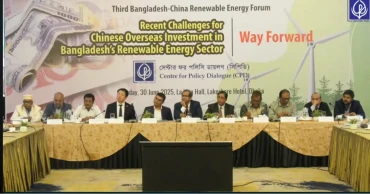
CPD urges review of solar project cancellations amid Chinese investors’ concerns
The Centre for Policy Dialogue (CPD) on Monday urged the interim government to reconsider its recent decision to cancel 37 solar power plant projects, warning that the move could severely undermine investors’ confidence, particularly among Chinese stakeholders.
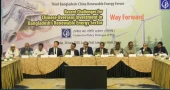
The recommendation came during a seminar titled ‘Recent Challenges for Chinese Overseas Investment in Bangladesh’s Renewable Energy Sector: Way Forward’, held at a Dhaka hotel on Monday.
The cancelled projects, worth over US $6 billion and totalling more than 3,287 megawatts in capacity, were approved under the previous Awami League government.
The interim administration has cited political considerations and allegations of irregularities as reasons for the cancellation.
Chinese investors, who had committed significant funding to several of the projects, expressed alarm during the event.
Representatives from Jinko Solar, Chint Solar, and the Chinese Renewable Energy Industries Association (CREIA) joined Bangladeshi officials and sector leaders in voicing concern.
Presenting the keynote paper, CPD Research Director Dr Khondaker Golam Moazzem and Programme Associate Abrar Ahammed Bhuiyan noted that 15 of the affected companies had already acquired land, meaning the cancellations could lead to financial and legal complications.
CPD raises alarm over Bangladesh’s energy budget
CPD warned that the government’s decision sends a negative message to the international investment community, particularly at a time when Bangladesh is seeking to expand its renewable energy capacity.
The think tank emphasised that such policy reversals could deter future investment, not just from China but from other key partners as well.
Among the special guests at the seminar were Jalal Ahmed, Chairman of the Bangladesh Energy Regulatory Commission; Mohammad Alauddin, Rector of the Bangladesh Power Management Institute; and Nahian Rahman Rochi, Head of Business Development at the Bangladesh Investment Development Authority (BIDA).
Officials from both the public and private sectors stressed that policy inconsistency, land acquisition difficulties, and bureaucratic hurdles are key barriers to realising Bangladesh’s renewable energy goals.
Bangladesh aims to generate 20 percent of its electricity from renewable sources by 2030, rising to 30 percent by 2040. This will require annual investments of nearly US $1 billion through the end of the decade, and even more in subsequent years.
China, which invested approximately US $676 billion in clean energy globally in 2023, accounts for 15.1 percent of Bangladesh’s total FDI stock. More than half of Chinese FDI in Bangladesh is directed toward the renewable energy sector.
Speakers at the event, including Masudur Rahim, CEO of Omera Renewable Energy Ltd; Mostafa Al Mahmud, President of the Bangladesh Sustainable and Renewable Energy Association (BSREA); and Han Kun, President of the Chinese Enterprises Association in Bangladesh, called for greater transparency and stability in energy sector policymaking.
Proposed budget fails to holistically address economic challenges: CPD
They urged the government to engage in constructive dialogue with affected investors and ensure that decisions do not jeopardise the country’s long-term energy security and investment climate.
1 year ago
CPD raises alarm over Bangladesh’s energy budget
Centre for Policy Dialogue (CPD) on Thursday raised serious concerns over Bangladesh’s proposed national budget for FY2025-26, warning that its fossil fuel-heavy focus threatens the country's clean energy transition and long-term sustainability.
These observations were made during a dialogue titled ‘Power and Energy Sector in the National Budget for FY2025-26: Reflections on the Priorities for Energy Transition’, held at BRAC Centre Inn in Mohakhali, Dhaka.
Energy Adviser Muhammad Fouzul Kabir Khan joined it virtually as chief guest.
The panel included CAB’s Professor Dr M Shamsul Alam, Professor Badrul Imam of Dhaka University, BGMEA Vice President Barrister Vidiya Amrit Khan, energy expert Monower Mostafa and BKMEA Vice President Md Akhter Hossain Apurbo.
CPD’s latest analysis warned that the energy budget undermines the government’s Three Zeros pledge – Zero Poverty, Zero Emission and Zero Unemployment, particularly the Zero Emission goal.
It highlighted that without urgent reforms, Bangladesh may fall further behind in its energy transition.
The budget, placed on June 2 and approved on June 22, is titled “Building an Equitable and Sustainable Economic System.” But CPD said it contradicts that vision by prioritising fossil fuels over renewables.
Proposed budget 'traditional', lacking major reform approaches: Seminar
Key Challenges Highlighted
The study, led by Dr Khondaker Golam Moazzem and his team, identified several critical issues:
·Persistent Financial Losses: BPDB continues to face losses despite subsidies and tariff revisions, while profits by BPC and RPGCL often come at consumers’ expense.
·Rising Fiscal Burden: Power sector subsidies now account for 41% of the national total, with LNG import subsidies rising to Tk 9,000 crore for FY26.
·Overdependence on LNG: Domestic gas exploration is stagnant, and the Gas Development Fund is diverted to LNG imports.
·Mismatch Between Capacity and Supply: Despite growing capacity, outages persist due to inaccurate demand forecasts and fuel import limitations.
·Flawed Pricing Mechanism: The market-based fuel pricing model launched in March 2024 lacks transparency and is vulnerable to taxation and exchange rate shocks.
·Slow RE Progress: BPDB has failed to attract bidders for solar projects, and the cancellation of 37 LoIs has harmed investor confidence.
·Costly Debt: The government is relying on expensive short-term loans to pay dues, raising sustainability concerns.
·Policy Gaps: Key policies like the Integrated Energy and Power Master Plan (IEPMP) are under review, causing alignment delays.
·Deviation from Transition Goals: The budget’s emphasis on coal extraction and LNG imports signals a retreat from the Zero Emission commitment.
Proposed budget fails to holistically address economic challenges: CPD
CPD’s Recommendations
· To realign with transition goals, CPD called for:
· Ending tax exemptions for fossil fuel power projects.
· Introducing carbon taxes and duties on fossil fuel plant imports.
· Withdrawing all fossil fuel and LNG subsidies.
· Prioritising domestic gas exploration using the Gas Development Fund.
· Phasing out inefficient power plants.
· Renegotiating unsolicited IPP contracts.
· Scaling up renewable energy in the ADP and cutting import duties and VAT.
· Creating a Renewable Energy Subsidy Fund.
· Investing in smart grids to support RE integration.
· Seeking low-interest MDB financing over short-term loans.
· Reviewing energy policies with the 2040 RE target in mind.
CPD said that the upcoming fiscal year will be a decisive test of the government’s resolve to uphold its climate and energy transition pledges.
1 year ago
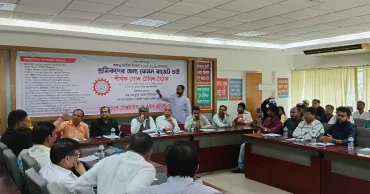
Labour Ministry’s share in budget shrinking every year: Dr Golam Moazzem
Despite an increase in absolute allocation, the labour sector’s proportional share in the national budget has been declining over the years, economist Dr. Golam Moazzem said on Tuesday.
Speaking at a roundtable titled “What Kind of Budget Do Workers Need?” at the National Press Club, the Research Director of the Centre for Policy Dialogue (CPD) pointed out that in the 2020-21 fiscal year, the allocation for the Ministry of Labour was 11 paisa for every Tk 100 in the budget. By FY2023-24, it had dropped to 9 paisa.
The event was organized by the Bangladesh Textile Garment Workers Federation.
“Even though the allocation has gone up in terms of amount, it has declined proportionally compared to other sectors,” Moazzem said.
He attributed this downward trend to a longstanding tendency across all governments to treat workers as a lower social and political priority.
“We expect to see how much of the Labour Reform Commission’s recommendations are reflected in the upcoming budget,” he added.
Moazzem also urged political parties to ensure that at least 10% of their nominees in the upcoming national elections are workers or represent labour interests.
NBR to remain split, misconceptions cleared: Finance Adviser
In a written proposal, the federation’s president Mahbubur Rahman Ismail said that despite an agreement reached in September last year among worker representatives, factory owners, and the labour ministry to implement a rationing system, no measures have been taken yet.
“Bangladesh is graduating from LDC status to a middle-income country. In such a context, it is unacceptable that workers continue to live below the poverty line,” he said.
The proposal outlined eight key demands: introducing rationing for workers, allocating 10% of the national budget to the labour sector, building hospitals in labor-dense areas, forming a workers’ safety fund, establishing worker housing, creating a universal welfare fund, and forming a workers' caucus in Parliament.
The Labour Reform Commission has also recommended rationing support for workers.
BKMEA President Mohammad Hatem said that both BGMEA and BKMEA support all legitimate demands of workers.
“This year, even a token allocation in the national budget could initiate the rationing system,” he said. “We also urge workers not to engage in destructive activities like arson and vandalism. While 95% of workers are peaceful, the remaining 5% tarnish the reputation of the entire sector.”
Referring to past examples like the Adamjee Jute Mills, Labour Reform Commission Chairman Sultan Uddin Ahmed criticized modern factories for neglecting worker accommodation.
“Factory owners today say that housing workers together could lead to increased political activity,” he said.
Worker Dulal Chandra Mojumdar noted that even five-star hotels like Hotel Sonargaon maintain wage disparities and fail to provide housing for all staff.
Raju Ahmed, General Secretary of the Bangladesh Workers’ Federation, stated: “Workers represent the largest share of the job market. Yet their votes hold little value. Without gaining power and participating in governance, workers’ demands will not be fulfilled.”
Jasim Uddin, General Secretary of the Bangladesh Motor Vehicle Mechanics Federation, said: “We make broken-down vehicles run again — the government must listen to us. If not, we will be forced to take to the streets.”
To press home their demands, including the implementation of rationing, President Mahbubur Rahman announced plans for mass rallies on May 30 in Gazipur, Savar, and Chattogram industrial zones, and on June 1 in front of the Department of Labour in Dhaka.
1 year ago

CPD recommends minimum wage of Tk 17,568 for RMG industries
The Centre for Policy Dialogue (CPD) on Sunday (October 8, 2023), based on research of living expenses, recommended minimum wage of Tk 17,568, at the entry level, for export-oriented apparel industries.
Currently, the minimum wage for garment workers, set by the wage board on December 1, 2018, stands at Tk 8,000 – a sum frequently scrutinised, particularly given the prevailing economic crisis.
Read: Lack of awareness a serious risk on pollution: CPD
CPD said, if the foreign buyers pay an additional 7 cents per apparel product, factory owners will not be under pressure to pay this wage.
The CPD made this proposal at the minimum wage revision, monitoring, and recommendation dialogue for the garment sector. The event was held at a hotel in Dhaka’s Gulshan.
CPD Research Director Khondokar Golam Moazzem unveiled the proposal. He explained that the proposed increase in minimum wage has been made through findings from a comprehensive survey on the garment sector, conducted by CPD.
The research institute said that they are making the proposal after surveying 228 workers in 76 factories.
The CPD research director and senior research assistant Tamim Ahmed presented the keynote paper at the event.
Read: Bangladesh will need $10 billion annually to import primary fuel for power generation: CPD
BGMEA President Faruque Hassan, BKMEA Executive President Mohammad Hatim, Owners’ Representative in Minimum Wage Board and former president of BGMEA Siddikur Rahman, Minimum Wage Board Workers’ Representative Sirajul Islam, among others, were present at the event.
The government set a new minimum wage board on April 10, 2023, tasked with determining the new minimum wage for the RMG industry through discussions at the tripartite level.
The board has already met several times, and the new minimum wage is likely to be finalised within the next month.
Read: It is the ‘profession’ of TIB and CPD to find loopholes in budget, Hasan Mahmud says
The issue of minimum wage is immensely important, particularly given that it has a substantial impact on the RMG industry’s overall competitiveness and the livelihood of workers. Hence, it is crucial to examine the current structure of wages and to determine a new wage in a way that allows workers to have a fair minimum wage.
2 years ago

Dr Fahmida recommends market monitoring by government
Emphasizing the issue of market distortion, Centre for Policy Dialogue (CPD) Executive Director Dr Fahmida Khatun has recommended market monitoring by the government and claimed that a significant group of people manipulates the market.
She pinpointed the ongoing economic instability globally and locally, addressing the issues of outrageous price rise of commodities, banking health, fiscal policies and external factors affecting the local economy.
Dr Fahmida, while speaking at a roundtable on Saturday, also discussed the dependence of Bangladesh on fuel imports and fuel price hikes affecting the production level. The Bangladesh Institute of Peace and Security Studies (BIPSS) hosted the monthly roundtable titled, ‘War, Famine and Turbulence: Global Trends 2023’ featuring three speakers - Dr Fahmida
Khatun, former Ambassador Air Vice Marshal (Retired) Mahmud Hussain and security analyst Shafqat Munir.
Also read: CPD's Fahmida made member of UNCTAD’s advisory board
The roundtable was moderated by BIPSS President Major General (Retd) ANM Muniruzzaman. The moderator initially highlighted the post-Covid issues being faced by the current world today, such as the Ukraine-Russia conflict, possibilities of an accidental escalation, economic downturns, food security, geo-political competition, climate security, elections in South Asia, disruptive technology, metaverse and the brand new front of artificial intelligence (AI).
Mahmud Hussain mentioned that the current Ukraine-Russia war would empty Europe’s energy storage if further escalation occurred.
The former ambassador and expert recommended institutional developments for Bangladesh to ensure sustainable preparedness in the future.
He stated that further worsening of the war would lead to a global price rise of fuel, putting a strain on Bangladesh's energy security.
Security analyst Shafqat Munir tapped into the untapped aspects of global affairs like geo-political competitions and confrontations.
He stated that further studies are required on geo-political competition and confrontations nearby, which may directly impact Bangladesh due to its geographical location.
Furthermore, he said, the interconnection between technology and security was discussed, along with the importance and vitality of disruptive technology, 3D printing, artificial intelligence and metaverse.
According to the security analyst, these technologies, if they land in the wrong hand, could create new security challenges for the country.
Munir opined on the question of national security that all Bangladeshis should speak in one voice. He mentioned the possible accidental escalations in the global arena.
3 years ago

CPD raises question about power tariff enhancement proposal
Centre for Policy Dialogue (CPD), a think-tank, has raised questions about the necessity of power tariff enhancement against the backdrop of the concerned ministry’s reported proposal for an allocation of Tk 56,860 crore as subsidy.
“We don’t understand why the Ministry of Power, Energy and Mineral Resources wants to raise power tariff at the retail level when it seeks such a huge amount as subsidy,” said CPD research director Dr Khondaker Golam Moazzem while making a presentation on the interim report on the proposed “Integrated Power and Energy Master Plan (IEPMP) on Thursday at CPD office.
Referring to the report, he said that of the total proposed amount, Tk 32,500 crore was sought for state-owned Bangladesh Power Development Board (BPDB) for power sector, Tk 19,360 crore for Bangladesh Petroleum Corporation(BPC) for petroleum import and Tk 5,000 crore for Petrobangla for LNG import.
Read more: BERC now to consult with govt before any move on retail power tariff hike proposals
“We don’t agree with a proposal of reducing subsidy by raising power tariff,” he said adding, Rather, the government should go for a phase out plan to retire the costly rental and quick rental power plants to reduce the cost of power generation.
The CPD research director said state-owned BPC is now making huge profit instead of incurring loss in its petroleum business after enhancement in fuel prices as the global fuel price is showing a declining trend.
He claimed that the BPC is now making a profit of over Tk 30 per litre in selling the diesel.
Responding to a question, he said the ministry sought such a huge amount as subsidy might be due to an inflated calculation.
CPD executive director Dr Fahmida Khatun also spoke on the occasion.
Appreciating the government’s initiative for adopting the Integrated Power and Energy Master Plan (IEPMP) , Dr Golam Moazzem said this has some positive and negative aspects.
Read more: Raising retail power tariff: 3 more distribution companies submit proposals
"But despite that we appreciate the move as it has much more focus on renewable energy promotion than before,” he said.
He, however, said that the government is now shifting from its original target of generating 40 percent of electricity from renewable energy by 2041.
“We see a major change in the statements as they now say the target is “up to 40 percent” by inclusion of word “Clean Energy” instead of renewable energy,” he added.
He also observed the government was trying to shift from the coal-fired power’s phase out plan by introducing “Carbon Capture Technology”.
The developed world is now coming away from this technology because it is not environment-friendly as such technology is used to capture carbon from the coal-fired power plants.
He said the cost of solar and other renewable energy (RE) options is coming down globally and generation of 16,000 MW of electricity, which is the targeted 40 percent of total planned power generation, is very much possible. Many local and foreign investors are ready to invest in the RE sector.
“The RE technologies are getting cheaper day by day. The government should go for proven technology in this regard instead of unproven ones,” he said.
He also observed that the government ultimately wants to promote import of LNG (liquefied natural gas) through the proposed master plan while the RE did not get proper attention in it.
“RE has not been avoided in the proposed master plan, but it was ignored,” he said.
3 years ago