national election
Next national election to be held under caretaker government: Law Minister
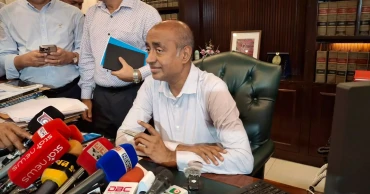
Law, Justice and Parliamentary Affairs Minister Md. Asaduzzaman on Thursday said the next national election will be held under a caretaker government following the court order.
“The process for forming the caretaker government and who would be included in it would become clear after reviewing the full text of the judgment,” he said while talking to reporters at his office at Secretariat.
Earlier in the morning, the Appellate Division upheld the High Court verdict declaring parts of the 15th Amendment to the Constitution unconstitutional and void and restoring the caretaker government system and the referendum.
When asked whether he could say that the next parliamentary election would definitely be held under a caretaker government, the minister said, “It is our political commitment.”
The caretaker government system was the outcome of a long political movement led by the BNP and the concept evolved from the interim government that oversaw the 1991 general election following the mass uprising of 1990, said the minister adding, BNP introduced the 13th Constitutional Amendment in 1996, establishing the framework for a neutral, non-party caretaker government to conduct national elections.
BNP had continued its movement for the restoration of the caretaker government system over the past 16 to 17 years, he said.
“The main objective of our movement was to ensure people's voting rights under the principle, ‘I will cast my vote for the candidate of my choice. We are politically committed to restoring that process and we believe there is no alternative to a caretaker government for achieving that goal,” he added.
2 months ago
Candidates must submit election expense returns by mid-March: EC
The candidates who contested the 13th parliamentary election are legally obliged to submit the return of election expenses by mid-March before the Election Commission (EC).
“There is an obligation to submit the return of candidates’ poll expenses before the returning officer concerned within 30 days after the announcement of election result (in gazette),” said a letter the EC sent to returning officers on Wednesday.
The EC also asked the returning officers to send the submitted return of election expenses to the Commission by March 25 next.
According to the Article 44C (1) of the Representation of the People Order, 1972, every election agent of a contesting candidate shall, within thirty days after the publication of the name of the returned candidate, submit to the Returning Officer a return of election expenses in the prescribed form.
Since the official election result was published on February 13, the return of a candidate’s election expenses must be submitted by March 15 next.
A total of 2,028 candidates ran in the February-12 parliamentary election held in 299 constituencies (except Sherpur-3) across the country. The contestants include 1,755 nominated by 50 political parties and 273 independent candidates.
The EC published the names and address of 297 elected MP candidates in a gazette on February 13, keeping the election result of Chattogram-2 and 4 constituencies withheld in line with the court’s decisions.
The newly elected MPs include 209 BNP ones, 68 Jamaat MPs, seven independent MPs and six NCP MPs, two Bangladesh Khilafat Majlis MPs, one MP each of Bangladesh Jatiya Party-BJP, Ganaodhikar Parishad, Ganasamhati Andolan, Khelafat Majlish and Islami Andolan Bangladesh.
The political parties that participated in the recent general election will have to submit an expenditure statement to the Election Commission within 90 days after the completion of election.
“Every political party nominating any candidate for election shall submit to the [Commission, for its scrutiny, within ninety days] of the completion of election in all constituencies, an expenditure statement giving details of the expenses incurred or authorised by it in connection with the election of its candidates for the period from the date of publication of the notification under clause of Article 11 till the completion of elections in all the constituencies in which it has set up candidates,” states the article 44CCC (1) of the RPO, 1972.
6 months ago
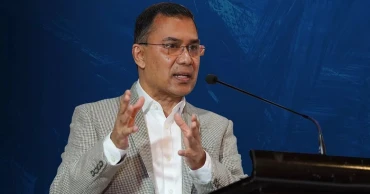
Tarique Rahman quits Bogura-6, keeping Dhaka-17: EC
BNP Chairman Tarique Rahman has left Bogura-6 seat for by-election as he is set to take oath as a member of parliament from Dhaka-17 constituency on Tuesday.
“We’ve received a letter that BNP chairman Tarique Rahman quits Bogura-6 constituency,” Election Commission Senior Secretary Akhtar Ahmed told UNB on Monday.
He said now the process continues to publish a gazette declaring the parliamentary constituency vacant.
Tarique Rahman was elected from two parliamentary seats – Bogura-6 and Dhaka-17— in the parliamentary elections held on Thursday last.
On Friday last, the EC published a gazette of 297 elected MP candidates.
The election results of two other constituencies – Chattogram-2 and 4-- were withheld as per the court orders. Besides, the election to Sherpur-3 was earlier cancelled following the death of a contesting candidate.
The newly elected MPs are set to take oath as members of the 13th parliament and also members of the Constitution Reform Council on Tuesday morning.
In the election, Bangladesh Nationalist Party (BNP) secured 209 parliamentary seats, while Bangladesh Jamaat-e-Islami won 68.
Besides, National Citizen Party-NCP settled victory in six constituencies, independent candidates in seven constituencies, Bangladesh Khelafat Majlish in two, Islami Andolan Bangladesh in one, Bangladesh Jatiya Party-BJP (led by Andaleeve Rahman Partho) in one, Ganaodhikar Parishad in one, Ganasamhati Andolan in one and Khelafat Majlish in one parliamentary seat.
7 months ago

Claims of 21.4% fake votes misleading: TIB
Transparency International Bangladesh (TIB) on Monday said false and misleading information is being circulated in its name regarding allegations of fake votes in the 13th parliamentary election.
In a press release, the organisation said information presented at a press conference marking the release of its report titled ‘Observation of the 13th National Parliamentary Election Process and Affidavit-Based Analysis’ has been misinterpreted and wrongly disseminated, creating confusion among the public.
TIB clarified that in its field-level research, conducted through a random sampling method, data were collected from 70 selected constituencies.
Among those, information regarding incidents of one or more fake votes was found in 21.4 percent of the constituencies.
“However, interpreting this finding to mean that 21.4 percent fake votes were cast nationwide is “completely incorrect, baseless and misleading,” the TIB said.
TIB requested media outlets that have already misrepresented or incorrectly presented the information to publish appropriate corrections without delay.
Otherwise, it said, such misleading representation would be considered intentional.
7 months ago
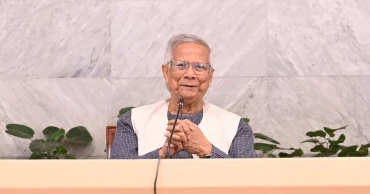
We’re lucky to have opportunity to serve nation: Prof Yunus
Chief Adviser Prof Muhammad Yunus on Sunday expressed his sincere appreciation to the members of the Council of Advisers, describing the recently concluded national election as both historic and highly successful.
“We are lucky people who got the opportunity to serve the nation,” Chief Adviser’s Press Secretary Shafiqul Alam quoted Prof Yunus as saying at the last meeting of the Council of Advisers.
Describing the election a ‘massive success’, Prof Yunus extended his gratitude to all those involved in ensuring its smooth conduct, particularly the law enforcement agencies and the Armed Forces for their active and professional roles.
Prof Yunus calls upon all to work together to fulfill people’s expectations
Press Secretary Alam briefed reporters at the Foreign Service Academy following the meeting. Senior Assistant Press Secretary Foyez Ahammad and Assistant Press Secretary Shuchismita Tithi were also present.
Alam said the Council adopted a formal resolution expressing deep appreciation to all stakeholders for their outstanding contributions towards organising what it termed a successful, historic and festive national election.
The Council conveyed special thanks to Home Affairs Adviser Lt Gen (retd) Md Jahangir Alam Chowdhury for his ministry’s leadership, noting that Bangladesh may not have previously witnessed an election of such high standard.
The Council extended gratitude to all agencies under the Ministry of Home Affairs, including the police, Border Guard Bangladesh (BGB), Coast Guard, Ansar, and the Armed Forces, for their commendable performance in ensuring a peaceful electoral process.
The Council approved a vote of thanks to immediate past Cabinet Secretary Dr Sheikh Abdur Rashid for effectively coordinating the administration and contributing to the conduct of a free, fair, peaceful and festive election.
It feels like Eid, creating a new Bangladesh: Prof Yunus
Information and Broadcasting Adviser Syeda Rizwana Hasan moved the motion of thanks, which was unanimously adopted.
A key point highlighted during the meeting was the anticipated emergence of a strong opposition in Parliament, comprising individuals who had been victims of enforced disappearance and killings, as well as those who were at the forefront of the July Revolution, reflecting broader representation across Bangladesh society.
The Council also underscored that individuals from similar backgrounds would be represented on the treasury bench, marking what it described as a new and inclusive chapter in the country’s parliamentary history.
7 months ago
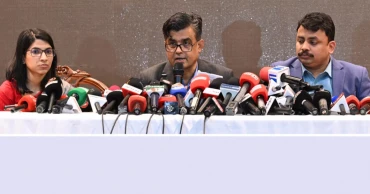
‘Advisers proud citizens’; will attend oath-taking ceremony: Shafiqul Alam
Chief Adviser’s Press Secretary Shafiqul Alam on Sunday described the advisers of the interim government as ‘proud citizens of the country’ and confirmed that they are there in Bangladesh, stating that they will also participate in the swearing-in ceremony of the new government on February 17.
“They are still in the country. They are proud citizens of the country, and they will put in their best efforts to take the country forward in the future,” Alam told reporters at the Foreign Service Academy.
Shafiqul Alam says his properties unchanged, bank deposit up slightly
The Press Secretary said the advisers will attend the oath-taking ceremony, arriving in flag-carrying vehicles.
Once the ceremony concludes, the vehicles will take them back to their respective residences, but without the flags, he said.
The Press Secretary made the remarks amid questions and social media speculation that some advisers were leaving the country, similar to Faiz Ahmad Taiyeb, the former special assistant to the Chief Adviser on ICT and telecommunications, who has already left the country.
When asked about Taiyeb’s departure, Alam said he had no additional comments beyond the former assistant’s own statement.
The newly elected MPs are scheduled to take oath at approximately 10am, followed by the incoming Prime Minister and cabinet around 4pm.
Quoting Foreign Adviser Md Touhid Hossain, Alam said the Foreign Ministers from Qatar and SAARC member states have been invited to attend the ceremony.
Smooth power handover after Feb-12 election: Shafiqul Alam
Meanwhile, referring to discussion at the last meeting of the Council of Advisers, chaired by Chief Adviser Prof Yunus, the Press Secretary said it was unfortunate to see that in the previous elections, minorities have been subjected to post-election violence.
“So far, this is the first time that we have not heard of any attack on any of our religious minority brothers and sisters after the election. Many of them, as you have seen, have happily cast their votes in a festive mode at the polling stations,” Alam said.
7 months ago
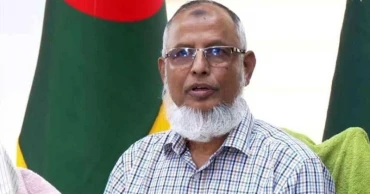
Elections more successful than anticipated: EC Anwarul Islam
Election Commissioner Anwarul Islam Sarkar on Sunday said the 13th parliamentary election and referendum were conducted more successfully than expected.
“We feel more successful than expected. Overall, we are satisfied with the election. We are satisfied with the percentage, the vote management, and all of your cooperation,” he said while talking to reporters in the city’s Nirbachan Bhaban.
About the Jamaat-e-Islami-led 11-party electoral alliance’s demand for a recount of votes in 32 constituencies, Anwar said the election teams working in the field carried out the preparation of results with utmost efficiency and professionalism.
Election schedule to be announced in early Dec: Election Commissioner Anwarul Islam
He said a large number of drones and helicopters were deployed, while body-worn cameras and closed-circuit television (CCTV) cameras were installed at almost every polling centre. “In such a situation, everything was as clear as a mirror. From here, we made our best effort to monitor which information was correct and which was false.”
The Election Commission said whenever any incident came to their notice, they tried to address the matter and resolve it.
Asked whether the Commission would accept the demand for a recount, he said the claims would require proper examination. “The law has given them the opportunity to place any election-related complaint before the High Court.”
59.44 percent votes cast in national election:EC
About the gazette publication, he said EC officials worked day and night to prepare the gazette of the newly elected members of parliament, adding that it was published in due time.
7 months ago

BNP wins 49.97% vote share, Jamaat 31.76%: EC
Bangladesh Nationalist Party (BNP) secured 49.97 percent, while Bangladesh Jamaat-e-Islami gained 31.76 percent of total votes cast in the 13th parliamentary election held on February 12 last.
Besides, National Citizen Party-NCP obtained 3.05percent votes, Islami Andolan Bangladesh pocketed 2.70 percent votes, Bangladesh Khelafat Majlish gained 2.09 percent and Jatiya Party got only 0.89percent, according to the statistics of the Election Commission.
In the election, 274 independent contestants bagged 5.79 percent votes.
A total of 77,695,023 votes (out of 127 million voters) were cast in the 299 constituencies (except Sherpur-3) in the referendum and the national election held on Thursday last. But the EC released unofficial election results of 297 constituencies on Friday last and kept the result of Chattogram-2 and 4 withheld in line with the court orders.
In the election, BNP secured 209 parliamentary seats, while Jamaat won in 68 seats, NCP in six constituencies, independent candidates in seven constituencies, Bangladesh Khelafat Majlish in two, Islami Andolan Bangladesh (IAB) in one, Bangladesh Jatiya Party-BJP (led by Andaleeve Rahman Partho) in one, Ganaodhikar Parishad in one, Ganasamhati Andolan in one and Khelafat Majlish in one parliamentary seat.
BNP candidates contested the polls from 290 seats, while Jamaat in 227 seats, IAB in 257 seats, Jatiya Party in 199 seats, Bangladesh Khelafat Majlish in 34 seats and NCP in 32 seats in the February-12 elections held in 299 out of 300 constituencies as the election in Sherpur-3 was earlier cancelled following the death of a contesting candidate.
A total of 50 political parties out of 59 registered ones participated in the election, but only five parties – BNP, Jamaat, NCP, IAB and Bangladesh Khelafat Majlish-- secured at least one percent votes.
We recognise overall election outcome: Jamaat Ameer
The other participant parties include Amar Bangladesh (AB) Party (gained 0.28pc of total votes, it had 30 candidates), Aamjanatar Dal (0.01pc votes, 15 candidates), Insaniat Biplab Bangladesh (0.03pc votes, 42 candidates), Islami Front Bangladesh (0.08pc votes, 20 candidates), Islami Oikyajote (0.00pc votes, two candidates), Khelafat Majlish (0.76pc votes, 20 candidates), Ganaodhikar Parishad (0.33pc votes, 94 candidates), Ganatantri Party (0.00pc, 1 candidate), Ganafront (0.00pc, 5 candidates), Gonoforum (0.01pc, 20 candidates), Ganasamhati Andolan (0.14pc, 17 candidates), Zaker Party (0.02pc, five candidates), Jagpa (0.00pc, one candidate ), Jatiya Party-JP (0.04pc, 10 candidates), JSD (0.04pc, 28 candidates), NDM (0.00pc, eight candidates), Janatar Dal (0.05pc, 20 candidates), Jamiyate Ulamaye Islam Bangladesh (0.47pc, four candidates), NPP (0.01pc, 22 candidates), Nagorik Oikya (0.01pc, 11 candidates), Bangladesh Jatiya Samajtantrik Dal-Jasod (0.02pc, 15 candidates), Bangladesh Islami Front (0.45pc, 25 candidates), Bangladesh Congress (0.01pc, 19 candidates), Bangladesh Kalyan Party (0.0pc, two candidates), Bangladesh Khelafat Andolan (0.01pc, seven candidates), Bangladesh Khelafat Majlish (2.09pc, 34 candidates), Bangladesh Jatiya Party (0.00pc, six candidates), Bangladesh Jatiya Party-BJP (0.14pc, two candidates), Bangladesh Development Party (0.17pc votes, two candidates) and Bangladesh NAP (0.01pc, one candidate).
The remaining participant parties are BNF (0.00pc, eight candidates), Bangladesh Nezame Islam Party (0.04pc, three candidates), Bangladesh Minority Janata Party-BMJP (0.01pc, eight candidates), Bangladesh Muslim League (0.01pc, 17 candidates), Bangladesh Muslim League-BML (0.00pc, three candidates), Bangladesh Republican Party-BRP (0.02pc, 14 candidates), Bangladesh Labour Party (0.01pc votes, 17 candidates), Bangladesh Supreme Party (0.04pc, 18 candidates), Bangladesh Samaodhikar Party-BEP (0.00pc, one candidate), Muktijot (0.01pc, 20 candidates), Communist Party of Bangladesh-CPB (0.08pc, 63 candidates), Bangladesher Biplabi Workers Party (0.04pc, seven candidates), Bangladesh Samajtantrik Dal (Marxist) (0.02pc, 33 candidates), Bangladesher Samajtantrik Dal- Basod (0.05pc, 36 candidates) and LDP (0.35pc votes and 13 candidates).
The parliamentary election was held alongside a referendum on the July National Charter (Constitutional Reform) Implementation Order 2025. In the referendum, there was a separate question among three questions to seek public mandate for the formation of a 100-member Upper House based on Proportional Representation (PR).
President Sahabuddin to administer oath to new cabinet members: Cabinet Secretary
Among the parties, Jamiyate Ulamaye Islam (with 0.47pc votes), Ganaodhikar Parishad (0.33pc), Ganasamhati Andolan (014pc), BJP (0.14pc), Biplabi Workers Party (0.04pc) and NDM (0.00pc) are components of the BNP-led electoral alliance.
On the other hand, AB Party (with 0.28 pc votes), Khelafat Majlish (0.76 pc votes), NCP (3.05 pc votes), Bangladesh Khelafat Majlish (2.09pc votes), Bangladesh Development Party (0.17pc votes), Labour Party (0.01pc votes) and LDP (0.35 pc votes) are the components of the Jamaat-led electoral coalition.
Overall, the BNP-led alliance obtained 51.09pc of the votes, the Jamaat-led electoral coalition gained 38.52 percent in the election.
If the proposed 100-member Upper House is ultimately formed on a PR basis, the BNP-led alliance would be entitled to 51 seats, while the Jamaat-led alliance would receive 39 seats, the EC data indicated.
7 months ago
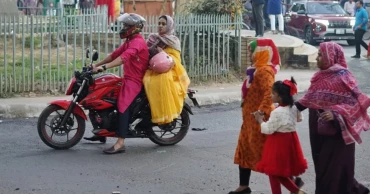
People return to routine as Bangladesh’s election holidays end
Public life across the country returned to normalcy on Sunday after the national election and a four-day government-declared holiday, with offices reopening, vehicles back on the roads and businesses resuming regular operations.
The extended break, announced to facilitate voting and ensure law and order, covered the election day and adjacent days, giving many people a rare opportunity for rest and travel.
With the holiday now over, government and private offices reopened, banks resumed transactions and educational institutions prepared to restart classes.
In the capital, traffic gradually picked up from early morning as commuters returned to work.
Although congestion was lighter than usual in some areas due to staggered reopening schedules, the familiar rush-hour rhythm was largely restored by midday.
Public transport services, including buses and ride-sharing vehicles, were operating normally.
At Kamalapur Railway Station, officials said train services were running according to schedules after operating on a limited timetable during the holiday period.
Launch terminals also reported regular services on major river routes, with many passengers returning to Dhaka after spending time with families in their home districts.
Markets and shopping centres reopened, drawing steady crowds.
Traders in New Market and other commercial hubs said sales were moderate but expected to increase in the coming days as supply chains stabilise and wholesale markets operate at full capacity.
Banks and financial institutions resumed full-fledged operations following special arrangements during the election. Bangladesh Bank officials said transaction volumes were expected to rise as government offices and businesses reopened.
ATM booths remained operational throughout the holiday, ensuring uninterrupted access to cash.
In several districts, local administrations reported a peaceful environment after the polls.
Law enforcement agencies maintained patrols in sensitive areas during the holiday to prevent any untoward incidents.
Officials said the overall situation remained stable, allowing residents to move freely and resume daily activities without disruption.
Educational institutions, many of which were closed for the election and holiday, announced plans to restart academic activities from Monday.
University authorities in Dhaka and other major cities said classes and examinations would proceed as scheduled unless otherwise notified.
Transport operators expressed optimism about the return of regular passenger flow.
Bus owners said the holiday period saw a surge in inter-district travel, particularly ahead of the election, followed by a steady return of passengers to urban centres.
With offices reopening, they expect commuter numbers to normalise within a day or two.
Industrial areas also began returning to routine production cycles.
Factory managers in key manufacturing zones said workers reported back after the break and supply deliveries resumed.
Export-oriented industries are working to ensure shipment schedules remain on track.
The Election Commission earlier expressed satisfaction over the overall conduct of the polls, noting voter turnout and the peaceful atmosphere in most parts of the country.
Observers said the smooth transition from election day to regular workdays reflected institutional preparedness and coordination among authorities.
Citizens voiced mixed feelings about the extended holiday.
While many welcomed the chance to spend additional time with family, some small business owners said prolonged closure affected daily earnings.
However, most agreed that the break contributed to a calm environment during and after the vote.
Security officials said they would continue monitoring the situation in the coming days, though no major incidents were reported following the announcement of results.
Patrols and checkpoints in certain areas will be gradually scaled back depending on the assessment of local conditions.
As the workweek resumes, attention is shifting to post-election priorities, including administrative continuity and economic activity.
With offices open, transport moving and markets active, daily life appears to have regained its usual pace after the polls and the four-day vacation.
7 months ago
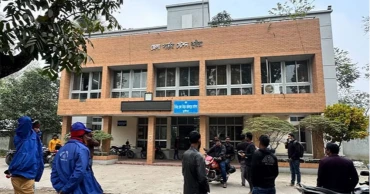
Jamaat wins three Kushtia seats as 17 candidates lose deposits
Seventeen of the 25 candidates who contested the national election from parliamentary constituencies in Kushtia have got their election deposits forfeited, according to official figures.
Under rules set by the Election Commission, a candidate loses their deposit if they fail to secure at least one-eighth — or 12.5% — of the total votes cast in their constituency.
A total of 25 candidates, including one independent and nominees from 14 political parties, took part in the election across Kushtia’s four seats. The only female contender stood under the banner of the Bangladesh Republican Party.
The results highlight the strong showing of Bangladesh Jamaat-e-Islami in the district, with the party winning three of the four constituencies. The Bangladesh Nationalist Party (BNP) secured the remaining seat.
Kushtia-1
In Kushtia-1, where 282,543 votes were cast, BNP candidate Reza Ahmed defeated Jamaat’s Belal Uddin.
Candidates who failed to reach the required threshold included JSD’s Md. Gias Uddin (star symbol), who received 203 votes; Bangladesh Islami Front’s Md. Badiruzzaman (candle symbol) with 241 votes; Islami Andolan Bangladesh’s Md. Aminul Islam (fan symbol) with 4,063 votes; independent candidate Md. Nuruzzaman Hablu Molla (cycle symbol) with 17,864 votes; Ganoadhikar Parishad’s Md. Shahabul Islam (truck symbol) with 613 votes; and JP’s Md. Shahriar Jamil (plough symbol) with 1,094 votes.
Kushtia-2
A total of 348,911 votes were cast in Kushtia-2. Jamaat candidate Md. Abdul Gafur defeated BNP’s Ragib Rauf Chowdhury.
Three candidates forfeited their deposits: Bangladesh Communist Party’s Nur Uddin Ahmed (spade symbol), who secured 80 votes; Islami Front Bangladesh’s Md. Babul Akter (chair symbol) with 1,123 votes; and Islami Andolan Bangladesh’s Md. Ali (fan symbol) with 3,887 votes.
Kushtia-3
In Kushtia-3, Mufti Amir Hamza won the seat, defeating BNP’s Engineer Md. Zakir Hossain Sarker. Of the 321,323 votes cast, four candidates failed to retain their deposits.
They were BASAD’s Mir Nazmul Islam (moy symbol) with 442 votes; Bangladesh Republican Party’s Rumpa Khatun (elephant symbol) with 475 votes; Ganoadhikar Parishad’s Md. Shariful Islam (truck symbol) with 299 votes; and Islami Andolan Bangladesh’s Md. Abdullah Akand (fan symbol) with 5,153 votes.
Kushtia-4
In Kushtia-4, where 308,260 votes were cast, Jamaat’s Md. Afzal Hossain defeated BNP’s Syed Mehdi Ahmed Rumi.
Among those forfeiting deposits were Islami Andolan Bangladesh’s Anwar Khan (fan symbol) with 1,373 votes; Bangladesh Minority Jatiya Party’s Tarun Kumar Ghosh (rocket symbol) with 671 votes; Ganoforum’s Md. Abdul Hakim Miah (rising sun symbol) with 255 votes; and Bangladesh Labour Party’s Md. Shahidul Islam (pomegranate symbol) with 308 votes.
7 months ago