NBR
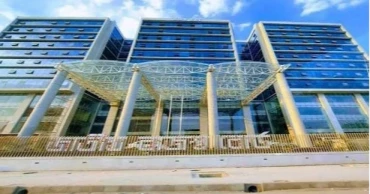
NBR detects Tk3.76cr VAT evasion by online clothing retailer
The Customs, Excise and VAT Commissionerate, Dhaka (West) has detected an estimated Tk3.76 crore in revenue evasion by J-Creation, an online clothing retailer, the National Board of Revenue (NBR) said Tuesday.
The commissionerate conducted a sudden raid on the premises of J-Creation in Mirpur on Sept 13 following a tip-off.
The business sells Punjabi outfits, sherwanis and other readymade garments through online platforms.
During the raid, officials found evidence of VAT evasion and seized a CPU and relevant documents, according to the NBR.
The authorities subsequently examined the company’s sales records and initially found evidence of revenue evasion amounting to around Tk3.76 crore.
The seized documents are now being examined further, and legal proceedings for filing a case are underway, the NBR said.
4 days ago

PM Tarique opens Revenue Conference 2026
Prime Minister Tarique Rahman on Tuesday inaugurated the Revenue Conference 2026, the second such event in the country, aimed at strengthening revenue collection and expanding the tax net.
The conference is being held at the Bangladesh-China Friendship Conference Centre in the capital and was organised by the National Board of Revenue (NBR).
The Prime Minister inaugurated the conference and later visited various stalls showcasing revenue collection activities, tax administration and initiatives to expand the tax base.
A video documentary titled “We Will Pay Taxes and Build the Country” was screened at the opening session.
The programme was chaired by acting NBR Chairman Ahsan Habib, who also moderated an exchange of views between the Prime Minister and officials from different departments.
During the discussion, officials shared their experiences and the challenges they face in revenue collection.
Taking part in the discussion, Tarique Rahman called on NBR officials to put past differences behind them and work together with honesty, efficiency and dedication for the country’s progress.
He stated that the government aims to move forward through collective efforts and is committed to creating an environment that fosters honest and capable officials to contribute more effectively.
Acknowledging the challenges and needs of NBR officials, the Prime Minister said the government will give due consideration to their legitimate demands while also ensuring the prudent use of taxpayers’ money.
He urged all concerned to properly perform their respective duties and work together to bring about positive change in the country.
Finance Minister Amir Khosru Mahmud Chowdhury, Prime Minister’s Adviser on Finance and Planning Dr Rashed Al Mahmud Titumir and acting NBR Chairman Ahsan Habib, among others, addressed the programme.
The conference is the second of its kind in Bangladesh. The NBR first organised a revenue conference in 2023, featuring seminars on income tax, value-added tax and customs, information booths and a revenue museum highlighting the history of the country’s revenue administration.
This year’s event is aimed at presenting the NBR’s activities, revenue collection procedures and reform initiatives to taxpayers and businesses, while also focusing on improving transparency and accountability in the revenue system.
Officials said the conference will provide an opportunity to discuss strategies for increasing revenue mobilisation and broadening the tax net. Separate divisions dealing with income tax, value-added tax (VAT) and customs are expected to present their respective work plans and priorities.
About 1,500 guests participated in the conference, including senior government officials and representatives from the economic, revenue and trade sectors, as well as experts.
The event also marked Prime Minister Tarique Rahman’s first direct engagement with NBR officials during his tenure, providing him an opportunity to learn about the revenue authority’s field-level operations, processes and challenges, according to officials.
1 month ago
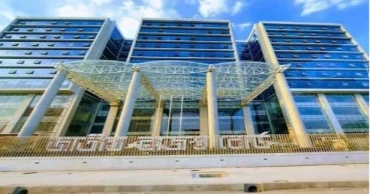
NBR launches special nationwide drive to verify tax deduction compliance
The National Board of Revenue (NBR) has intensified nationwide monitoring and verification of tax compliance, asking tax zones across the country to deploy special teams to ensure proper deduction and deposit of taxes at source under the Income Tax Act, 2023.
The revenue authority said the special drives are being conducted as per Section 147 of the Income Tax Act, 2023, which empowers tax officials to inspect businesses and verify whether taxes deducted at source have been correctly deposited into the government treasury.
The NBR urged all businesses, organisations and taxpayers to remain aware of the legal authority vested in tax officials under the law and to cooperate fully during inspection and verification activities.
According to the revenue authority, Section 147 authorises tax officials to enter any commercial or economic establishment, business premises or office without obstruction for on-site inspections.
During such visits, officials are empowered to examine and requisition account books, vouchers, bank statements, receipts and any other documents related to financial transactions or business activities.
The law also permits tax officials to inspect information stored in computer systems, cloud servers, digital records or electronic devices. Where necessary, they may gain access to password-protected or encrypted systems to verify tax-related information.
In addition, officials are authorised to temporarily seize and retain account books, documents, electronic records or digital devices if required to verify the accuracy of taxes deducted at source.
They may also collect copies of documents, images or account records and place identification marks or official seals on them for verification purposes.
The NBR said these powers are aimed at ensuring transparency in withholding tax administration and preventing revenue leakage through inaccurate or incomplete tax deductions.
The revenue authority also reminded taxpayers that Section 147(2) of the Income Tax Act provides for penalties against any individual or organisation that obstructs, resists or fails to cooperate with tax officials in carrying out their statutory duties.
The NBR urged all withholding tax deductors to deposit taxes deducted at source into the government treasury through the electronic challan (e-Challan) system, ensuring that the correct legal provision and the appropriate economic code are mentioned while making payments.
To address concerns over the implementation of Section 147, the NBR advised taxpayers facing any ambiguity, operational difficulty, alleged harassment or grievance to contact the member secretary of the NBR’s Section 147 Committee directly via email at [email protected].
The latest move comes as the tax authority seeks to strengthen compliance, improve monitoring of withholding tax collections and enhance revenue mobilisation through stricter enforcement of existing tax laws.
It has been assigned an ambitious revenue collection target of Tk 6.04 lakh crore for the 2026-27 fiscal year.
This historic target accounts for the majority of the overall Tk 6.95 lakh crore total government revenue collection goal for the period.
2 months ago
NBR alerts taxpayers to fake audit calls, extortion attempts
The National Board of Revenue (NBR) on Sunday warned taxpayers to remain vigilant against fraudsters impersonating tax officials and attempting to extort money by falsely claiming that their tax files have been selected for audit.
In a statement , the NBR said it has recently noticed that a group of scammers was contacting taxpayers from various mobile phone numbers, falsely informing them that their tax files were under audit.
The fraudsters were allegedly promising to exempt taxpayers from audit or threatening them with legal complications unless they paid money, the revenue authority said.
The NBR clarified that no official or employee contacts taxpayers regarding tax audits through personal mobile phone numbers or any unauthorised communication channel. If a tax file is selected for audit, the taxpayer is informed only through a formal written notice in accordance with the law, it said.
The revenue authority also reminded taxpayers that any outstanding tax or related fees must be paid only to the state treasury through the prescribed government payment system.
It stressed that no NBR official is authorised to receive payments personally or through mobile financial services such as bKash, Rocket or Nagad, or via personal bank accounts.
The NBR advised taxpayers who receive suspicious phone calls, text messages or emails claiming to be related to tax audits not to be misled and to verify the information immediately by contacting the office of the Deputy Commissioner of Taxes in their respective tax zone.
It also urged taxpayers to report anyone demanding money while impersonating an NBR official to the nearest law enforcement agency and to preserve the fraudster’s phone number as evidence.
2 months ago
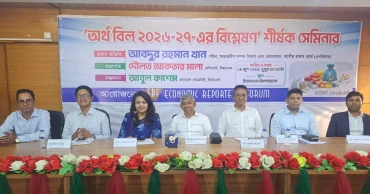
Sweeping deregulatory measures in budget to lower cost of doing business: NBR Chairman
National Board of Revenue (NBR) Chairman Md. Abdur Rahman Khan on Sunday said that unprecedented steps have been taken in the proposed budget for fiscal year FY2026-27 to create a deregulated environment for businesses.
"For a long time, export-oriented businesses have been demanding the expansion of bonded warehouse facilities. Previously, those who did not own a bonded warehouse faced numerous complications in collecting raw materials from bond-facilitated institutions. The new budget has eliminated these limitations," the NBR chief said.
He made the remarks as the chief guest while addressing a seminar titled "Analysis of Finance Bill 2026-27" at the Economic Reporters' Forum (ERF) auditorium in the capital on Sunday afternoon.
The NBR Chairman explained that apparel exporters with bonded warehouses can now smoothly sell raw materials to other exporters who lack such facilities. "This decision will immensely benefit the country's backward linkage industries and enhance the capability of local industries," he added.
He further noted that the previous continuous bond facility was restricted, requiring approval from the commissionerate to import raw materials for another institution. This facility has now been expanded to the inter-commissionerate level.
Furthermore, bond licenses will now be accessible to entrepreneurs across any sector upon application, moving away from the previous practice where only a few selected sectors enjoyed the privilege.
For businesses that do not wish to take a bond license but are interested in duty-free imports, the NBR has introduced a new option allowing them to import duty-free raw materials against bank guarantees, the Chairman announced.
Highlighting reforms in the Authorized Economic Operator (AEO) facility, which allows businesses fast-track customs clearance without regular physical inspections at ports, the NBR chief said that the mandatory requirement of submitting audit reports has been relaxed. This relaxation aims to encourage more businesses to apply, as audit reports are often delayed outside the taxpayers' control.
The NBR Chairman also disclosed a major revenue-protection initiative, stating that the revenue board will introduce QR codes on cigarette packets to verify tax compliance.
He revealed that around 15 percent of cigarettes in the market currently go untaxed due to false manufacturing or import declarations. "Once the QR codes are implemented on cigarette packets, the scope for tax evasion will be eliminated, enabling the state to realize an additional Tk 2,000 crore in revenue," Dr. Khan stated.
The seminar was presided over by ERF President Doulat Akhter and moderated by the organization's General Secretary Abul Kashem. NBR Second Secretary (VAT) Badruzzaman Munshi and First Secretary (Customs Policy) Tareq Hassan, among other high officials, were also present at the event.
3 months ago

Businesses get until June 30 to upload paper VAT returns to e-VAT system
The National Board of Revenue (NBR) has extended the deadline for businesses to enter previously submitted paper-based VAT returns into the electronic VAT (e-VAT) system until June 30, 2026, ahead of the planned introduction of mandatory online VAT return filing from July.
According to an NBR press release issued on Sunday, a new sub-module titled “Hard Copy Return Entry” has been incorporated into the e-VAT system to facilitate the digital entry and preservation of all monthly VAT returns that had earlier been submitted in hard copy form.
The revenue authority said it had issued a circular on January 5, 2026 outlining the procedures for using the sub-module and had initially set March 31, 2026 as the deadline for entering all paper returns into the online system.
However, data from the e-VAT platform indicate that a significant number of hard-copy returns have yet to be entered electronically.
As part of its preparations to make online VAT return submission compulsory from July 2026, the NBR has decided to grant businesses additional time until June 30 to complete the process.
The NBR warned that businesses failing to enter their paper returns into the e-VAT system within the revised deadline would face restrictions.
In such cases, their closing balances as of May 2026 would be frozen, meaning no adjustments could be made against those balances in the future.
The revenue authority also noted that all VAT returns must be available in the online system for refund applications to be processed. As a result, businesses that do not enter all their previous VAT returns into the e-VAT platform will not be eligible to submit refund claims.
The NBR urged taxpayers to cooperate fully with its ongoing efforts to digitise all revenue-related activities, saying the initiative is aimed at enhancing transparency and accountability in the country’s tax administration system.
3 months ago

NBR warns jobseekers against fraud promising Income Tax Department jobs
The National Board of Revenue (NBR) on Monday warned jobseekers and their guardians against fraudsters who are collecting money by falsely promising jobs in the Income Tax Department.
In a press release, the revenue authority said it had received information that certain fraud rings in different parts of the country were attempting to deceive job applicants by claiming they could secure appointments in the Income Tax Department in exchange for money.
According to the NBR, the main objective of these fraudsters is to exploit candidates who would otherwise obtain jobs through the regular recruitment process on merit.
The revenue collecting agency said the fraudsters often mislead successful candidates into believing that their appointments were secured through financial transactions.
The NBR noted that while some candidates who fail to secure jobs due to a lack of qualifications may receive refunds from the fraudsters, those who are selected through their own merit are likely to lose the money paid to the criminal networks.
The revenue authority assured the public that the ongoing recruitment process for vacant posts in the Income Tax is being conducted with full transparency and accountability in accordance with legal procedures.
It said eligible candidates would be selected by a committee comprising representatives from the Ministry of Public Administration, the Internal Resources Division, the Bangladesh Public Service Commission and the Income Tax Department.
It also requested people to report any information regarding individuals or groups collecting money in the name of securing jobs in the Income Tax to the relevant Tax Commissioner’s Office or the NBR’s Public Relations Officer.
The authority reiterated that no payment is required to obtain employment in the department and stressed that appointments would be made solely on the basis of merit and through the prescribed recruitment procedures.
3 months ago
Govt mulls SIM tax cut, removal of levies on replacement and IoT SIMs
The government is considering reducing the tax on new SIM card issuance and abolishing taxes on SIM replacements and Internet of Things (IoT)/Machine-to-Machine (M2M) SIMs as part of efforts to expand the telecommunications sector and strengthen digital connectivity.
According to National Board of Revenue (NBR) sources, a proposal to this effect is currently under consideration.
“The Bangladesh Telecommunication Regulatory Commission (BTRC) sent a letter to the Posts and Telecommunications Division on May 5, which was later forwarded to the NBR,” a senior NBR official told UNB.
The recommendations were discussed at a high-level meeting chaired by PM’s adviser adviser on posts, telecommunications and ICT Rehan Asif Asad on April 29, according to the letter.
Senior officials from the Posts and Telecommunications Division, NBR, BTRC and other relevant agencies attended the meeting.
BTRC said the current tax structure on SIM issuance has become a significant barrier to market expansion and subscriber acquisition.
According to the regulator, mobile operators currently spend about Tk 700 to activate a new subscriber connection.
Of the total amount, Tk 300 is paid as SIM tax, around Tk 50 covers the SIM kit cost, while the remaining Tk 350 is spent on operations, distribution, marketing and other taxes.
The commission said operators often subsidise nearly half of the acquisition cost, while about 43 percent of the expenditure goes to the government as non-recoverable SIM tax.
BTRC also noted that the average revenue per user (ARPU) for mobile operators currently ranges between Tk 130 and Tk 150 per month.
Consequently, operators need nearly five months to recover the cost of acquiring a new customer, though the actual payback period can stretch to six to nine months due to lower usage levels and shorter customer lifecycles.
The regulator said the prevailing tax regime has made new customer acquisition economically less attractive and created a structural impediment to telecom market growth.
Citing international practices, BTRC said only a handful of countries, including Jamaica and Ghana, continue to impose taxes on new SIM issuance.
On SIM replacement, the commission argued that replacement SIMs do not generate new subscriber connections or additional revenue for operators, as they merely reactivate existing mobile numbers.
“Imposing taxes on replacement SIMs amounts to double taxation and places an unnecessary financial burden on customers, particularly those who lose their handsets or SIM cards,” it said.
BTRC further recommended the complete withdrawal of taxes on IoT and M2M SIMs to accelerate digital transformation and facilitate the adoption of smart technologies.
The regulator noted that the overall tax burden on mobile services in Bangladesh stands at around 39 percent, significantly higher than in many other countries.
It added that IoT and M2M SIMs generate substantially lower revenues than conventional mobile connections, with average monthly earnings of only Tk 20–25 per SIM compared with Tk 130–150 from regular subscribers.
According to BTRC, maintaining the current tax burden could discourage investment and make large-scale deployment of IoT services economically unviable.
The commission said removing taxes on IoT SIMs could significantly expand the use of smart devices across sectors such as industrial automation, logistics, agriculture, energy management and smart city solutions, thereby enhancing productivity, reducing waste and creating new business and employment opportunities.
It also said wider adoption of IoT services would drive greater data consumption and eventually generate additional government revenue through VAT and service-related taxes.
3 months ago
MCCI urges NBR to make upcoming budget ‘supportive, not punitive’
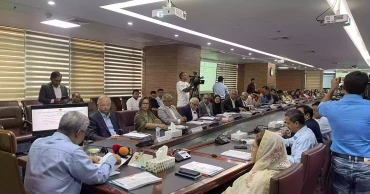
Metropolitan Chamber of Commerce and Industry (MCCI) on Saturday called on the National Board of Revenue (NBR) to frame the forthcoming national budget as a support mechanism for businesses rather than a burden as domestic industries continue to weather high interest rates and a persistent dollar crunch.
MCCI President Kamran T Rahman handed over the chamber's pre-budget proposals to NBR Chairman Abdur Rahman Khan at a meeting at NBR office in the capital.
Noting that member institutions of MCCI contribute nearly 50% of national revenue, Kamran said the chamber remained committed to working as a close partner of the NBR in building an investment-friendly and transparent tax regime.
“At a time when high interest rates of 12% to 14% and dollar shortages are driving up raw material import costs, small and medium entrepreneurs are bearing the heaviest burden,” he said, urging that the next budget prioritise relief over restriction.
Key proposals
On broadening the tax net, the MCCI president noted that despite more than one crore e-TIN holders, fewer than half file returns regularly, a structural weakness the chamber has repeatedly flagged.
With around 90% of Bangladesh's economy dependent on the informal sector, he proposed introducing a symbolic minimum tax of Tk 100 to Tk 1,000 and a one-page digital return filing system via mobile app to draw the informal workforce into the tax fold and curb tax evasion.
On the effective tax rate, the MCCI observed that advance income tax (AIT), tax deducted at source (TDS) and various restrictions push the actual tax burden on many businesses to between 40% and 50% far above the nominal rate.
The chamber called for the unconditional reduction of the corporate tax rate and a shift from turnover-based to actual income-based taxation.
On digital transformation of the tax system, MCCI proposed replacing the separate platforms for income tax, VAT and customs with a unified taxpayer profile, rationalising VAT rates, automating input tax credits and introducing online hearings at the assessment, appeal and tribunal stages to reduce cost and improve administrative efficiency.
On the rationalisation of the Primary Source Rule (PSR), the chamber said mandatory PSR compliance across 39 categories is hampering ease of doing business. It urged that the system be simplified, made logically consistent and rendered digitally verifiable to ease the compliance burden on taxpayers.
On the super-rich tax, MCCI cautioned that raising tax rates on high-income earners risks discouraging honest taxpayers and increasing the likelihood of capital flight. It argued that expanding the tax net is a more effective and sustainable route to revenue growth than hiking rates.
On SME support, the chamber called for a separate and enabling tax framework for small and medium enterprises, including reduced turnover taxes, input tax credit facilities and rational cuts in VAT and duties on raw materials, measures it said would lower production costs, sharpen competitiveness and ultimately boost revenue collection over the long term.
Kamran also welcomed the NBR's reform initiatives under the newly elected government and expressed hope that the chairman would provide clear direction on the overall reform roadmap, including the future of the Revenue Policy and Revenue Management Ordinance 2025, which lapsed without being enacted into law. “A clear institutional separation between policy formulation and revenue administration would significantly improve transparency, accountability and predictability in the tax system.”
MCCI President concluded by expressing confidence that, under the farsighted leadership of the Prime Minister and the guidance of the Finance Minister, a pro-growth tax policy would be enacted that simultaneously raises government revenue and expands the space for business and employment.
4 months ago

NBR faces Tk 98,000cr revenue shortfall as businesses push for duty cuts ahead of budget
Bangladesh's National Board of Revenue (NBR) is running nearly Tk 98,000 crore behind its revised collection target for the current fiscal, even as it posted over 11 percent growth in revenue.
The gap came into sharp focus Tuesday as business associations urged the tax authority to slash import duties ahead of the 2026-27 national budget.
Business groups met NBR Chairman Abdur Rahman Khan in the office for pre-budget consultations, presenting a raft of proposals aimed at nurturing domestic industry and reducing reliance on imports.
NBR extends corporate tax return deadline to May 15
Three associations led the charge: the Accumulator Battery Manufacturers and Exporters Association of Bangladesh (ABMEAB), the Bangladesh Electrical Association (BEA), and the Bangladesh Manufacturers Association of Transformers and Switchgears (BMATS).
Their central demand is a steep reduction in import duties, supplementary duties and VAT on raw materials and components used in the electrical and electronics manufacturing sectors.
Specifically, they called for duties on inputs for electric fans, LED bulbs, circuit breakers, transformers and batteries to be slashed from the current 10–25 percent range to just 1–5 percent.
The battery industry also pressed for greater investment incentives in lithium-ion and sodium-ion technologies, as well as tax relief on used battery recycling areas the sector sees as critical to long-term industrial competitiveness.
The broader thrust of the proposals is to promote “Made in Bangladesh” manufacturing, shield small and medium enterprises from import competition, and keep consumer prices within reach of ordinary buyers.
NBR Chairman, while acknowledging the submissions, struck a cautionary note. “We need to move away from a culture of tax exemptions,” he said, adding that while duty adjustments for business needs are possible, blanket exemptions create leakage in the tax system.
His remarks came against the backdrop of a yawning revenue shortfall. According to data published by NBR's Research and Statistics Wing, the board collected Tk 2,87,862 crore in the nine months through March 26 against a revised target of Tk 3,85,852 crore — leaving a deficit of nearly Tk 97,990 crore.
Despite the gap, year-on-year collection grew by 11.15 percent compared to the same period in fiscal 2024-25, offering some consolation as the government prepares to frame the next budget.
4 months ago