Middle-East
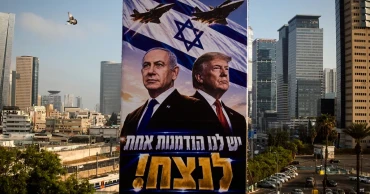
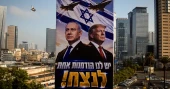
Netanyahu denies reports about escalation with Iran in last day before election
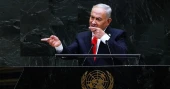
Israelis entered the final 24 hours of an intense election season on Monday, as reports circulated that Prime Minister Benjamin Netanyahu may have clashed with the Israeli military over initiating a possible escalation with Iran immediately before elections.
Tensions flared over reports that Netanyahu and his military chief of staff clashed over an instruction by the prime minister to carry out an "action" the army worried could reignite the conflict with Iran. Netanyahu's office denied the report, first published by Israel's Channel 12, as "fake news."
Defense Minister Israel Katz also quickly denied the report. "I state unequivocally that there has been no intention by Israel of initiating an attack on Iran before the elections in Israel," Katz wrote on X on Monday, calling reports of rifts between political and military leaders "completely baseless and false." However, he stressed that Israel would respond forcefully if Iran attacks first.
Israel's opposition candidates slammed the reports, accusing Netanyahu of endangering regional stability for his political preservation. Netanyahu's main rival, former military chief of staff Gadi Eisenkot, warned Netanyahu not to "dare to place your own political interests above the security of the state." He posted on X, "Netanyahu, my eyes are on you."
Avigdor Lieberman, head of the hawkish Yisrael Beytenu party, part of the opposition bloc, sent a letter to Israel's attorney general demanding a criminal investigation into possible treason by Netanyahu's "attempts to drag Israel into a war on the eve of elections, including a willingness to sacrifice (Israeli) soldiers out of fear of losing the election."
Although Israelis are breathlessly approaching the election as one of the most crucial in years, people across the Middle East not expecting dramatic changes regardless of the victor. Both Netanyahu and his main rivals have similar approaches to Israel's regional security in both Gaza and Iran.
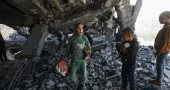
In southern Gaza, Jamal Abu Deeb, who was displaced from Khan Younis, said that no matter who is elected, it won't be good news for the Palestinians. "It is all war and destruction," he said, adding that there are still strikes every day that kill people and children across Gaza. "Do you think whoever gets elected will give us a better life? Quite the opposite."
"They all have the same playbook, they have no mercy — death and destruction for everyone," said Ibrahim Qeshta, who was displaced from Rafah. "Eisenkot is like Netanyahu, he will be the same. Our people die everyday, for nothing."
Iran also watched the last-minute electioneering warily. "It makes no difference to us who ultimately takes the helm of a regime whose track record shows that it has brought nothing to our region but violence and bloodshed," Esmail Baghaei, Iran's foreign ministry spokesperson, said in his weekly media briefing on Monday.
7 hours ago
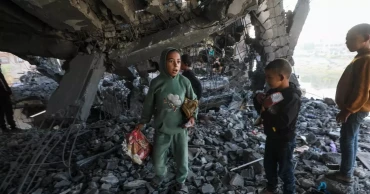
Israeli air strikes kill 5 in Gaza, including child
At least five people, including a child, were killed in fresh Israeli air strikes targeting camps and tents of displaced Palestinians across the Gaza Strip on Monday.
Civil Defence agency spokesperson Mahmoud Bassal said Israeli fire and air strikes have killed at least 13 people and wounded about 60 others across Gaza over the past 24 hours.
Emergency responders transported three bodies, including that of a child, following an Israeli air strike targeting a camp for displaced people in the al-Mawasi area, west of Khan Younis, Bassal told media.
A fourth person was killed in a separate attack on a tent housing displaced Palestinians near Khan Younis city in southern Gaza, media said.
Meanwhile, a third air strike in Gaza City’s al-Rimal neighbourhood killed one person and injured three others, according to officials at al-Shifa Hospital.
With inputs from Al Jazeera
10 hours ago
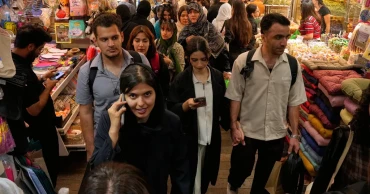
Some residents prepare to leave Tehran as anxiety grows
Tehran is dotted with bombed-out buildings from U.S. and Israeli strikes during the height of the war in March and April. Thousands of homes were damaged or destroyed.
Hashem Vajdani, 45, a gym trainer, said he plans to leave the city as anxiety grows.
“I have already packed my belongings to go to a safer town in the north of the country,” he said. “Today I bought more canned food, crackers and extra blankets.”
There are concerns that new fighting could bring a higher toll for Iranian civilians. Thousands have been killed in the war. Trump has repeated threats to take out power plants and other infrastructure.
Anger at the U.S. president has found expression in a billboard set up days ago at a major Tehran square. Passersby have gawked at a Trump impersonator languishing behind bars as footage airing behind him shows a deadly strike on a wedding party in southern Iran that was blamed on the U.S.
Staring up at the cage, Farzaneh Arabzadeh, 30, said she hoped the scene would happen in reality. Trump said he launched the war to help Iranians, she said, but he “put our people in a worse situation.”
The elections in Israel and the U.S. are expected to reflect voters' anger over the war and other issues. Trump’s political support could be weakened, while Netanyahu is in a tight race at a time of anger over Hamas' Oct. 7, 2023, attack, and a series of inconclusive wars in Gaza, Lebanon and Iran.
Israel's elections are especially important, Tehran-based analyst Rahman Ghahremanpour said. If Netanyahu stays, there is a higher chance of all-out war resuming because of his willingness to take major risks, he added.
Tehran residents said neither election is likely to improve relations.
“It makes no difference. Their hostility toward us remains unchanged,” said Rasool Ghanbari, 50.
20 hours ago
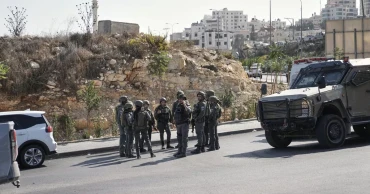
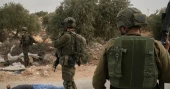
Israel orders West Bank closure after killing two Palestinians
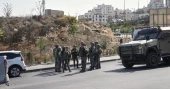
Israeli forces shot dead two Palestinians in the occupied West Bank on Friday after accusing them of attempting an attack near Hebron, prompting Prime Minister Benjamin Netanyahu to order security forces to seal off the city and prepare for a territory-wide closure.
At least five other people were injured in the incident, some of them critically, according to reports.
The Israeli military said it had thwarted what it described as a “terror attack against Israeli civilians”. The two Palestinians, both from Hebron, were carrying an M16 rifle and a handgun, the military said, without specifying the intended target.
Netanyahu’s office later announced that security forces had been instructed to immediately cordon off Hebron and prepare for a complete closure of the West Bank beginning Friday.
The incident comes ahead of Israel’s parliamentary election scheduled for Tuesday, which will determine whether Netanyahu secures another term as prime minister. The vote is taking place three years after the Hamas-led attacks on Israel that triggered the war in Gaza.
Israeli authorities have warned of possible attacks by the country’s “enemies” ahead of the election.
Following the shooting, Netanyahu convened an emergency meeting of his Security Cabinet and senior military and security officials. He alleged that Hamas was planning a major attack aimed at killing civilians but provided no details of the alleged plot.
“Our brave soldiers thwarted this attack with courage and determination,” Netanyahu said, praising the forces involved and wishing the wounded a speedy recovery. He did not clarify whether those injured were soldiers or civilians.
Earlier on Friday, Israel’s far-right National Security Minister Itamar Ben-Gvir called for restrictions on Palestinian movement in the West Bank following the incident.
“The lives of the residents of Judea and Samaria, of the settlers, the lives of the soldiers, the lives of the police officers, the lives of our fighters are a million times more important than freedom of movement,” he said, using Israel’s term for the West Bank.
Ahead of the anniversary of the October 7, 2023, Hamas-led attack, Netanyahu had also accused the Palestinian militant group of potentially seeking to carry out an attack to influence the Israeli election outcome, without presenting evidence to support the claim.
3 days ago
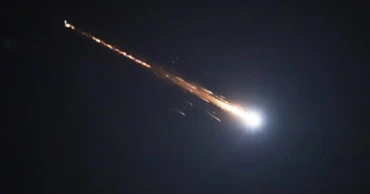
Saudi-led coalition intercepts Houthi ballistic missile following explosions in Riyadh
The Saudi-led coalition in Yemen announced early Friday that it had intercepted and destroyed a ballistic missile launched by Yemen's Houthi group toward the Saudi capital Riyadh, according to a statement posted on X by the coalition's spokesperson.
Loud explosions were heard in Riyadh early Friday, while residents received alerts on their mobile phones.
The coalition also announced the interception and destruction of two drones launched by the group toward the kingdom's southern region, without providing further details.
3 days ago
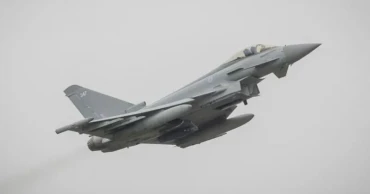
UK to deploy jets to defend Saudi Arabia from Houthi attacks
Britain will deploy Royal Air Force jets to protect Saudi Arabia from Houthi attacks, as violence across the Middle East continues to claim lives, including in Yemen and Gaza.
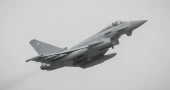
British Defence Secretary Wes Streeting said RAF Typhoon jets would conduct defensive air patrols over Saudi Arabia to protect cities, civilians and critical infrastructure. The UK will also send a military transport aircraft and an unspecified number of military advisers, while extending its aerial refuelling support for Saudi aircraft by 90 days. British jets will intercept incoming missiles and drones but will not attack Houthi positions on the ground.
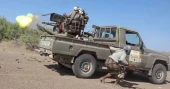
In southern Yemen, the death toll from a Houthi missile strike on a government military training camp in Shabwa province has risen to 73, according to Governor Awad Ibn al-Wazir. The recruits, aged 18 to 20, were targeted at the al-Alam camp, with some still missing a day after Monday’s attack.
In the besieged city of Taiz, a Houthi missile struck a residential area on Tuesday, killing two teenage girls and injuring six others, local authorities said. The UN warned that the siege has left civilians at grave risk, with soaring prices and shortages of food and other necessities. UN human rights chief Volker Türk called for humanitarian aid to enter the city and for civilians wishing to leave to be allowed to do so safely.
Meanwhile, an Israeli strike on an apartment in Gaza before dawn killed a husband and wife and wounded others, according to Shifa Hospital. The Israeli military said it had targeted a Hamas militant. Gaza’s health ministry said more than 1,500 Palestinians had been killed by Israeli forces since the ceasefire agreed last year.
Separately, a senior Qatari official said Israel’s political leaders were not committed to a negotiated end to the Gaza war. Majed al-Ansari, spokesperson for Qatar’s Foreign Ministry, told The Associated Press that there was currently no Israeli partner for peace.
Israeli Prime Minister Benjamin Netanyahu also suggested possible further joint action against Iran in a video call with US President Donald Trump, saying the two leaders had a job to finish together.
Meanwhile, Turkey has submitted to parliament a mutual defence agreement signed with Saudi Arabia and Pakistan for ratification. The pact stipulates that an armed attack against one signatory would be treated as an attack against all three and provides for closer military cooperation and intelligence sharing.
6 days ago
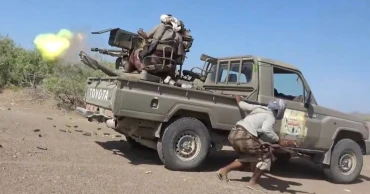
Death toll rises to 60 in Houthi strike on Yemen training camp
The death toll from a Houthi missile strike on a government military camp in southern Yemen rose to 60 people, primarily new recruits, making it the deadliest strike since fighting in the country began escalating three months ago, Yemeni officials said Tuesday.
At least a dozen people were still missing a day after the Iranian-backed rebels hit the al-Alam training camp in the southern province of Shabwa with ballistic missiles, three officials said.
Monday's strike was part of a recent surge of fighting in Yemen, which started when forces from the internationally-recognized government and Saudi-led coalition launched airstrikes on Houthi-held Sanaa International Airport in July, shattering a 2022 ceasefire deal that largely stopped fighting in the country's civil war.
The Houthis have also fired missiles and drones on Saudi Arabia, which has struggled to counter the Houthi attacks, even with far superior U.S.-supplied arms.
The strike on the al-Alam camp hit while recruits were lining up in formation for a training session. Videos from the area circulated online and analyzed by The Associated Press showed many motionless bodies lying on the sandy ground of the camp.
More than 200 other recruits were also wounded, said the officials, who spoke on condition of anonymity because they were not authorized to brief the media.
One of the officials, from the local government, said several suffered serious injuries and were transferred to hospitals in other provinces in life-threatening condition. He said at least 15 of the recruits killed were from a single Yemeni tribe.
In televised comments aired by the Saudi-owned Al Arabiya satellite news television, Shabwa governor Awad Ibn al-Wazir said the dead were new recruits from across Shabwa being trained to provide security in the province and not combat operations.
“These recruits have never before participated in any mobilization or on any front,” he said. “They have no connection to the front lines … they were (part of) a non-offensive security force.”
The Shabwa provincial government said in a statement Monday that the Houthis fired three ballistic missiles on the camp. The Houthis claimed the attack, saying they had killed and wounded dozens but did not provide further details.
The camp, which was previously used by a militia backed by the United Arab Emirates, is located in the Jardan district, north of the provincial capital of Ataq. It sits on a crucial supply line connecting to the government-controlled province of Marib.
Shabwa and Marib, along with neighboring Hadramawt province, contain what has been dubbed the Yemeni government’s “triangle of power,” a strategic area in which the country’s oil and gas production is located.
On Tuesday, authorities in Saudi Arabia issued an attack warning for the capital area in the late morning followed by the sound of an explosion in northern Riyadh where the King Khalid International Airport is located. The airport has come under repeated Houthi attacks this month, forcing the facility to suspend its operations.
The all-clear was given a short time later and Saudi Arabia said a ballistic missile fired by the Houthis had been intercepted.
Yemen first plunged into civil war in 2014, when the Houthis seized Sanaa and much of northern Yemen and forced the government into exile.
A Saudi-led coalition intervened the following year in an attempt to restore the government to power. The conflict created one of the world’s worst humanitarian disasters, and killed more than 150,000 people.
6 days ago
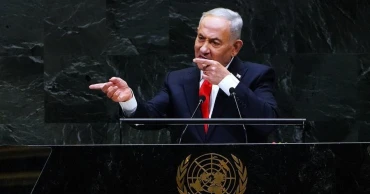
Trump endorses Netanyahu for re-election as Israeli PM
US President Donald Trump on Sunday endorsed Israeli Prime Minister Benjamin Netanyahu for re-election, nine days ahead of Israel's parliamentary elections.
In a post on his Truth Social platform, Trump announced his “Complete and Total Endorsement” of Netanyahu in the upcoming vote.
Describing Netanyahu as a “Great Warrior Prime Minister” and a key US partner in confronting Iran, Trump said Washington might have to handle the task itself if the Israeli leader failed to win re-election.
“If Israel has the wrong Leader, which would be anyone other than Bibi, America will have to do this work ourselves, and I am not inclined to do so,” Trump wrote.
Netanyahu thanked Trump for his backing in a post on X.
In a phone interview with US news outlet Axios on Sunday, Trump said he had started planning the endorsement earlier in the week.
Asked whether he could work with another Israeli leader, Trump said, “Maybe I will, maybe I won't. Who wants to take the chance?”
Israel is scheduled to hold parliamentary elections on October 27, marking the country's first national vote since the Hamas-led attack on October 7, 2023.
Trump's endorsement comes as Netanyahu faces a closely contested election, with most opinion polls indicating that his coalition is likely to fall short of the 61 seats required to form a government, according to Axios.
7 days ago
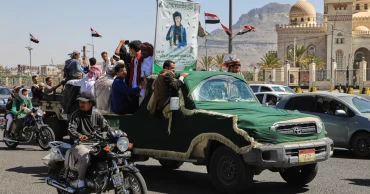
Egypt agrees to support Saudi Arabia against Houthi attacks
Egypt’s top security body has agreed to provide support to Saudi Arabia to help it defend itself against escalating attacks by Iranian-backed Houthi rebels in Yemen, marking another front in the ongoing Iran war.
Saudi Arabia has been seeking military assistance from its allies as the Houthis continue to target airports and oil infrastructure across the kingdom with drones and missiles capable of changing direction mid-flight, making interception difficult.
The attacks have killed at least 19 people, disrupted thousands of flights and shaken global markets.
Also on Sunday, Saudi Arabia’s defence minister met with the president of the United Arab Emirates to discuss ways to strengthen cooperation, according to the UAE’s state news agency WAM. Relations between the two countries have been strained in recent years as they supported different factions within the Yemeni coalition fighting the Houthis.
Egypt’s announcement came a month after a visit by Saudi Crown Prince Mohammed bin Salman. The National Defence Council, chaired by President Abdel-Fattah el-Sissi, decided to provide “all possible forms of support” to help Saudi Arabia defend its security, according to a presidential statement.
The statement did not specify the nature of the assistance. On Saturday, el-Sissi called on parliament to authorise him to deploy troops and military equipment abroad.
Civilians killed in Yemen and Saudi Arabia
The escalation has threatened civilians in both countries, while Yemen has seen a return to civil war. Aden, the interim capital of Yemen’s internationally recognised government, has come under attack in recent days, with its airport and a government-used palace targeted.
On Sunday, an airstrike killed at least nine people, including five children and two women, in the Houthi-controlled northern province of Saada, according to the rebels’ Health Ministry.
Ministry spokesperson Anees al-Asbahi said the strike hit a house in Sahar district, wounding 19 others, including 11 children. Some of the injured were in critical condition.
Al-Asbahi blamed Saudi Arabia for the attack, but there was no immediate comment from the kingdom. Houthi-run Al-Masirah television broadcast footage showing people clearing debris by hand and pulling two young people from the rubble.
The Houthis said Saudi-led attacks had killed or wounded more than 30 people over the past 24 hours. Their military spokesperson, Brig Gen Yahya Saree, claimed that 110 missiles or airstrikes had targeted civilian sites in Sanaa and other cities. The Associated Press could not independently verify the claim.
Meanwhile, a Saudi helicopter gunship crashed near the southwestern city of Najran, killing its two crew members, a Saudi military spokesperson said, attributing the incident to a technical malfunction. The Houthis had earlier claimed responsibility for shooting it down.
Saudi Civil Defence authorities later said a projectile fired by the Houthis landed in a residential area of Najran province, injuring six people.
Both sides trade accusations as mediation efforts emerge
The Houthis have resumed attacks on Saudi Arabia in recent weeks over the kingdom’s support for Yemen’s internationally recognised government in the civil war. The rebels have also recently seized more territory along Yemen’s Red Sea coast and near the Bab el-Mandeb Strait, a key alternative shipping route to the Strait of Hormuz.
Houthi chief negotiator Mohamed Abdulsalam on Sunday blamed Saudi Arabia for the escalation, saying the rebels had warned the kingdom against attacking Sanaa airport in mid-July.
The strike prevented an Iranian aircraft carrying a Houthi delegation from landing after the group returned from the funeral of Iran’s supreme leader, who was killed in the opening strikes of the war in February.
Angered by Saudi Arabia’s longstanding blockade, the Houthis subsequently announced their own blockade against the kingdom.
Abdulsalam said Oman had proposed a five-day truce during which the two sides would meet to resolve their differences. He said the Houthis had agreed to halt attacks if Saudi Arabia met their “humanitarian demands”, without elaborating.
He accused Riyadh of showing no “indication that it is ready to deal positively” with the demands, adding that the rebels launched their offensive along the Red Sea coast shortly afterwards.
A Saudi diplomat said last week that the kingdom had invited the Houthis to a meeting in Oman in July “to resolve outstanding differences and bring an end to this escalation”, but the rebels declined to participate.
On Sunday, Al-Azhar, Egypt’s leading Sunni Muslim religious institution, called for the formation of an “urgent mediation committee” to help end conflicts across the Arab region.
8 days ago
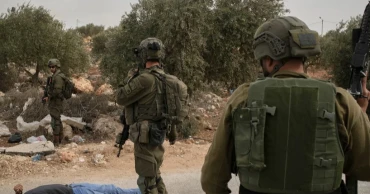
Israeli police probe attack on diplomats in West Bank, 3 children killed in Yemen strike
Israeli police on Saturday launched an investigation into an alleged attack on diplomats visiting the occupied West Bank village of Taybeh, after footage circulated online appeared to show several diplomats being assaulted. Public broadcaster Kan reported that representatives from France, Belgium and Poland were among them. Israel’s military said the visit had not been coordinated with it and no soldiers were present.
Meanwhile, Iranian-backed Houthi rebels accused Saudi Arabia of carrying out airstrikes in Yemen’s southwestern Dhamar province that killed three children and wounded more than a dozen people. The strikes reportedly hit homes in al-Ar village in Dawran Aness district. Saudi Arabia did not immediately comment.
Separately, Washington Post photographer Heidi Levine was undergoing surgery after being beaten by Israeli settlers in the West Bank. Her daughter said Levine suffered a nearly severed finger, a broken rib, multiple fractured vertebrae and lacerations. Levine said her press-marked helmet and protective vest likely prevented more serious injuries.
8 days ago