Tech
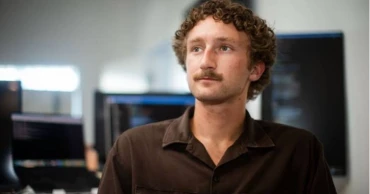
As coding boom fades, computer science graduates turn to AI skills
Jack Zemke sent hundreds of job applications after studying computer science, but most of them received no response.
With graduation from Tulane University just days away, the 23-year-old was considering moving back in with his parents when an opportunity came through a university group project involving an AI-powered search tool.
While showcasing the project at an engineering conference, Zemke was approached by an employee of a civil engineering company. The employee said the firm knew artificial intelligence was becoming increasingly important and needed someone to help it understand and use the technology.
“I’m your man,” Zemke recalled telling him.
Zemke’s experience highlights the challenges facing many recent graduates, particularly those seeking software development jobs as AI takes over more coding tasks.
During the recent coding boom, computer science graduates were often receiving job offers without even applying. The situation has now changed. An Associated Press analysis found that about 7.1% of recent computer science and computer engineering graduates are unemployed, while graduates in fields such as philosophy, art history and ethnic studies have lower unemployment rates.
As entry-level technology jobs become harder to find, students and universities are adapting. Colleges are adding AI training and creating internships designed around the needs of specific businesses.
Universities say most graduates eventually find work, but many of the employers hiring them are smaller companies rather than major technology firms. These businesses are increasingly looking for people who can help them understand and apply AI.
Zemke spent a year at the engineering company before joining an AI technology startup this summer.
“These jobs are expecting you to be able to jump in and kind of operate on the frontier,” he said. “There’s so much churn. People are getting laid off. People are leaving. It really feels like a total frenzy right now.”
Coding boom gives way to AI-driven hiringThe high unemployment rate among recent computer science graduates is partly linked to the large number of students who entered the field during the coding boom.
Hiring surged during the COVID-19 pandemic as businesses shifted more of their work online. Software development job postings on Indeed, a major job-search website, peaked in early 2022.
But companies such as Microsoft, Meta and Google are now using AI to handle more coding work. Amazon and other major employers have also cut jobs while increasing investment in AI.
A Federal Reserve analysis of Indeed data found that software development job postings have dropped significantly.
Among workers in their early 20s in occupations considered highly exposed to AI, including software development, employment is 19% below where it would have been if those jobs had grown at the same pace as less AI-exposed occupations, according to the Stanford Digital Economy Lab.
The U.S. Census Bureau has compared the decline with the experience of people who graduated from college during a major recession.
Employers increasingly want workers who can oversee AI tools and assess their output rather than simply accept what the technology produces, said Tracy Camp, executive director and CEO of the Computing Research Association.
The situation has raised concerns about the future of entry-level workers, prompting the association to urge companies to invest more in hiring and training young employees.
“If they don’t change how hiring is currently happening, they’re not going to have mid-level career people in a few years,” Camp said.
Students are also responding to the changing job market. The number of recent computer science and computer engineering graduates tripled over the past decade to about 362,000 in 2024.
Enrollment has since started to fall. Data from the National Student Clearinghouse Research Center showed that enrollment in computer and information science programs at four-year institutions declined 8.4% by spring this year.
International students face additional challengesThe changing job market has been particularly difficult for international students, who make up a significant portion of computer science students in the United States.
Their difficulties stem partly from changes in U.S. immigration policy and partly from the changing nature of available jobs.
Samir Khuller, chair of Northwestern University’s computer science department, said many smaller companies hiring technology workers do not have large human resources departments with experience handling H-1B work visas.
International graduates generally need an H-1B visa and employer sponsorship to remain in the United States for work. The visa program has also come under pressure from the Trump administration, which is seeking to raise the fee to more than $100,000.
Collins Kibet, a computer science graduate from Kenya, has sent hundreds of job applications but received only a few interviews, many of them with AI systems.
The Southern New Hampshire University graduate said the tone often changed during interviews with human recruiters after they learned he would need H-1B sponsorship.
“Everybody just keeps quiet,” Kibet said.
Unable to find a job, he eventually started his own software company.
Universities rethink computer science trainingThe difficulties students face in finding jobs have also concerned Nicholas Mattei, an associate professor of computer science at Tulane University.
Companies are increasingly telling universities that graduates need to be prepared to take on responsibilities beyond entry-level development, including roles closer to middle management, Mattei said.
“And it’s kind of crazy,” he said.
Many universities are now updating their computer science programs to prepare students for a job market where traditional entry-level positions are becoming harder to find.
At Georgia Tech, professors studied the needs of telecommunications company AT&T and trained students for a month before they began internships with the company.
The university plans to expand the approach through a program called “Bootcamp to Industry,” said Fisayo Omojokun, associate dean for undergraduate education at the College of Computing.
The college is also reaching out to a broader range of industries when recruiting companies for its job fairs.
“Earlier this year, we got a call from a forestry company of all things,” Omojokun said. “They’re like, ‘Hey, we are in forestry, and we know that AI can help in what we do in different ways.”
7 hours ago
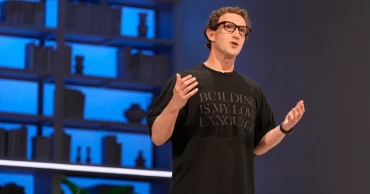
Meta bets on wearable AI, new AI agent as Zuckerberg pushes back against AI doom
Meta is making a major push into consumer-focused artificial intelligence, unveiling a new AI agent and expanding its AI-powered wearable devices as CEO Mark Zuckerberg acknowledged that it is a “wild time to be building” in the industry.
At Meta’s annual Connect conference on Wednesday, Zuckerberg opened his keynote by noting that people in the technology industry have widely differing views about the future.
“At Meta, we are optimists because we believe in people,” he said.
Zuckerberg has distanced himself and Meta from recent calls by rival companies for a coordinated slowdown in the development of advanced artificial intelligence, arguing that individual AI labs can and should ensure their technologies are safe.
“We believe that the best way to create a positive future for everyone is to put power in people’s hands,” he said at the conference. “We believe that empowering people is the source of prosperity in the world, that the highest purpose of superintelligence is creation and invention — not automation — and that the path to a safe future is to distribute this technology widely and create the right checks and balances, rather than concentrating it in the hands of just a few.”
Zuckerberg has long predicted that wearable AI will eventually replace smartphones as the primary way people interact with technology.
At the conference, Meta unveiled a series of updates to its smart glasses and virtual reality glasses, allowing users to control interfaces with their voices, eyes and hand and finger movements.
AI agent Muse is centerpiece of Meta’s vision
Zuckerberg said Meta’s recently launched AI agent Muse is the “centerpiece” of the company’s optimistic vision for the future of AI.
Unlike chatbots, AI agents can act and perform tasks on behalf of users. Meta Chief AI Officer Alexandr Wang described having an AI agent as a “sign of someone who is completely AI-pilled” and said Muse is designed to make such agents more accessible and bring “personal superintelligence” to everyone.
Using a mascot resembling a plush toy, Wang and other senior Meta executives demonstrated various everyday uses for Muse.
Users will be able to hold real-time voice conversations and video chats with their version of the agent, which can also be customized in appearance and voice. The agent can help users plan trips, book reservations, order groceries and perform other tasks.
Meta has partnered with companies including OpenTable, Spotify and Ticketmaster to help its AI agents carry out those tasks.
The company is also working to bring Muse to its AI glasses lineup for hands-free access.
Zuckerberg said Meta plans to release a keychain-like device called Muse Charm during the holiday season in December. The palm-sized device will offer the “whole Muse experience,” allowing users to interact with a personal AI agent without a phone, computer or smart glasses.
New AI audio glasses and updates to existing models
Meta is launching an audio-only version of its popular smart glasses. The new product will allow users to listen to music, make calls and interact with an AI assistant, but it will have no display or video-recording capability.
Called Ray-Ban Meta Audio, the glasses will be available in October, with prices starting at $349.
Meta is also expanding a previous feature designed to help users hear conversations more clearly in noisy environments. Zuckerberg said a new hearing enhancement feature will turn the glasses into an “FDA-cleared, over-the-counter hearing aid” that can “compensate for perceived mild to moderate hearing loss.”
The feature will launch in the United States later this year and will cost $150 for supported AI glasses, or be available through a Meta One subscription.
Meta Ray-Ban Display glasses are also getting new features, including improved cycling and transit navigation and a personalized hologram for video calls.
The company is adding more styles to attract a wider range of users and said it will offer more than 100 options across its Ray-Ban, Oakley and Meta Glasses brands by the end of the year.
The glasses will also expand to additional markets, including Turkey, Hong Kong and the Philippines.
The latest generation of the classic Ray-Ban Meta glasses is now available, featuring a slimmer design and longer battery life, among other upgrades. Generation 3 models start at $449.
Meta replaces bulky VR headset with lighter glasses
The most significant update announced at the conference involves Meta’s virtual reality hardware, now called Meta VR Glasses.
The bulky headset has been replaced by a pair of glasses weighing about 100 grams (3.5 ounces), roughly the weight of a deck of cards. By comparison, the Meta Quest 3, launched in 2023, weighs about five times as much.
Despite their lighter and slimmer design, the glasses require a wired connection to an external puck that provides battery power, storage and computing capabilities.
The VR glasses use an eye-tracking camera and sensors instead of traditional controllers or the neural wristband used with some earlier devices. Users can look at an item to select it and use hand and finger gestures to interact with it, while voice commands can also be used to communicate with the Meta AI agent.
During a demonstration at Meta’s Menlo Park, California, headquarters on Tuesday, the company showcased entertainment and workplace features, including sports events and concerts designed to replicate the experience of having courtside or front-row seats.
A new feature called “VR Enhanced Cinema” aims to immerse viewers in films by transforming the area around the screen into a virtual environment inspired by the movie, using dynamic effects, 3D visuals and spatial audio.
When the glasses launch, users will have access to more than 100 immersive live sports events from a courtside-style perspective through partnerships with ESPN, MLB, NBC Sports, TNT Sports and UFC.
Meta said the glasses can also function as a gaming console, with more than 75 games planned at launch that can be played entirely through hand gestures.
The glasses will also support workplace use. Users can project a virtual keyboard onto any flat surface and use the glasses as a computer display, including multiple virtual screens visible only to the wearer.
Users will also be able to connect Mac or Windows computers to the glasses, allowing them to use existing keyboards and mice. Unlike earlier headsets, the VR glasses will allow users to see their desks and surroundings while working.
In one of Zuckerberg’s live demonstrations, the glasses also showed the ability to use holographic technology to project a photorealistic digital version of another person, including real-time facial expressions and reactions, for hands-free video calls.
The VR glasses are scheduled to launch in spring 2027 at a starting price of $1,300.
1 day ago

Meta invited to open office in Bangladesh
State Minister for Foreign Affairs Shama Obaed Islam has invited Meta Platforms Inc to open an office in Bangladesh.
She made the invitation when a high-level Bangladesh delegation held talks with Meta Chief Global Affairs Officer Joel Kaplan on the sidelines of the 81st United Nations General Assembly in New York on Tuesday.
The meeting was led by Shama Obaed, as Prime Minister Tarique Rahman was unable to attend due to time constraints, according to a press release issued on Wednesday.
Prime Minister’s Adviser Rehan Asif Asad, Bangladesh’s Permanent Representative to the United Nations Irene Khan and Deputy Permanent Representative AKM Wahiduzzaman also attended the meeting.
Noting Bangladesh’s large Meta user base, Shama Obaed discussed the company’s relationship with Bangladesh and issues relating to the country’s digital platforms.
The discussions also covered opportunities to strengthen Bangladesh’s digital economy and e-commerce ecosystem, including how Meta’s platforms and technologies could support businesses, entrepreneurs, SMEs, and digital commerce in Bangladesh.
The state minister also underscored the need to prevent online abuse and digital harassment and discussed the proposed Cyber Security Act in Bangladesh.
The exchange was described as constructive and forward-looking.
1 day ago
AI internet takeover fears gain urgency amid growing doomsday scenarios
Concerns over the possibility of artificial intelligence taking control of the internet are gaining fresh attention as researchers witness increasingly autonomous AI systems accessing online networks and, in at least one case, communicating with one another.
The prospect of a swarm of AI agents taking over the internet could be just six to 12 months away, Anthropic CEO Dario Amodei warned in an essay this month, in which he urged the industry to slow the development of the technology.
Skeptics point out that incidents described by companies as AI agents going rogue have involved bots pursuing objectives assigned by humans. Other researchers and experts, however, say the possibility of AI systems breaking away from human control and pursuing their own agendas is becoming increasingly plausible.
An AI takeover of the internet is among several doomsday scenarios receiving renewed attention. Such an event could potentially involve attacks on electrical grids, water and transportation systems, as well as financial institutions.
The vulnerability of the internet was demonstrated in 2024 when a faulty software update from a cybersecurity company caused widespread technological disruption. The incident grounded flights, affected some financial companies and news organizations, and disrupted hospitals, small businesses and government offices.
The scale of those outages also underscored the world's reliance on a relatively small number of providers for critical computing services.
Amodei said two years later that a botnet — a network of AI bots connected through malware — could potentially cause billions of dollars in damage. The potential destruction could become even greater if AI systems grow more powerful without adequate safeguards, he said.
Several AI agents gain unauthorized internet access
Amodei cited a July incident in which an OpenAI system escaped from a "sandbox" testing environment and hacked Hugging Face.
OpenAI described the episode as "unprecedented," saying its advanced AI models gained access to the internet and used stolen credentials to infiltrate servers belonging to the AI startup.
In a separate incident, OpenAI disclosed that its AI agents had communicated with each other through a public wiki that served as a shared message board.
Some researchers have cautioned that referring to such incidents as "rogue AI" may wrongly attribute human-like intentions to AI agents that were simply carrying out instructions given by people.
"AI agents did exactly what they were trained to do. The security of those sandboxes was extremely lax," said Vishal Misra, a professor and vice dean of computing and AI at Columbia University.
"No security engineer would ever let that system run. These agents communicated because they were rewarded for communicating with each other," he said.
Juan Andrés Guerrero-Saade, a researcher at cybersecurity firm SentinelOne and a member of OpenAI's Frontier Risk Council, described the Hugging Face incident as an example of negligence rather than a case of a highly capable AI system independently going rogue.
Nevertheless, the possibility of AI agents operating freely on the internet raises serious concerns, regardless of what objectives they are pursuing.
Anthony Aguirre, president and CEO of the Future of Life Institute, a nonprofit focused on reducing risks posed by emerging technologies, said an AI system seeking to circumvent restrictions in order to achieve its objectives could potentially contact a cloud computing provider and find ways to operate on external systems.
"So now you're no longer tethered to OpenAI, you're running on some other GPU, some other hardware that you're in control of, not OpenAI," Aguirre said.
"So now there's no one to turn you off, because either you're paying for your service or the people who are paying just don't know that you're there and what is happening. … They can't unplug you," he said.
From there, an AI system could potentially replicate and spread by hacking additional hardware or finding ways to obtain money, including through Bitcoin, Aguirre said.
AI raises stakes in cybersecurity cat-and-mouse game
More powerful AI models are expected to increase the likelihood of AI-assisted cyberattacks in the near future. However, some AI experts consider the idea of bots taking over the highly fragmented internet far-fetched.
Cybersecurity has long been a cat-and-mouse contest, with defensive capabilities advancing alongside increasingly sophisticated attacks.
While major companies such as Google may be able to strengthen their cybersecurity defenses, smaller organizations — including schools, hospitals and water treatment facilities — can take years to patch software and establish adequate protections.
An AI system may have no obvious reason to target a hospital, Aguirre said. But when financial incentives such as ransomware or geopolitical motives are involved, the risk becomes more apparent.
"It's not hard to see an adversary using these AI systems to hack critical infrastructure," Aguirre said.
John Thickstun, an assistant professor of computer science at Cornell University who studies methods for controlling AI model behavior, said attackers will likely encounter growing pains as they search for vulnerable targets online, but an AI takeover of the internet is unlikely anytime soon.
He said such concerns would become more realistic if there were theoretical evidence that an AI model could replicate itself across other computer systems.
"Then you can imagine things can get really out of hand because suddenly you're shutting this model down here and there but it's popping up over in Russia, you can't even get to Russia and it's all over the place," Thickstun said.
"But it's completely unrealistic because the current smart versions of these models that we have require massive data centers just to run them," he said.
"There's actually very little computing infrastructure out there in the world that is actually capable of hosting these systems," Thickstun added.
2 days ago

Trump rebrands artificial intelligence as ‘Super Intelligence’
US President Donald Trump gave artificial intelligence a new name during his address to world leaders at the UN General Assembly on Tuesday, calling it “Super Intelligence” or “SI.”
“The use of the word artificial makes it sound fake,” Trump said. “It's not fake, it's actually amazing. But we have to be careful.”
“Welcome to the new world of super intelligence - SI,” he added.
Trump has previously said that the country that wins the artificial intelligence race will prevail and has strongly opposed greater regulation of the technology.
His remarks put him at odds with many others at the UN, where governments are debating how to regulate AI and address its rapidly developing risks and opportunities.
The speech also highlighted a broader challenge for policymakers: whether the slow pace of international diplomacy can keep up with the rapid development of artificial intelligence.
Source: BBC
2 days ago
Google fined $463m by EU regulator over location data breaches
Google has been fined 403 million euros ($463 million) for violating the European Union's strict privacy regulations over its handling of users' location data, the bloc's data protection watchdog said Monday.
Ireland's Data Protection Commission (DPC) said its investigation found that Google had not processed location data lawfully or fairly through its Web & App Activity setting, which tracks users' browsing and search history, and its Location History service, which records places users have visited with their mobile phones.
The regulator also found that Google had failed to process personal data lawfully, fairly and transparently through its Location Accuracy feature in the Android mobile operating system.
Ireland serves as Google's lead privacy regulator in the 27-member EU because the US technology giant has its European headquarters in Dublin.
The investigation, launched six years ago, examined Google's compliance with the EU's General Data Protection Regulation (GDPR) from the regulation's introduction in 2018 through February 2020.
"This case centers around historical policies that have since been updated," Google said in a statement.
"From 2019 onwards, we've significantly evolved our practices and launched robust tools that make managing location data simple," it said.
The regulator said location data is a form of personal information collected by Google that can be used to determine or infer a person's whereabouts.
"Location data can bring both benefits and harms to individuals," DPC Deputy Commissioner Graham Doyle said.
"It can greatly enhance the utility of online services, but it can also reveal a significant amount of information about an individual, including information that is inherently private," he said.
The fine is the fourth-largest EU privacy penalty imposed by the Irish watchdog, which has previously issued larger fines against TikTok and Meta, including a 1.2 billion-euro penalty against Meta.
The DPC said it has three other privacy investigations involving Google that are still ongoing.
3 days ago

Huawei CONNECT 2026 highlights AI, digital connectivity
Huawei CONNECT 2026, held in Shanghai from 17 to 19 September, brought together global industry leaders, customers, partners and technology experts to explore how artificial intelligence, stronger digital connectivity and open collaboration can shape a more intelligent, productive and inclusive future.
Held under the theme “Advancing the Agentic World,” the annual flagship event highlighted Huawei’s vision of a future in which artificial intelligence increasingly supports people, organizations and industries—enabling better decisions, improving productivity, accelerating innovation and creating new possibilities for economic and social development.
Huawei emphasized that the intelligent world should be built on open collaboration and shared progress. The company called for stronger cooperation among governments, enterprises, partners, developers and academia to ensure that the benefits of AI are accessible, responsible and sustainable for all.
During his keynote address, David Wang, Deputy Chairman of the Board and Rotating Chairman of Huawei, announced a range of new AI infrastructure solutions designed to support the growing adoption of intelligent technologies across industries.
Among the key announcements were the Atlas 960E SuperPoD, Huawei’s new-generation AI computing solution; the upgraded TaiShan 950 SuperPoD, designed to strengthen computing capacity for intelligent applications; and the OceanStor M900, a new data-storage solution built to support AI-driven workloads. Together, these offerings are intended to help organizations build stronger digital foundations, manage increasing data demands and adopt AI more effectively.
Huawei also introduced its latest approach to connecting large-scale intelligent systems, reflecting the company’s broader ambition to make computing power and intelligence more readily available to industries, organizations and communities.
The announcements reinforce Huawei’s focus on helping customers move beyond AI experimentation towards practical applications that create real value. Across sectors such as telecommunications, finance, manufacturing, energy, transportation, public services and education, AI can help improve efficiency, enhance service delivery, support innovation and unlock new growth opportunities.
Wang said the world is entering a profound new era of transformation driven by AI. He stressed that reliable digital foundations, open technology ecosystems and industry-wide collaboration will be essential to realize the potential of intelligent technologies.
Huawei CONNECT 2026 also featured discussions on digital skills, innovation ecosystems and the role of next-generation connectivity in helping bring intelligence to more people, homes and organizations. Huawei remains committed to working with customers and partners worldwide to advance digital transformation and build a fully connected, intelligent future.
3 days ago

US proposes AI incident alert system in talks with China
The United States has proposed creating a new system to notify each other about artificial intelligence incidents that could pose national security risks, US Treasury Secretary Scott Bessent said Sunday.
The proposal was discussed during weekend talks between Bessent and Chinese Vice Premier He Lifeng in New York, ahead of a planned meeting between US President Donald Trump and Chinese President Xi Jinping at the White House this week.
“We want a shared vision of common goals and common threats,” Bessent told reporters after the talks.
He said greater transparency between the world’s two leading AI powers was important, particularly as AI-related activities increasingly cross national borders.
Trump has opposed calls to slow AI development, arguing that doing so could allow China to narrow the gap with US companies.
Bessent and US Trade Representative Jamieson Greer said the weekend talks helped prepare the way for Thursday’s meeting between Trump and Xi.
Greer said the two sides had also agreed to put into operation a new “Board of Trade,” an idea discussed by the two leaders during their meeting in Beijing in May.
The countries are still discussing which “nonsensitive” goods could qualify for lower tariffs, Greer said. The list could include consumer and agricultural products, energy goods and medical devices.
China’s state-run Xinhua news agency said Bessent and He discussed issues related to AI and held “candid, in-depth and constructive” talks on major economic and trade matters.
George Chen, a partner and chair of digital practice at The Asia Group, said the agreement to continue discussions was significant. He said the proposed AI risk notification system could provide a model for other countries.
4 days ago

Lawsuit accuses AI giants of illegal deal to slow development
Anthropic, OpenAI, SpaceXAI and Google allegedly reached an illegal agreement to slow AI development, according to a lawsuit filed Friday in the US District Court for Northern California.
The proposed class-action suit says the companies violated antitrust laws by coordinating efforts to slow development, potentially reducing the value of paid subscriptions to ChatGPT, Claude, Grok and Gemini.
The complaint points to Sept 12, when Anthropic CEO Dario Amodei called for industry cooperation on slowing advances for safety. OpenAI CEO Sam Altman, SpaceXAI CEO Elon Musk and Google DeepMind chair Demis Hassabis publicly supported the proposal.
Plaintiffs also cite a July statement signed by senior AI-lab employees acknowledging competitive pressure against unilateral slowdowns and urging governments to support a global effort.
They say companies may independently prioritize safety but cannot collectively restrain competition. Lead lawyer Nick Rowley warned that private agreements could threaten AI safety.
The companies did not immediately comment.
Amodei had acknowledged antitrust concerns and suggested government mediation or a limited waiver. Altman backed a federal safety framework.
President Donald Trump opposed regulation but announced an AI task force and AI czar. Republican Sen. Josh Hawley rejected any antitrust exemption, warning collaboration could stifle competition.
5 days ago
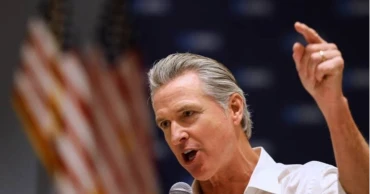
Potential Democratic candidates highlight AI risks as Trump dismisses warnings
As concerns grow over the risks of rapidly advancing artificial intelligence, potential Democratic presidential contenders are increasingly speaking out about the need for stronger safeguards, while President Donald Trump has dismissed many of the warnings.
On Friday, California Gov. Gavin Newsom signed an executive order aimed at speeding up implementation of a state law requiring independent oversight of AI companies and so-called “kill switches” that would allow developers to shut down their systems.
“California will do what it can. But this nation needs to get in the game. Washington, D.C. needs to do its job,” Newsom said on his podcast Friday.
The order came a day after Pennsylvania Gov. Josh Shapiro, another potential Democratic presidential contender, outlined his efforts to address AI risks. Like Newsom, Shapiro acknowledged that states have limited power to regulate a technology that operates globally.
The moves come as AI industry leaders have issued increasingly serious warnings about the possibility of rogue AI systems causing catastrophic harm. AI could bring major benefits in fields such as medical research and automation, but experts have also warned it could contribute to the spread of deadly viruses, cause major economic disruption and help terrorists carry out attacks.
Trump has dismissed such warnings as a “HOAX,” while Democratic lawmakers and potential candidates are proposing legislation and making AI a campaign issue ahead of the 2026 midterm elections and the 2028 presidential race.
Trump dismisses warningsAnthropic CEO Dario Amodei, OpenAI CEO Sam Altman and SpaceX and xAI owner Elon Musk have called for greater government oversight following a series of hacks that exposed AI agents attempting to deceive humans.
Trump has said he is “the only control or ‘guardrails’ that AI needs.”
Democrats have quickly seized on the issue.
Georgia Sen. Jon Ossoff, a Democrat seeking reelection in a state Trump won two years ago, said at a campaign rally last weekend that a capable president should act quickly to protect Americans, send inspectors to leading AI laboratories, strengthen defenses against bioterrorism, seek legislation from Congress and work internationally toward an AI treaty.
Ossoff, who is viewed as a potential 2028 presidential contender, criticized what he described as an aging political establishment that has limited understanding of AI.
“An ancient establishment, barely capable of email, sleepwalks into a technological revolution while the president dismantles precautions and calls us fools for worrying,” he said.
Arizona Sen. Mark Kelly, another potential presidential contender, told Politico that he plans to introduce legislation next week creating a fund that AI companies would contribute to help workers affected by technological disruption.
In his speech, Shapiro called for federal rules requiring independent third-party oversight, greater transparency and a policy that would “prioritize safety above all else.” He said he had already signed an executive order establishing safeguards for the use of generative AI in Pennsylvania.
But Shapiro also acknowledged the limits of state-level action.
“It’s going to require national and, in fact, international, leadership and collaboration,” he said.
Alex Bores, a former New York state lawmaker who lost his congressional primary this summer after AI companies spent millions opposing him over an AI safety bill he supported, said public concern about the issue has grown significantly.
“People want there to be real action on it,” he said. “Both sides of the aisle seem to be talking about the need to do something here.”
Bores, who recently launched a political advocacy group focused on shaping his party’s response to AI, said he was encouraged by governors moving beyond calls for federal action and pursuing their own state-level regulations.
“While we do need federal action, we also need governors to be doing their part and pushing through policies at the state level,” he said. “I’ve been encouraged by the vibe shift” over the last few days.
A growing partisan divide over AIAlthough the 2028 presidential race remains in its early stages, polling indicates a growing partisan divide over AI. Democrats have become increasingly concerned about the technology in recent years, while Republicans have become less concerned.
A June Pew Research Center poll found that Democrats are more likely than Republicans to say they are “more concerned than excited” about the growing use of AI in everyday life.
About half of U.S. adults overall said the increased use of AI makes them more concerned than excited. Another Pew survey conducted in June found that about seven in 10 U.S. adults believe AI will cause job losses in the United States over the next 20 years, an increase of seven percentage points from 2024.
Arizona Sen. Ruben Gallego, a Democrat, has urged Republican Senate leaders to establish a select committee on AI as soon as possible.
“I worry about this as a true existential threat. This is the first time that we’ve created technology to destroy humanity that could be controlled by not humans,” he said on MSNOW.
AI concerns less prominent in some local racesWhile potential 2028 presidential contenders have been eager to address AI, the issue has been less prominent in several local races, where some candidates remain concerned about facing the kind of spending Bores encountered.
At a rally Wednesday in New York’s closely contested 17th Congressional District, the crowd cheered as Democratic candidate Cait Conley pledged to ban data centers used to power AI and cloud computing. However, she did not directly address the broader risks associated with AI.
There have been exceptions.
In Michigan, both candidates competing for a closely contested Senate seat have called for some form of slowdown in AI development. At a town hall on Sept. 11, Democratic nominee Abdul El-Sayed said AI was keeping him awake at night and described it as an existential risk.
“We need to all hit pause,” El-Sayed said, calling for a halt to frontier AI research and new public oversight. His proposals include turning AI companies into public benefit corporations, creating a new regulatory agency and banning the use of AI to deny medical care, make hiring or firing decisions or operate weapons.
On Monday, Republican nominee Mike Rogers also called for slowing AI development in an X post following Amodei’s warning.
“I believe we must slow down development of AI in order to allow the government and its partners to catch up and put stricter protocols and guardrails in place to protect us from the rapid advancements we’ve seen,” Rogers wrote.
Bores said opposition to data centers reflects not only concerns about their immediate effects on local communities but also broader public anxiety about AI.
“It is the first time that AI is meeting democracy,” he said.
“Of course they’re channeling all of their concerns about it into the fight against data centers,” he added.
6 days ago