BNP
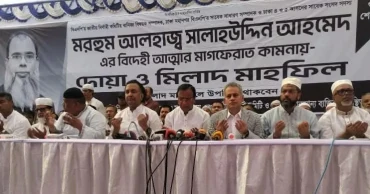
Kulkhani held for former MP Salahuddin Ahmed
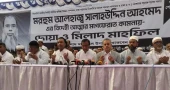
A kulkhani was held after Jumma prayers on Friday for the eternal peace of the soul of Salahuddin Ahmed, former MP for Dhaka-4 and BNP Trade Affairs Secretary.
The programme was held at the field of Shyampur Government Primary School in the capital.
Salahuddin Ahmed died at Evercare Hospital in Dhaka at 8:10pm on October 13 while undergoing treatment.
His funeral prayers were held in three phases on October 14. Prime Minister and BNP Chairman Tarique Rahman attended the first funeral prayer, held at the South Plaza of the Jatiya Sangsad Bhaban.
BNP Standing Committee member Mirza Abbas, Road, Rail and Shipping Minister Sheikh Rabiul Alam, BNP Chairman’s Advisory Council member and Dhaka South City Corporation Administrator Abdus Salam, BNP Joint Secretary General Habib-un-Nabi Khan Sohel, State Minister for Railways Habibur Rashid Habib, International Affairs Secretary Dr Asaduzzaman Ripon, Narayanganj City Corporation Administrator Advocate Shakhawat Hossain, attended the kulkhani and doa mahfil.
Others present included Dhaka North BNP Joint Convener SM Jahangir, Volunteer Affairs Secretary Mir Sarafat Ali Sapu, BNP Youth Affairs Secretary Abdul Kader Bhuiyan Jewel, former Joint Convener of Dhaka South BNP Nabi Ullah Nabi, Dhaka South BNP Convener Rafiqul Alam Majnu, Member Secretary Tanvir Ahmed Robin and former president of the central Jatiyatabadi Chhatra Dal committee Rawnakul Islam, along with leaders and activists of the BNP and its affiliated organisations.
8 hours ago
Come to parliament for talks instead of long marches, Shahe Alam tells opposition
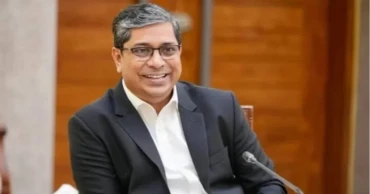
Local Government, Rural Development and Cooperatives (LGRD) State Minister Mir Shahe Alam on Friday urged opposition parties to abandon long marches and protest programmes and join parliamentary discussions, saying five seats had been kept vacant for them on the constitutional amendment committee.
“Leave aside long marches and protest programmes and come to parliament. Five seats have been kept vacant for the opposition on the constitutional amendment committee. You can nominate five representatives at any time and play a responsible role,” he said.
The state minister made the remarks at a press briefing at the Shibganj Upazila Parishad building in Bogura around 10am.
He criticised opposition leaders for not attending the inauguration of a memorial built in memory of those killed during the July-August uprising, despite being invited, saying they had offered lame excuses for their absence.
“Those who want to engage in politics over July-August throughout the day showed their deceptive attitude by staying away from the inauguration ceremony,” he said.
Mir Shahe Alam said Prime Minister Tarique Rahman attended the inauguration of the July Memorial, built by the government at Osmani Udyan, on October 19 as the chief guest.
He said the Dhaka South City Corporation had invited the presidents and general secretaries of like-minded, allied and coalition political parties to the event.
The prime minister inaugurated the memorial and reopened Osmani Udyan after 10 years in the presence of four families of those killed during the uprising, including the fathers of Mir Mughdho, Abu Sayeed and Anas, as well as the mother of another victim, the state minister said.
He said the names of 834 officially recognised martyrs had been inscribed on the memorial, describing it as the only such memorial in Bangladesh.
Referring to the opposition's explanation that they had skipped the event because the opposition leader's name was not included on the invitation card, Mir Shahe Alam said the argument was not valid.
Had opposition leaders attended, the prime minister would have invited their representatives onto the stage, he added.
Later, the state minister attended a prize-giving ceremony for talented teachers and students at the Shibganj Upazila Parishad auditorium as the chief guest.
13 hours ago
Moyeen Khan’s condition stable, says Zahid
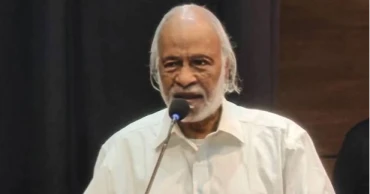
Local Government, Rural Development and Co-operatives Minister Dr Abdul Moyeen Khan, who was hospitalised on Wednesday night with breathing and heart-related problems, is now in stable condition, said BNP Standing Committee Member Prof Dr AZM Zahid Hossain on Thursday.
He shared the information after visiting Moyeen Khan, also a BNP Standing Committee member, at Evercare Hospital Dhaka in the afternoon.
“He was admitted to the hospital yesterday [Wednesday] after falling ill with breathing and heart-related problems. He is receiving treatment under close observation by the doctors,” Zahid said, adding that his condition is now more stable than it was on Wednesday.
Zahid, also the social welfare, and women and children affairs minister, said Moyeen Khan is undergoing treatment under the supervision of Evercare Hospital physicians Dr Kazi Atiqur Rahman, Dr Ziaul Huq and Dr Zafor Iqbal.
In the evening, BNP acting Secretary General Ruhul Kabir Rizvi also visited Moyeen Khan at the hospital.
During the visit, the doctors briefed him on his latest condition.
Earlier, Moyeen Khan was taken to Evercare Hospital on Wednesday night after he fell ill.
The family has urged the country’s people to pray for his speedy recovery.
1 day ago
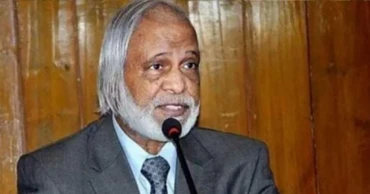
Moyeen Khan hospitalised with chest pain
Local Government, Rural Development and Co-operatives Minister and BNP Standing Committee Member Dr Abdul Moyeen Khan has been hospitalised after complaining of severe chest pain.
He was taken to Evercare Hospital Dhaka on Wednesday night and subsequently moved to the Coronary Care Unit (CCU), according to the BNP Media Cell.
On Thursday, BNP Standing Committee Member and Social Welfare Minister Prof Dr AZM Zahid Hossain visited Moyeen Khan at the hospital.
During the visit, Zahid enquired after his overall condition from the doctors responsible for his treatment.
He also prayed for his speedy recovery and good health.
1 day ago
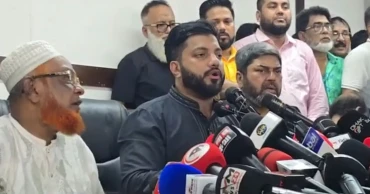
Resigning to avoid overshadowing govt activities, embarrassing BNP: Ishraque
State Minister for Liberation War Affairs Ishraque Hossain on Monday announced his resignation, saying he wants to prevent the controversy over an anti-drug drive from overshadowing the government’s activities or embarrassing his party, the BNP.
“I have voluntarily sought release from my responsibilities as State Minister for Liberation War Affairs from the honourable Prime Minister from today,” he said, adding that Prime Minister Tarique Rahman has agreed to his decision.
He made the announcement at a press conference at the Jatiya Press Club this afternoon.
Ishraque, the BNP MP of Dhaka-6 constituency, said he wanted to devote his time to making his constituency drug-free and addressing other problems faced by its residents.
The controversy erupted after a video circulated on social media showing him carrying a firearm during an anti-drug drive in Ghuntighar area alongside the railway line in Gandaria on Saturday.
Explaining his participation in the anti-drug drive, Ishraque said residents had repeatedly complained about drug trafficking in the area which he described as a major drug distribution hub.
He said several meetings with police and local leaders had failed to resolve the problem, prompting a decision to launch a coordinated campaign involving residents and law enforcers.
He claimed that around 25 to 30 people came out of the area and moved towards their vehicles when the team entered the spot.
“I held my legally licensed firearm for a short time for my personal safety, so that I could protect myself if any situation arose,” he said, adding that he put the weapon away after the situation was brought under control.
Ishraque said police were informed about the operation and later joined the drive.
He claimed that the team recovered schoolbags containing mobile phones believed to have been snatched, around 300 grams of heroin, several bottles of alcohol and locally made weapons from several buildings.
He also said police arrested six people and took them into custody along with the recovered items for legal proceedings.
Defending his actions, Ishraque said the operation was conducted in coordination with police and in line with decisions of the Dhaka-6 law and order committee.
“I firmly believe that I did nothing wrong that day. I held the firearm only for self-defence,” he said, expressing regret if his conduct or the operation had hurt anyone.
He said the campaign against drugs would continue with greater enthusiasm as a BNP activist rather than as a minister, urging people to provide information about drug hotspots.
“I have started this fight against drugs, and it will continue,” he said.
Ishraque won the 2026 general election as the candidate for Dhaka-6, bagging78,850 votes.
On February, 17, 2026, he took charge as State Minister for Ministry of Liberation War Affairs.
4 days ago
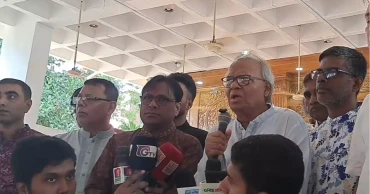
Rizvi warns of plots to disrupt communal harmony
BNP Acting Secretary General Ruhul Kabir Rizvi on Monday warned that attempts to undermine Bangladesh’s tradition of communal harmony would be resisted, saying the country’s secular-minded and religious people would not allow such conspiracies to succeed.
“Some may conspire against this great tradition of Bengal, and some may plot against it. But the secular-minded and religious people of this country will never allow such attempts to grow or succeed. They will resist them, as they have done repeatedly in the past,” he said.
He made these remarks during a visit at the Durga Puja mandap at Jagannath Hall of Dhaka University.
He said people of different religious communities had lived together in Bangladesh for thousands of years, sharing one another’s festivals and cultural traditions.
“We have taken part in one another’s celebrations and considered each other’s joy as our own,” he said, stressing the importance of preserving this tradition.
The BNP leader said people of different faiths shared a common national identity, language, food habits, clothing and folk culture, despite their differences in religious beliefs.
Referring to the concept of Bangladeshi nationalism introduced by late President Ziaur Rahman, he said it provided space for people of all religious communities.
Rizvi also stressed that ensuring the religious rights and security of every citizen was the responsibility of the state.
“Everyone may have their own religion and beliefs, but everyone has rights before the state,” he said.
He said the government had taken several steps to help Hindu devotees celebrate Durga Puja peacefully and securely.
He said the government had extended the holiday period for the festival and increased the rice allocation for puja mandaps and temples.
He also said a government initiative to provide monthly honorariums to temple priests and attendants is being implemented.
Rizvi expressed hope that communal harmony would be further strengthened through greater practice of mutual respect and peaceful coexistence.
He wished members of the Hindu community a joyful Durga Puja, expressing hope that the festival would strengthen bonds of brotherhood among people.
4 days ago
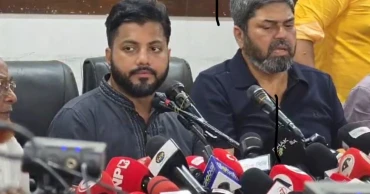
Ishraque announces resignation as State Minister for Liberation War Affairs
Ishraque Hossain has announced his resignation as the State Minister for Liberation War Affairs.
Ishraque, the BNP MP of Dhaka-6 constituency, announced the decision at the Jatiya Press Club on Monday afternoon, two days after a video showing him brandishing firearms during an anti-drug drive went viral on social media.
A video of the drive was posted on Ishraque Hossain’s official Facebook page on Saturday afternoon that sparked controversy across the country.
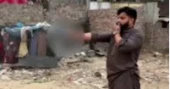
The video shows him getting out of a vehicle with a loudspeaker and a pistol and then chasing a group of people during an anti-drug drive near the railway line in the capital’s Gandaria area.
At one point, he was seen pointing the weapon towards some people while shouting, “Hey, stop, stop.”
Another man in plainclothes was also seen chasing people with a weapon in his hand.
In another Facebook post on Saturday evening, Ishraque pledged to continue the drives until Dhaka-6 constituency is made free of drugs.
In a statement on Sunday he said he briefly raised his licensed firearm in “self-defence” during an anti-drug drive in the capital’s Gendaria area on Saturday after receiving warnings of possible “security threats”.
Ishraque said he, along with his security personnel, got out of their vehicles and raised the weapon briefly when a group of 30 to 35 people allegedly approached their convoy aggressively near a suspected drug den.
He claimed that law enforcement agencies and his own intelligence sources had warned him of possible security risks, including the possibility of drug traders firing at them from rooftops.
“The weapon was raised for a very short time in self-defence to protect lives and property amid fears of an imminent attack,” the state minister said, adding that it was put away as soon as the potential threat had passed.
Additional Police Commissioner of the Detective Branch (DB) Md Shafiqul Islam on Sunday said Dhaka Metropolitan Police (DMP) will take necessary action after reviewing the viral video.
Ishraque won the 2026 general election as the candidate for Dhaka-6, bagging78,850 votes.
On February, 17, 2026, he took charge as State Minister for Ministry of Liberation War Affairs.
4 days ago
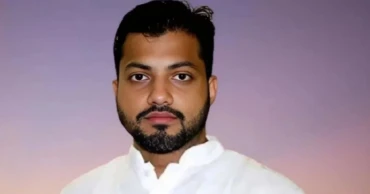
Ishraque to make final announcement on resignation as state minister at Press Club at 2pm
State Minister for Liberation War Affairs Ishraque Hossain has said he will make a final announcement regarding his resignation from the post at the National Press Club at 2pm on Monday and face journalists there.
He said, “I will make the final announcement of my resignation as state minister for Liberation War Affairs and face journalists at the National Press Club at 2pm today, Inshallah.”
He disclosed this in a post on his verified Facebook page in the morning.
In the post, Ishraque said he had seen some “self-proclaimed enlightened people” expressing ecstasy in their Facebook posts.
“I hope that if the need for any movement or struggle arises in the future, they will be inspired by nationalist ideals, return home from abroad and join that movement,” he said.
He said he would now work against drugs with a hundred times more enthusiasm, not as a member of parliament or state minister, but as a BNP activist.
“The cleanliness campaign will be further intensified,” he said.
Ishraque also said he would be able to visit different districts to strengthen the organisational capacity of the Jatiyatabadi Prajonmo Dal across the country.
“Not minister, but drug eradication! Drug eradication, drug eradication!” he added.
4 days ago
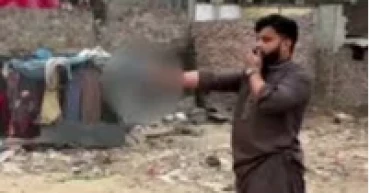
Ishraque’s armed antics during anti-drug drive put BNP in awkward position
The incident involving Liberation War Affairs State Minister and Dhaka-6 MP Ishraque Hossain raising a firearm during an anti-drug drive has caused unease within the BNP and the government, triggering widespread criticism on social media.
Ishraque conducted a surprise raid on a suspected drug den in a slum beside the railway tracks in Ward No. 45 under Gandaria Police Station in Dhaka-6 on Saturday. Six people were detained on suspicion of involvement in drug trading.
While people concerned have welcomed the campaign against drug dens across the country, questions have been raised over the minister’s approach.
Although there is support for efforts to curb drug trafficking, the minister’s actions have reportedly put the government in an uncomfortable position.
Social media users have been closely scrutinising the incident, particularly Ishraque’s participation in an anti-drug operation without the direct involvement of law enforcement agencies and his display of a firearm.
The controversy started after a video of the incident was uploaded to the minister’s own official Facebook page. Many questioned his decision to conduct such an operation as a state minister, brandish a firearm and publicise the incident on social media. Others also raised questions about the role of law enforcement agencies.
What actually happened
Ishraque led the surprise raid on Saturday afternoon in the Doyaganj Ghuntighar Railway Gate area beside Gandaria Railway Station in the capital.
At around 5:15pm, a video of the operation was uploaded to the Facebook page of the Dhaka-6 MP and state minister for Liberation War Affairs. Its caption read: “Ishraque’s action: Drug den demolished, dealers handed over to police.”
The video quickly spread across social media.
It showed Ishraque getting out of a vehicle with a handheld loudspeaker in one hand and a pistol in the other before chasing a group of people. He was seen pulling back the pistol’s slide, apparently preparing it to fire, pointing it towards the group and shouting at them.
BNP's Reaction
BNP leaders have expressed discomfort over the conduct of a state minister. They said they had no objection to the need for anti-drug initiatives but questioned the way Ishraque carried out the operation.
However, no BNP leader was willing to put their criticism on the record.
A BNP lawmaker, commenting on the incident, said he himself owned a licensed firearm, but having a licence did not mean it could be used in any situation:
“A firearm may be used if self-defence is necessary and the circumstances warrant it. Otherwise, it cannot be used. Ishraque Hossain is a state minister. He should have been more responsible. If an ordinary person becomes frightened by seeing my firearm, that must also be taken into consideration. Having a firearm licence does not mean it can be displayed in any manner. I do not think what he did can be considered normal. Acting in this way is never appropriate."
The fact that Ishraque resorted to his gun during a drive against drugs, rather than some other situation, does not excuse it, in his opinion.
"Let me reiterate that drugs are a serious problem. But even if the objective of an initiative is good, procedural mistakes cannot be justified. It is essential to act in accordance with the law," the lawmaker said.
Despite the intense criticism, some people have also defended Ishraque’s actions.
Prime Minister’s Political Assistant Md Rashed Khan praised the minister’s firm stance against drugs, describing his initiative as commendable. However, he also advised Ishraque to exercise greater caution in the future.
Meanwhile, Cabinet Secretary Nasimul Gani declined to comment when asked about the incident after Sunday’s Cabinet meeting.
Facing criticism, Ishraque issued a statement on Sunday claiming that 30 to 35 people approached his motorcade in an aggressive manner while making a commotion after he reached a makeshift drug den.
Fearing an attack, he and his government security personnel briefly raised their firearms in self-defence, he said. The weapons were lowered after the situation returned to normal, according to the statement.
The state minister also outlined steps he had previously taken to curb the spread of drugs in the area. He said he had taken initiatives to establish a permanent police outpost and address the shortage of personnel.
He also claimed that he had participated in a social resistance programme based on discussions with police and local political and social leaders.
However, questions remain over whether the operation had been coordinated with police beforehand. Although Ishraque referred to previous discussions with police, he told the media on Saturday that he had asked police to arrive at the scene 10 minutes after reaching the area.
In a post on Sunday, Ishraque said: “From now on, we will destroy these dens with bamboo sticks. The police will stand by and watch, then arrest them in front of a magistrate and take them away. Inshallah, we will take the anti-drug struggle to its fullest form.”
Legal questions
Alongside questions about whether Ishraque’s firearm was legally licensed, the manner in which he displayed it in public has also come under scrutiny.
The Home Ministry’s Firearms Licence Issuance, Renewal and Use Policy, 2025, sets out conditions for carrying and using firearms for self-defence, while also placing restrictions on displaying them.
Under Clause 25 of the policy, a person may carry or use a firearm licensed in their own name for self-defence, but may not display it in a manner that could cause fear or annoyance to others.
Police will investigate whether any legal provisions were violated in Ishraque’s case.
Speaking at a press conference at the Dhaka Metropolitan Police (DMP) Media Centre on Sunday, Detective Branch (DB) chief Shafiqul Islam said the deputy commissioner of the Wari Division had been assigned to investigate the incident.
He said legal action would be taken in accordance with the law if the investigation found any violation.
5 days ago
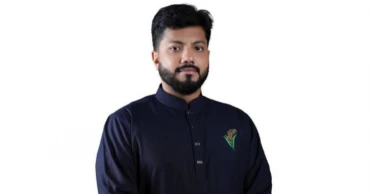
Ishraque says he raised licensed firearm in ‘self-defence’ during anti-drug drive
State Minister for Liberation War Affairs and Dhaka-6 MP Ishraque Hossain has said he briefly raised his licensed firearm in “self-defence” during an anti-drug drive in the capital’s Gendaria area on Saturday after receiving warnings of possible “security threats”.
In a statement issued on Sunday, Ishraque said he, along with his security personnel, got out of their vehicles and raised the weapon briefly when a group of 30 to 35 people allegedly approached their convoy aggressively near a suspected drug den.
He claimed that law enforcement agencies and his own intelligence sources had warned him of possible security risks, including the possibility of drug traders firing at them from rooftops.
“The weapon was raised for a very short time in self-defence to protect lives and property amid fears of an imminent attack,” the state minister said, adding that it was put away as soon as the potential threat had passed.
He said the firearm was licensed by the competent authority and that it was displayed for self-defence within the legal framework.
In a video, Ishraque was seen carrying a firearm while chasing several people during an anti-drug operation in Gendaria on Saturday.
According to the statement, the drive was part of a coordinated social resistance initiative involving local residents, law enforcement agencies and political and social leaders to curb drug trading in Gendaria and surrounding areas.
Ishraque said he had received complaints from residents about drug trading and the spread of drugs among students in areas, including Ghantighar, Munshitek and Koratitola, since taking office as the elected representative of Dhaka-6.
He said the area had become a major transit point for drug syndicates after the 2024 mass uprising.
Following a drug-related violent incident in June in which three people were reportedly shot, the state minister said he visited the area and held several coordination meetings with senior law enforcement officials.
He said he had also sent a demi-official letter to the relevant police station seeking to address manpower shortages and establish a permanent police outpost near the suspected drug dens. “The proposal has yet to be implemented.”
About the operation, Ishraque said Gendaria police were informed shortly after the team reached the area and that joint drives were subsequently conducted with police assistance.
He claimed that four to five illegal makeshift drug dens were dismantled during the operation. Heroin, foreign liquor, drug-use paraphernalia, locally made sharp weapons, cash allegedly linked to drug sales and mobile phones suspected to have been snatched were seized, he said.
Six alleged drug traders were detained and handed over to police along with the seized items, according to the statement.
The state minister also criticised reports by several media outlets, accusing them of presenting the firearm incident without its broader context.
He alleged that the reports focused on images of him holding a weapon while overlooking the operation and the reported seizures and arrests.
Ishraque urged media outlets to verify information and publish reports with the full context.
Reiterating the government’s “zero-tolerance” policy on drugs, he said eliminating drug dens and making Dhaka-6 free of drugs are among his major commitments to the public.
The state minister said anti-drug operations will continue in the public interest.
5 days ago