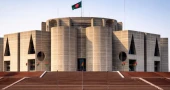
Parliament

Prioritise news importance, not party balance in BTV coverage: JS body
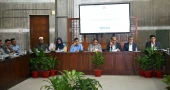
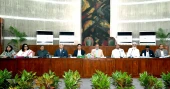
The Parliamentary Standing Committee on the Information and Broadcasting Ministry on Tuesday called on Bangladesh Television (BTV) to prioritise the importance and relevance of news over maintaining a proportional balance between coverage of the ruling and opposition parties.
The recommendation came at the committee’s second meeting, held at the Jatiya Sangsad Bhaban on Tuesday with its chairman Md Amanullah Aman in the chair.
The committee stressed that BTV should fulfil its responsibilities as a public service broadcaster accountable to the state and society, rather than seeking to become a commercial television channel.
It also emphasised the need to clearly define BTV’s goals and objectives, taking into account the social impact of its news coverage and programmes.
The committee said important news involving the opposition should receive due prominence whenever relevant, instead of determining coverage based on the proportional representation of the government and opposition in news bulletins.
It also stressed the need for BTV’s programmes and news coverage to convey a positive message to the public, encouraging people to work together and ensuring that authoritarianism does not return.
The committee called for the production and broadcast of programmes acceptable to people regardless of their political affiliations.
At the meeting, members also discussed preserving the history of the 1990 mass upsurge and the July mass uprising alongside the 1971 Liberation War in the Bangladesh Film Archive’s collection of nationally important documentaries and historical records.
The committee further discussed preparing a list of officials under the Information and Broadcasting Ministry who had been forced into retirement on unethical grounds or denied promotions over the past 17 years.
The list, including their names and designations, is to be presented at the next meeting.
A list of programmes and activities cancelled during the same period was also discussed for presentation at the next meeting.
The committee stressed the need to ensure transparency and accountability in all activities under the ministry.
It also recommended that all concerned take an active role in ensuring that members of the Hindu community can celebrate the upcoming Durga Puja freely and without disruption.
43 minutes ago
JS body recommends transparency in management of 3 seaports
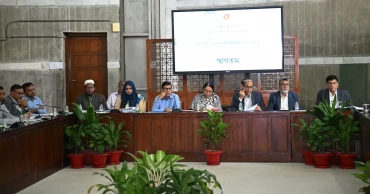
The parliamentary committee on government undertakings on Monday suggested for greater transparency and accountability in the financial management and operations of the country’s three major seaports, with a focus on resolving longstanding audit objections and preventing misuse of public funds.
The committee made the recommendations at its fifth meeting, chaired by Chief Whip Nurul Islam Moni at the Jatiya Sangsad Bhaban.
The meeting reviewed the financial management, operational activities and audit reports of the Chattogram, Mongla and Payra port authorities.
The committee emphasised improving operational efficiency, preventing wastage of public money and taking necessary steps to ensure accountability of the authorities concerned.
It also discussed security and management at Chattogram Port following a recent report in a national daily titled “Containers Loaded with Goods Disappearing One after Another, Security at Chattogram Port at Risk”.
The meeting stressed the need to expedite the disposal of auctionable containers and vehicles that have remained at the port for a long time, improve coordination between the Customs authorities and port management, and take effective measures to resolve existing complications.
The committee also discussed strengthening digital management systems and improving transparency in port operations.
During a review of dredging activities, project implementation and related audit objections at Mongla and Payra ports, the committee emphasised ensuring that projects achieve their intended objectives and public funds are used properly.
It recommended identifying those responsible and taking necessary action in accordance with the rules if irregularities or financial losses are established in project implementation.
The meeting also discussed recovering matured fixed deposits held by Chattogram Port Authority with various banks and clearing longstanding audit objections at the three ports.
The committee stressed that the authorities concerned should take effective steps to protect public funds, ensure proper planning in project implementation and strengthen accountability in financial management.
23 hours ago
JS committee on Power Ministry seeks more information on govt's rooftop solar initiative
A parliamentary standing committee has sought detailed information on electricity generated by rooftop solar systems and supplied to the national grid, questioning the government’s progress towards its target of adding 4,000MW of rooftop solar power by February next year.
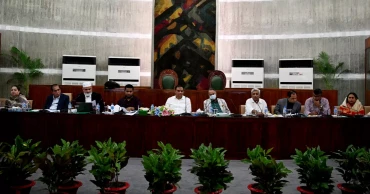
The Parliamentary Standing Committee on the Ministry of Power, Energy and Mineral Resources made the recommendation at its first meeting at the Jatiya Sangsad Bhaban on Saturday, asking the ministry to provide a detailed account of monthly progress, project costs and imports of solar panels and inverters at its next meeting.
Speaking to journalists after the meeting, committee member Hasnat Abdullah said the ministry’s data showed that only 60MW of rooftop solar power had been added to the grid over the past 30 days, despite the 4,000MW target.
At this rate, only 720MW would be added by February, he said, adding that the committee had sought details of the monthly progress and letters of credit opened for importing solar panels and inverters.
The committee also questioned the cost of rooftop solar projects. Hasnat said a 50MW project should cost around Tk 150 crore, while the ministry had estimated the cost of a project of that capacity at more than Tk 350 crore. It asked the ministry to provide a detailed breakdown of the costs of individual projects.
According to the parliamentary secretariat, the meeting was informed that the Power Division had 41 ongoing development projects under the Annual Development Programme for the 2026-27 fiscal year.
The projects have allocations of Tk 10,653 crore in project assistance, Tk 4,071.39 crore from government funds and Tk 3,381.80 crore from agencies’ own resources.
The meeting was also informed that the country’s gas-fired power generation capacity stood at 12,022MW, while actual generation ranged between 4,000MW and 5,000MW.
Coal-fired generation capacity was 6,927MW, with actual output ranging from 5,000MW to 6,000MW. Liquid-fuel-based plants had a capacity of 6,409MW but generated between 2,500MW and 3,000MW.
The committee was told that consumers installing rooftop solar systems by February 28, 2027, would receive Tk 10.50 per unit for surplus electricity supplied to the national grid until February 28, 2030.
Committee member and Jamaat-e-Islami MP Nazibur Rahman said the ministry had acknowledged mismanagement, corruption and a lack of planning behind the country’s power and energy crisis during its presentation.
However, he said, the ministry had failed to provide updates on the implementation of recommendations made by an earlier inquiry committee into capacity payments.
He said a committee led by a judge had been formed following a High Court verdict on capacity charges. The parliamentary committee wanted to know what recommendations the inquiry body had made and what steps had been taken to implement them.
Nazibur also questioned the absence of regulations governing public hearings for energy price determination by the Bangladesh Energy Regulatory Commission (BERC).
He said Section 34 of the 2003 law provided for price determination through public hearings and the formulation of relevant regulations, but the process had not been implemented in 23 years.
The committee also sought clarification on whether public hearings had been held before setting liquefied petroleum gas (LPG) prices and the recent increase in fuel prices.
Nazibur said global energy market disruptions were being compounded by domestic mismanagement and poor planning. He called for accountability in spot-market fuel purchases at high prices and urged the government to prevent businesses from exploiting the crisis.
He also demanded a clear timetable for drilling planned gas wells, expanding domestic exploration and accelerating offshore gas exploration.
Hasnat Abdullah, meanwhile, called for a forensic audit of Tk 2.89 lakh crore paid in capacity charges in the power sector.
He said the country had an electricity generation capacity of 29,000MW, but actual generation was around 14,125MW. The payments made under the Speedy Supply of Power and Energy (Special Provisions) Act 2010 should be examined through a forensic audit, he said.
Capacity payments, subsidies and overhauling charges beyond actual requirements were placing pressure on the economy, Hasnat added.
He also raised concerns over diesel stocks, which he said were sufficient for only 31 days. As rural agriculture, transport and economic activities depend heavily on diesel, he said the committee had sought a plan to increase reserves and prevent supply disruptions.
On LPG prices, Hasnat alleged that weak government monitoring had allowed market prices to rise far above the official rate.
Although the government-set price was around Tk 1,800 per cylinder, consumers were paying Tk 2,500 to Tk 2,600, he said.
The committee also sought an explanation for plans to establish new LNG and coal-fired power plants in Maheshkhali and Payra, saying such projects could undermine efforts to reduce dependence on imported energy.
It asked the ministry to provide projections for power generation capacity and peak demand in 2030, the expected shares of gas, coal, solar and nuclear power, and a timeline for shutting down idle oil-fired plants.
The committee also sought clarification on reports that 32 gas wells had been drilled within a short period, asking the ministry to distinguish between exploration and development wells.
Hasnat further raised concerns over excessive and allegedly fictitious electricity bills, saying some consumers had received bills ranging from Tk 3 crore to Tk 7 crore.
Nazibur said the ministry’s officials had not arrived at the first meeting with adequate information and preparation. He said committee members would submit their questions in advance to enable officials to provide detailed answers at the next meeting.
The meeting was chaired by committee chairman Mia Nuruddin Ahmed Apu and attended by Power, Energy and Mineral Resources Minister Iqbal Hassan Mahmood, State Minister Aninda Islam Amit and other committee members.
The committee said its aim was to ensure ministerial accountability and make parliamentary oversight effective.
2 days ago
JS committee urges ministry to ensure migrant workers do not face harassment at airports
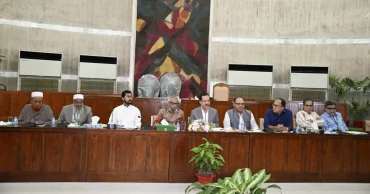
The Parliamentary Standing Committee on the Ministry of Expatriates’ Welfare and Overseas Employment on Thursday recommended strict vigilance to prevent irregularities and corruption in the ministry’s activities and ensure that migrant workers do not face harassment at airports.
The recommendation was made at the committee’s first meeting of the 13th Parliament, held at the Jatiya Sangsad Bhaban on Thursday with committee chairman A K M Fazlul Haque Milon in the chair.
The committee reviewed the ministry’s functions and budget allocation at the meeting.
It urged all officials of the ministry to perform their duties carefully so that no irregularity, corruption or deviation occurs in its overall activities.
The committee also recommended taking necessary measures to ensure that migrant workers are not subjected to negligence or harassment after arriving at airports.
The meeting was informed that 432,786 workers were sent abroad to different countries between February 18 and September 30 this year, including 36,590 women.
During the same period, remittance inflows stood at $24.75 billion, which was around $2.80 billion higher than the previous period, according to the meeting.
The committee was also informed that 186 Bangladeshis, including 12 women and eight children, were repatriated from Iran with funding from the Wage Earners’ Welfare Board amid the war situation in the Middle East.
It was further informed that overseas workers are sent through government-approved private recruiting agencies and Bangladesh Overseas Employment and Services Limited (BOESL).
There are currently 2,860 recruiting agencies in the country, of which 2,187 are operational, the meeting was told.
The secretary of the Ministry of Expatriates’ Welfare and Overseas Employment, heads of various departments and agencies under the ministry, and relevant officials of the Jatiya Sangsad Secretariat attended the meeting.
4 days ago
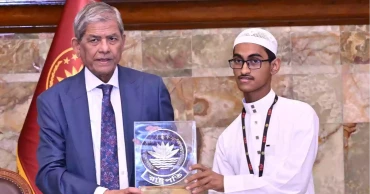
Govt to encourage Quran education and practice: President
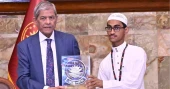
President Mirza Fakhrul Islam Alamgir on Thursday said the government will encourage Quran education and practice while ensuring due recognition and honour for Hafez and students who achieve international recognition.
He made the remarks when the winners of the 46th King Abdul Aziz International Holy Quran Competition met him at Bangabhaban in the afternoon.
President said it is a matter of immense pride and joy for the nation that Bangladeshi contestants had achieved such success competing against participants from 133 countries.
He congratulated the winners, their teachers, guardians and educational institutions for the remarkable achievement.
4 days ago
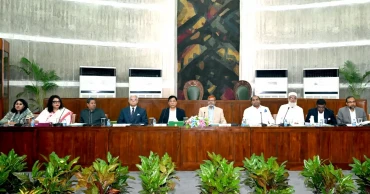
JS Standing Committee on Civil Aviation and Tourism Ministry holds its first meeting
The first meeting of the Parliamentary Standing Committee on the Civil Aviation and Tourism Ministry on Thursday recommended filling vacant posts in the ministry and its agencies on a priority basis to strengthen the country’s aviation and tourism sectors.
The meeting, chaired by committee chairman Abul Kalam Azad Siddiqui, was held at the Jatiya Sangsad Bhaban.
The committee chairman urged the ministry to implement Prime Minister Tarique Rahman’s policy of “Bangladesh First” and maintain a zero-tolerance policy against corruption.
He advised the ministry and its agencies to carry out their activities with transparency and accountability while ensuring coordination and keeping the institutions free from corruption.
At the meeting, detailed activities of the Civil Aviation Authority of Bangladesh (CAAB), Biman Bangladesh Airlines, Bangladesh Tourism Board and Bangladesh Parjatan Corporation were presented as part of efforts to develop Bangladesh as a major aviation hub and an attractive tourism destination.
The committee recommended that the ministry submit a detailed report on the implementation status of its ongoing activities and the posts that are currently vacant.
It also recommended taking necessary measures on a priority basis to fill the vacant posts.
The committee advised the ministry and its agencies to work in coordination to build a modern, safe and internationally standard aviation and tourism sector, while embracing the principle of “Work to build the country” as an effective team with honesty and dedication.
The chairman thanked all concerned for their cooperation in ensuring the smooth conduct of the committee’s activities.
5 days ago
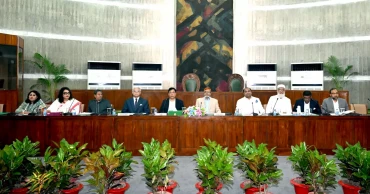
Parliamentary body suggests strict action against building code violations in Dhaka
The Parliamentary Standing Committee on Public Undertakings on Thursday recommended strict measures to stop the construction of buildings in the capital in violation of approved designs, and to end unauthorised commercial activities in residential areas.
The committee of the 13th Jatiya Sangsad held its fourth meeting at the Cabinet Room of the Jatiya Sangsad Bhaban, with its chairman and Chief Whip Nurul Islam Moni in the chair.
The meeting reviewed the overall activities of the Rajdhani Unnayan Kartripakkha (Rajuk), its ongoing housing and infrastructure development projects, and its financial management and audit reports.
The committee directed Rajuk to carry out regular monitoring and run mobile courts, alongside ensuring strict enforcement of the law, to stop the harassment of customers by real estate developers.
It also recommended that plots due to people affected by land acquisition for Purbachal New Town project be ensured without delay.
The committee stressed the need to investigate past irregularities in plot allocation and the dominance of middlemen, and to take necessary action.
Rajuk was also asked to take steps to expand housing facilities through the construction of multi-storey apartments, instead of new land-based projects.
For planned and sustainable urbanisation, the committee laid emphasis on an integrated utility system and underground cabling, fire safety measures in new commercial buildings, adequate washrooms and prayer spaces, and the preservation of Dhaka's lakes.
It also recommended a feasibility study on expanding solar power in the capital.
Expressing concern over delays in audit activities, the committee urged the use of modern digital systems to complete audits swiftly and settle audit objections.
Committee members and officials concerned from the Office of the Comptroller and Auditor General (CAG), the Ministry of Housing and Public Works, Rajuk, the National Housing Authority and the Jatiya Sangsad Secretariat attended the meeting.
5 days ago
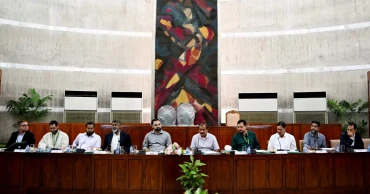
Parliamentary committee suggests measures to keep youth away from drugs
The Parliamentary Standing Committee on the Ministry of Youth and Sports has recommended expanding training for unemployed young people and organising regular sports competitions at upazila level to keep youths away from drugs and engage them in productive activities.
The recommendation was made at the committee’s first meeting held at the Jatiya Sangsad Bhaban on Wednesday, with its chairman Md Abul Khair Bhuiyan presiding.
The committee was briefed through a presentation on the activities of the Ministry of Youth and Sports and its departments and agencies.
It was also informed about various activities undertaken by the ministry under the government’s 180-day programme.
The committee recommended taking extensive promotional measures through electronic, print and online media to increase publicity for the ‘Notun Kuri Sports 2026-27 (Season-2)’ programme.
It also called for bringing unemployed young men and women under various training programmes and arranging regular sports events every year at upazila level across the country.
The committee stressed the need for project officials to perform their duties with integrity, dedication and accountability in implementing development projects.
It recommended strict monitoring and quality control to prevent contractors from using substandard construction materials in development works.
The committee also called on the relevant members of parliament to take necessary initiatives in their respective constituencies to construct a playground in every union in line with the Prime Minister’s election manifesto.
It further recommended taking steps to construct biogas plants across the country in phases.
The committee stressed the need to ensure the safety of women athletes and prevent any form of harassment, recommending a zero-tolerance policy in this regard.
Members of the committee and officials of the ministry and its agencies attended the meeting.
6 days ago
Parliamentary body seeks update on earthquake preparedness
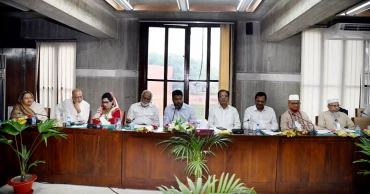
The Parliamentary Standing Committee on the Ministry of Disaster Management and Relief has sought information on the country’s preparedness to deal with earthquakes, particularly in Dhaka and other cities.
The committee made the request at its first meeting held at the Jatiya Sangsad Bhaban on Tuesday, with committee Chairman Munshi Rafiqul Alam in the chair.
It also recommended taking effective measures to ensure the rapid dissemination of early warnings to people in disaster-prone areas.
The committee asked the ministry to prepare and present district-wise lists of shelters and volunteers at its next meeting and send the lists to local MPs.
It stressed that project officials must discharge their responsibilities with honesty, dedication and accountability.
The panel also recommended ensuring proper distribution of relief, assistance and allocations, and keeping shelters clean and fit for use.
It called for close monitoring of construction work to prevent contractors from using substandard construction materials.
A presentation on the activities of the Ministry of Disaster Management and Relief and its subordinate departments and agencies was made at the meeting.
The committee was also briefed on various activities undertaken by the ministry during the past six months.
6 days ago
Parliamentary body stresses stability in financial sector
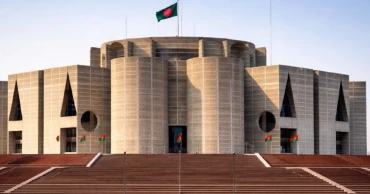
The Parliamentary Standing Committee on the Finance Ministry on Sunday stressed the need for bringing economic stability alongside ensuring transparency and accountability in the ministry’s activities.
The committee also instructed the ministry to present clear data and information on the issue at its next meeting.
The instruction came at the 4th meeting of the parliamentary body, held at the Jatiya Sangsad Bhaban with committee Chairman Mushfiqur Rahman in the chair.
At the meeting, the ministry made a detailed presentation on the current state of financial institutions, particularly banks.
Taking part in the discussion on the presentation, committee members stressed the need for ensuring transparency and accountability and bringing stability in the financial sector.
Finance Minister Amir Khosru Mahmud Chowdhury, Chief Whip Nurul Islam Moni, other committee members Md Jalal Uddin, Moinul Islam Khan, Md. Shafiqul Rahman (Kiron), Md. Saiful Alam, Syed Joynul Abedin and Md. Abul Hasnat attended the meeting.
Secretary of the Financial Institutions Division, Secretary of the Finance Division and senior officials from Bangladesh Bank and other concerned agencies, and the Parliament Secretariat were also present.
9 days ago