NCP
BNP's failure would harm Bangladesh, not just party: Sarjis
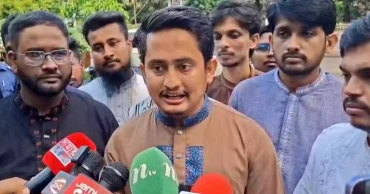
If the Bangladesh Nationalist Party (BNP) gradually derails and moves toward failure, the consequences will harm the entire country, not just the party itself, warned Sarjis Alam, northern region chief organizer of the National Citizens' Party (NCP).
Speaking to journalists after an NCP district organizational meeting at the Chandpur Press Club on Friday afternoon, he said that when constructive criticism is made against the BNP, the party mistakenly interprets it as opposition.
"Constructive criticism of a political party should not be viewed as taking a stance against them," he added. "Instead, when a political party goes astray, criticizing them is necessary because the impact of any party's failure ultimately falls on the country's politics and state system."
Addressing the home minister, the NCP leader urged him to deliver tangible results in reality rather than relying on "showy statements" on or off the parliament floor.
9 days ago
NCP lists 29 'failures' of BNP govt in first 180 days, slams RAB rebranding, Delhi presser
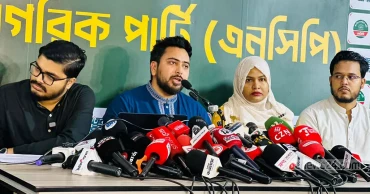
National Citizen Party (NCP) Convener and Opposition Chief Whip Nahid Islam on Monday alleged that the BNP government has failed on multiple fronts during its first six months in office.
He made the remarks at an emergency press conference at NCP's temporary central office at Banglamotor around noon.
Nahid alleged that the government has failed in 29 areas, including energy, commodity prices and law and order.
Criticising the government's various activities, he said the BNP government has failed to properly fulfil any of the promises it made to the people during its 180 days in power.
The NCP leader said mismanagement has become evident across sectors, from the energy crisis and price spiral to the worsening law-and-order situation.
He also alleged that important artefacts were removed from the July Mass Uprising Memorial Museum.
Nahid also criticised the government for its move to rebrand Rapid Action Battalion (RAB), saying despite the long-standing demand for RAB dissolution, the government has instead moved to reorganise the force under a new name to “avoid sanctions.”
He cited the government's failure to bring back former Inspector General of Police Benazir Ahmed from the United Arab Emirates as evidence of a weak foreign policy, calling it the manifestation of the administration's diplomatic shortcomings.
Reflecting on the government's six months in office, the opposition chief whip said while six months is too short for a full assessment, the government should still have apologised to the people for its failures and lack of planning.
He alleged that the administration is once again attempting to revert to old-style politics, and criticised the government for failing to establish the rule of law overall.
At the press conference, the NCP convener also spoke on India and deposed Prime Minister Sheikh Hasina, alleging that Hasina's press conference in Delhi on August 5 last was held with the “cooperation” of the Indian government.
13 days ago
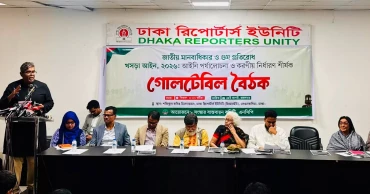
Speakers at NCP's discussion slam draft laws on goom, NHRC; some sound 'hope'
Political parties, human rights activists and lawyers have criticised the government over the draft laws on the National Human Rights Commission (NHRC) and prevention of enforced disappearances, calling for an end to political appointments and stronger institutional independence.
They also demanded that allegations of enforced disappearance be investigated by an independent and impartial body instead of law enforcement agencies.
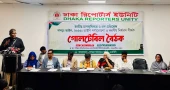
They made the remarks at a roundtable titled “National Human Rights and Prevention of Enforced Disappearance Draft Laws, 2026: Legal Review and Way Forward” organised by the National Citizen Party (NCP) at the Shafiqul Kabir Milon Auditorium of Dhaka Reporters Unity on Tuesday afternoon.
Former member of the NHRC and the Commission of Inquiry on Enforced Disappearances Dr Nabila Idris presented the keynote paper at the event.
NCP Member Secretary Akhter Hossain said six months have passed since the government assumed office, but some decisions taken by the previous government have been cancelled, forcing stakeholders to discuss the same issues again.
“If the ordinances on the National Human Rights Commission and prevention of enforced disappearances had been passed in the first session of parliament, there would have been no need for such discussions,” he said.
He said people in Bangladesh carry a deep trauma over enforced disappearances, with many people having disappeared and some later returning to testify about how they had been detained.
“Many others have never returned after being disappeared. Yet the victims and their families have not received proper justice,” he said.
Akhter alleged that the draft NHRC law has curtailed the commission’s investigative powers, requiring it to wait for investigation reports from the concerned agencies when human rights violations occur.
He also criticised the proposed appointment process for the chairperson of the commission, saying it could allow the government to appoint a person of its choice.
Regarding the draft law on prevention of enforced disappearances, he said assigning investigation to agencies that themselves could face allegations of enforced disappearance would make impartial investigations difficult.
“There is a risk that incidents of enforced disappearance could be covered up in the name of investigation,” he said.
He further said provisions allowing punishment for false complaints could intimidate families of victims and discourage them from reporting disappearances.
Photographer, writer and human rights activist Shahidul Alam said he had hoped Bangladesh would become a different country after the fall of the previous government.
“I still have that hope,” he said.
He said large amounts of money had been taken out of the country and the country would have to overcome the consequences.
“Politicians have come to power through our votes. They will decide how the country is run. But the country cannot be run according to the security forces,” he said.
Political scientist and analyst Prof Dilara Chowdhury said state-building becomes difficult in the absence of national ideological consensus.
“We have not yet found the leadership needed for state-building,” she said.
She also criticised political debates over issues such as who is a collaborator while people continue to face shortages of electricity and gas.
She alleged that the BNP had been moving away from its commitments made during the July movement.
Former member of the Constitutional Reform Commission and Supreme Court senior advocate Dr Sharif Bhuiyan said the NHRC and a law on enforced disappearances were necessary to hold the government accountable.
“The ability of these institutions to work independently depends on their appointment process. There can be no politicisation in appointments,” he said.
He said the government should not be allowed to interfere with these institutions either before or after appointments.
Former member of the Judicial Reform Commission Barrister Tanim Hossain Shawon said the main purpose of the enforced disappearance law should be to prevent members of law enforcement agencies from committing such offences.
But, he said, the draft law had weakened this provision.
“The original proposal was that an independent commission would investigate enforced disappearances. We recommended assigning this responsibility to the Human Rights Commission. But the law now says the police will investigate. Then what is the point of enacting the law?” he asked.
General Secretary of Amar Bangladesh Party (AB Party) Mohammad Asaduzzaman Bhuiyan Fuad questioned why politicians in Bangladesh repeatedly fail to change their traditional practices.
He alleged that enforced disappearances and extrajudicial killings had historical precedents in Bangladesh and criticised successive governments for failing to break away from such practices.
Fahim Mashrur, convener of the Referendum Implementation Citizens’ Forum, alleged that the government had already “thrown the July Charter into the dustbin”.
He said that if the charter was implemented with notes of dissent, it would no longer remain the July Charter in its original form.
“If reforms are not carried out, those appointed to the Human Rights Commission will be politically affiliated people. The question is how much service can be expected from them,” he said.
Sarwar Tushar, deputy head of the NCP’s Reform Implementation Committee, criticised the BNP-led political approach to the government and alleged that the party had failed to deliver on its commitments.
He also criticised the police for allegedly continuing practices from the previous regime and alleged that political appointments were being made in key positions.
“The BNP may play its main game during the formation of a caretaker government,” he alleged, adding that the party was advancing its political plans through appointments to institutions.
NCP central organiser Advocate Arman Hossain moderated the roundtable.
19 days ago
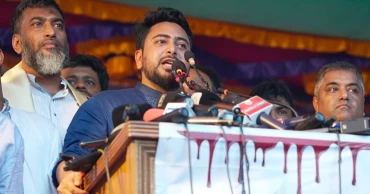
Govt won't be allowed to stay if energy crisis persists: Nahid Islam
Nahid Islam, Convener of the National Citizen Party (NCP) and Opposition Chief Whip, on Friday warned that the government would not be allowed to remain in power if it continues to fail to provide essentials like gas and electricity.
Addressing a massive public rally in the city’s Jatrabari area, the NCP leader attributed the ongoing national fuel and energy crisis to governmental mismanagement, corruption, and "unprecedented looting". The rally, organized by NCP’s Dhaka Metropolitan South unit, presented several demands, including the implementation of the public mandate, a reversal of fuel-gas price hikes, and an end to political oppression.
Opposition leader urges acting president to convene special parliament session over power, energy crisis
"If this government cannot supply gas, reduce prices, or stop the extortion hindering businesses, we will not let them stay in office," Nahid said.
23 days ago

Nahid accuses BNP govt of walking the same old path of autocracy
National Citizen Party (NCP) Convener and Opposition Chief Whip Nahid Islam on Sunday accused the BNP-led government of walking the same old path of autocracy.
Addressing a press briefing following an alliance meeting at the opposition leader’s residence in the capital, Nahid said: “However, we have seen this government disregard the public mandate of the referendum and it has also shown no intention of implementing any provisions of the July Charter. They have not taken the oath for the Reform Commission, have not convened a session and are politicizing all institutions including the Election Commission. We had envisioned a peaceful government and an impartial Election Commission, yet we see this government is also treading the old path of autocracy.”
Nahid's statement also alluded to an aborted attempt at arriving at a consensus candidate despite
“A proposal was pitched for the presidential election to enable us to collectively elect a universally acceptable president, proposals were also made to amend the election process and to explore ways to further enhance the president’s powers within the framework of the balance of power,” he said.
“Our expectation was that the President would be elected after the election, in accordance with the July Charter. We expected that the mandate given by the people with 70 percent of the people supporting us would be met through the implementation of the July Charter and the formation of a Constitution Reform Council, this would enable us to elect a new President under a newly reformed constitution just as we had various other expectations,” he added.
The NCP leader further criticized the retention of the incumbent president for an extended six-month period without judicial accountability, raising questions about potential political maneuvering ahead of future caretaker transitions.
Nahid added,“This is because, looking at the BNP’s past history, we have seen that they have consistently attempted to retain power during such transitional periods, they have made various efforts to do so and have created numerous political and constitutional crisis in Bangladesh.”
Answering to a journalist’s question why they are nominating a candidate despite the potentiality of losing the election the NCP leader stated that we believe that for democracy, this process should be participatory and competitive.
At the press conference Nahid announced that the 11-party coalition would counter the process by fielding LDP Chairman and veteran Freedom Fighter Col. (Retd.) Oli Ahmad as a presidential candidate to uphold competitive and participatory democracy.
28 days ago

Border killing segment removed from July Museum, Nahid alleges
National Citizen Party (NCP) convener Nahid Islam on Saturday alleged that the segment on killings along the Indian border and the list of Bangladeshis who died in such incidents, which existed in the July Memorial Museum during the interim government's tenure, has been removed under the current government.
“The list of Bangladeshis killed in border shootings and the memorial for Felani have been removed from the museum. Meanwhile, the current government has increased its own party-related content,” Nahid told reporters after visiting the museum on Saturday morning.
He said during the rule of ousted prime minister Sheikh Hasina, all authoritarian decisions including looting of people’s money used to be taken from Ganabhaban.
The interim government had planned to convert the building into a museum.
“We spoke extensively both in parliament and outside for the museum to be opened to the public. I had visited here before as well. Some changes have been made by the government after the elections,” Nahid said.
He further alleged that the segment on border killings, memories of the massacres at the border, and recollections of the anti-Modi movement have all been removed from the museum, while the BNP's movements and struggles have been given comparatively more prominence. “The museum should not become a place for practising party-based history. It should remain a place for practising national history.”
Commenting on the removal of anti-India content from the museum, Nahid said India was complicit in the fascism that prevailed in Bangladesh over the past 16 years. “BNP is perhaps afraid of India. The government thinks doing this will help maintain good relations with India. The issue is not about having good or bad relations with India, the relationship must be one of dignity.”
The NCP convener said the memories preserved from the July uprising should be showcased in greater detail, following a timeline covering contributions from various districts, universities, private universities and madrashas.
29 days ago
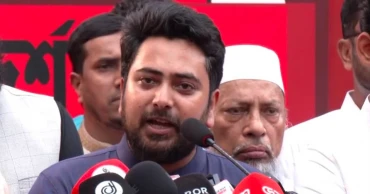
Nahid blames Hasina's Delhi briefing on government's diplomatic 'weakness', marks it as failure
National Citizen Party (NCP) Convenor and Chief Whip of the opposition Nahid Islam on Friday said Sheikh Hasina was able to hold a press briefing in Delhi because of the BNP government's failures and diplomatic weakness.
"This is a diplomatic failure of the government. The foreign ministry is trying to earn praise by issuing a press release over fascist Hasina's Delhi briefing. This is mere rhetoric, what we colloquially call empty posturing. Big words are used in the press release, but no diplomatic action is being taken," Nahid told reporters.
Hasina will be taken straight from airport to gallows upon return: Nahid
He made the comments after visiting a photo exhibition titled "July Still Not Over," organised by Bangladesh Jamaat-e-Islami on the premises of the opposition leader's official residence.
Nahid said the Awami League had announced the press briefing in advance and the Delhi government had cooperated with them. “The Indian High Commission should have been summoned and strongly condemned by the government.”
He added that the government should make public what diplomatic measures it plans to take against such incidents in future.
Alleging that the government is attempting to turn authoritarian, Nahid said if structural reforms are not carried out, the present government too will become autocratic, noting that such a tendency already exists within it.
He said history shows that a "failed Awami League" has repeatedly tried at different times to reassert itself in that mould but has failed in the face of public resistance, citing 1996 as an example. He warned that any fresh attempt now would again meet public resistance.
NCP's chief organiser for the northern region Sarjis Alam, spokesperson Asif Mahmud Shojib Bhuiyan and chief coordinator Nasiruddin Patwary, among other senior leaders, were present during the visit.
30 days ago

NCP demands Hasina's extradition, warns against ‘bargaining’ her fate
National Citizen Party (NCP) Spokesperson Asif Mahmud Shojib Bhuyain on Thursday demanded the immediate extradition of ousted Prime Minister Sheikh Hasina, warning that her legal status must never be used as a “bargaining chip” in bilateral or geopolitical negotiations.
Addressing a press briefing at the NCP's Banglamotor office, he said the party viewed with "deep concern and profound disappointment" Hasina's public address at an event in New Delhi marking the 2nd anniversary of the July uprising on Wednesday, calling it an affront to a date of profound significance for Bangladesh's struggle for democratic renewal and accountability.
Hasina will be taken straight from airport to gallows upon return: Nahid
"Sheikh Hasina has been convicted by the International Crimes Tribunal of Bangladesh for crimes against humanity. Her continued ability to participate in political activities from India, despite the judicial process against her, raises serious concerns regarding respect for Bangladesh's legal institutions," Asif Mahmud said.
"We condemn India's such action humiliating the sovereignty of Bangladesh," he said, urging New Delhi to give due consideration to Bangladesh's judicial decisions and facilitate Hasina's prompt return under the existing extradition framework between the two countries.
The NCP spokesperson said mutual respect for each other's legal systems, sovereign institutions and democratic processes remains essential to sustaining a "constructive and forward-looking" bilateral relationship between Dhaka and New Delhi.
He also urged the government to pursue all available legal, diplomatic and institutional avenues "with greater urgency, transparency and effectiveness" to secure Hasina's return, saying the people of Bangladesh deserve a credible, coordinated and institutionally robust approach demonstrating the state's commitment to justice.
"This issue should not be reduced to political rhetoric or managed solely through diplomatic formalities. It requires sustained political commitment, effective intergovernmental engagement, and clear institutional accountability," Asif Mahmud told reporters.
Reaffirming the NCP's commitment to democracy, constitutional governance and the rejection of "authoritarian and fascist politics in all their forms," he said the party opposes any attempt to treat Hasina's legal status as an instrument of bilateral political negotiation or geopolitical bargaining.
"Any arrangement that compromises Bangladesh's sovereignty, judicial independence, or democratic future will be contrary to the interests and aspirations of the Bangladeshi people," the NCP spokesperson said.
He further said the lasting dismantling of authoritarian structures will require comprehensive constitutional, institutional and political reforms, adding that no individual or institution accused of grave crimes against the people of Bangladesh, or of undermining the country's sovereignty, should be permitted to return to political life without first facing a credible process of justice and accountability.
1 month ago
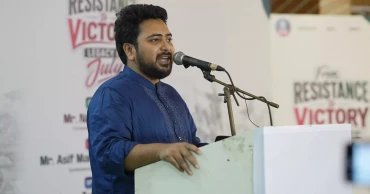
Campuses being turned into ‘havens of terror’ again, alleges Nahid
National Citizen Party (NCP) Convener and Chief Whip of the Opposition Nahid Islam on Tuesday alleged that Bangladesh's educational institutions are once again being turned into “sanctuaries of terror”, claiming a familiar pattern of campus and hall grabbing is being repeated.
“Today, an attack was carried out on Jagannath University's Central Students’ Union representatives and the leadership of Chhatra Shakti. Chhatra Dal is trying to take control of various educational institutions, including Dhaka College and Dhaka Alia Madrasah. In Habiganj, our brother Alif had his eyes gouged out,” he said.
Nahid was addressing a discussion titled “From Resistance to Victory: Legacy of July” at Aftabnagar in the capital, organised by the combined private university unit of Jatiya Chhatra Shakti to mark the 2nd anniversary of the July uprising.
Urging the government to learn lessons from the past, he said authorities should avoid getting into confrontations with students and instead allow them to pursue their studies without disruption.
The NCP leader also called for preserving the democratic culture of educational institutions and ensuring employment opportunities for students.
“This government seems to believe that since it is in power, it can seize everything. Sheikh Hasina had thought the same, and you have all seen the consequences,” he said, drawing a parallel with the ousted former prime minister.
Highlighting the contribution of private university students to the July uprising, the opposition chief whip described their role as a “trump card” of the mass movement, saying the authoritarian government had never anticipated that private university students would take to the streets in such numbers.
“After the crackdown on July 17, everyone thought there was no one left to carry the movement forward. We remember the sacrifices of private university students with deep respect. Their role needs recognition and proper documentation. Unfortunately, this government has taken no initiative regarding private universities,” he said.
Among others, NCP Spokesperson Asif Mahmud Shojib Bhuyain, political council member Ali Ahsan Zonaed, Joint Member Secretary Rafe Salman Rifat, Jatiya Chhatra Shakti President Zahid Ahsan, and General Secretary Abu Baker Majumder, along with other private university leaders, spoke as special guests at the discussion.
1 month ago
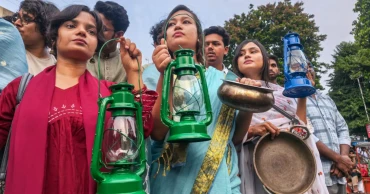
Chhatra Shakti protests against commodity price hike, gas-electricity crisis
Dhaka University unit of Jatiya Chhatra Shakti, the student wing of National Citizens’ Party (NCP), held a demonstration today protesting the ongoing crisis of gas, electricity across the country and the increasing price of daily commodities.
The program was held in front of DU’s Raju sculpture around 6pm, showing hurricane lamps, cooking pots and pans making the event dramatic.
During the demonstration the protesters are heard chanting slogans such as ‘Bah ajob Tarique Bhai, Khamba ache current nai’, ‘Chula ache gas nai, Bah ajob Tarique bhai’, among others.
The country has gone back to the time of 2002-2004 where the pillars of electricity exist without electricity, claimed DU unit president of Chhatra Shakti Tahmid Al Mudassir Chowdhury.
1 month ago