Israeli military operations inside southern Syria have intensified tensions and raised concerns about a prolonged Israeli presence as forces expand control within and around a buffer zone near the Golan Heights.
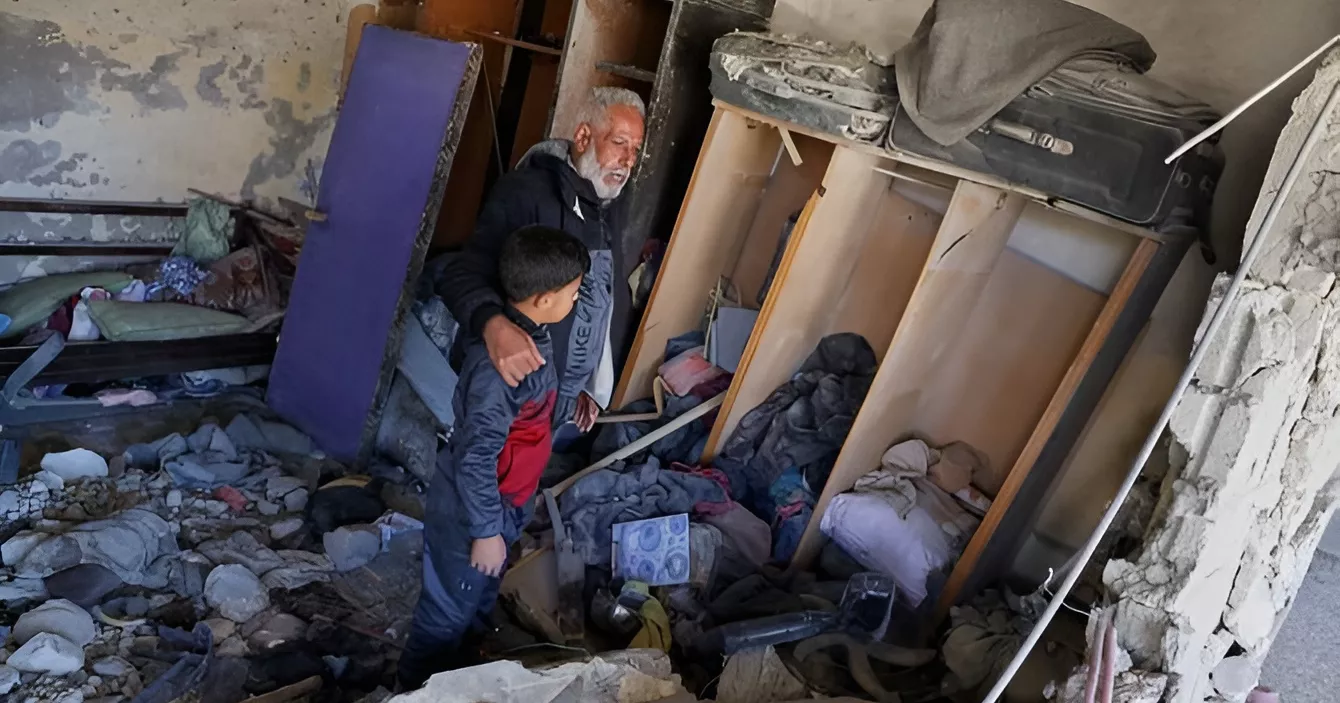
Last month, Israeli troops carried out a raid in the village of Beit Jin in southwestern Syria, during which 13 residents were killed, according to local accounts. Israel said the operation targeted members of a militant group planning attacks into Israel and that its forces came under fire, wounding six soldiers, before responding with ground fire and air support. Syrian authorities described the incident as a massacre, while residents rejected Israeli claims that militants were operating in the village.
The raid was one of several recent Israeli actions in Syria that have increased local opposition and reduced prospects for improved relations between the two countries, despite pressure from the United States to ease tensions.
Prospects for limited Israeli-Syrian engagement had emerged late last year after Sunni Islamist-led rebels removed former Syrian President Bashar Assad, a close ally of Iran. Syria’s interim president, Ahmad al-Sharaa, has said he does not seek conflict with Israel. Israel, however, has expressed distrust of al-Sharaa due to his past militant affiliations.
Israeli forces subsequently moved into the United Nations monitored buffer zone in southern Syria adjacent to the Golan Heights, which Israel captured in the 1967 Middle East war and later annexed, a step not widely recognised internationally. Israeli troops have established checkpoints, military positions and landing sites, including on Mt Hermon, and have increased patrols and drone surveillance across nearby Syrian areas.
Israel has said its presence is temporary and aimed at preventing attacks by militant groups and remnants of pro-Assad forces. It has not provided a timeline for withdrawal, and talks on a bilateral security arrangement have not produced results.
Developments in neighboring Lebanon and Gaza have also influenced perceptions in Syria. Israel continues to hold positions in southern Lebanon following a ceasefire with Hezbollah, while maintaining airstrikes and surveillance operations. In Gaza, Israeli plans include buffer zones even after a future withdrawal from parts of the territory.
At a regional meeting in Doha earlier this month, al-Sharaa accused Israel of using perceived threats to justify military actions, saying withdrawal to positions held before Assad’s removal was necessary for security on both sides.
The interim Syrian government faces multiple internal challenges, including unresolved arrangements with Kurdish-led authorities in the northeast and instability in the southern province of Sweida, where sectarian clashes earlier this year resulted in hundreds of civilian deaths. Israel has portrayed itself as a protector of Syria’s Druze minority and has also sought contacts with Kurdish groups.
Analysts say Israel’s approach risks undermining international efforts to support a unified Syrian state. Michael Young of the Carnegie Middle East Center said the strategy contradicts the positions of Saudi Arabia, Turkey, Egypt and the United States, which favor a stable and consolidated Syrian government.
Israeli Prime Minister Benjamin Netanyahu has said Israel seeks a demilitarized zone extending from Damascus to the UN buffer zone, including Mt Hermon. While he said agreements with Syria remain possible, he stressed Israel would adhere to its security principles.
Israel’s actions have drawn rare public criticism from US President Donald Trump, who has supported al-Sharaa’s efforts to consolidate control. Trump said it was important that Israel maintain dialogue with Syria and avoid steps that could disrupt the country’s recovery.
Netanyahu is expected to discuss Syria during a planned visit to Washington later this month. Analysts say Israel is unlikely to withdraw soon, while Syria’s interim government has limited leverage against Israel’s military strength.