Special

A peacock hobby that grew into a Tk 28 lakh venture
What began as a fascination with the graceful dance of a peacock has turned into a thriving farming venture for Md Shah Ali of Homna upazila in Cumilla.
In December 2019, Shah Ali, a young man from Babarkandi village in Nilkhi Union, spent Tk 1.65 lakh to buy a pair of peacocks after becoming captivated by their colourful feathers and distinctive courtship display.
He later bought five more, bringing his collection to seven. Over the years, the birds multiplied, and what started as a hobby gradually grew into a full-fledged peacock farm.
Today, Shah Ali has 85 peacocks, including 12 mature birds, with an estimated total value of around Tk 28 lakh.
He has already sold peacocks worth nearly Tk 24 lakh.
His farm has also expanded beyond peacocks. He raises cattle, goats, sheep, guinea fowl and quails alongside the colourful birds.
In Babarkandi, Shah Ali is now widely known as the village’s peacock farmer.
Some locals even call him “Peacock Shah Ali”.
A recent visit to his farm found the birds roaming freely around the enclosure, with some spreading their magnificent tails and dancing.
Visitors from different areas regularly come to see the birds and, in some cases, buy them.
Shah Ali studied up to Class VIII. While living in Badda, Dhaka, his father ran a cattle farm, where Shah Ali helped by cutting grass for the animals.
At the same time, he became involved in buying and selling birds in the Mirpur area.
It was there that he first saw peacocks up close.
“I liked the peacocks when I saw them in Mirpur. Later, I decided to buy a pair with money I had saved from selling birds and cattle,” he said.
The first pair laid 18 eggs, from which 12 chicks hatched.
After returning to his village, Shah Ali invested Tk 2 lakh to build two tin-shed structures for the birds.
He then spent another Tk 2.5 lakh to buy four female and one male peacock.
The seven birds subsequently laid 140 eggs, from which 128 chicks hatched.
21 hours ago

Bangladesh plans major railway expansion, faster Dhaka-Ctg connectivity, electric trains
Bangladesh is pursuing a broad-based programme to expand and modernise its railway network, with plans for new rail links, double-line corridors, modern signalling, improved passenger services, stronger freight connectivity and eventually electric and high-speed trains.
The initiatives are aimed at increasing railway capacity, reducing travel time, improving safety and reliability, and strengthening railways as a key component of the country’s passenger and logistics network.
According to the government’s 2026-27 budget documents, railway development will focus on constructing new railway lines and bridges, procuring modern locomotives, coaches and wagons, upgrading existing infrastructure, modernising signalling and expanding optical-fibre-based communication networks.
The government also plans to improve railway connectivity with seaports and land ports, expand regional and cross-border links and increase commuter train services.
Dhaka-Chattogram corridor gets major focus
One of the most significant components of the plan is a proposed chord line on the Dhaka-Cumilla section of the Dhaka-Chattogram railway corridor.
According to the budget speech, the proposed line would reduce the rail distance between Dhaka and Chattogram by around 80 kilometres, from approximately 320 km to 240 km.
The government expects the shorter route to reduce train travel time between the two cities from about five hours to around three hours.
Finance and Planning Minister Amir Khosru Mahmud Chowdhury said in the budget speech that a feasibility study for the chord line had been completed, with the Shyampur-Cumilla alignment preliminarily selected from three proposed routes.
The proposed shortcut would also have a major freight component.
Freight trains carrying goods from Chattogram Port, the planned Bay Terminal and Matarbari Deep Sea Port are expected to be able to connect directly with the proposed Dhirashram Inland Container Depot (ICD) through the existing Chattogram-Feni-Cumilla-Brahmanbaria-Bhairab-Narsingdi railway route.
The government sees the proposed connectivity as a way to strengthen the country’s logistics network and improve the movement of imported and exported goods.
Electric trains on Dhaka-Chattogram route
The government is also moving towards electrification of the Dhaka-Chattogram railway corridor.
Prime Minister Tarique Rahman told Parliament on Sept 9 that the feasibility study and detailed design for installing electric traction to operate electric trains on the corridor had been completed.
He said a detailed implementation plan and timeline would be prepared after securing the necessary financing, and the project would be implemented subject to availability of funds.
Once implemented, the electric traction system is expected to increase average train speeds and reduce journey times.
Double-line development
The government is simultaneously working to convert the Dhaka-Chattogram railway route into a dual-gauge double-line corridor.
The Prime Minister said feasibility studies and detailed designs for dual-gauge double lines on the Tongi-Akhaura and Laksam-Chattogram sections had already been completed.
The Laksam-Chattogram Dual Gauge Double Line Development Project is currently being processed for approval, while preparation of the Development Project Proforma (DPP) for the Tongi-Akhaura project is at the final stage, he said.
The two projects are expected to increase passenger-carrying capacity and train speeds once implemented.
Greater emphasis on freight transport
The government’s railway strategy is not limited to passenger services.
Greater emphasis is being placed on freight transportation to increase the commercial viability of Bangladesh Railway and strengthen rail’s role in the country’s supply chain.
The proposed connections involving Chattogram Port, Bay Terminal, Matarbari and Dhirashram ICD are particularly significant in this regard, as they would create a stronger rail-based link between seaports and inland logistics facilities.
The government also plans to encourage private investment in railway development and use Public-Private Partnership (PPP) arrangements for suitable infrastructure projects.
New trains, workshops and technology
The modernisation programme includes procurement of new locomotives, passenger coaches and freight wagons, along with construction and rehabilitation of railway bridges.
The government plans to strengthen the Saidpur and Pahartali railway workshops so that coaches and locomotives can increasingly be assembled locally, potentially reducing dependence on imported rolling stock.
Modern signalling systems and optical-fibre-based communication networks are also part of the planned upgrade to improve operational reliability and the quality of passenger and freight services.
Towards a wider rail network
The longer-term objective is to gradually bring all districts and major cities under railway connectivity and strengthen links with ports, economic centres and neighbouring countries.
Bangladesh Railway’s master-planning documents have also envisaged a wider network of new and upgraded corridors, including links towards the country’s ports and border areas and improved regional connectivity with neighbouring countries.
The government has proposed Tk 9,940 crore for the Ministry of Railways in the 2026-27 budget, reflecting the priority given to railway development in the current fiscal programme.
Taken together, the planned projects represent a shift towards a more integrated railway system combining infrastructure expansion with technological modernisation, faster passenger services and greater freight-carrying capacity.
Bangladesh Railway's revenue increased by Tk 221 crore in the 2025-26 fiscal year, but it continued to spend significantly more than it earned despite a modest improvement in its operating ratio.
According to a Bangladesh Railway , it earned Tk 2,066.38 crore in FY26, up from Tk 1,845 crore in the previous fiscal year.
Its total operating expenditure, including salaries, allowances, pensions and maintenance of tracks and rolling stock, stood at Tk 3,955 crore, resulting in an expenditure-to-income ratio of 1.91, an improvement from 2.09 in FY25.
23 hours ago
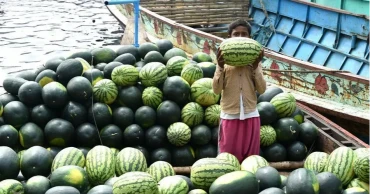
Satkhira farmers turn to off-season watermelon for higher profits
Farmers in Satkhira are increasingly turning to off-season watermelon cultivation, drawn by bumper yields and profits of up to Tk 1.5-2 lakh per bigha.
The short-duration crop which can be harvested within about three months is proving increasingly attractive to farmers in the southwestern district, where salinity has long posed a challenge to agriculture.
Farmers say relatively low production costs and good market prices are encouraging more people to take up watermelon cultivation.
Jamal Uddin Sardar, a farmer from Gariyadanga village in Satkhira Sadar upazila, has cultivated more than a bigha of off-season watermelon and is expecting a bumper harvest.
He said he has spent around Tk 60,000-70,000 on cultivation and expects to sell watermelons worth more than Tk 2 lakh.
At the field, the watermelons are currently selling for Tk 40-45 per kilogramme.
“The yield has been very good. If the market price remains favourable, I expect a good profit from the crop,” he said.
Alauddin Sardar has cultivated two varieties of watermelon on one bigha of land.
This is his first attempt at watermelon cultivation, and he is hopeful of making a profit.
“The plants have grown well and the fruits are looking good. I hope to make a profit from this cultivation,” he said.
The Department of Agricultural Extension (DAE) said off-season watermelon has been cultivated on 143 hectares of land in Satkhira this year.
The target yield has been set at 30-33 metric tonnes per hectare, while field-level indications suggest that production is good.
The locally cultivated varieties include watermelons that are green outside with yellow flesh and yellow-skinned varieties with red flesh.
Their sweet taste and attractive appearance have helped create strong demand in the market, allowing farmers to obtain comparatively better prices.
Agriculture officials said the profitability of the crop is encouraging farmers to expand cultivation.
Another advantage is its short cultivation cycle. Farmers can harvest the crop within 90-110 days and use the land for another crop, allowing them to generate additional income from the same piece of land.
Agriculture officials are providing farmers with technical advice and support to improve production and manage cultivation challenges.
Saiful Islam, deputy director of the Department of Agricultural Extension, said farmers were increasingly adopting watermelon cultivation because of its profitability and short production cycle.
He said agricultural officials were providing necessary advice and assistance to farmers to encourage cultivation and improve yields.
1 day ago
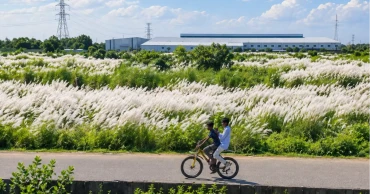
Gomti char turns into a white carpet of Kashful
The charland along the Gomti River in Munshiganj has turned into a sea of white as blooming kash flowers sway in the breeze against a backdrop of blue skies and drifting clouds.
The area around Pakhir Mor under Baushia union of Gazaria upazila is drawing visitors from nearby areas and beyond, with vast stretches of the river char now covered in the seasonal flowers.
During a recent visit, large patches of the char were found covered with blooming kash. The soft white plumes swayed gently in the wind, creating a striking contrast with the river water and surrounding green grass.
2 days ago
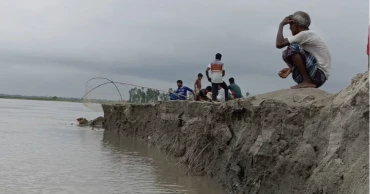
Teesta erosion leaves several hundred families homeless in northern districts
At least 386 houses have been washed away by severe erosion along the Teesta River in five northern districts over the past seven days, leaving hundreds of families homeless.
The erosion has intensified at 113 points in Rangpur, Gaibandha, Lalmonirhat, Nilphamari and Kurigram, according to the Bangladesh Water Development Board (BWDB).
Ahsan Habib, superintending engineer of the BWDB Rangpur regional office, said the situation has worsened rapidly in recent days.
“Erosion has intensified at 113 points in the five districts while 386 houses have been washed away in the past seven days,” he said.
He said there was insufficient allocation for erosion-control measures and the matter has been brought to the ministry’s attention.
In Gaibandha’s Sundarganj upazila, erosion has taken a particularly heavy toll on people living along the riverbank in Kapasia Union.
In Singijani and Bhorer Pakhi areas, residents said the river current increased suddenly, causing sections of the riverbank to collapse one after another.
Many families could not save their furniture, rice, clothes and other belongings as their houses collapsed.
Shahidul Islam, a resident of the area, said the erosion was so rapid that people barely had time to move their belongings to safety.
Ahad Mia said families are now facing an uncertain future after losing their homes and land.
Sundarganj Upazila Nirbahi Officer Iffat Jahan Tuli visited the affected areas and assured them of necessary assistance.
Gaibandha BWDB Executive Engineer Shariful Islam said geo-bags are being dumped at vulnerable points as an immediate measure.
“We are monitoring the situation and taking immediate preventive measures. Further steps will be taken based on the situation,” he said.
3 days ago
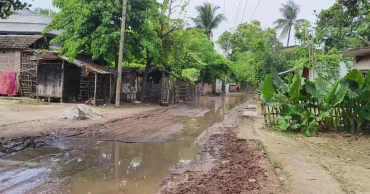
Dilapidated road disrupts life in several Chapainawabganj villages
A journey that should take only a few minutes has turned into a test of patience and caution for residents of several villages in Shibganj upazila, as a roughly three-kilometre stretch of road remains riddled with potholes and damaged asphalt.
The road runs from Kamalpur through Mirzapur to Karnakhali in Daipukuria Union and serves as a key link for local people.
But years without proper repairs have left the road in such poor condition that residents now have to negotiate potholes and stagnant water every day.
The situation becomes particularly difficult during the monsoon.
Rainwater fills the potholes, while sections of the asphalt surface have washed away.
Locals said water remains stagnant for five to 10 days after rainfall, turning parts of the road into muddy and uneven stretches.
For villagers, the consequences go far beyond an uncomfortable ride.
A child trying to reach school, a farmer carrying mangoes to market or a family rushing a sick person to hospital may all have to use the same damaged road.
“Our children use this road to go to school. Because of the potholes and water, they sometimes cannot go to school properly. When it rains, walking becomes difficult too,” said local resident Mojibur.
The road is particularly important for students because it connects settlements with educational institutions in the area.
During heavy rain, parents often become concerned about their children’s safety while travelling along the damaged stretches.
Local college teacher Abdul Jabbar said the condition of the road becomes a serious concern when someone needs urgent medical attention.
“The road has been in poor condition for a long time. The biggest problem is taking patients to hospital. It becomes very difficult to transport a patient by ambulance or other vehicles in an emergency,” he said.
The road also carries agricultural produce from the villages to local markets.
Chapainawabganj is widely known for mango production, making road connectivity particularly important during the mango season.
4 days ago

Govt eyes 3,000km expressway network to modernise road transport
The government has unveiled an ambitious plan to develop a nationwide network of nearly 3,000 kilometres of expressways as part of a long-term strategy to build a safer, modern and technology-driven road transport system.
According to a budget document, the government plans to identify potential expressway corridors and conduct feasibility studies as part of its long-term road development strategy.
It also plans to develop an integrated multimodal transport system linking road, rail, water and air transport, while introducing smart technologies for axle-load control and setting up new control stations.
The government has also planned measures to improve road safety, reduce congestion in Dhaka through ring roads and radial roads, expand digital toll collection and promote environmentally sustainable infrastructure.
Bus services are also set for major changes, with plans to rationalise bus routes, gradually replace ageing buses with electric ones and improve driver training.
For FY2026-27 and the medium term, the government plans to establish an integrated and sustainable road and public transport system. Among the proposed measures are enactment of a Metropolitan Transport Authority Act, introduction of metro rail-based feeder services and adoption of transit-oriented development plans.
The government also plans to prepare technical manuals, promote electric vehicles and introduce an automated vehicle fitness certification system. Training will be provided to nearly 5,50,000 professional drivers.
The budget document said roads that have remained neglected and deteriorated for years are being brought under accelerated repair and renovation programmes to ensure smooth and uninterrupted road communication across the country.
In urban transport, the government plans to expand integrated ticketing systems, Rapid Pass services and online platforms to improve transparency and efficiency in public transportation.
It is also pursuing a six-line metro rail network for Dhaka and its surrounding areas. Construction of MRT Line-1 and MRT Line-5 (Northern Route) is progressing, while planning activities for MRT Line-5 (Southern Route), MRT Line-2 and MRT Line-4 are underway.
A monorail-based feeder network is planned to connect metro rail terminal points with different destinations. The government also intends to introduce electric buses gradually in Dhaka.
The plans include developing women-friendly and safer transport services and expanding fully electric metro rail and bus systems to reduce air and noise pollution.
The Bridges Division is also set to accelerate the construction of major bridges and elevated expressways to reduce travel time and transport costs.
The government plans to expand electronic toll collection, introduce smart traffic management and use environmentally sustainable technologies in infrastructure management.
Looking ahead, it plans to increase investment in the bridge and expressway sector, construct the Second Jamuna Bridge and implement the Dhaka-Chattogram Elevated Expressway.
Projects under public-private partnership arrangements will also be pursued as part of the government’s broader plan to strengthen the country’s road and transport connectivity.
The government said the transport-sector plans have been adopted in line with the Sustainable Development Goals and are intended to build a safer, more efficient and integrated transport network.
4 days ago
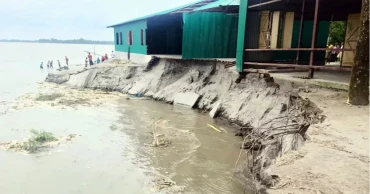
School relocation dispute leaves Gaibandha char children’s education in limbo
Children in the remote char areas of Phulchari upazila have battled for generations more than poverty and distance to attend school.
They have also had to contend with a shifting landscape as the Jamuna and Brahmaputra rivers repeatedly swallow their homes, roads and educational institutions.
Now, a dispute over the relocation of a primary school has added another obstacle, disrupting classes and leaving the education of scores of children uncertain.
Angaridah Government Primary School, established in 1946 through the initiative of local residents, was intended to bring education closer to children living in the char areas of Gajaria Union.
But the school has struggled to maintain a permanent home.
Repeated river erosion has forced it to move several times over the decades. According to local residents, the school has been washed away or relocated at least 12 times since its establishment.
Following the devastating floods and erosion of 1988, the school was re-established in Angaridah char.
Yet, once again, the relentless advance of the Jamuna has forced it to abandon its latest location.
A school on the move
As the river continued to eat away at the school grounds, its structure was dismantled.
Educational materials, furniture and corrugated iron sheets were also removed and transported to a remote part of nearby Ziadanga char, where the school was reassembled.
The move, however, has sparked a dispute between two groups of local residents.
Some villagers alleged that an influential group deliberately selected the isolated location to serve its own interests.
They argued that the site is far from the main settlement and unsuitable for a school serving children from the wider community.
Others have demanded that the school be moved to a more populated area, closer to the children who need it most.
The disagreement has created tension in the community and disrupted the normal functioning of the school.
In an effort to keep education going, teachers have set up a makeshift shed at the new site and resumed classes. But the temporary arrangement has done little to resolve the problems facing students and teachers.
Learning under a tin roof
Attendance has reportedly dropped sharply since the school moved to the remote section of Ziadanga char.
Many students are reluctant to make the journey to the new location.
For those who do attend, the learning environment is far from ideal.
The tin-roofed structure stands on a sandy riverbank, where temperatures rise sharply during the day.
Rain further disrupts classes, making it difficult for students to concentrate and teachers to continue lessons, said students and their guardians.
The shortage of space has compounded the problem. Three classes are being conducted simultaneously in the same room, creating an environment in which effective teaching is extremely difficult.
Local residents also said the dispute has affected teachers’ attendance, with some reportedly failing to attend classes regularly.
Search for a solution
Concerned over the situation, Phulchari Upazila Nirbahi Officer (UNO) Mostafizur Rahman and officials from the Upazila Education Committee recently visited the school to assess its condition.
Following the visit, they recommended relocating the school to a densely populated area near Ziadanga Mosque, where a larger number of students live.
The proposed site, officials believe, would provide children with easier access to the school and help create a more suitable learning environment.
However, local residents alleged that some influential people are opposing the proposed relocation, prolonging the dispute and leaving the future of the school uncertain.
Gajaria Union Parishad Chairman Khorshed Ali Khan Khushu said the decision to establish the school near Ziadanga Mosque has been taken in accordance with government regulations.
He said continued obstruction to the relocation would ultimately harm the students and urged all concerned to cooperate in ensuring a suitable learning environment.
5 days ago
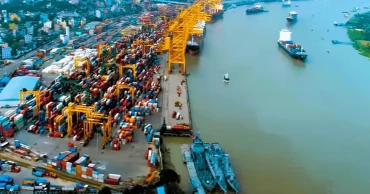
Govt plans measures to improve business climate, diversify exports
The government plans to take a series of measures to improve the cost and ease of doing business, attract foreign investment, diversify exports and promote balanced industrial development across the country, according to a budget document.
Giving priority to deregulation, the government plans to streamline investment-related services, fully digitalise them and integrate them with the Bangladesh Investment Development Authority’s One-Stop Service (BIDA-OSS) platform.
It also plans to strengthen coordination among investment promotion agencies through an interactive website and map investment-related services sector by sector.
The government will further develop BanglaBiz as a single digital platform for business approval services to provide investors with faster, predictable, coordinated and transparent government services.
To attract foreign direct investment, it plans to promote 19 promising sectors identified in an investment heat map.
The government has set an export target of $63.4 billion for the 2026-27 fiscal year, aiming for 15 percent growth in both goods and services exports, Commerce Minister Khondakar Abdul Muktadir announced recently.
There are already signs of stronger investment interest. The Bangladesh Export Processing Zones Authority (BEPZA) said they secured investment proposals worth $717.71 million from 36 companies in FY2025-26, the highest annual commitment in its history.
The proposed projects are expected to create 75,744 jobs once fully operational.
BEPZA-run zones also generated $8.41 billion in exports in FY26, accounting for 17.51 percent of the country’s total merchandise exports.
BEPZA is also planning to establish new export processing zones in Patuakhali and Jashore.
The Patuakhali EPZ is expected to create employment for nearly one lakh people, while the Jashore EPZ is expected to generate around 1.5 lakh jobs.
The establishment of Rangpur EPZ in Gaibandha and Sirajganj EPZ in Sirajganj is also in the pipeline.
The government plans to expand digital services under the Bangladesh Economic Zones Authority (BEZA), where 60 of its 125 services have already been brought online. Standard Operating Procedures have been prepared for 88 services.
The Cabinet in July approved in principle three major policy measures, including the draft Invest Bangladesh Act, 2026, the National Renewable Energy Development Strategy (2026–2030) and the Import Policy Order, 2026–2029, aimed at improving the investment climate, expanding renewable energy and updating the country's import framework.
It also plans to promote environmentally sustainable industrialisation through the Green and Resilient Economic Zone guidelines, renewable energy facilities, solar power systems and Central Effluent Treatment Plants.
Economic zones are planned in Kurigram, Nilphamari, Chandpur and Kushtia to reduce Dhaka-Chattogram-centric industrialisation and support balanced regional development.
Ahead of Bangladesh’s graduation from the Least Developed Country category, the government plans to pursue Free Trade Agreements, Preferential Trade Agreements and Economic Partnership Agreements with potential trading partners to maintain the country’s competitiveness in global trade.
The government also plans to reduce dependence on ready-made garments, which currently account for nearly 82 percent of export earnings, by promoting handicrafts, home décor items, jute products, natural cosmetics, toys and baby products in international markets.
Facilities will be extended to promising export-oriented sectors, including agricultural products, light engineering, pharmaceuticals, electronics, gold and diamonds, to import goods under customs bonded facilities or against bank guarantees on a duty-free basis.
The government plans to diversify export markets by giving priority to Latin America, Africa, Central Asia, the Middle East and various European countries.
It also plans to expand online trade services, including electronic Certificates of Origin through the Business Single Window platform, and develop an Interactive Exporters Database to help exporters identify and connect with foreign buyers.
The government plans to modernise laws and policies for safer and environmentally sustainable shipbreaking, shipbuilding and ship recycling.
Policy support will also be provided for energy-efficient and environmentally friendly electric bikes and scooters.
For cottage, micro, small and medium enterprises, the government plans to develop service platforms, update SME cluster mapping, expand financial inclusion and launch programmes to create new entrepreneurs.
It also plans to provide mentorship, technical and skills training, financing, export support, design and branding assistance and access to domestic and international marketplaces for CMSMEs.
The government plans to accelerate industrialisation in unused BSCIC plots, develop existing industrial areas, expand industrial park capacity and introduce investment-friendly policies.
Under the National Green Industrial Policy, incentives will be introduced to promote energy-efficient technologies, waste-to-resource production and low-carbon industrialisation.
The government also plans to implement Bangladesh Bank’s Tk 60,000 crore Stimulus Package-2026 for agriculture, cottage and small industries, SMEs and sick and closed industrial enterprises.
Of the package, Tk 41,000 crore will come through a refinancing fund and Tk 19,000 crore from Bangladesh Bank’s own resources.
The package includes Tk 20,000 crore for reopening closed industries and supporting the service sector, Tk 10,000 crore for agriculture and rural economic activities, Tk 5,000 crore for CMSMEs, Tk 3,000 crore for export diversification and Tk 3,000 crore to develop North Bengal as an agricultural hub.
The government expects these initiatives to create more than 2.5 million direct and indirect jobs.
It also plans to provide a 6 percent interest subsidy to support expansion of production activities, reducing the effective borrowing cost for entrepreneurs to less than half the prevailing market-based interest rate.
6 days ago
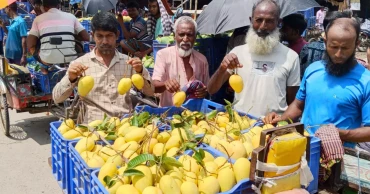
Katimon keeps Naogaon mango market brisk in off-season
While the season for popular mango varieties such as Amrapali, Fazli, Gopalbhog and Himsagar has ended, Katimon mangoes are keeping Naogaon’s markets active in the off-season.
At Sapahar, the district’s largest mango market, farmers are bringing fresh Katimon from their orchards and buyers are continuing to purchase the fruit even after the traditional mango season.
A visit to the Sapahar market on September 10 and 11 found the market bustling with Katimon mangoes. Farmers arrived with their produce in vans, while buyers gathered to purchase the fruit.
Local residents said the busy market looked much like the peak mango season, although other popular varieties are no longer available.
Mangoes are traditionally associated with a particular season in Bangladesh. Amrapali usually arrives early, followed by varieties, including Nak Fazli, Himsagar, Haribhanga, Gobindabhog, Langra and Gopalbhog. By the end of the regular season, mango supplies normally decline sharply.
Katimon, however, has changed that pattern. Commercial cultivation of the variety has expanded in Naogaon in recent years because it can produce fruit several times a year.
Mansur Ali, a farmer from Haripur, said he cultivated Katimon on 5 bighas of land and is happy with the yield.
“I asked for Tk 8,000 per maund, while traders offered Tk 6,500. I will sell if I get Tk 7,000,” he said, adding that prices vary depending on the quality of the fruit.
Farmers Rezaul and Siddiqur Rahman of Balukadanga said demand for Katimon remains strong because other varieties are unavailable at this time.
The weather was favourable and the yield was good this year, they said, hoping of expanding their cultivation in the future.
Consumers are also happy to find fresh mangoes in the market at a time when the regular season has ended.
Pradip, a local buyer, said he has never seen such a busy Katimon market before.
“Mangoes are not usually available at this time. Seeing such beautiful fruit makes me want to buy some for home,” he said.
7 days ago