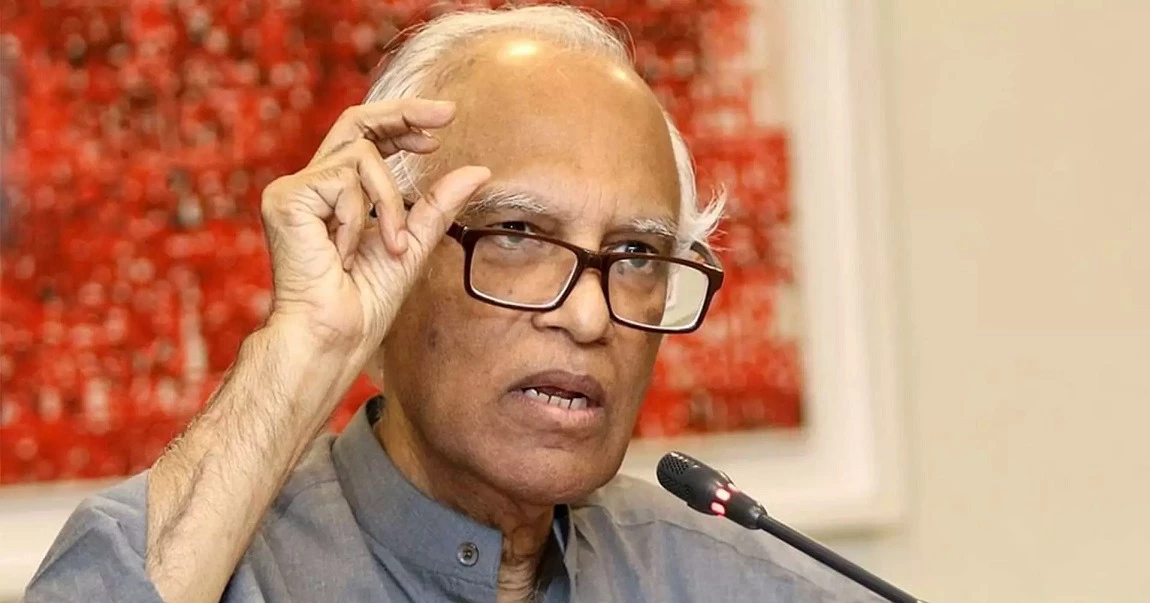
Planning Adviser Dr Wahiduddin Mahmud on Wednesday said the government will no longer take foreign loans merely because they are available, emphasising that external financing will now be reserved for essential projects aligned with national priorities.
In the past, loans from the World Bank, IMF, ADB and other development partners were often accepted as a matter of principle, irrespective of actual need or the merit of the projects, the Adviser said while briefing reporters after the ECNEC meeting.
February polls to be peaceful, festive despite attempts to delay: Prof Yunus
“This is not a sound economic policy. We no longer want to burden the country with unnecessary debt just because concessional loans are offered,” he said.
The Adviser explained that as Bangladesh graduates from Least Developed Country (LDC) status, concessional loans with low interest and longer repayment schedules will gradually disappear.
For this reason, the government is carefully choosing which projects should be financed with external borrowing.
“If a project is not a genuine priority, we are not interested in taking a loan for it. On the other hand, if a project is essential and concessional finance is available, we will consider it,” he added.
He also disclosed that several large foreign loan-dependent projects are currently on hold at his desk.
“I will not name them, but some stakeholders are unhappy because we have stopped projects that are not justified. We want this policy shift to continue beyond our time, so future governments also don’t take loans unnecessarily,” the Adviser said.
Bangladesh not ready yet to tap booming $1 trillion semiconductor industry
Rising costs of major infrastructure schemes remain another concern. Citing examples of metro rail and highways, he said Bangladesh is paying more per kilometer than neighboring countries.
“Foreign financing does not guarantee efficiency. Local and foreign vested groups often push up costs. This needs to be studied in depth,” he said, adding, “From now on we will design projects according to our priorities and then approach development partners for financing. Not the other way around.”