
The first 21 days of the BNP-led government under Prime Minister Tarique Rahman have set a strong precedent for governance, sending a message that a new, democratic Bangladesh is moving decisively towards development, good governance, accountability, and the empowerment of its people.
The new BNP government has already taken a series of positive steps aimed at improving administrative efficiency, strengthening law and order, stabilising the economy, and restoring public confidence, marking what many observers describe as an encouraging start.
These early initiatives have attracted widespread attention across the country’s political arena, media, and public discourse.
A different style of leadership
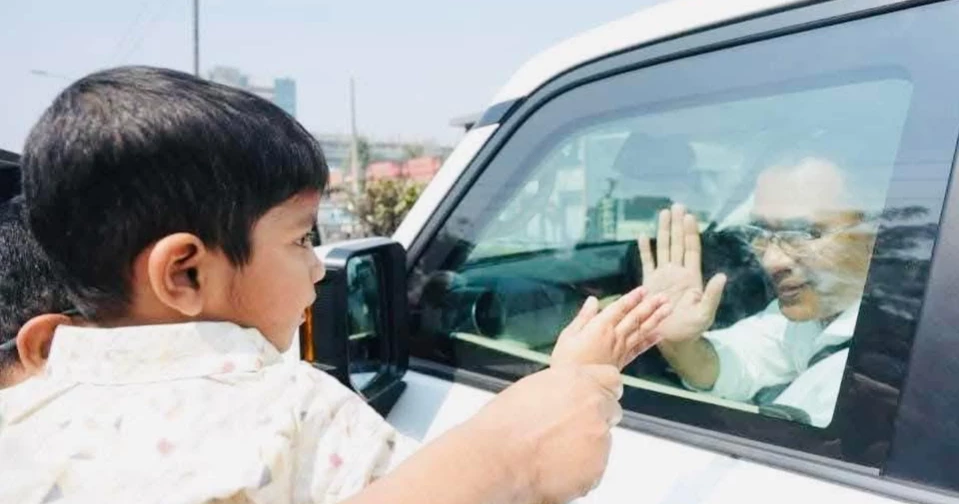
Soon after taking office, Tarique Rahman signaled a shift in political culture by presenting himself as a leader who wants closer engagement with ordinary citizens.
Observers say his public appearances and relatively simple movements without extensive protocol have attracted public interest.
In several instances, the Prime Minister’s motorcade was seen following normal traffic signals, which many view as a symbolic gesture of respect for rules that apply to everyone.
Government officials say the Prime Minister has set economic recovery, employment generation, anti-corruption efforts and improved governance as key priorities.
He has also repeatedly highlighted the role of young people as a driving force behind national development, stressing the importance of education, technology and skills training to prepare them for future opportunities.
Change in Traffic and Protocol
The Prime Minister’s simple style of movement, without heavy VIP protocol, has already brought positive changes to traffic management.
Even as a head of government, his modest approach is a rare example in Bangladesh’s political history.
In just 21 days, the average vehicle speed on Dhaka’s roads has increased from 4.5 km/h to 5.3 km/h. Where over eighty lakh work hours were previously lost daily due to traffic congestion, this single initiative has already begun saving a significant portion of that time.
Officials say limiting large VVIP security arrangements has had a visible effect on traffic management in the capital.
Transport analysts estimate that the average vehicle speed in Dhaka has slightly increased in recent weeks, which they partly attribute to fewer road closures for official convoys.
To explore long-term solutions to traffic congestion, the prime minister held a meeting with experts from Bangladesh University of Engineering and Technology led by transport specialist Shamsul Haque on March 2.
Until recently, such scenes on the roads were unheard of, with streets, pavements, and even footbridges closed for government convoys. Prime Minister Tarique Rahman has ended this practice.
His motorcade now respects traffic signals, setting an example that encourages citizens to follow the law. Limited VIP protocol, greeting people at signals, and taking selfies with the pedestrians have changed public perception.
The Prime Minister has also abolished the formal reception of ministers and service chiefs during his foreign trips, a move widely praised.
New social welfare cards
The government has begun work on several card-based welfare initiatives aimed at improving living standards of the people and enhancing public service delivery.
The “Family Card”, one of the key promises in the BNP’s election manifesto, was launched in a pilot programme for women-led households, fulfilling his election pledge to support women’s empowerment, economic inclusion and social justice.
Just three weeks after the formation of government following a massive election victory, the Prime Minister launched the Family Card at T&T playground in Banani (adjacent to Korail slum) in his constituency.
Officials say similar initiatives are being planned, including a “Farmers’ Card” that will provide farmers with easier access to agricultural services and financial support.
“Just as we were able to provide Family Cards to 37,000 women at today’s event, Inshallah, we will distribute Farmers’ Cards to our farmers next month,” Tarique Rahman said while launching the Family Card.
A “Probashi Card” is also under consideration to improve services for Bangladeshi migrant workers, while an e-health card programme is being prepared to expand healthcare access at the community level.
Expatriates’ Welfare and Overseas Employment Minister Ariful Haque Chowdhury said the Probashi Card will be launched soon in line with Prime Minister Tarique Rahman’s 180-day priority plan.
Following the Prime Minister’s guidelines., he also said they have started discussions to reopen labour markets in several Middle East countries where opportunities for Bangladeshi workers have recently declined or been closed.
To bring healthcare services closer to people’s doorsteps, Prime Minister Tarique Rahman on 4 March directed the health minister to take necessary steps to introduce the e-Health Card.
He also instructed the authorities to begin the recruitment process for 100,000 health workers—80 percent women and 20 percent men—within a short time.
Administrative discipline
In the first week after taking office, the Prime Minister has all government officials and employees to arrive at their offices by 9am
Ministers and senior officials have also been asked to monitor attendance and service quality in public offices.
The Prime Minister himself has been attending office on time regularly, including on Saturdays, which are usually government holidays.
Police reforms
The government is focusing on structural reforms rather than merely changing uniforms to create a more people-friendly police force.
The Home Ministry has sought support from Japan in areas such as police training, management, traffic control, technology, and infrastructure.
Adopting Japan’s policing system as a model, the ministry has decided to establish modern police policies in Bangladesh.
On 3 March, an executive meeting was held between the Home Minister and the Japanese ambassador to discuss these initiatives.
Managing the Middle East crisis
Within the first 20 days in office, the BNP government faced a major crisis arising from the Iran-Israel-US conflict in the Middle East, which put pressure on Bangladesh’s energy sector.
The government acted swiftly, with Prime Minister Tarique Rahman ordering the purchase of four LNG cargoes from the spot market in March.
He also instructed Bangladesh Bank to ensure sufficient foreign currency reserves for private-sector LNG imports.
Beyond purchasing energy, the government took steps to manage the crisis through conservation measures. Public, private, and autonomous institutions were directed to save energy, and private vehicle use was discouraged with limits on fuel purchases—measures expected to play a critical role in energy conservation even in emergency situations.
“Bangladesh first” diplomacy
In his first press briefing after winning the election, Tarique Rahman outlined a foreign policy approach centred on national interests.
He clearly stated that the government’s foreign policy will prioritise “Bangladesh first.”
The Ministry of Foreign Affairs has reinforced this message, saying the government will maintain diplomatic relations with all countries with a firm and upright approach.
Although diplomatic tensions had arisen with India during the interim government, relations have improved noticeably under the BNP administration as while visa issuance for Bangladeshis had almost halted, it is now gradually increasing.
Within the first 20 days of the BNP government, US Assistant Secretary for South and Central Asian Affairs S Paul Kapur, visited Bangladesh and held discussions with BNP representatives.
The talks covered aspects of the U.S.-Bangladesh trade agreement as well as broader efforts to strengthen bilateral relations.
Political courtesy
Before taking the oath on 17 February, Prime Minister Tarique Rahman, after winning the election, chose not to hold his party’s victory rally.
Instead, he personally met with the leaders of the two defeated parties, including Shafiqur Rahman, Amir of Bangladesh Jamaat-e-Islami, and Nahid Islam, convener of the National Citizens’ Party—a unique act of political courtesy in Bangladesh’s history.
He also attended the Jamaat-e-Islami Iftar party and BNP senior leaders participated in the one-year anniversary of the NCP, moves aimed at preventing hostility and sending a message of political goodwill.
Market monitoring during Ramadan
The government took office just as the holy month of Ramadan began, raising concerns about possible price spikes in essential commodities.
However, regular monitoring by the Commerce Ministry has so far kept prices of several essential items relatively stable, officials say.
Boosting Business Confidence
During the interim government, around 400 factories had been shut down, undermining business confidence.
On his first day in office, the new Governor of Bangladesh Bank announced that these factories would be reopened and also indicated a reduction in policy interest rates.
These measures have restored entrepreneurs’ confidence, and despite past challenges, they are now seeing renewed prospects for investment and economic growth.
Business leaders say they are cautiously optimistic about the economic outlook.
Education reform plans
The government has also directed the Education Ministry to work on long-term reforms aimed at improving education quality and aligning the system with international standards.
Officials say preparations are underway for the upcoming secondary school certificate examinations, while curriculum updates are also being considered.
Relief for farmers
One of the first cabinet decisions was a plan to waive agricultural loans of up to Tk10,000 for farmers, including those involved in crop farming, fisheries and livestock.
Officials say the measure could benefit more than a million farmers and ease financial pressure on rural households.
Crackdown on mob violence and extortion
During the interim government, around 500 people were victims of mob violence, with over 250 killed. On its first working day, 18 February, the BNP government declared an end to all forms of mob culture. Police Chief Ali Hossain Fakir reinforced the message, stating that while citizens can pursue their legitimate demands democratically, creating chaos through mob violence will no longer be tolerated.
The government has also taken a firm stance against mob violence and extortion.
Home Minister Salahuddin Ahmed announced that such activities would not be tolerated, while police have been instructed to strictly enforce law and order.
Protecting press freedom
During the interim government in December, two leading Bangladeshi media outlets, Prothom Alo and Daily Star, were attacked and set on fire.
Within ten days of taking office, Home Minister Salahuddin Ahmed inspected the Prothom Alo building and announced that a charge sheet would be filed within two months, ensuring the perpetrators face the law.
Foreign Minister Khalilur Rahman also said the trial would send a clear message that no attacks on the media will go unpunished in Bangladesh.
Restoring police chain of command
After the fall of the Awami League government on 5 August, the police chain of command had completely collapsed and saw little improvement during the interim government.
Within the first 20 days of taking office, the BNP government restored the chain of command.
The Home Minister issued an order stating that no police officer may bypass their immediate senior to contact a higher-ranking officer, though senior officers may contact juniors if necessary. This single directive has brought significant structural reform to the entire police force in just 20 days.
While many of these initiatives are still at an early stage, analysts say the first few weeks of the BNP government have provided an initial indication of its priorities.