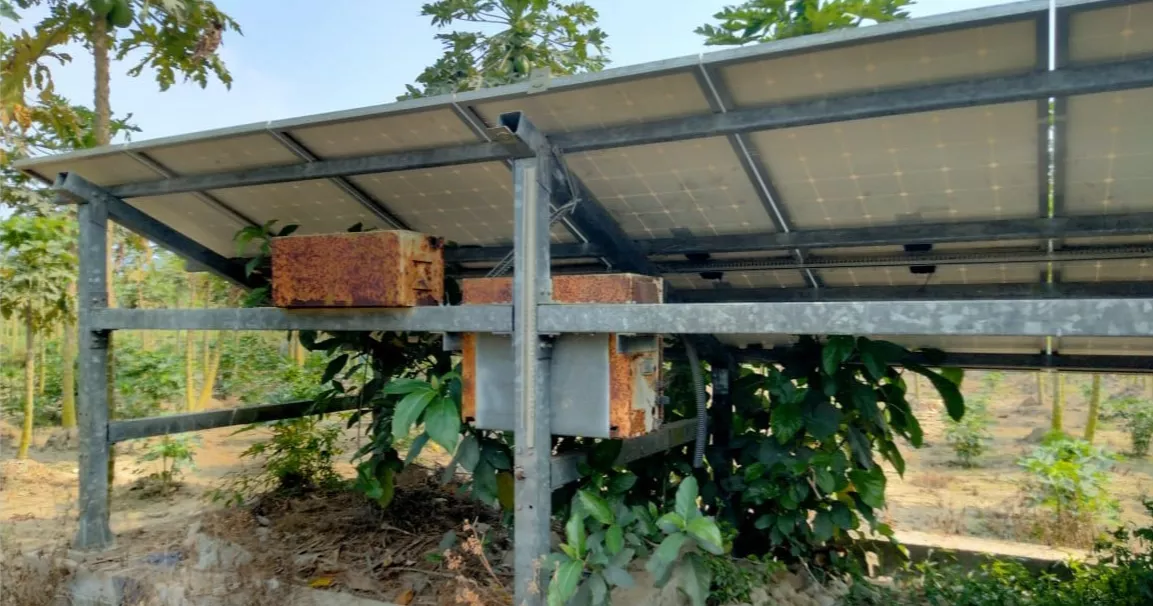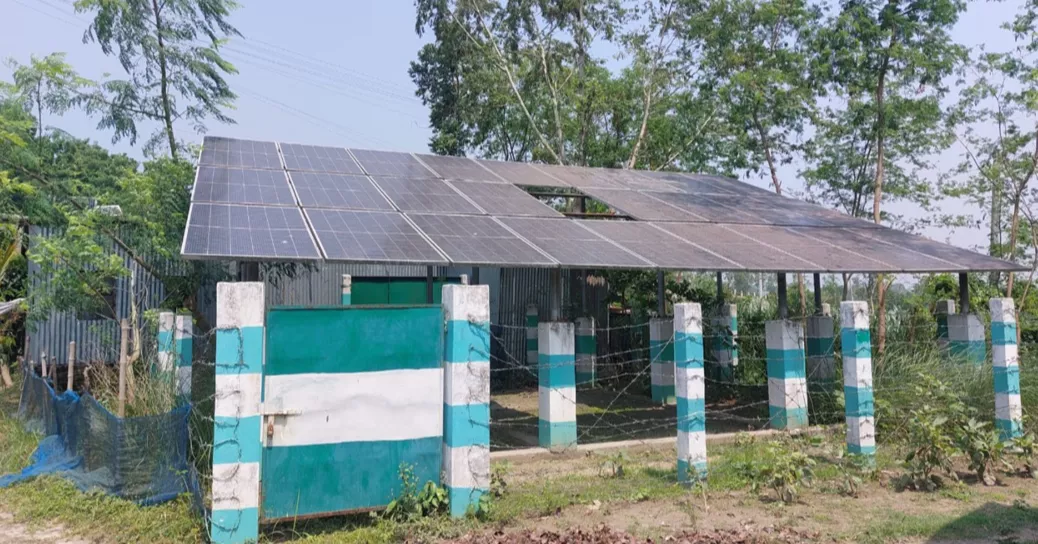
Solar irrigation projects in three upazilas of Manikganj have failed to deliver expected benefits, with all the pumps lying idle due to poor maintenance, weak management and technical faults, forcing farmers to rely on costly diesel amid the ongoing fuel crunch.
Farmers said the projects, introduced nearly a decade ago to cut farmers’ irrigation cost and dependency on diesel, are now lying non-functional.
Instead, farmers are struggling to irrigate their fields amid a growing diesel shortage and rising fuel prices.
A costly bridge in Manikganj waiting for roads
However, four pumps in Sadar upazila have remained functional, officials said.
Projects turn ineffective
In Singair upazila’s Rasulpur village, a solar irrigation pump installed in 2016 with support from a Korean organisation has remained out of service for years.
The pump, equipped with 24 solar panels and a generation capacity of 5.16 kilowatts, was initially able to irrigate around eight bighas of land.
Locals said the project worked well for the first two years, benefiting farmers with low-cost irrigation. However, the system collapsed after the solar panels were stolen at night.
However, the authorities concerned did not take any effective steps in this regard, rendering the pump to lie abandoned.
Farmer Abdul Halim said, “We got water easily at low cost in the beginning. But after the panels were stolen, no one came forward to restore the system.”
Another farmer, Idris Mia, said the local managing committee also became inactive, leaving the project completely abandoned.
Besides, the fate of a similar pump at Merundi in Harirampur upazila remained the same.
BADC project yet to start
A similar situation is observed in Ghior upazila, where one solar irrigation pump installed by the Bangladesh Agricultural Development Corporation (BADC) under a Tk 20.6 lakh project has remained non-operational for around five years since the beginning.
The pump, set up on the bank of the Dhaleshwari River in Char Ghior, were expected to provide irrigation to at least 70 bighas of land and benefit over 100 farmers.
A managing committee was also formed with local farmers, but the project never became functional.
During a field visit, it was seen that no water is being provided though pipes were installed.
Farmers are now relying on diesel and electric pumps to cultivate Boro paddy and other crops.
Several farmers alleged that they were promised affordable irrigation facilities, but no official is seen in years after installation. They also claimed that the local committee members remained inactive for the last two years.