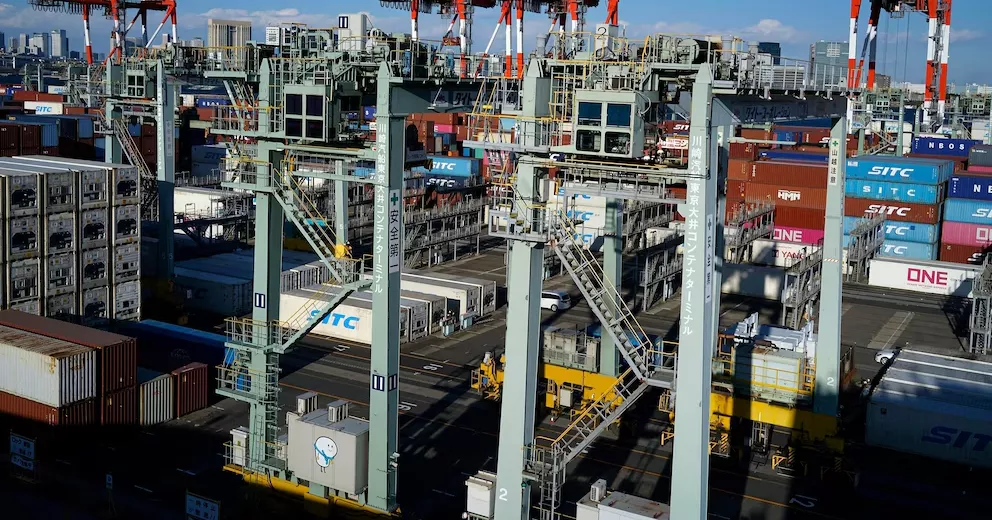
Japan recorded a 6% increase in exports in November from a year earlier, buoyed by a recovery in shipments to the United States, which rose for the first time since March after trade-related uncertainty eased following a tariff deal with the Trump administration.
Preliminary figures released Wednesday showed imports edged up 1.3% year-on-year, resulting in a trade surplus of 322.2 billion yen (about $2.1 billion).
Exports to the U.S. jumped nearly 9%, driven by stronger shipments of automobiles, chemicals and cameras, offsetting weaker demand for machinery and iron and steel. On the import side, purchases of U.S. oil almost tripled, while imports of grain and other food items also rose sharply.
Under the tariff agreement with Washington, most Japanese goods face a baseline import duty of 15%, instead of the previously proposed 25%. That helped lift passenger vehicle exports by 8% in volume terms, though their total value increased just 1.5%, suggesting automakers absorbed much of the higher tariff costs rather than passing them on to buyers.
Imports from the U.S. climbed more than 7%, yet Japan still posted a trade surplus with its largest trading partner of 739.8 billion yen ($4.7 billion), an 11% increase from a year earlier.
Luxury car sales slide in China as economic slowdown hurts European automakers
Exports to the European Union surged about 20%, supported by stronger demand for machinery, vehicles and other manufactured products. By contrast, shipments to China slipped 2.4%, reflecting weaker exports of chemicals, machinery and vehicles amid diplomatic strains.
Oxford Economics’ Norihiro Yamaguchi said higher tariffs will likely continue to restrain exports, though he expects Japan’s overseas shipments to strengthen next year, aided by spillover effects from robust U.S. spending on artificial intelligence.
Source: AP