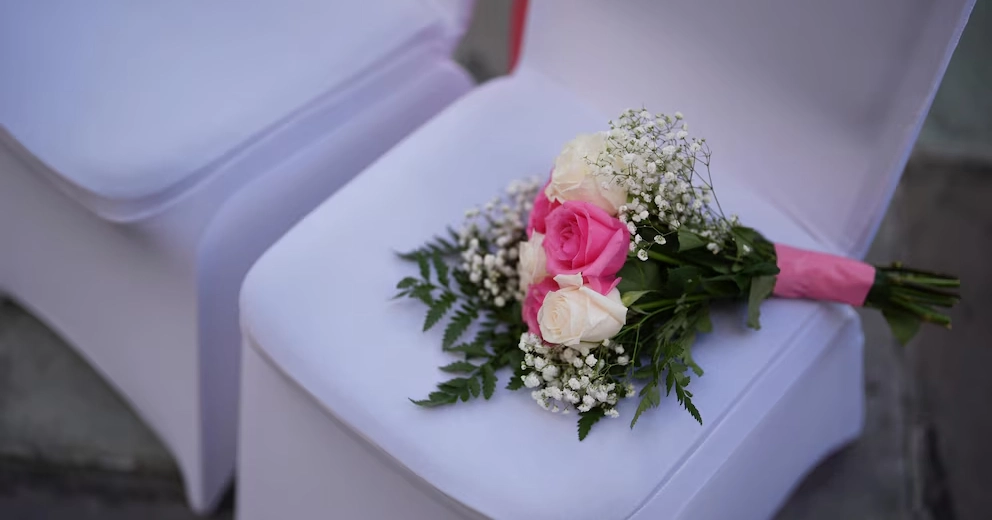
When Emily Day planned her October wedding in Calgary, she skipped a traditional florist and instead planted her own flowers — a creative experiment that opened her eyes to the environmental toll of the global flower trade. Her dried, homegrown arrangements cost far less than store-bought bouquets and lasted long after the ceremony.
Day and her fiancé built garden beds from wooden shipping crates and planted varieties such as yarrow, feverfew, strawflowers and statice. They harvested and dried the blooms in midsummer before the first frosts. On her wedding day, her autumn-themed bouquets included blue echinops from a nearby farm and tansy picked from roadsides. The entire project cost about 1,300 Canadian dollars ($925), significantly cheaper than hiring a florist. It also pushed her to consider the heavy carbon footprint of imported flowers — from plastic packaging to long-haul flights.
Younger generations planning weddings and special events are increasingly choosing eco-friendly alternatives: growing their own flowers, foraging wild blooms, opting for potted plants or working with florists who prioritize sustainability. Many businesses now focus on local sourcing and repurposing flowers after events.
The environmental cost of imported blooms
Imported flowers often travel from South America to North America through long, energy-intensive supply chains, said Kai Chan, a sustainability scientist at the University of British Columbia. Cut flowers require refrigeration and are frequently flown in — both major sources of greenhouse gases. Large-scale monoculture fields used for growing roses and other flowers also degrade soil and reduce biodiversity.
Chan said flowers grown by local farmers are typically a better choice, as they require less travel and are usually produced in ways more compatible with local ecosystems.
A shift toward local, seasonal choices
Omaha-based florist Holly Lukasiewicz of District 2 Florals prioritizes sustainable methods, from avoiding non-biodegradable green foam to sourcing local blooms. She offers composting services and preserves flowers for clients. She hopes customers increasingly embrace seasonal flowers instead of expecting any variety year-round.
King Charles III’s charity sells Christmas stockings sewn from Sandringham drapery
Imported flowers became dominant in the industry thanks to trade policies and cheaper production costs, said Neil Anderson, a horticulture professor at the University of Minnesota. While many consumers choose the least expensive option, others are willing to pay more for local, eco-conscious flowers.
Debra Prinzing, founder of the Slow Flowers Society, said local flowers can make weddings more personal: couples know exactly where the blooms come from, and seeing them again in bloom can bring back memories year after year.
The Knot’s editorial director, Esther Lee, said sustainability has become a priority for many couples who want their weddings to reflect the character of the region and include meaningful, local touches.
What about artificial flowers?
Artificial flowers are sometimes marketed as eco-friendly alternatives, but many are made from plastic and shipped long distances. Silvia Bellezza of Columbia Business School said buyers should look closely at manufacturer data rather than assuming artificial options are greener.
For Day, the benefits of her homegrown flowers continued after the wedding. Guests took arrangements home, and a friend later reused several pieces at her own ceremony. She said dried flowers can be reused repeatedly — and when they finally wear out, they can go straight into the compost bin.
Source: AP