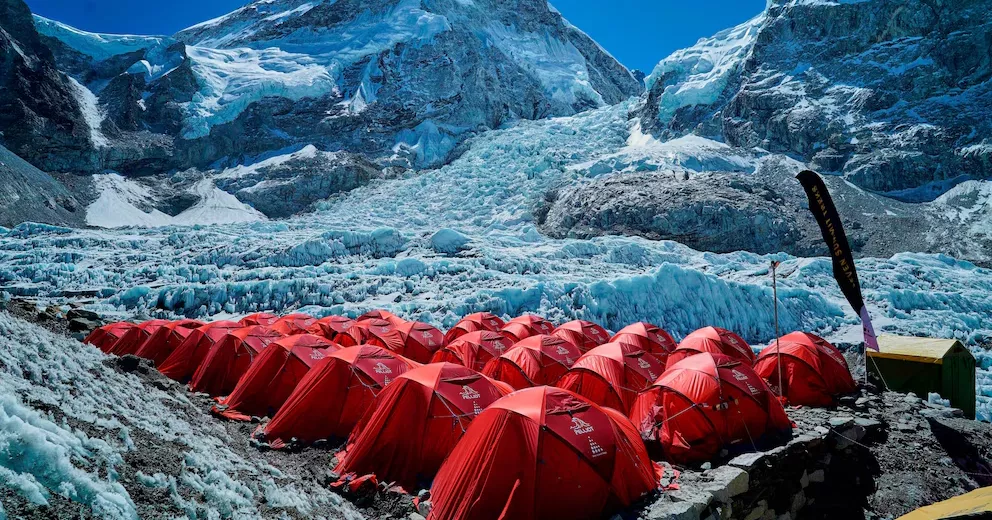
Hundreds of climbers are preparing to scale Mount Everest despite the danger posed by a massive unstable ice block on the route and rising travel and permit costs.
About 464 climbers, along with a similar number of Nepali guides, are now at Everest base camp waiting for the short period of favorable weather expected this month to begin their climb to the world’s highest peak, which stands nearly 8,850 meters high.
Climbers started arriving at the 5,300-meter-high base camp last month. However, their progress was delayed for more than two weeks because of a huge unstable block of ice, known as a serac, hanging dangerously above the main climbing route.
The elite “Icefall doctors” assigned by the Sagarmatha Pollution Control Committee usually complete the climbing route by mid-April by fixing ropes and placing aluminum ladders over deep crevasses.
This year, however, the route through the dangerous Khumbu Icefall was only opened on April 29.
The committee also warned climbers that the cracked serac could collapse at any moment and urged expedition teams to be extremely careful.
The newly prepared route passes below the unstable ice block, which remains a major concern for climbers and guides.
The Khumbu Icefall is considered one of the most difficult sections of the Everest climb because of its constantly moving glacier, deep crevasses and massive hanging ice formations, some as large as 10-story buildings.
A similar falling serac triggered a deadly avalanche in 2014 that killed 16 Nepali guides and workers.
Veteran mountain guide Lukas Furtenbach, who is leading a large expedition team this year, said the risk is serious.
“Anyone who says they are not concerned is either inexperienced or not paying attention,” he said from base camp.
He added that this year’s route is more exposed and difficult than last year’s in some sections because climbers must pass under unstable ice formations.
To reduce risk, Furtenbach said his team is carrying lighter loads, limiting time spent in dangerous areas and relying heavily on experienced Sherpa guides for safety decisions.
Other expedition companies are also warning climbers to move carefully, especially during warmer afternoon hours when melting ice increases the risk of collapse.
António Guterres visited Nepal’s mountains in 2023 and warned about the rapid melting of Himalayan glaciers caused by climate change and global warming.
Despite concerns over safety, the Iran conflict and rising travel expenses, climbing activity remains strong this season, according to expedition organizer Ang Tshering Sherpa.
He said the number of climbers from the United States and Europe has dropped, while more climbers from Asian countries are joining Everest expeditions.
China has closed the northern route to Everest this year, forcing all climbers to attempt the ascent from Nepal’s southern side.
Thousands of climbers have successfully reached Everest’s summit since it was first conquered on May 29, 1953, by New Zealand mountaineer Edmund Hillary and Sherpa guide Tenzing Norgay.