
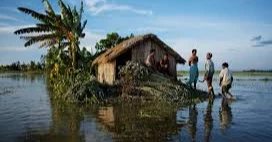
Bangladesh, long cited as a global hotspot and ground zero for climate change. Being swept by waves of recurrent disasters and intense weather, our nation of 170 million people frequently faces episodes of physical harm and severe outbreaks of vector-borne diseases.
The impact is deeply felt among the poorest, who constitute over a fourth of the population and depend heavily on a fragile public health system because private care is beyond reach. The poor are also the backbone of Bangladesh’s largely informal economy - when they are mostly sick, their livelihood gets affected.
Because Bangladesh lacks a universal health-insurance scheme, most health costs are borne out of pocket. In fact, Bangladesh has the second highest out-of-pocket expenditure in South Asia after Afghanistan. People in Bangladesh are financially exhausted from making medical expenses caused by frequent disasters and outbreaks of various diseases, pushing vulnerable families into debt and distress.
The most urgent hazard is the intensifying summer heat, especially in cities, including Dhaka, where millions of people live in slums. In these areas, inadequate utility services, high-rise surroundings that trap heat, and cramped living conditions combine to make people vulnerable.
Slums are the world’s most congested places, leaving people huddled and dehydrated. During summer, when power outages become frequent, slum people are forced to spend long hours on the streets at night, or work long hours in overheated garment factories or informal jobs — hawking or pulling rickshaws — in the daytime. In rural coastal zones, heat-waves and arid land hit farmers and informal labourers just as hard.
Chronic exposure to heat is the fate of millions in Bangladesh, including the poor living in the countryside, especially along the coast, where vast swathes of land lie parched during summer as heatwaves become more frequent all over Bangladesh.
Living constantly in the heat could be life-threatening. It can lead to heat exhaustion, heat stroke, heat cramps, neurological problems, and skin diseases. This is a big burden for a country where non-communicable diseases such as diabetes and heart and kidney diseases are alarmingly rising, largely because of unplanned urbanization and expansion of a rather unhealthy food industry.
The summer is now starting earlier than before, stretching into the monsoon and introducing new climate patterns from March through October. And the outlook is bleak - heat-wave frequency and intensity are projected to climb even higher.
Over the past few years, prolonged summers, featuring some of the longest heat waves in history, were accompanied by a clear shift in rainfall pattern, creating ideal conditions for the rapid spread of vector-borne diseases like dengue. Often, dengue fever coincides with flu season, when multiple other viruses also strike. People suffer from co-infection, heat diarrhea, and colds developing from incessant sweating.
Unusual rains also trigger flash floods, which cause injury and later lead to diarrhoea, skin infections, and crop destruction. A single flood may seem minor at national scale, but for individual families, especially farmers, a lost harvest means debt and hunger.
People, mostly farmers, also die in lightning strikes, floods, and cyclones. Along the coast, people are silently dying from drinking unsafe water due to the intrusion of salinity. An increasing number of low-pressure systems and cyclones are also hindering the incomes of the poor by affecting fishing, farming and other agricultural activities. Less income means less availability of food and funds for treatments.
Climate change is also taking a toll on mental health. Falling income while diseases and disasters increase naturally causes stress and anxiety. A reflection of the consequences of constantly living in stress and anxiety is evident in the ever-growing number of high blood pressure patients. Emotional wounds rarely make the headlines, though they leave deep marks on people’s lives.
Bangladesh’s overcrowded public hospitals and weak primary-health infrastructure are ill-equipped for this surge in climate-driven health problems. Many rural patients travel to urban centres for care, incurring significant travel and treatment costs, often resorting to high-interest loans when no collateral exists.
Every fever, every drip, every hospital visit cuts into the household budget. A simple mosquito bite can start a chain reaction that ends with a child missing class. What begins as a health issue soon spirals into a social and economic crisis.
More expenses than income means productivity loss. From a macro-economic perspective, this cycle matters. Rising out-of-pocket health costs reduce labour productivity and erode life expectancy and many more.
Early warning capacity needs strengthening. Developing an effective early warning system depends on the generation of reliable meteorological data, which needs investment to align it with public health planning. Some short-term steps can be taken to give people a respite from heat stress. Shaded public spaces and access to safe drinking water need to be increased. An awareness campaign on ways to deal with heat is required. Health insurance schemes and social protection programmes should be introduced and expanded to protect low-income families from falling into debt after illness. Climate related health concerns could be part of social insurance schemes. It is expected that the Government will include the climatic health concerns under the draft National Social Security Strategy (NSSS) 2026 and Action Plan 2026.
Health needs to occupy a more prominent position in our climate policies. It must be placed at the very center of adaptation and resilience strategies.
Health must move to the centre of our climate-adaptation agenda. If policymakers only count damaged crops or lost land, they will miss the true cost of climate change — exhausted parents and malnourished children.
When extreme weather makes people sick, or worse, kills them, investing in health is not optional; it is indispensable for sustainable growth and resilience.
Dr. Khondaker Golam Moazzem is a leading industrial economist in Bangladesh and Research Director at the Centre for Policy Dialogue (CPD), Dhaka. With over 30 years of experience, he has published extensively on social issues, workers’ rights, and sustainable development, including climate and energy policy, and actively advises government bodies and trade associations on inclusive and environmentally conscious policies.
The views expressed in this article are those of the author and do not necessarily reflect the official editorial position of UNB.