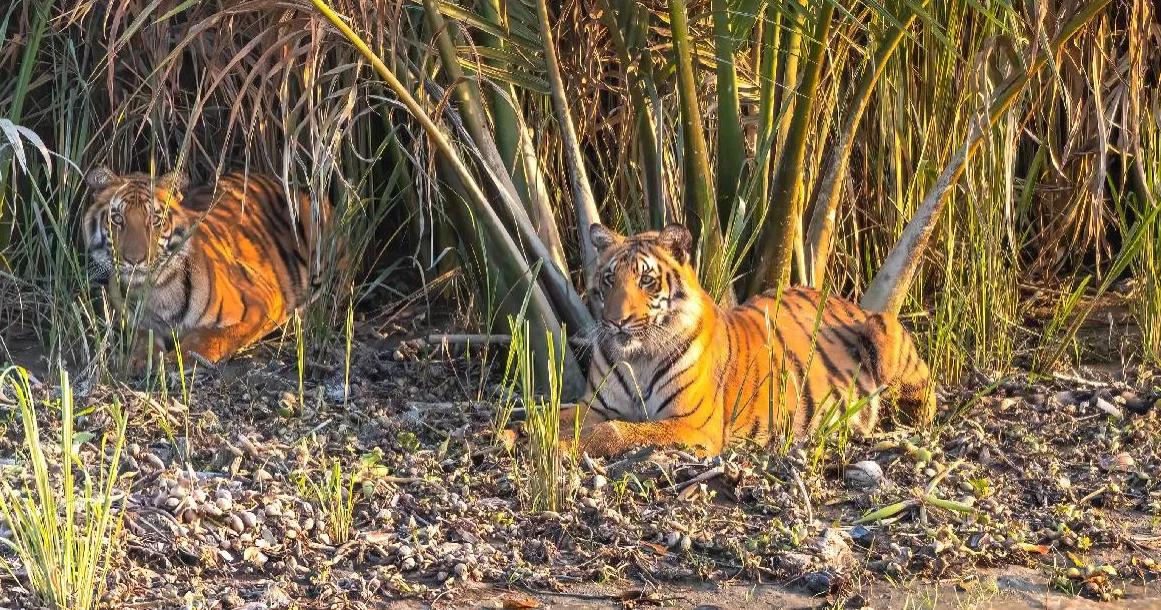
July 29, 2025, was the Global Tiger Day. WildTeam joined the Bangladesh Forest Department to celebrate this Day. Our theme was “Increase in Tiger Population, Prosperity of the Sundarbans.” WildTeam (formerly Wildlife Trust of Bangladesh) has been talking against deer farming in the country since 2010.
Being a deltaic country Bangladesh, had extensive forest reserves of which many are lost today. The remaining natural forests of the country not only hold a wide variety of wildlife but also serve as a protection from natural calamities like cyclones. In addition to this, millions of people also depend on forest resources to earn a livelihood. Needless to say, the sustainability of the forests is intertwined with the survival of the wildlife they hold. Therefore, if any species of fauna is threatened, it threatens the forest as a whole. Without wildlife, forests will not exist and so will we not. Indeed, no matter whether it is an urban dweller or a rural fisherman, our lives are directly or indirectly linked with our natural heritage.
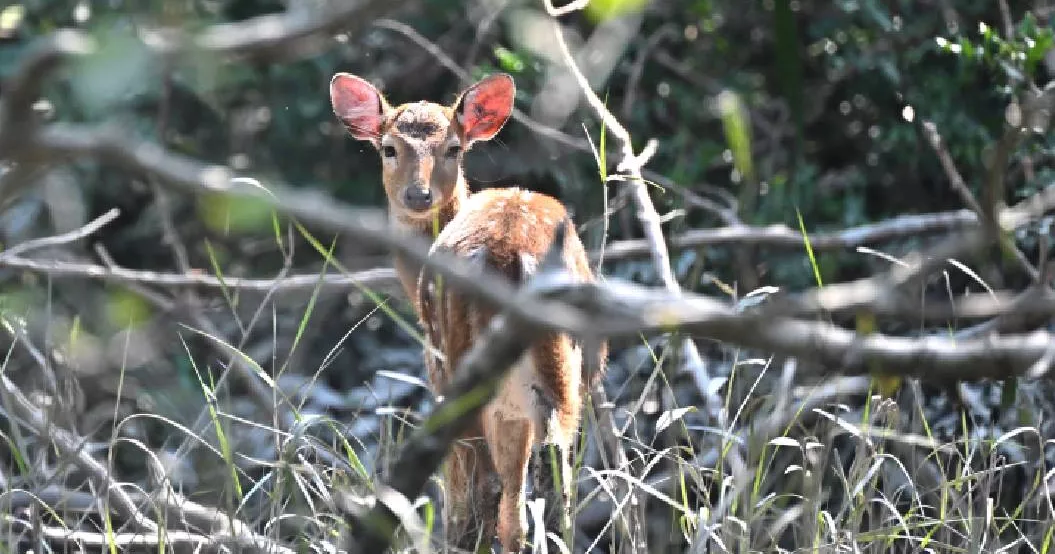
Among the many wild mammals found in Bangladesh one is the spotted deer, the majority of which are found in the Sundarbans. Apart from the Sundarbans, some introduced populations of spotted deer are also found in Nijhum Dwip of Noakhali and Char Kukri Mukri Wildlife Sanctuary in Bhola. Deer play an important role in the complex systems of a forest; large mammals such as deer can act as keystone species that determine ecosystem diversity and distribution through alteration of vegetation succession. For instance, foraging by deer affects the survival rate of herb, shrub and tree species. Deer also contribute to nitrogen cycling and disturbance regimes and they provide direct food for predators such as tigers. Indeed, spotted deer are the main food for tigers in the Sundarbans, and any decline in the wild population of deer will, in turn, directly affect the survival of our national animal. In summary, the removal of such keystone species will therefore risk the future of the whole ecosystem and its biodiversity.
Despite these risks, the Government of Bangladesh has formed a policy to allow commercial farming of spotted deer. The policy allocates the Forest Department and the Government Zoos the authority to sell wild spotted deer as the primary stock for farming thereby allowing anyone to raise spotted deer as ordinary farm cattle. The source of the primary deer stock for farming is not specified. The policy will be of concern to anyone who is well aware of the scenario that prevails in the communities adjoining the Sundarbans: lack of wildlife crime monitoring and inadequate law enforcement have led to out-of- control spotted deer poaching and consumption in and around the Sundarbans. As many as 11,000 deer per year are consumed in the eight upazilas adjacent to the forest. Indeed, the lack of law enforcement means that the poachers and consumers do not even fear getting caught. Some may argue that farming is an effective tool for reduction of poaching of wild animals.