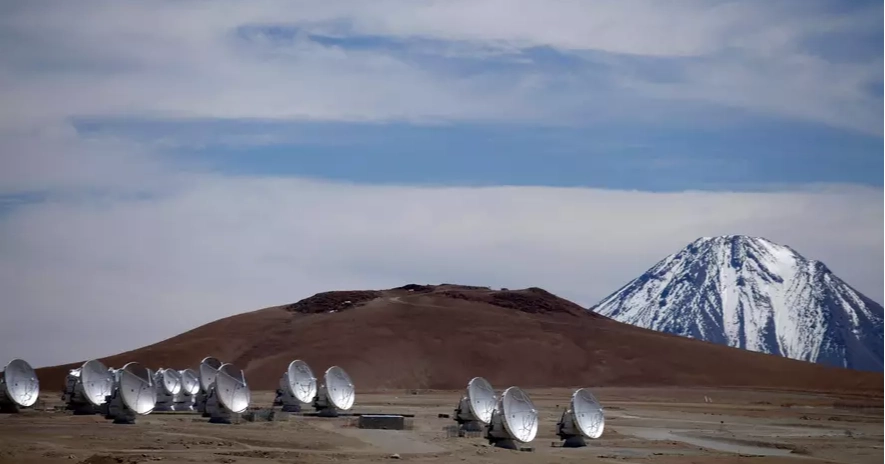
The Atacama Desert, one of the darkest and clearest night skies on Earth, has become a vital hub for astronomers studying the universe. Its dry climate, high altitude, and isolation from urban light pollution make it ideal for major ground-based telescopes.
But that pristine darkness faces a new threat, according to a group of leading scientists who issued an open letter to the Chilean government on Tuesday. A private company plans to build a massive renewable energy complex within sight of the Paranal Observatory, operated by the European Southern Observatory (ESO).
Thirty prominent astronomers, including 2020 Nobel laureate Reinhard Genzel, warned the project poses “an imminent threat” to humanity’s ability to study the cosmos. The scientists emphasized that damage to Paranal’s observations would affect researchers worldwide, from studying planet formation to exploring the early universe. They urged the government to balance economic development with the protection of one of Earth’s most irreplaceable scientific resources.
AES Andes, a subsidiary of U.S.-based AES Corp., said its studies show the project would comply with Chilean regulations and be compatible with astronomy. The proposed plan includes 3,000 hectares (7,400 acres) of wind and solar farms, a desalination plant, and a new port — all just 3 kilometers (1.9 miles) from Paranal. Experts warn this would increase light pollution by 35% and introduce dust, vibrations, and atmospheric turbulence, which could severely disrupt telescope observations.
Sanda Lizard: A fascinating reptile of the desert
“At the best sites in the world for astronomy, stars don’t twinkle. Even the smallest artificial turbulence would destroy these characteristics,” said Andreas Kaufer, ESO’s operations director. “If the sky brightens due to artificial light, observations are lost — and since we have the most sensitive telescopes at the best location, they’re lost for everyone.”
Chile hosts around 40% of global astronomical infrastructure, and the situation in the Atacama reflects a wider global tension between industrial development and preserving dark skies. Light pollution is increasing about 10% per year, putting other prime observatory locations — including Hawaii and Arizona — at risk.
“Major observatories have been forced to remote locations, and now even these last dark-sky sites are threatened by development and mining,” said Ruskin Hartley, executive director of DarkSky International, a nonprofit focused on preserving night skies.
Source: AP