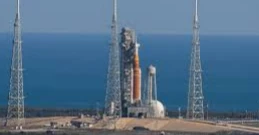
NASA has once again postponed the eagerly awaited Artemis II mission to the moon after encountering a new problem with the rocket on Saturday.
The earliest the four astronauts could now fly to the moon is April.
The latest delay came just one day after NASA had targeted March 6 for Artemis II, marking humanity's first moon flight in more than 50 years. Officials said the rocket’s upper stage experienced an interruption in the helium flow overnight. This helium is critical for purging the engines and pressurizing the fuel tanks.
This issue is unrelated to the hydrogen fuel leaks that delayed a previous countdown rehearsal earlier this month and led to a repeat test.
NASA Administrator Jared Isaacman suggested that a malfunctioning filter, valve, or connection plate might be causing the helium flow problem. Regardless of the exact cause, the solution requires returning the 322-foot (98-meter) rocket to its hangar for repairs.
“We will begin preparations for rollback, and this will eliminate the possibility of a March launch,” Isaacman said on X. He added that NASA’s next potential launch windows are in early or late April.
“I know this news is disappointing,” he continued. “The disappointment is felt most by the NASA team, who have been working tirelessly on this mission.”
Earlier, NASA had planned to move the rocket back to the Vehicle Assembly Building at Kennedy Space Center but also considered completing repairs at the launch pad. The situation remains fluid, said spokesperson Cheryl Warner. Whether the fixes are done at the pad or in the hangar, the preparations required for rollback rule out a March launch.
Hydrogen fuel leaks had already delayed Artemis II's lunar fly-by by a month. A second fueling test on Thursday showed few leaks, giving NASA confidence to target a March launch. The four astronauts entered their two-week quarantine on Friday evening as part of mandatory health protocols.
Isaacman stated that the helium system had functioned properly during both dress rehearsals, and the issue emerged later during routine testing, which kept engineers working through the night to assess the situation.
The interrupted helium flow is confined to the SLS rocket’s interim cryogenic propulsion stage, which is vital for placing the Orion crew capsule in the correct high-altitude orbit for systems checks after liftoff. The stage is also intended to separate from Orion, providing a target for the astronauts to practice docking maneuvers for future moon missions.
During NASA’s Apollo program, 24 astronauts flew to the moon between 1968 and 1972. The Artemis program, however, has completed only one flight so far—a 2022 lunar-orbit mission without a crew. That mission also faced hydrogen fuel leaks and a helium issue similar to the one on Saturday. A crewed moon landing under the Artemis program is still a few years away.