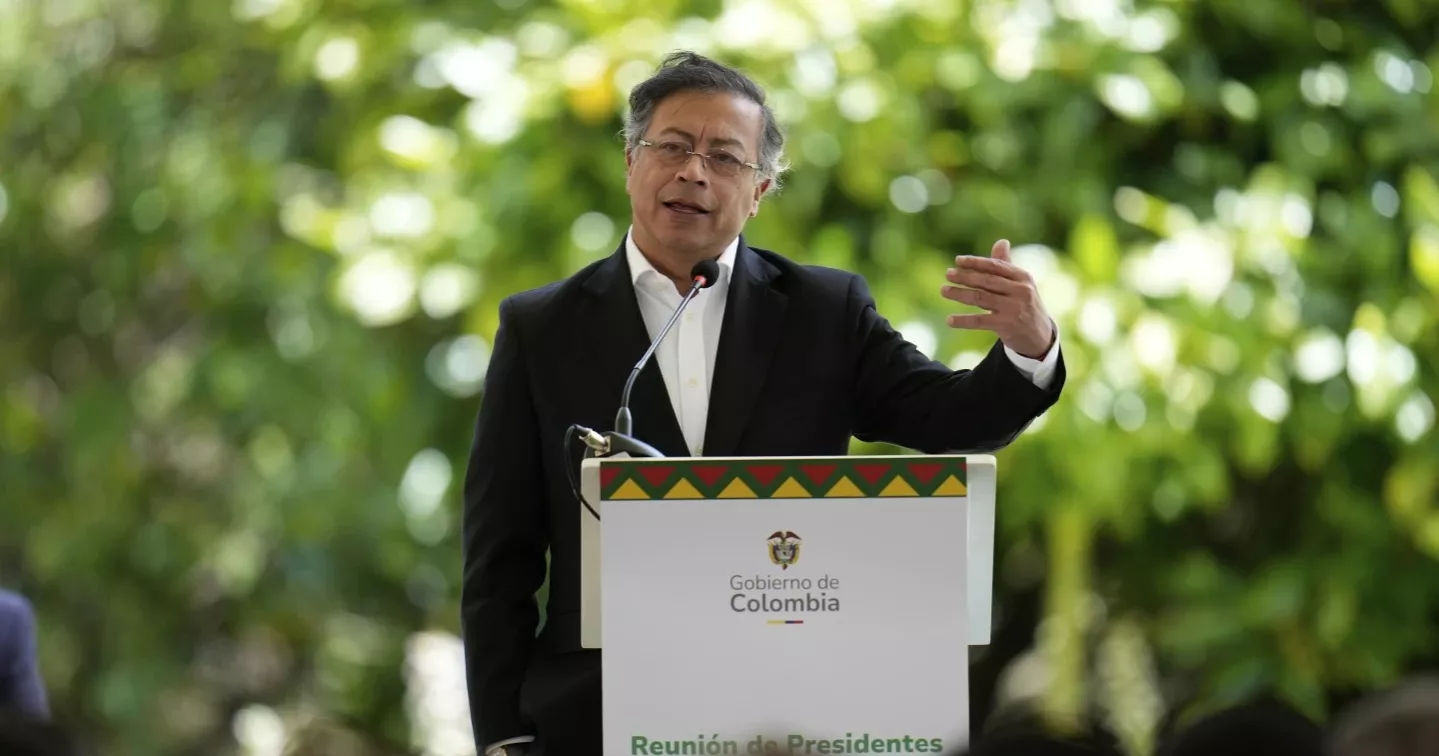
Colombian President Gustavo Petro strongly criticized the U.S. government on Tuesday after it placed Colombia on a list of countries deemed uncooperative in the fight against drugs for the first time in three decades.
In posts on his X account, the leftist leader accused the United States of trying to interfere in Colombian politics and seeking a “puppet president” ahead of next year’s presidential elections.
“The Colombian people will decide if they want a puppet president…or a free and sovereign nation,” Petro wrote, adding that he would not allow his country to “kneel” to U.S. interests or let coca farmers be mistreated.
The Trump administration’s decision on Monday cited Colombia’s failure to meet international commitments to combat drug trafficking and highlighted slow progress against the cocaine trade. Despite the decertification, Washington issued a waiver to avoid major cuts in U.S. aid.
U.S. embassy chargé d’affaires in Bogota, John McNamara, assured that consular services, humanitarian programs, and defense cooperation would continue. “We are going to do everything we can to fight with the Colombian people against the global threat of drugs,” he said.
Colombia’s decertification comes amid a surge in cocaine production, with coca cultivation nearly tripling over the past decade to a record 253,000 hectares in 2023, according to the U.N. Office on Drugs and Crime.
Petro, a former rebel, has also angered U.S. officials by rejecting extradition requests and criticizing Washington’s drug policies in Latin America, including its approach toward Venezuela. He has controversially claimed that whisky kills more people than cocaine and argued that rich nations target Latin American drug production for political reasons.
Analysts say decertification is unlikely to hinder Colombia’s counter-narcotics operations, as military cooperation with the U.S. is expected to continue. However, tensions between Bogota and Washington may rise, with Petro likely to use the issue to fuel anti-American sentiment and galvanize support ahead of elections.
The Trump administration’s report blamed Petro’s leadership for the rise in cocaine production, describing his negotiations with “narco-terrorist groups” as ineffective. While Colombia’s security forces were praised for their efforts, the report said the political leadership failed to meet drug control obligations.
U.S. Secretary of State Marco Rubio echoed the criticism, noting Colombia has historically been a strong partner, but under its current president, cooperation on tackling drug cartels has weakened.