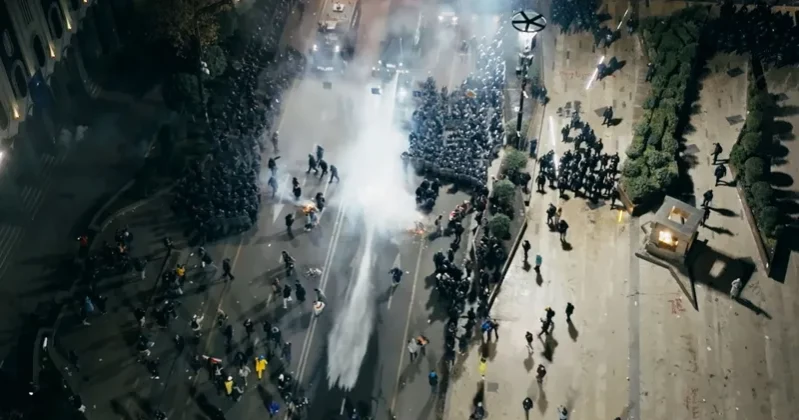
Evidence gathered by the BBC suggests that Georgian authorities used a World War One-era chemical agent, camite, against anti-government protesters last year, causing long-lasting health effects.
Protesters in Tbilisi, demonstrating against the government’s suspension of the country’s European Union accession bid, reported severe burning sensations when sprayed with water cannon, along with weeks of coughing, shortness of breath, vomiting, and fatigue. One protester, Gela Khasaia, said his skin burned and could not be washed off.
A study led by Dr. Konstantine Chakhunashvili, a pediatrician sprayed during the protests, surveyed nearly 350 participants and found that almost half suffered symptoms for more than 30 days. Sixty-nine were examined medically, revealing “significantly higher abnormalities” in heart electrical signals. The study has been peer-reviewed and accepted by the journal Toxicology Reports.
Chemical weapons experts, whistleblowers from Georgia’s riot police, and document evidence indicate that the water cannon likely contained camite, a potent chemical first used by France in World War One. Former riot police officer Lasha Shergelashvili said he had previously tested the chemical and warned against its use due to its persistent effects, but the cannons continued to be loaded with it until at least 2022.
An inventory obtained by the BBC listed chemicals coded UN1710 and UN3439, later identified as trichloroethylene and bromobenzyl cyanide (camite). Toxicology expert Prof. Christopher Holstege confirmed that clinical findings from protesters were consistent with camite exposure and inconsistent with conventional riot-control agents such as CS gas.
UN Special Rapporteur on Torture, Alice Edwards, called the use of the chemical “exceedingly dangerous” and said populations should never be subjected to experimental agents. She stressed that riot-control measures must have only temporary effects under international law, and described the reported symptoms as potentially constituting torture or ill-treatment.
Georgian authorities dismissed the BBC findings as “absurd” and said police had acted legally in response to “illegal actions of brutal criminals.”
The protests on Tbilisi’s Rustaveli Avenue have continued nightly for the past year, with demonstrators calling for the resignation of the government over alleged election rigging, pro-Russian policies, and restrictive civil society legislation. The ruling Georgian Dream party denied pursuing Russian interests, asserting that recent laws served public welfare.
With inputs from BBC