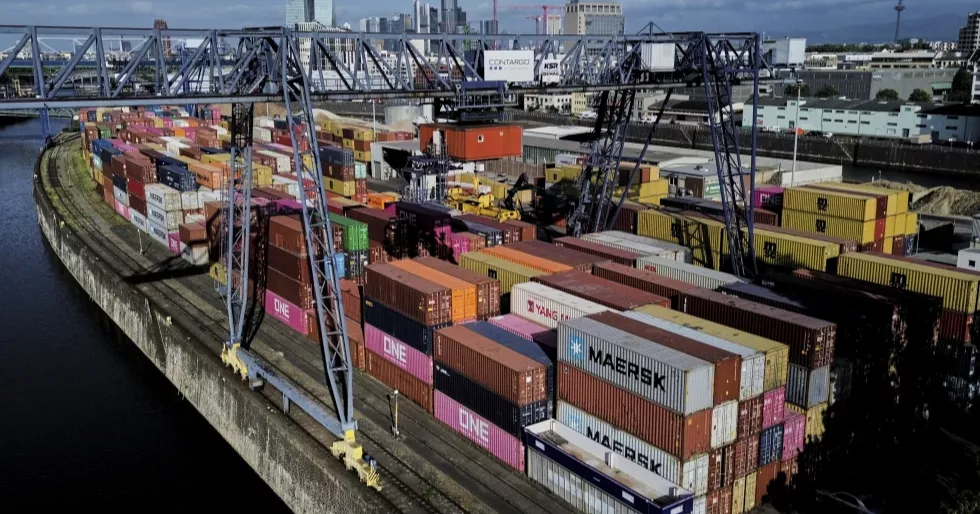
Germany’s economy, the largest in Europe, recorded a 0.4% growth in the first quarter of the year, driven by stronger-than-expected performance in exports and manufacturing, according to official data released on Friday. This marks a doubling of the initial estimate.
The Federal Statistical Office had previously stated at the end of last month that the economy grew by 0.2% in the January to March period compared to the previous quarter. Ruth Brandt, the head of the office, attributed the upward revision to “the surprisingly good economic development seen in March.”
UK inflation hits highest level in over a year as domestic bills spike
The last time Germany experienced higher growth was in the third quarter of 2022, when GDP rose by 0.6%. The country has faced persistent challenges in achieving strong economic growth, with the economy contracting in each of the past two years. In the final quarter of last year, GDP declined by 0.2%.
In its initial projection since the new government led by Chancellor Friedrich Merz assumed office earlier this month, the government’s panel of independent economic advisers forecast on Wednesday that GDP will stagnate in the current year and rise by 1% in 2026.
The panel cited challenges from tariffs and trade threats imposed by U.S. President Donald Trump but also highlighted the potential benefits from a significant infrastructure investment initiative introduced by Merz’s coalition.
Carsten Brzeski, global head of macro at ING bank, noted that the improved performance in the first quarter is likely “a positive one-off” in the short term, driven by companies rushing to act before Trump's tariffs take effect.
German police arrest a suspect, injured 5 people outside bar attack
“Due to the announced tariffs and in anticipation of ‘Liberation Day,’ German industrial production and exports surged in March,” Brzeski wrote in a research note.