Hamas announced Friday that it is still evaluating a U.S.-backed proposal for a temporary ceasefire in Gaza. Meanwhile, Israeli airstrikes claimed 27 lives, according to local hospital sources.
The proposal, already accepted by Israeli authorities, initially received a lukewarm response from Hamas. However, President Donald Trump stated Friday that negotiations were nearing a breakthrough. “They’re very close to a deal in Gaza,” Trump said, adding later, “They’re in a tough situation — I think they want a way out.”
While the U.S. has not publicly disclosed the full proposal, a Hamas and an Egyptian official revealed it includes a 60-day halt to hostilities, guarantees of negotiations toward a long-term truce, and a commitment from Israel not to resume fighting after any hostage release — a key concern following the collapse of a previous deal in March.
Earlier Friday, Hamas issued a short statement confirming it was consulting with other Palestinian groups after receiving the proposal from U.S. envoy Steve Witkoff.
UN spokesperson Stephane Dujarric called on all parties to demonstrate “political courage” and finalize an agreement.
Reportedly, the plan includes a partial withdrawal of Israeli forces to pre-ceasefire positions. In exchange for the release of 10 living hostages and some bodies by Hamas, Israel would free more than 1,100 Palestinian prisoners — including 100 serving life sentences for deadly attacks. During the truce, hundreds of aid trucks would be allowed into Gaza daily to combat widespread hunger caused by months of blockade.
Qatar’s ambassador to the UN, Alya Ahmed Saif Al-Thani, confirmed that talks involving Qatar, the U.S., and Egypt are continuing, expressing strong commitment to ending the crisis.
On Thursday, senior Hamas figure Bassem Naim criticized the U.S. proposal, saying it fails to meet key demands, especially the complete cessation of war and alleviation of starvation.
Meanwhile, the death toll in Gaza continues to rise. Hospital sources reported 27 deaths from Israeli strikes on Friday, including 13 killed — eight of them children — when a tent was bombed in Khan Younis. Another 12 bodies, including women, were recovered from Jabaliya refugee camp. At least 72 people were confirmed killed the day before, although figures from northern hospitals remain unavailable due to ongoing clashes.
According to the Gaza Health Ministry, over 54,000 Palestinians — mostly women and children — have died since the war began. The ministry does not separate combatants from civilians in its statistics.
The conflict erupted on October 7, 2023, when Hamas launched a deadly attack on Israel, killing about 1,200 people, mostly civilians, and capturing 250 hostages. Israel says 58 remain in Gaza, though it believes 35 are dead, and Prime Minister Benjamin Netanyahu has expressed uncertainty over the fate of several more.
On the ground in Gaza, residents remain skeptical about any peace deal materializing.
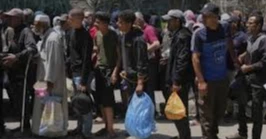
“This war is the nightmare of 2023, 2024, and now 2025,” said Mohammed Abed, a resident of Deir al-Balah. He described waiting hours for food, managing one meal a day, and calling the conflict a “war of starvation.”
Gaza ceasefire talks gain momentum as Israel accepts a US proposal
“Politics shouldn’t dictate who gets to eat or drink,” Abed said. Another resident, Mohammed Mreil, echoed the desire for peace: “We want to live — and we want them (Israelis) to live. We weren’t created to die.”