Iran has received a U.S. proposal to pause hostilities in the Middle East, officials said Wednesday, even as Washington continues to deploy paratroopers and additional Marines to the region.
Tehran has not publicly confirmed receiving the plan and dismissed the diplomatic effort, while continuing attacks on Israel and Gulf Arab states, including an assault that caused a major fire at Kuwait International Airport.
Key Points of the US Proposal
Two Pakistani officials, who delivered the plan to Iran, described the 15-point proposal broadly. It reportedly covers sanctions relief, a rollback of Iran’s nuclear program, limits on missile development, reopening the Strait of Hormuz, and restrictions on Iran’s support for armed groups, according to an Egyptian official involved in the mediation.
Many of the points were already contentious before the war. Iran has long insisted it will not discuss its ballistic missile program or regional militias, which it views as central to its security. Control over the Strait of Hormuz also represents a major strategic advantage.
US Military Reinforcements
At least 1,000 troops from the 82nd Airborne Division are scheduled to deploy to the Middle East in the coming days, sources told the AP. In addition, around 5,000 Marines trained for amphibious operations, along with thousands of sailors, are being sent to the region.
Diplomatic Hurdles
Egyptian and Pakistani officials suggested possible in-person talks between the U.S. and Iran could occur as soon as Friday in Pakistan. Special envoy Steve Witkoff, Jared Kushner, Secretary of State Marco Rubio, and Vice President JD Vance are involved in the U.S. team. Iran, however, denies engaging in direct talks with the U.S., with its Khatam Al-Anbiya Central Headquarters warning, “Not now, not ever.”
Israel, which has been urging continued military action against Iran, was reportedly surprised by the ceasefire proposal. Any negotiations face major challenges, including uncertainty over who in Iran has authority to negotiate, and Israel’s ongoing targeted strikes against Iranian leaders.
Ongoing Conflict and Casualties
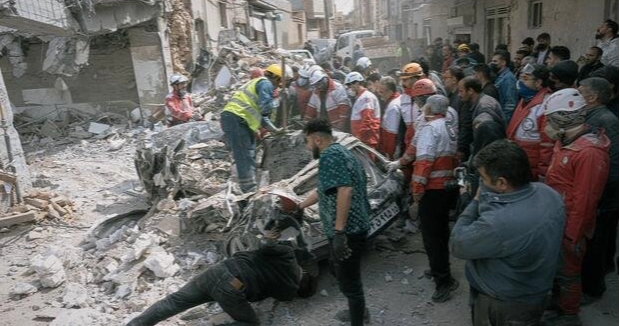
The Israeli military reported multiple airstrikes in Tehran and a strike on an Iranian submarine development center in Isfahan. Missile alerts have sounded repeatedly in Israel, while Hezbollah rockets continue to target northern Israel.
Iran also remains active against Gulf Arab neighbors. Saudi Arabia destroyed at least eight drones, and one Iranian drone hit a fuel tank at Kuwait International Airport.
Casualties are significant: Iran reports over 1,500 dead, Israel 20 (including two soldiers in Lebanon), and U.S. forces at least 13 killed. Lebanon has seen over 1,000 deaths, mainly from Israeli strikes on Hezbollah, and 80 Iraqi security personnel have been killed.
Impact on Energy Markets
Oil prices remain high due to Iran’s partial blockade of the Strait of Hormuz. Brent crude, which spiked near $120 a barrel during the conflict, dropped below $100 following news of potential negotiations but is still up roughly 35% since the war began. Iran confirms it charges ships for passage through the strait.
The ceasefire plan represents a potential first step toward de-escalation, though analysts warn substantial hurdles remain before any agreement can be realized.