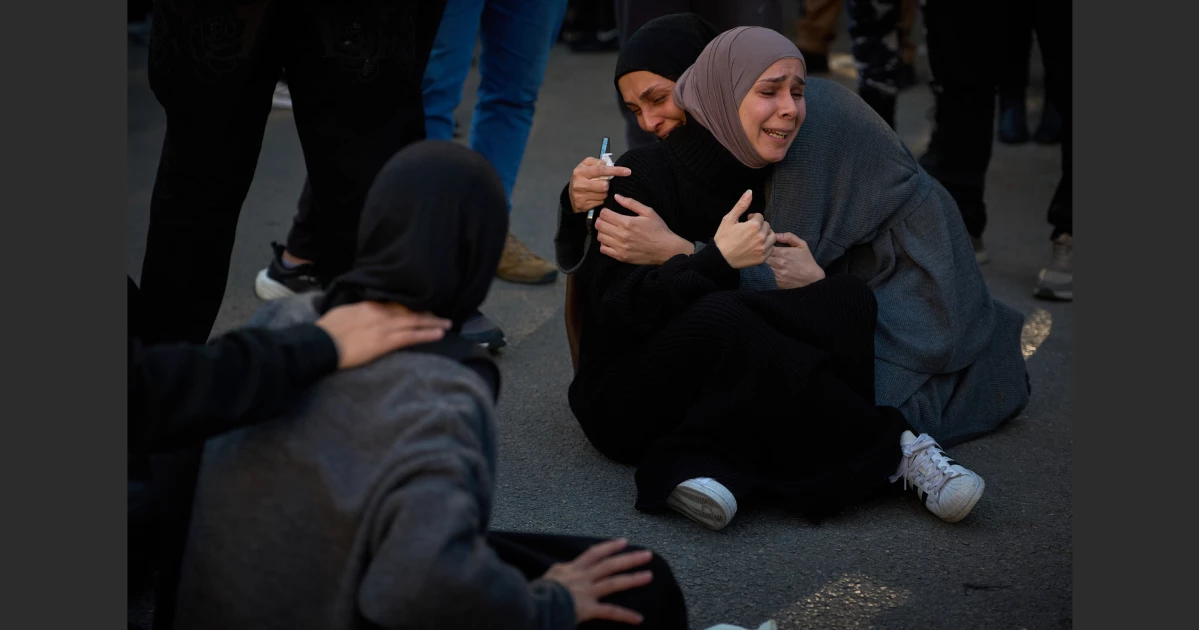
The death toll in Lebanon from Israeli strikes in the ongoing war between Israel and Hezbollah has risen to 2,020, the Lebanese health ministry said Saturday.
The death toll from nearly six weeks of war includes 248 women,165 children and 85 health workers, the ministry said. Another 6,436 people have been wounded. Nearly 100 people were killed in the past 24 hours.
The Iran-backed Lebanese militant group fired missiles into Israel on March 2 in retaliation for the U.S.-Israeli attacks on Iran. A tentative truce is now in place in Iran, but the U.S. and Israel say the agreement does not apply to Lebanon, while Tehran says it does. The question is likely to be one of the thornier points in the U.S.-Iran ceasefire negotiations now underway in Pakistan.
Meanwhile, the United States and Iran began historic face-to-face negotiations Saturday in Pakistan, days after a fragile, two-week ceasefire was announced, as the war that has killed thousands of people and shaken global markets entered its seventh week.
The White House confirmed the direct nature of the talks, a rare instance of high-level engagement, and said they were ongoing as of 10 p.m. local time.
Meanwhile, the U.S. military said two destroyers transited the Iran-gripped Strait of Hormuz ahead of mine-clearing work, a first since the war began. Iran’s state media, however, earlier said Iran forced a U.S. military ship attempting to cross the strait to turn around.
The U.S. delegation led by Vice President JD Vance and the Iranian one led by Parliament Speaker Mohammad Bagher Qalibaf were discussing with Pakistan how to advance the ceasefire already threatened by deep disagreements and Israel's continued attacks against the Iranian-backed Hezbollah in Lebanon, whose health ministry said the death toll has surpassed 2,000.
Since the Islamic Revolution in Iran in 1979, the most direct U.S. contact had been in 2013 when President Barack Obama called newly elected President Hassan Rouhani to discuss Iran’s nuclear program. The most recent highest-level meetings were between Secretary of State John Kerry and counterpart Mohammad Javad Zarif during negotiations over the program.
Now talks are underway between Vance, a reluctant defender of the war who has little diplomatic experience and warned Iran not to “try and play us,” and Qalibaf, a former commander with Iran's powerful Revolutionary Guard who has issued some of Iran's most fiery statements since fighting began.
Israel and Lebanon will have direct negotiations
Meanwhile, Israel pressed ahead with strikes in Lebanon after saying there is no ceasefire there. Iran and Pakistan have disagreed. The Lebanese state-run news agency reported at least three people killed.
Negotiations between Israel and Lebanon are expected to begin Tuesday in Washington, Lebanese President Joseph Aoun’s office said Friday, after Israel's surprise announcement authorizing talks despite the countries lack of official relations.
But as thousands in Lebanon protested the planned negotiations, Prime Minister Nawaf Salam said he had postponed a planned trip to Washington “in light of the current internal circumstances.” It was not immediately clear what that meant for talks.
Israel wants Lebanon's government to assume responsibility for disarming Hezbollah, much like was envisaged in a November 2024 ceasefire. But it is unclear whether Lebanon's army can confiscate weapons from the militant group, which has survived efforts to curb its strength for decades.
Hezbollah joined the war in support of Iran in the opening days. Israel followed with airstrikes and a ground invasion.
The day the Iran ceasefire deal was announced, Israel pounded Beirut with airstrikes, killing more than 300 people in the deadliest day in Lebanon since the war began, according to the country's Health Ministry.