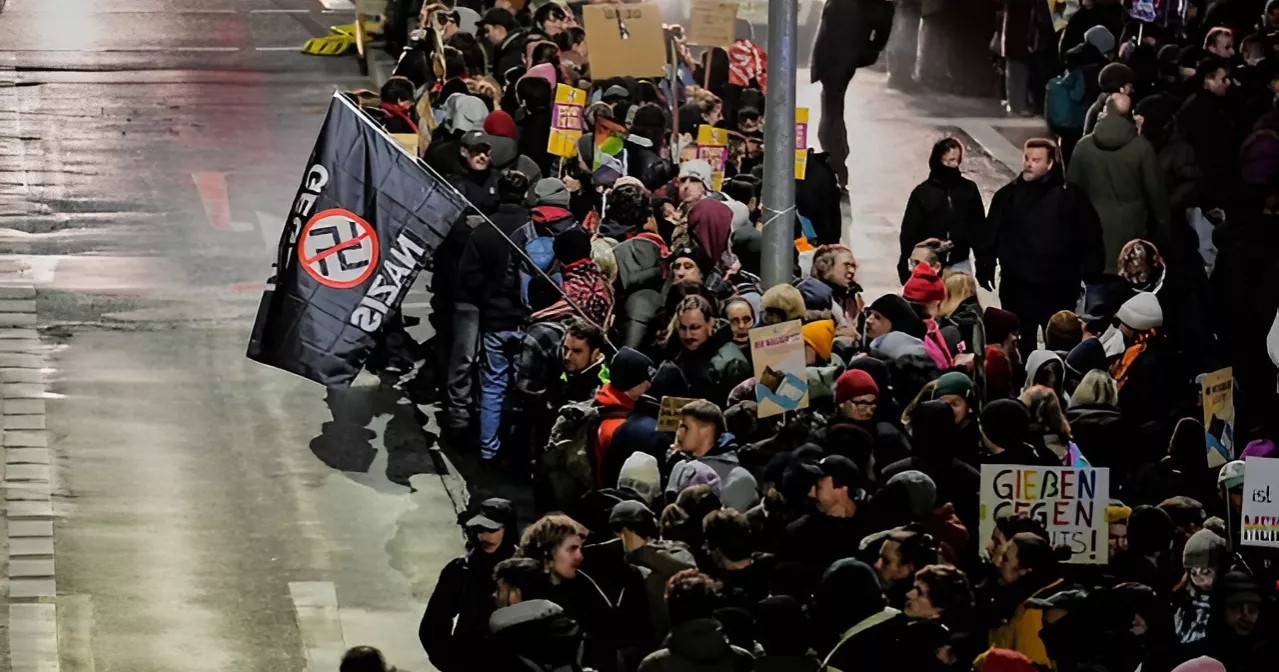
Thousands of protesters rallied in the western German city of Giessen on Saturday as the far-right Alternative for Germany prepared to launch its new youth organization.
Some demonstrators clashed with police, who used pepper spray and later water cannons to disperse blockades.
Police said stones were thrown at officers at one site, prompting the use of pepper spray. In another area, around 2,000 protesters refused to clear a road, leading authorities to deploy water cannons.
The founding convention of the new AfD youth wing, expected to be named Generation Germany, was scheduled to take place at the Giessen convention center but had not begun two hours after its planned start.
The group replaces the Young Alternative, an earlier youth organization formally cut off by the party and dissolved in March.
AfD, which won more than 20 percent of the vote in February’s national election and is now the main opposition party, intends to keep tighter control over the new body.
The Young Alternative had been classified as a right-wing extremist group by Germany’s domestic intelligence agency, a label also applied to AfD itself before being suspended pending a legal challenge.
A Cologne court last year upheld the extremist designation for the Young Alternative, citing its promotion of an ethnically defined German identity, agitation against migrants and asylum seekers and ties with extremist movements, including the Identitarian Movement.
A higher court ended the appeal process in June after confirming the group’s dissolution.
Germany’s political parties typically maintain youth branches that are often more ideological than the main organizations.
It remains unclear whether AfD’s new group will differ significantly from its predecessor.
Kevin Dorow, a delegate from Schleswig-Holstein who was previously active in the Young Alternative, said the new organization aims to continue its mission by attracting and training young people for future roles within the party.
He said he had not seen a “drift in a radical direction” in the previous youth wing.
AfD promotes itself as an anti-establishment party amid declining public trust in traditional politics.
It first entered the national parliament in 2017, propelled by discontent over large-scale migration in the mid-2010s, and continues to campaign heavily on restricting migration while tapping into broader frustrations across the country.