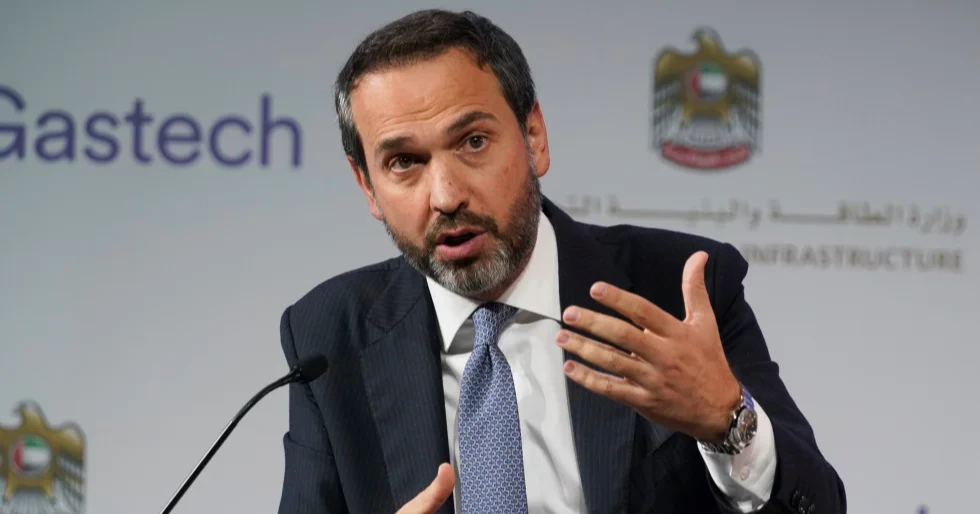
Turkey’s energy minister has urged greater protection of Black Sea oil and gas routes after three Russian tankers were struck off the Turkish coast, warning that the region’s critical energy lifelines are increasingly at risk.
Minister Alparslan Bayraktar said Ankara is alarmed not only by the threat to commercial vessels but also to two major undersea pipelines — Blue Stream and TurkStream — that deliver Russian gas directly to Turkey. Citing the 2022 Nord Stream sabotage, he stressed Turkey’s heavy dependence on imported energy.
“We call on all parties to keep energy infrastructure out of this war because it concerns people’s daily lives,” Bayraktar told reporters Wednesday. “Energy flows in the Black Sea and the Bosphorus and Dardanelles straits must remain uninterrupted.”
Ukraine says its naval drones hit two Russian tankers on Nov. 28, while a third was damaged Tuesday as it approached the port of Sinop. President Recep Tayyip Erdogan earlier denounced the attacks, calling them a threat to navigation, human life and the marine environment within Turkey’s exclusive economic zone.
Nearly half of Turkey’s total energy supply comes from Russian oil and gas. Ankara, a NATO member, faces mounting pressure from Washington to scale back its energy reliance on Moscow. During President Recep Tayyip Erdogan’s visit to President Donald Trump in September, the U.S. urged Turkey to loosen its energy ties with Russia. Turkish companies later signed a multibillion-dollar deal to purchase U.S. liquefied natural gas.
Bayraktar defended the relationship, saying Russia had long been “a very reliable supply” for Turkish consumers since the 1980s. Still, he acknowledged the need to diversify. “We don’t want to rely on one country or a few countries,” he said, noting that Turkey seeks more competitive and varied sources of natural gas.
He confirmed that state-owned BOTAS recently finalized a new supply contract with Russia’s Gazprom.
Turkey’s cooperation with Russia also extends to nuclear energy. Rosatom is constructing the four-reactor Akkuyu nuclear power plant on Turkey’s Mediterranean coast, expected eventually to provide around 10% of the country’s electricity. The project, however, has suffered repeated delays linked to Western sanctions on Russian entities following Moscow’s 2022 invasion of Ukraine.
Bayraktar said the plant is still on track to generate its first electricity next year. Some components are now being sourced from China after Western suppliers declined involvement due to sanctions.
He added that financing challenges persist, including around $2 billion “stuck in JP Morgan for a long time” after Western nations froze Russian assets. “We need to play a moderator role to help release this money because it is intended for the project,” he said.