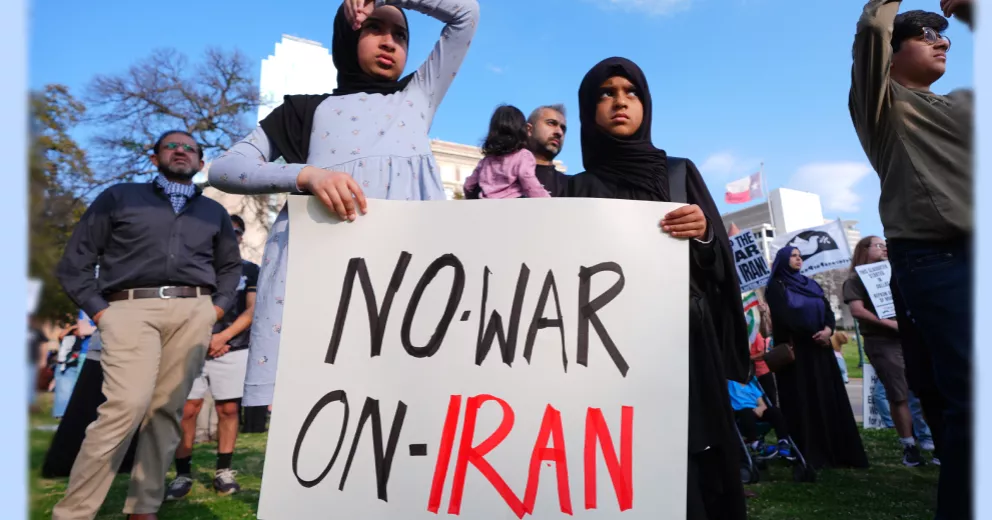
As the US-Israel conflict with Iran entered its sixth day on Thursday, tensions have intensified and begun to spread across the Middle East and beyond, with significant implications for countries heavily dependent on imported fuel.
The war has killed more than 1,000 people in Iran, more than 50 in Lebanon and around a dozen in Israel, according to officials in those countries.
The escalating hostilities have disrupted key energy routes, driven up global oil prices and heightened economic uncertainty in regions reliant on Middle Eastern energy supplies.
The ongoing violence has also raised fears of broader regional instability, particularly affecting oil transit through the Strait of Hormuz, a crucial chokepoint for nearly one-fifth of the world’s crude shipments.
Global stock markets have been hammered amid worries that the spike in oil prices may grind down the world economy. US stocks appeared steadier at Wednesday’s opening.
Bangladeshi economist Professor Selim Raihan has warned that the country faces a significant risk of sudden uncertainty if the conflict in the Middle East expands further.
In a Facebook post on Wednesday, Raihan said the situation became more alarming after Iran on Monday declared the closure of the Strait of Hormuz, triggering sharp volatility in the global energy market.
“Tehran has reportedly warned that its Revolutionary Guard and navy would take strict action against any vessel attempting to cross the strategic waterway.”
He said that a substantial share of the world’s crude oil and liquefied natural gas (LNG) shipments passes through the Strait of Hormuz.
“Any disruption to shipping along this route could cause major interruptions in global energy supply, with immediate consequences for import-dependent economies such as Bangladesh.”
Seeking an early resolution to the ongoing crisis in the Middle East, Bangladesh on Wednesday conveyed to the US that it is difficult for a country like Bangladesh to bear the economic impact of this war if it lasts longer and spreads further.
“We have discussed the crisis in the Middle East. I told him (US Assistant Secretary S Paul Kapur) that two of our Bangladeshis have lost lives and seven others have been injured. If this war is prolonged or spreads, this fear may increase further,” Foreign Minister Dr Khalilur Rahman told reporters at the Ministry of Foreign Affairs after his meeting with the US top diplomat.
Meanwhile, a torpedo fired by a US submarine sank an Iranian warship off the coast of Sri Lanka. The Sri Lankan navy said on Wednesday that it had recovered 87 bodies and rescued 32 people.
The Iranian vessel sunk in the Indian Ocean was the Islamic Republic’s “prize ship”, US Defence Secretary Pete Hegseth said. It was one of the few instances of a submarine sinking a ship since the Second World War.
The sinking of the IRIS Dena illustrates a US-Israeli military operation against Iran that is stretching beyond its borders.
War affects tens of thousands of flights
Over 20,000 of the more than 36,000 flights scheduled to fly to or from the Middle East between Saturday’s start of the war and Wednesday have been cancelled, according to aviation analytics firm Cirium.
How sport is being disrupted by the war
The war against Iran launched by the United States and Israel — and Iran's retaliation — has had a considerable impact on sport.
The US-Israel war with Iran has caused many sporting events in the region to be postponed. The conflict is also affecting other events farther afield, largely by forcing changes to travel arrangements. Some questions cannot yet be answered.
Iranian women kick off Women's Asian Cup campaign
The 2026 AFC Women’s Asian Cup kicked off on Sunday — a day after the US and Israel began launching airstrikes on Iran — but far from the conflict, in Australia. On Day 2 of the tournament, on Monday, all eyes were on the Iranian team, one of 12 taking part in the Women’s Asian Cup. The Iranian women did not sing the national anthem. South Korea dominated the football match from the outset, as might have been expected given that they sit 21st in the FIFA women’s rankings, well above Iran at 68th. South Korea won comfortably 3–0.
Men's football World Cup: Will Iran participate?
Even as the women were playing their opening match at the Women’s Asian Cup, the big question on football fans’ minds around the world is whether the Iranian men will do the same at this summer’s World Cup.
Iran’s group matches are all scheduled to be held in the United States, with two matches in Los Angeles and one in Seattle.
The president of Iran’s FA now says he cannot yet confirm whether the team will take part.
Iraq’s World Cup qualifying impacted by the war
Iraq’s hopes of World Cup qualification are being affected by the Iran war because embassy and airspace closures are preventing players from obtaining visas for the play-off tournament in Mexico.
The Iraqi football federation says it is communicating with FIFA about its match against Bolivia or Suriname in Monterrey, Mexico, on 31 March.
The federation wrote in a social media post that its coach, Graham Arnold, is unable to leave the United Arab Emirates, and several players and staff members are experiencing difficulties obtaining visas.
Iraq and the UAE have been floated as potential replacements for Iran’s team — which has already qualified — should the Iranians not participate in the World Cup.
Hegseth says war with Iran could last 8 weeks
U.S. Defence Secretary Peter Brian Hegseth says the timeline could extend further than previously speculated.
“You can say four weeks, but it could be six, it could be eight, it could be three,” he said. “Ultimately, we set the pace and the tempo.”
# With inputs from agencies