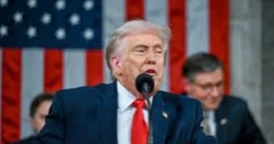
Donald Trump said Friday he is dissatisfied with the latest negotiations over Iran’s nuclear program but signaled he is willing to allow more time for diplomacy before considering military action.
His remarks followed another inconclusive round of indirect U.S.-Iran talks in Geneva. While American military assets continue to build up in the Middle East, Trump has warned that force remains an option if Tehran refuses a sweeping agreement. Iran, for its part, maintains that its uranium enrichment is for peaceful energy purposes and denies seeking nuclear weapons.
Speaking to reporters as he departed the White House, Trump criticized Iran’s negotiating stance, saying the U.S. was unhappy with the progress and reiterating that Iran “cannot have nuclear weapons.” Later, during a visit to Texas, he suggested Iranian officials were unwilling to make sufficient concessions. He repeated his opposition to Iran enriching uranium at any level, arguing the oil-rich country has no need to do so. Asked how close he was to authorizing military strikes, Trump declined to elaborate, acknowledging that any conflict carries risks.
Despite Trump’s critical tone, Oman’s foreign minister, Badr al-Busaidi — who is mediating the talks — publicly urged patience. In an interview with CBS, he said a deal was achievable if negotiators were given adequate space to resolve outstanding issues.
Meanwhile, U.S. Secretary of State Marco Rubio is scheduled to visit Israel early next week to discuss regional matters including Iran, Lebanon and Gaza. The State Department’s announcement of the trip, combined with Trump’s comments, suggested any immediate strike may not be imminent.
Rubio also designated Iran a “state sponsor of wrongful detention,” citing the arrest of Americans and other foreign nationals. He warned that Washington could potentially invalidate U.S. passports for travel to or from Iran — a restriction currently applied only to North Korea — if Tehran does not change its behavior.
At the same time, a confidential report by the International Atomic Energy Agency said inspectors have not regained access to key Iranian nuclear facilities since they were heavily bombed during a 12-day conflict launched by Israel last June. The agency said it could not verify Iran’s claim that enrichment activities ceased after U.S. and Israeli strikes.
Security concerns are rising across the region. The U.S. Embassy in Jerusalem authorized the voluntary departure of nonessential personnel and their families, with Ambassador Mike Huckabee encouraging those considering leaving to do so quickly. Several countries, including Britain, Germany, Australia and China, have also advised citizens to avoid travel to Israel or Iran, and some airlines have suspended flights from Tel Aviv.
Diplomatic activity continues in parallel. Omani mediators met with U.S. Vice President JD Vance, and technical discussions are planned in Vienna next week. Iran’s foreign minister has reiterated that sanctions relief must be part of any agreement.
U.N. Secretary-General António Guterres called on both sides to prioritize diplomacy, noting that while positive signals have emerged from negotiations, military movements in the region remain deeply concerning.