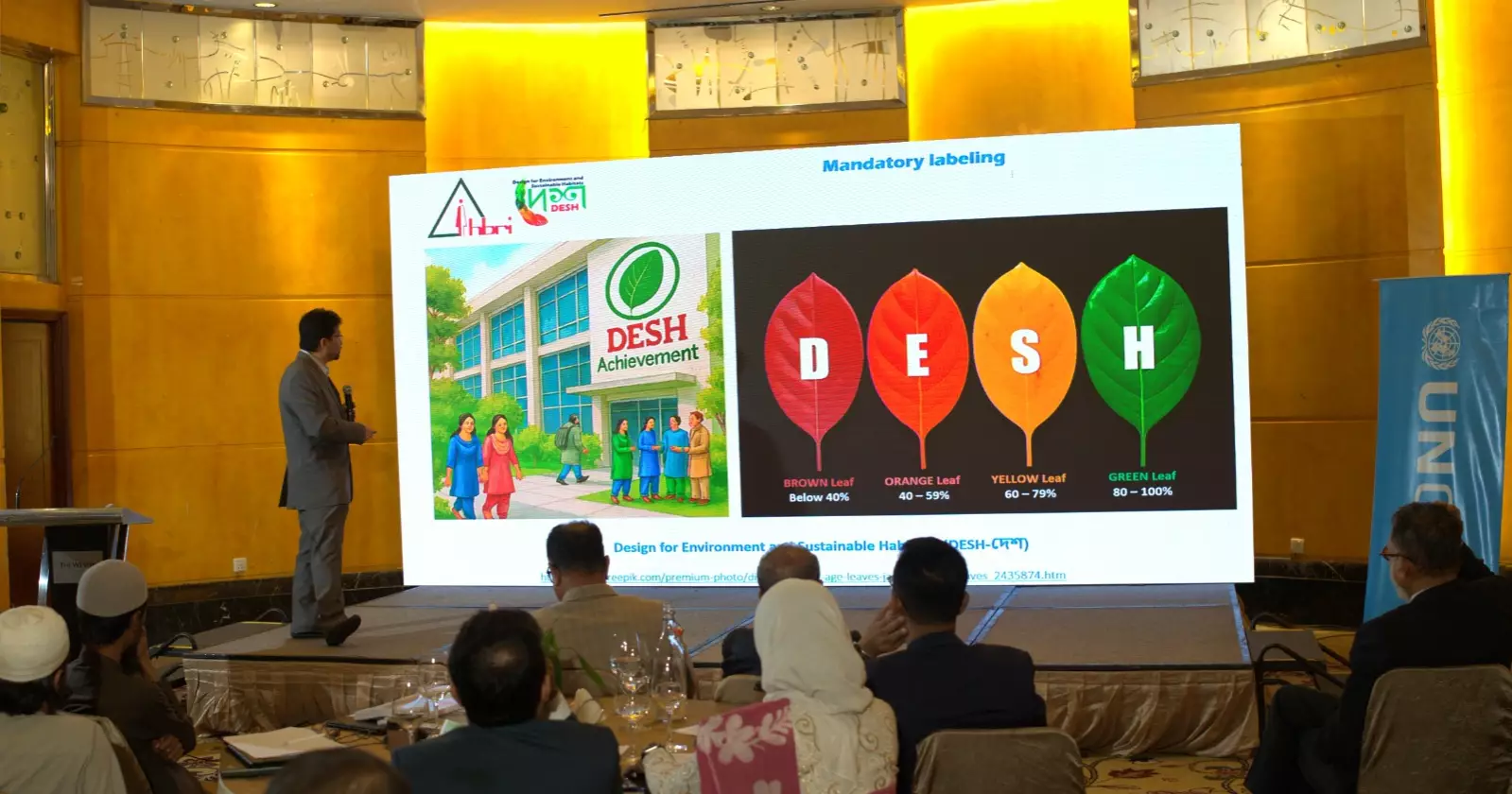
Bangladesh is taking a significant step toward transforming its construction sector with the development of the Green Building Certification Framework (DESH), a nationally tailored system designed to promote sustainable, climate-resilient, and resource-efficient buildings, officials said on Wednesday.
Developed by the Housing and Building Research Institute (HBRI) with support from the United Nations Office for Project Services (UNOPS), under the leadership of the Ministry of Housing and Public Works (MoHPW), the DESH framework is part of the broader initiative “Transforming the Built Environment through Sustainable Materials in Bangladesh.”
The recently held stakeholder consultation marked a critical milestone in the development of the framework, said the United Nations Office for Project Services (UNOPS) on Wednesday.
Bringing together representatives from government, academia, and industry, the session focused on technical validation and co-development of the certification system.
Despite the presence of established national and international certification systems, the introduction of DESH, a locally adapted, performance-driven framework, received overwhelmingly positive feedback.
Stakeholders expressed strong appreciation for its contextual relevance, practical applicability, and alignment with Bangladesh’s climate and development priorities, with no major opposition raised during the consultation or in subsequent engagements.
The DESH framework adopts a holistic approach, integrating key dimensions such as climate resilience, energy efficiency, water management, sustainable materials, and occupant health.
Its structure is designed to ensure both technical rigor and practical usability across Bangladesh’s rapidly growing built environment.
Building on this momentum, the Ministry of Housing and Public Works and HBRI have emphasised the importance of expanding awareness and visibility of the DESH framework nationwide.
Increasing public and institutional understanding will be critical as the framework moves toward its next phase, including broader consultations and eventual public review.
This next stage will focus on ensuring that DESH is not only technically robust but also widely recognised, accepted, and adopted across sectors, supporting Bangladesh’s transition toward a low-carbon, resilient, and sustainable built environment, according to UNOPS Bangladesh Office.
The initiative, the UN agency said, reflects a growing national commitment to align construction practices with climate goals, strengthen local capacity, and establish a certification system that responds to Bangladesh’s unique environmental and socio-economic context.