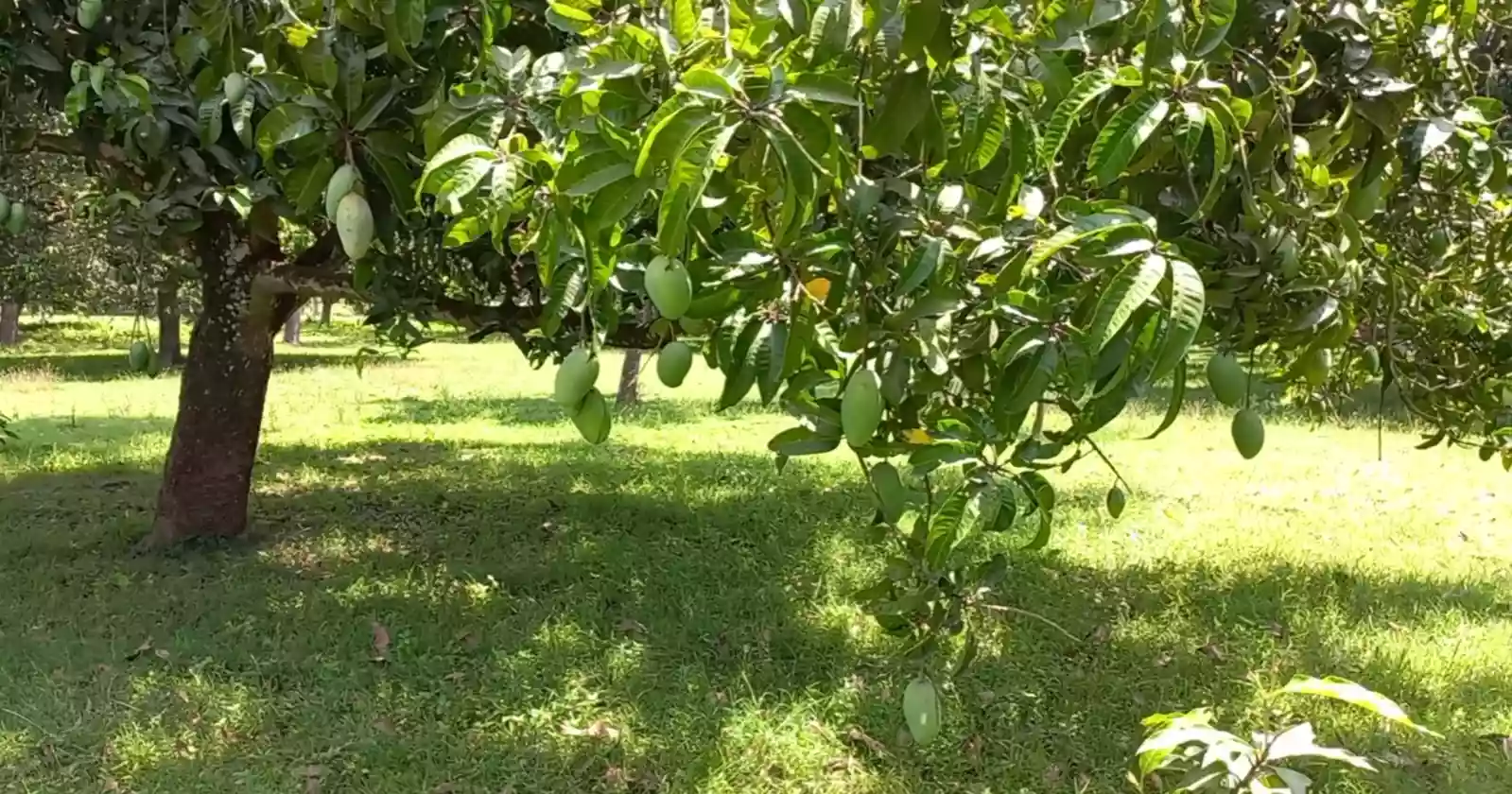
With the arrival of the month of Jaistha, locally known as the peak mango season, Chapainawabganj, often called the mango capital of Bangladesh, is gradually filling up with the sweet aroma of ripening mangoes.
Lush green orchards across the district are now laden with growing fruits, while farmers remain busy with pruning, pest control, guarding orchards, and preparing for harvesting and marketing.
Officials, growers, and traders said ripe mangoes are expected to start arriving in the market by the end of this month. The season will begin with early varieties like Guti mango, followed by Gopalbhog, Khirsapat, Langra and other popular varieties in phases.
Department of Agricultural Extension (DAE) officials said mango has been cultivated on 37,487 hectares of land in Chapainawabganj this season, with a production target of around 458,912 metric tons.
If weather condition remains favorable, officials expect a strong yield and profitable season for farmers and traders alike.
Farmers said the season began with heavy flowering, and although storms, rain and hail in some areas caused partial fruit drop, a satisfactory number of mangoes remain on the trees.
Gopalbhog and Guti varieties in particular are maturing quickly and many orchard owners have already set up temporary sheds for harvesting and storage, they said.
Increased prices of pesticides, fertilisers, labour, and irrigation have significantly raised overall cultivation expenses. Despite this, they remain hopeful of profit if market prices remain stable.
Azizul, a mango farmer from Jadupur area, said, “This year the trees had a lot of flowers. Some damage occurred due to bad weather, but overall the mango condition is good.”
Another grower, Serajul Islam from Nashipur, said, “The mangoes are in good condition. We had good flowering this year, but some fruits fell due to adverse weather. Still, a good amount has survived. If there are no major storms or hail, we expect a good yield. It will take around 7 to 10 days for the first harvest. If market prices are good, we will make a profit.”
Farmer Mithu said production is strong this year and the fruits are nearly mature. “We expect to start marketing after Eid. First, Guti and Gopalbhog will be harvested, followed by Khirsapat, Langra, Fazli, Amrapali, BARI-4 and Ashwina varieties in stages,” he said.
Another orchard owner, Abdul Rakib, welcomed the decision not to set a fixed harvesting calendar this year. “It is better for us. We harvest when mangoes are naturally ripe. A fixed schedule often forces early picking, which can cause losses,” he said.
The district administration has confirmed that no “mango calendar” will be enforced this season. Farmers will be allowed to harvest naturally ripened fruits, but strict action will be taken against marketing of immature or chemically ripened mangoes.
Department of Agricultural Extension officials said that if no major natural disaster occurs, the production target is likely to be achieved. This would benefit thousands of farmers and boost the local economy.
Deputy Director of the Department of Agricultural Extension in Chapainawabganj, Dr. Yasin Ali, said flowering and fruit setting were initially strong this year, though some fruit drop occurred mid-season. “Overall condition is encouraging. We expect Guti and Gopalbhog mangoes to reach the market by the end of May. After Eid, full-scale harvesting will begin. If no major natural disaster occurs, we are hopeful for a good yield,” he said.