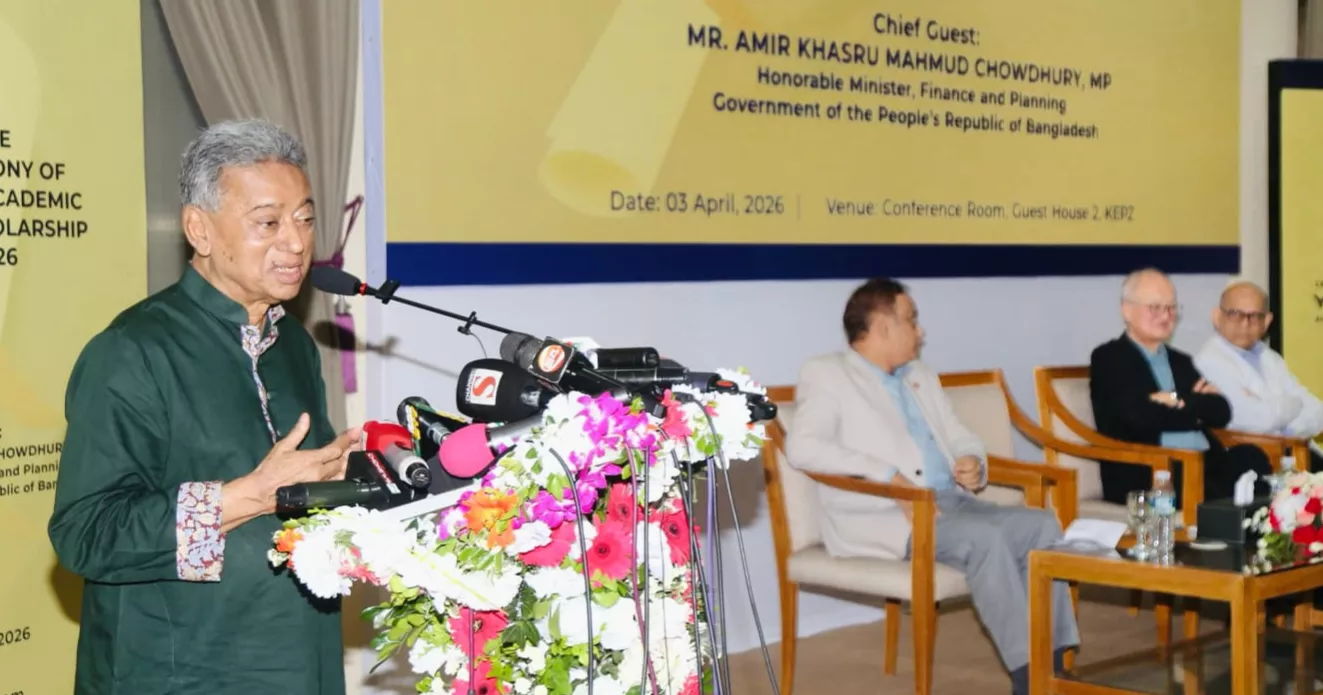
Finance Minister Amir Khosru Mahmud Chowdhury on Friday said the government is importing fuel at higher prices to ensure energy security amid the ongoing conflict in the Middle East.
"The impact of the Middle East war is not limited to Bangladesh alone; it has affected the entire world," he said while addressing the convocation of Independent University, Chattogram, as the chief guest.
The minister said Bangladesh has been procuring oil and gas from multiple countries to deal with the global energy crisis and maintain stability in daily life and economic activities.
He noted that uninterrupted fuel supply is being ensured to keep industries running, sustain production, and support agricultural activities.
"The government will not compromise on energy security under any circumstances," Khosru added.
He said there has been no major disruption so far, with industries operating as usual and people travelling smoothly during the Eid holidays.
The minister, however, warned that the high cost of fuel imports has put significant pressure on the government's finances.
"If this continues, it will impact the national budget and development activities, making it difficult to fulfil commitments made to the people," he said.
Khosru indicated that the government is considering new decisions regarding fuel management and has already taken steps to promote energy conservation among ministers and officials.
He urged people to cooperate with the government by using energy more efficiently.
On the capital market, the minister said the government is planning major reforms to restore investor confidence and encourage large investors to raise funds from the stock market instead of relying heavily on bank loans.
He lamented the lack of collaboration between universities and industries in Bangladesh, calling it a barrier to improving education quality and research output.
Khosru stressed the need to prioritise technology-based education, noting that many graduates — even those with higher degrees — remain unemployed due to the overemphasis on general education.
"Countries that are ahead in technology are better prepared to face future global challenges," he said, urging universities to introduce more technology-oriented curricula and faculties to enhance employability at home and abroad.