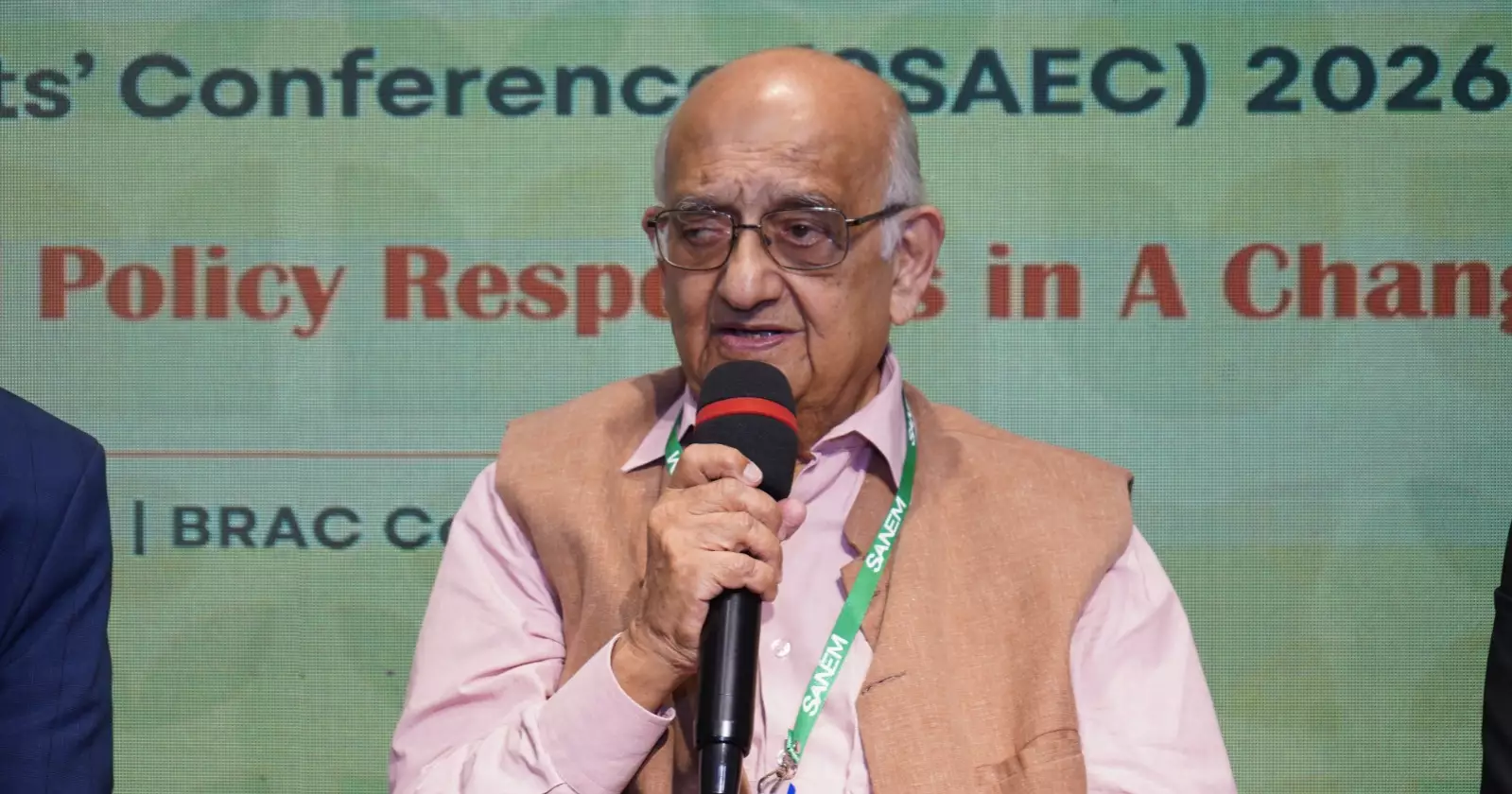
Those who defaulted on loans in Bangladesh have since embedded themselves within the country's political system and are now among the primary obstacles to meaningful economic reform, prominent economist Rehman Sobhan said Sunday.
“Reform in Bangladesh cannot be achieved simply by enacting laws,” said Sobhan, chairman of the Centre for Policy Dialogue (CPD). “A credible reform framework must be multi-layered and account for ground realities.”
He was speaking on the concluding day of the 9th Annual Economists' Conference of the South Asian Network on Economic Modelling (SANEM).
Sobhan outlined what he described as the three pillars of effective reform: sound legislation, a capable administrative structure, and the political will to enforce laws through that structure. Without all three in place, he warned, reform efforts would yield little. “Administrative competence, political commitment and an accountability framework are indispensable if reform is to take hold in practice.”
Turning to political parties, Sobhan was candid about a persistent credibility gap. Election manifestos contain sweeping reform pledges, he observed, yet party members themselves are often unfamiliar with their own platforms and genuine follow-through remains rare. “Reform cannot ride on political manifestos alone. Without broad-based public support, it simply will not happen.”
He was equally sceptical about the durability of reforms tied to international lending. Conditionalities attached to World Bank and IMF loans tend to be observed initially to secure disbursement, he noted, but lose momentum soon after.
On the upcoming national budget, Sobhan advocated a shift to performance-based budgeting: a system under which the government would report not merely on expenditure but on the outcomes achieved. “Right now we account for spending. What we lack is any analysis of what that spending actually delivers.”
Sobhan also underscored the role of a constructive opposition, arguing it must go beyond partisan resistance to actively monitoring government performance and ensuring accountability.
He closed by stressing that sustaining reform momentum requires sustained democratic practice, particularly accountability within the ruling party and genuinely participatory elections.
The session was chaired and moderated by SANEM Executive Director Selim Raihan. CPD Distinguished Fellow Debapriya Bhattacharya presented the keynote paper, while former Finance Secretary Mohammad Muslim Chowdhury joined as a discussant.