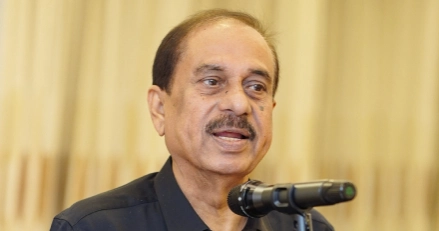
Matiur Rahman Chowdhury, editor-in-chief of Manabzamin and president of the Newspaper Owners' Association of Bangladesh (NOAB), on Monday urged journalists to perform their duties with integrity and professionalism.
“A family can be destroyed, a country can face serious threats, or a government can fall into trouble due to a mistake or error in your reporting,” he said at a workshop titled ‘Election Commitments, Reforms and Fact-Checking’, organised by the Citizens’ Platform for SDGs in association with the Economic Reporters Forum (ERF).
Amid what he described as an epidemic of misinformation, Matiur Rahman called for unity among all stakeholders to address the growing challenges.
Highlighting the sensitivity of economic reporting, he said reporters covering the economic beat carry even greater responsibility.
“A single report can potentially put the country in a risky situation,” he noted, urging journalists to exercise utmost caution and maintain professionalism while reporting on economic issues.
He also criticised the “photocard-based journalism."
Expressing frustration over divisions within the media community, he said, “If we journalists could unite, we could change the entire Bangladesh. But we have not been able to do so.”
He added that many journalists feel more comfortable identifying themselves as members of political parties or groups rather than as journalists.
“We must be journalists first, and only then any other identity,” he said.
Reiterating his commitment to the profession, Matiur Rahman said he wishes to continue practising journalism until his last breath. "I want to die as a journalist"
Regarding the wage board, the NOAB president said that although owners are willing to implement it, various challenges have made its execution difficult.
Among others, Dr Debapriya Bhattacharya, Distinguished Fellow at CPD; Professor Mustafizur Rahman, Core Group Member of the Citizens’ Platform and Distinguished Fellow at CPD; and ERF General Secretary Abul Kashem also spoke at the event.
The two-day workshop was supported by the Embassy of Switzerland in Bangladesh and UNDP Bangladesh.