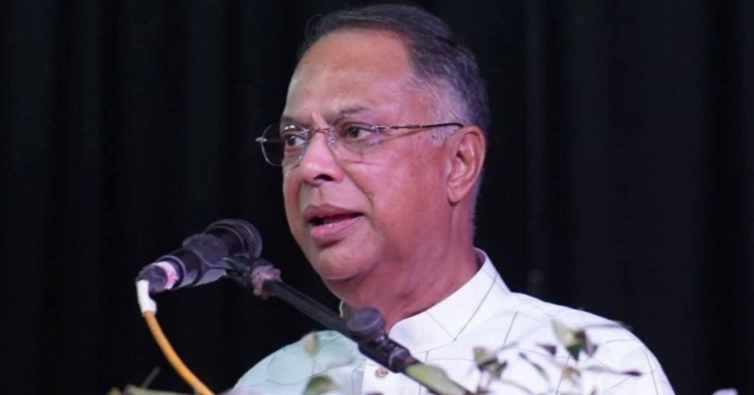
Power, Energy and Mineral Resources Minister Iqbal Hassan Mahmood Tuku on Monday told Parliament that currently there is no energy shortage rather fuel hoarding and excessive purchase are creating problems in the country.
“I want to make it clear that there is no shortage of fuel in Bangladesh so far. In fact, we have increased the supply more than last year,” he said.
The Minister made this remark while delivering a statement under Section 300 of the Rules of Procedure in the House to raise the energy supply situation in the country amid panic buying triggered by the Middle East war.
He said the government has been able to ensure higher fuel supply this year compared to the volume sold at this time last year.
Iqbal Hassan Mahmood said definitely the actual consumption of people suddenly could not have doubled within a year. “This unusual change makes it clear to us that the mentality of fuel hoarding is now a bigger problem than fuel shortage,” he said.
“Despite our adequate supplies and preparations, if people buy more than they need or hoard illegally in villages and towns, normal supplies will inevitably be disrupted,” he added.
The Energy Minister stressed the need for creating trust and awareness among the people to address the present energy problem.
Noting that cooperation from the people is very essential here, he urged the people to avoid additional purchase, refrain from hoarding and reserve, stop energy and power wastage and raise voice against hoarding and illegal connections.
The Energy Minister said the government has taken comprehensive preparations to ensure uninterrupted energy supply in the country despite global uncertainty.
He said the world is passing through instability due to international conflicts, geopolitical tensions, supply chain risks and uncertainty in fuel transportation, particularly in the Middle East, which has put pressure on global energy supply systems.
The impact of this situation has also reached Bangladesh, but under the directive of Prime Minister Tarique Rahman, the government has taken timely and effective preparations to keep the energy supply normal, he said.
He informed the House that when the government assumed office on February 17, 2026, diesel stock stood at 206,000 metric tons, and as of March 30, 2026, diesel stock increased to 218,000 metric tons. During the 41 days from February 17 to March 29, a total of more than 482,000 metric tons of diesel was sold, yet stock levels increased due to advance import and effective management.
Iqbal Hassan said the government has taken advance measures to ensure smooth transportation, agricultural production, industrial operations and business activities ahead of the Holy Eid-ul-Fitr.
He added that based on March 2025 demand, the government ensured 10 to 25 percent additional fuel supply in March 2026 to prevent any crisis or artificial market pressure.
He said last year’s daily diesel demand in March was around 12,000 metric tons, while petrol and octane demand ranged between 1,200 and 1,400 metric tons respectively. But this year, abnormal increases in fuel purchases have been observed in many areas, indicating hoarding tendencies rather than real demand growth.
“Fuel supply is adequate, but excessive purchases and illegal hoarding are creating artificial pressure,” he said.
The minister informed the House that the government has launched enforcement drives against illegal hoarding and fuel smuggling.
So far, some 3,168 mobile court operations have been conducted, 153 cases filed, fines were imposed, and 16 persons sentenced to imprisonment. Authorities also seized 140,000 litres of diesel, 22,000 litres of octane and 23,000 litres of petrol, he said.
He warned that the government will take tougher action against hoarders and smugglers in the interest of the public and national security.
The minister said that fuel import arrangements have already been made to ensure supply continuity. In April, 50,000 metric tons of fuel (octane) will be imported under existing agreements, while an additional 30,000 metric tons will be sourced locally to meet demand for the coming months.
He highlighted that the government is maintaining stable fuel prices despite price hikes in the international market.
Currently, diesel is being sold at around Tk 100 per litre while the actual cost has risen significantly due to global price increases. Similarly, octane and petrol are being sold below international market rates, with the government bearing substantial subsidies to protect consumers.
“The government believes that in times of global crisis, the first responsibility of the state is to stand beside the people and ensure their protection,” he added.
Iqbal Hassan said many countries declared energy emergencies and restricted industrial and educational activities due to fuel shortages, but Bangladesh has kept transportation, industries, agriculture, education and business activities running smoothly.