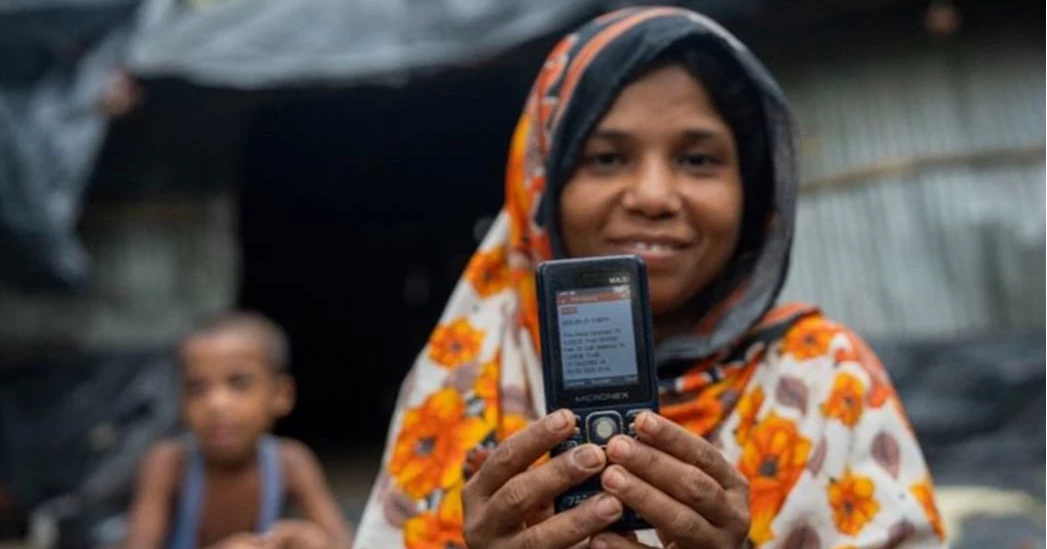
The United Nations World Food Programme (WFP) launched an emergency response in Teknaf upazila of Cox’s Bazar, shortly after early warning signals were issued.
In a proactive move, the WFP, in coordination with the government, initiated support through its anticipatory action mechanism.
A total of 6,500 people received Tk 5,000 (US$43) per family, transferred directly to their mobile wallets. The early support enabled families to purchase food and essential supplies, safeguard their homes, and prepare for the potential impact of the disaster, said a WFP press release.
“As always, climate shocks hit hardest in communities already living in poverty and facing high food insecurity. Because we acted early, families had a chance to prepare and face the storm with greater resilience and dignity,” said Dom Scalpelli, WFP Country Director in Bangladesh.
To respond to climate shocks throughout this year, WFP has developed a four-phase emergency preparedness and response plan. It includes anticipatory action before the emergency hits to help people prepare; emergency food rations immediately after; financial support for affected people to access food as markets begin to reopen; and cash-for-work and income-generating activities to help communities recover quickly.
The plan aims to reach over six million of people at risk – although the actual number could be far higher – but faces a funding gap of US$55 million, with anticipatory action making up the largest share.
UNICEF halts key education programmes in Bangladesh amid aid fund crisis
“Anticipatory action gave families a chance to prepare – to buy food, secure their homes, and stay safe. But this window is narrow, and resources are limited. We are calling on partners to act with us – early, fast, and at scale – to protect lives before the next wave of flooding hits,” added Scalpelli.
WFP’s latest response is part of a growing national effort to strengthen early action in Bangladesh. In 2024, over 15 AA frameworks were activated by UN agencies, the Red Cross Red Crescent Movement, INGOs like CARE, Save the Children, and STEP, and the Start Fund.
This year, 46 agencies are expected to implement AA frameworks, with increasing national leadership and expanded coverage of hazards like heatwaves, landslides, and droughts.
WFP’s anticipatory action is generously supported by partners including the European Union and donors contributing to our global Trust Fund — such as Germany and Ireland.
They also acknowledge pooled funding and multilateral support, including from the UN Central Emergency Response Fund (CERF) and donors like Belgium, whose contribution enabled our recent AA response in Teknaf.
Meanwhile, in the Rohingya refugee camps in Cox’s Bazar, home to over one million refugees, continuous rainfall has triggered flooding and landslides, affecting nearly all 33 campssaid the release.
WFP is delivering fortified biscuits and hot meals to displaced families. However, additional funding of US$2 million is urgently needed to replenish local stocks of fortified biscuits – an essential, vitamin-enriched ration that is ideal for emergencies and has been widely used in Bangladesh’s School Feeding Programme for over two decades, it said.