
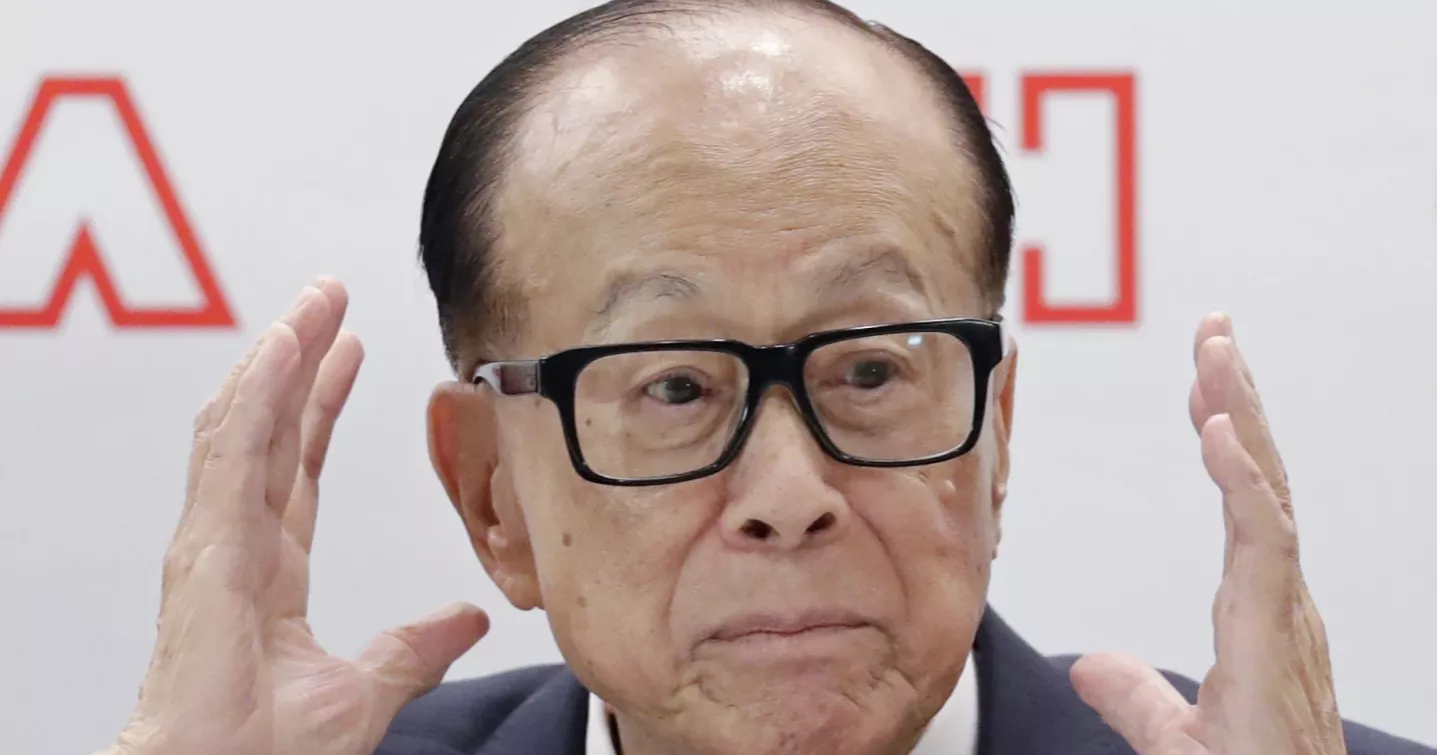
A business deal involving Hong Kong’s richest man, Li Ka-shing, has sparked controversy after his company, CK Hutchison Holdings, agreed to sell its Panama Canal port assets to a consortium that includes U.S. investment firm BlackRock Inc. The move has reportedly angered Beijing.
In recent days, Beijing’s Hong Kong affairs offices have shared sharp critiques from state-backed media regarding the proposed sale. This has raised concerns about the deal’s future and highlighted the complex balancing act that Hong Kong businesses face between aligning with Beijing’s expectations and pursuing their own economic interests.
Li Ka-shing’s Influence and Ties to Beijing
Nicknamed “Superman,” 96-year-old Li is among the world's wealthiest individuals, with Forbes estimating his net worth at $38 billion. Though he retired as chairman of CK Hutchison in 2018, handing the reins to his son Victor, he remains one of Hong Kong’s most powerful figures.
Li built his vast business empire from humble beginnings, mirroring Hong Kong’s transformation into a global financial hub. His conglomerate spans multiple sectors, including real estate, supermarkets, telecommunications, and utilities. Internationally, his company owns British drugstore chain Superdrug and European mobile carrier Three.
CK Hutchison has operated ports at both ends of the Panama Canal since 1997—an arrangement that once led former U.S. President Donald Trump to claim Chinese interference in the critical shipping route.
Business tycoon killed by grandson over property dispute
Over the years, Li has maintained close ties with Beijing, serving on elite political committees and meeting with top Chinese leaders. The Chinese Communist Party (CCP) has historically viewed support from Hong Kong’s business community as crucial for maintaining the city's capitalist economy and global trade networks. However, Li has occasionally faced criticism from Beijing, particularly when he sold off mainland Chinese assets in 2015.
During Hong Kong’s 2019 pro-democracy protests, he was also criticized for his perceived neutrality, while other business leaders took a more pro-Beijing stance.
The Panama Ports Sale and Beijing’s Reaction
On March 4, CK Hutchison announced plans to sell its port operations, including holdings in Hutchison Port Holdings and Hutchison Port Group Holdings, to a consortium featuring BlackRock subsidiary Global Infrastructure Partners and Terminal Investment Limited. The latter is chaired by Italian shipping magnate Diego Aponte, whose family reportedly has long-standing business ties with Li.
The deal, valued at nearly $23 billion (including $5 billion in debt), would grant the consortium control over 43 ports in 23 countries, including the Balboa and Cristobal ports at either end of the Panama Canal. The transaction does not include any ports in Hong Kong or mainland China. CK Hutchison has stated the sale is purely a commercial decision.
While the deal was welcomed by Trump, it has drawn strong criticism from Beijing. A state-backed newspaper editorial accused CK Hutchison of betraying China and urged the company to reconsider its loyalties. Another editorial suggested that great entrepreneurs must also be patriots, warning against aligning with "predatory" American politicians.
On Chinese social media platform Weibo, public sentiment has been largely critical of Li, with some users accusing him of prioritizing profit over national interest.
Hong Kong’s Chief Executive John Lee refrained from directly criticizing the deal or Trump but reiterated Beijing’s opposition to “bullying tactics” in international trade.
Geopolitical Implications
Some reports suggest that Chinese leaders were frustrated at not being consulted before the deal was announced. Analysts believe Beijing was caught off guard and had little time to formulate a response.
Ports are strategically sensitive assets, and transactions involving them often attract government scrutiny, said Wilson Chan, co-founder of the Pagoda Institute, a think tank specializing in public policy and global economics.
Top Hong Kong court overturns convictions of 3 former organizers of Tiananmen vigils
It remains unclear whether Beijing’s pressure will impact the deal, which requires approval from Panama’s government. When asked whether Chinese authorities were investigating the sale, China’s Foreign Ministry redirected reporters to other government agencies. CK Hutchison has yet to comment on the controversy and has postponed its planned financial results news conference.
Analysts warn that canceling the deal could carry risks. “If Beijing forces CK Hutchison to back out, Trump will take credit for securing the deal and then react aggressively if it is reversed,” said Chan. This could further erode global confidence in Hong Kong’s business environment.
Long-Term Implications for Hong Kong
The first Trump administration imposed sanctions on Chinese and Hong Kong officials for undermining the city's autonomy, promised under the "One Country, Two Systems" framework established when Britain handed the territory to China in 1997. However, following the 2019 protests, Beijing has tightened political control over Hong Kong.
Li may attempt to appease Beijing by reinvesting proceeds from the port sale into Hong Kong or mainland China’s port infrastructure, aligning with government priorities. However, tensions between Beijing and private businesses remain unpredictable.
Although Chinese President Xi Jinping recently met with business leaders to signal support for the private sector, companies may still feel pressured to align with the CCP’s political agenda. If Beijing moves to block Li’s port deal, analysts believe Washington could retaliate with further sanctions on Hong Kong and Chinese businesses.
“This situation underscores U.S. concerns about Hong Kong’s shrinking business autonomy,” said George Chen of The Asia Group, a Washington-based consultancy. “It weakens the credibility of ‘One Country, Two Systems.’”