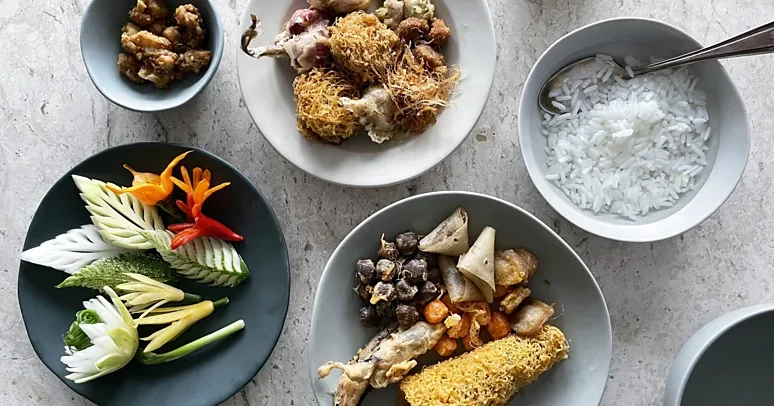
As Thailand celebrates the Buddhist New Year, known as Songkran, in mid-April, soaring temperatures call for ways to cool down—one of which is the traditional and aromatic dish known as khao chae.
Songkran, taking place from April 13–15, is marked by playful water fights across the country. But another refreshing way Thais mark the season is by enjoying khao chae, a cold, floral-infused rice dish that symbolizes the start of summer.
Khao chae—literally meaning “soaked rice”—has its roots in the Mon ethnic group, which was historically present in what is now Myanmar and Thailand. The version popular today, especially in Bangkok, has evolved significantly from the simple Mon original, according to Thai food writer and historian Leela Punyaratabandhu. Traditionally served in clay pots to keep it cool, the original dish was far more rustic, lacking the elaborate accompaniments now associated with it.
During the 19th century under King Rama IV, khao chae underwent a transformation in the royal court. It became a symbol of refinement, presented with carved vegetables and served with ice—then a luxury item inaccessible to the general public.
Modern recipes are still steeped in royal tradition. Jasmine rice is thoroughly washed to remove excess starch, ensuring the grains don’t clump together or turn cloudy when soaked. The rice is then submerged in cold, flower-scented water, often infused with jasmine, ylang ylang, and damask roses—flowers that bloom in summer, adding seasonal meaning to the dish.
Preparing the fragrant water is an art in itself. Flowers must be picked at just the right moment—usually the evening before—and steeped for a few hours, but not too long, to avoid unpleasant flavors. Some even add a smoky essence using a Thai culinary candle called tian op.
But khao chae isn’t just rice in fragrant water—it’s accompanied by an array of rich and complex side dishes. These can include fried shrimp paste balls, stuffed shallots and peppers, sweet beef or pork jerky, and crispy egg nests. According to Punyaratabandhu, the strong flavors and unusual textures can be challenging, especially for those used to more mainstream Thai dishes like pad see ew.
Though she debated including khao chae in her cookbook due to its complexity, Punyaratabandhu felt it was vital to represent Bangkok’s culinary heritage. Similarly, chef Max Wittawat of New York’s Bangkok Supper Club, who learned the dish from Bangkok culinary expert Jantararat Hemvej, sees it as a symbol of Thai tradition that has reemerged in recent years.
Thanks to year-round access to blooming flowers and a resurgence in interest in traditional Thai cuisine, khao chae is now more widely enjoyed. Its vibrant presentation has also made it a hit on social media, with its ornate sides and delicate serving ware often “too pretty to eat.”
There’s even a specific way to eat khao chae: rice and side dishes should be enjoyed separately to maintain the purity of the floral water. Pickles and veggies balance the stronger flavors, making each bite feel fresh and light.
For Wittawat, the growing popularity of khao chae is a welcome return to cultural roots. Once a royal delicacy, it’s now a beloved summer tradition for everyone. “Thai people are reconnecting with their heritage,” he says. “And that’s something to celebrate.”
Source: BBC